Podcasts

  • S4 E8: With... Rebecca Marks - For the final episode of series 4, Sam and Mia are joined by historian, author and content creator Dr Rebecca Marks! Rebecca holds a Master's in Art Hist...
    1 month ago
Showing posts sorted by relevance for query cara lockwood wuthering high. Sort by date Show all posts

Saturday, August 26, 2006

Saturday, August 26, 2006 12:06 am by M.   No comments
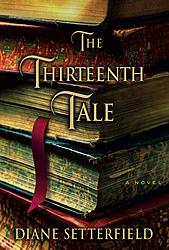
The Sacramento Bee reviews several books that appear this Fall. The Thirteenth Tale written by Diane Setterfield and published by Orion (in UK) / Atria (US) next September, is one of them. The reviewer is a little bit confused about who wrote what:

Here's a novel brimming with atmosphere and labyrinthine plotting that recalls the gothic-like chillers by Daphne du Maurier and Joyce Carol Oates, spiced with flavors reminiscent of "Jane Eyre" and "Wuthering Heights" by Charlotte Bronte
(sic !!!!). The language is rich, the elements intriguing _ a secluded mansion populated by brooding characters, musty family secrets that must be unearthed, and ghostly presences that appear and vanish.

Vida Winter is a legendary author who over the decades has taken delight in making up stories about her past, most of which she tells during interviews with journalists. Now ill and aged, she wishes to tell the truth about her life. To that end, Winter commissions young but troubled Margaret Lea to move in to the ancestral estate, listen to her stories and write her biography. Lea, an amateur biographer, slowly learns that Winter's truth is far more bizarre than any of the fictitious versions she has fabricated.

Setterfield teaches French in England. "The Thirteenth Tale" is her debut novel, and was the subject of an international bidding war last year. Movie rights are expected to be snatched up soon.

On amazon.co.uk, a reviewer gives a more precise information of the Brontë connections:

This is, quite simply, a rattling good yarn and that is not meant to sound derogatory in any way. One of those unputdownable books that take the reader over from the first page and leave you feeling bereft at the end. The story has everything, twins, a governess, house on a remote moor, a governess, warring siblings, abandoned baby, a fire - from this, it is clear to see that the author loves Jane Eyre (in fact quotes and references to this book abound) and, in the general decay and characteristics of its inmates, we are forcibly reminded of Wuthering Heights. There is a sneaky reference to Henry James The Turn of the Screw that sets your thoughts off at another tangent, and, in case you think this sounds all too gloomy and gothic, there are descriptions of the grounds and the gardener that make you think of The Secret Garden.
(Elaine Simpson-Long)


The Independent mentions the infamous Bloomsbury's editions of Jane Eyre and Wuthering Heights that we have reported several times in the past.

Do you remember Cara Lockwood's Wuthering High? On ALAN online you can find an interview with the author:

Can you describe WUTHERING HIGH for our readers?
Wuthering High is the story of a haunted boarding school called Bard Academy. The ghosts are no ordinary ghosts, and while I don't want to spoil the ending, I will say that the lives of the students start to reflect classic books, like Wuthering Heights and Jane Eyre. (...)

What are your plans for your next novel? Can you give us a peek?
Yes! My next novel is a sequel to Wuthering High, and it's called The Scarlet Letterman. Miranda is back in book two, as well as love interests Ryan Kent and Heathcliff, who are still both trying to win her affection.

The Sydney Morning Herald's reporter Keith Austin travels around Lancashire County and visits Wycoller Hall:

My next stop is the car-free village of Wycoller (ancient bridges, old barns, Pierson's House - thought to be Ferndean Manor from Jane Eyre), which is an absolute delight. So all is well with the world. This is it, this is the green and pleasant land that you dream of, the England of myth made real.

Mark Richardson on Pitchford talks about the impact of listen to Kate Bush's Wuthering Heights in the late 70s:

But I heard "Wuthering Heights" and discovered that I wanted to live inside the song, to play it over again to see if I could figure out what made it so moving.

Categories: ,,

Saturday, September 22, 2007

Saturday, September 22, 2007 1:42 pm by M. in , , ,    No comments
Trespass by Valerie Martin is reviewed in The Telegraph. Wuthering Heights is mentioned:
Intrusion is also a significant theme in the novel that Chloe is illustrating, Wuthering Heights. When envisaging Heathcliff, the foundling who encroaches on the lives of the well-to-do Earnshaw family, she takes Ellen Dean's remark that he is a gypsy as a sign that he might be Eastern European, another link with the dreaded Salome. (...)
She is not afraid to take risks. Like Emily Brontë, she kills off a central character midway through the novel, even though that death, like Catherine Earnshaw's, robs the narrative of much of its energy. (Michael Arditti)
Another review can be read today on Independent Online.

Teenage readers is the subject of this article in The Record. One of the them says:
One of her favourite books is Emily Bronte's Wuthering Heights, which she read when she was in Grade 6. She's persistent.
"I didn't get it at first. Then I re-read it." (Barbara Aggenholm)
Sp!ked reviews Patrick Hamiltons's 1941 novel Hangover Square. According to the reviewer the story is very similar in spirit to Wuthering Heights:
In many ways it’s like Wuthering Heights written entirely from Heathcliff’s perspective – if Cathy were heartless as well as wild and if Heathcliff were, at bottom, a rather sad and kind, gentle giant, who circumstances had bereaved and made alone. (Emily Hill)
The Jakarta Post illustrates the dangers of reading Wuthering Heights just before writing an article about an artists' collective exhibition in Jakarta, Indonesia:
Lisa Sumardi gives her illuminated sirens titles like Lovely Lady and Beautiful Legs. Wati Karmojono's small white house, Bukit Damai (Peaceful Cliff Face) (2007) stands 43 centimeters tall. This delicate creation could be a birdhouse or a toy -- it is placed at just the right height for a child to peer inside -- and is lit by a single tea light, evoking a ghostly doll's house or Heathcliff keeping a light in the window in Wuthering Heights. (Eilish Kidd & A. Junaidi)
On the blogosphere: j_spiderwebs reviews Cara Lockwood's Wuthering High. Lesmizphan talks about Bernard J. Taylor's Wuthering Heights musical (the 1991 concept album).
Wuthering Heights must be his star project, yet despite its gripping tunes, its lyrics provide a bland taste of his writings. They lack the poetic and romantic nature expected of an Emily Bronte novella. The words tend to get repetitive and long-winded at times, eg during You Were My True Love and I See A Change in You. The element of "Love" is too blatantly expressed -- subtleness and an old European flair seem to be lacking here. But in contrast to his other works, this would make the cut. Lesley Garrett, THE soprano diva, stars as Cathy. Unfortunately I'm not too fond of her flighty voice. It's void of much emotions and solid timbre -- too breezy and uniform thoughout the recording. (Le)
Categories: , , ,

Tuesday, December 09, 2008

Esquire rescues several 'forgotten' inventors:
Ryan Wendel (1862)
First person to design complete ransom note by cutting individual letters out of assorted newspapers and his sister's Emily Brontë novel, then gluing them onto sheet of parchment. (Note: Wendel was really self-conscious about his handwriting.) (Brian Frazer)
The Oldham Evening Chronicle gives some additional details about the Tamasha Theatre's upcoming Wuthering Heights production:
Bronte goes Bollywood in Oldham next year in a new musical which is being premiered at the Coliseum Theatre. (...)
Emily Bronte may be spinning in her Haworth grave when her only novel becomes a sumptuous musical based on her classic tale of passion, jealousy and revenge.
Oldham audiences will be asked to substitute Cathy, the heroine, and Heathcliffe, the brooding anti-hero, and instead visualise Shakuntala, the beautiful and head-strong daughter of merchant Singh, and Krishan the wild street urchin that Singh adopts.
Thrown together as unlikely siblings, their adolescent play soon turns into tumultuous passion.
But — just like 19th century Yorkshire — Indian society has its taboos and hierarchies, and Shakuntala yearns for the riches and status that only local playboy Vijay can provide.
Coliseum chief executive Kevin Shaw said: “It is a really exciting project which has been bubbling for a little while now.
“We are only a few miles away from where Wuthering Heights was set, and we have long had an idea of doing some sort of Bollywood extravaganza.
“We are supplying technical teams and supporting development of the show.
“It will be quite an innovative design, because it is touring, but will create the locations very simply yet effectively.
“There will be lots of fabric, some puppets and lots of colour.”
Tamasha’s producer Alex Derbyshire added: “I hope Emily Bronte would be delighted with the reinvention.
We will be true to the storyline of the novel, and we won’t be changing the ending.”
Wuthering Heights will open at the Coliseum on March 13, and runs until March 28. After Oldham, it goes to Exeter, Glasgow, London, Newcastle, Southampton, Coventry, and Harrogate. (Janice Barker)
We think it must be rather difficult to be both spinning in her grave and delighted at the same time, though.

The Bellingham Herald interviews the amateur composer of the ongoing performances of Robert Johanson's Jane Eyre at the Sehome High School, Bellingham, Washington:
Sehome High School's drama department is staging Robert Johanson's adaptation of "Jane Eyre," Charlotte Bronte's classic 19th-century Gothic romance, this weekend at the school's Little Theatre.
Director Vicki Chaney asked senior Michael Marcel Ardans, 17, who goes by his middle name, to improvise some music on piano for the play. Ardans asked her if he could put together a string quartet and compose music for them to perform during the show. He then attended several rehearsals and then composed period and situation appropriate music for the production. He spoke with The Bellingham Herald about his musical life. (...)
Q: What was the process for composing this music?
A: I generally compose on paper and when I've finished I transfer it to a computer merely so I can print it. There really isn't a huge need for me to hear everything I do as I'm composing. As a musician I know certain things work or don't and I have a good understanding of harmony so that's not too much of an issue like most would imagine it to be. I however do not perform in this show, nor will I be conducting. I am strictly behind the scenes. The music's performed by Molly LeCompte, first violin; Annie Vohs, second violin: Emma Binderup, viola; and Kaeli Earle, cello. (Margaret Bikman)
On Anime News Network the distinction between the Brontës and Jane Austen is not really very important. Presenting Emma: A Victorian Romance:
For anyone who enjoys Victorian romance novels, Emma will definitely please. With its tale of inevitably and unanswered love, class and obligation, it could fit alongside anyone's mental repertoire of favorite works, between Mansfield Park and Jane Eyre. (Bamboo Dong)
The Telegraph & Argus reminds us of the Branwell Brontë's Christmas Cracker day at the Brontë Parsonage Museum next December 13.

Several newspapers report the upcoming release of the 100 Classic Book Collection for Nintendo DS: The Sun, The Times, Nintendo World Report, The Telegraph, Daily Mail, PC Magazine, ...

Some reviews on the blogosphere: Cara Lockwood's Wuthering High on Bookworm 4 Life, Wuthering Heights 1939 on Doin' the pop (in Spanish) and Jane Eyre on The Full Review and BFC Book Reviews. Finally via Brontës.nl we have discovered a Flemish radio programme: Bekende Buitenlanders in Brussel (Known Foreigners in Brussels) in Radio Vlaanderen Internationaal devoted to Emily and Charlotte's stay in Brussels.

Categories: , , , , , , , , ,

Wednesday, June 06, 2007

Wednesday, June 06, 2007 2:18 pm by M. in , , , , , ,    2 comments
Some well-known BrontëBlog news get a new chance today on the internet.

The York Theatre Royal's performances of Wuthering Heights are reviewed (or something similar) in The Stage. The review contrasts with the enthusiasm of this previous one:
How dare anyone put on such a poor Wuthering Heights - and in Yorkshire.
Heathcliff is dreadful and Cathy is not far behind. Joel Fry, who plays Heathcliff, cannot be heard. He has no presence and gives little indication of caring for Cathy. He has the attitude of a sullen fourth former who has been forced to take part in the school play and would much rather be alone with his Play Station.
Cathy is played as a tomboy, by a whiny voiced Jessica Harris. She is a silly girl and not a wild and wanton young woman. No sign of passion from either of them.
With the exception of Kate Ambler the others in the cast are woefully inadequate. Each has two or more characters to play and the characters must age. That should not present a problem but apparently it does.
Judging by the cast's careless movement Sue Dunderdale, the director, has given little thought to shape, position and physical language.
Jane Thornton's spare and fluid adaptation, used so well by Hull Truck Theatre, covers the two generations in the story with clarity and understanding but in this production the final section is muddled and confusing.
Thornton does include some singing of Emily Bronte's poems. An inspired idea but here they are poorly presented.
Imagine a West Riding woollen mill's interior without machinery and you have the set. It should excite and inspire but it has no effect on this cast and this director. (
Kevin Berry)
EDIT: Luke has replied to this review on this comment.

LipService's Withering Looks are the subject of this article in the Yorkshire Evening Post:
AWARD-WINNING theatre company LipService make a long awaited return to Wakefield Theatre Royal on Saturday June 23 with their cult literary spoof Withering Looks.
The show takes a tongue-in-cheek look at the lives and works of the Bronte sisters.
It features many of the well-known characters from all the famous novels alongside some completely new ones that LipService have made up.(...)
To book tickets for Withering Looks call the box office on 01924 211311 or book online at www.wakefieldtheatres.co.uk. (
Stuart Robinson)
The New York Observer clearly dislikes the Puppini Sisters's cover of Wuthering Heights.
Kate Bush’s ghastly “Wuthering Heights” (...)[is] derailed by a silly surfeit of shtick, gimmicks and low camp. (Rex Reed)
More music, do you remember Los Campesinos! song with the Jane Eyre reference? Pitchfork posts about it:
On the flip, "Don't Tell Me to Do the Math(s)" reverses the band's usual M.O., bringing the dance floor to the bookstore rather than vice versa. Dewey decimals and Jane Eyre disses get a lift from a potent guitar hook, violins, and still more glockenspiel. (Marc Hogan)
The blogosphere is also full of Brontë references. This class is reading Wuthering Heights and publishes some of the discussions online. Plasticsturgeon reviews Cara Lockwood's Wuthering High. Author Jeanne-Marie Leach is interviewed on PASTimes:
What is the greatest historical novel you’ve ever read and why?
From the classics: Wuthering Heights. Heathcliff is the all-time greatest villain because of the depth of his plot for revenge. He is the ultimate bad boy. I do not believe that every villain must have redeeming qualities. As in Wuthering Heights, there are real-life villains who have nothing good inside them. Everyone loves to hate Heathcliff.

Other stories reviews Dame Darcy's illustrated edition of Jane Eyre:
The illustrator, an American comic book artist by the name of Dame Darcy, calls herself - randomly - a "neo-Victorian", and obviously loves the novel. But... she seems to miss the point SO MANY TIMES with her illustrations that I found myself questioning both her ability to remember what she's drawn before (Pilot the dog changes colour from one drawing to the next), and to actually restrain her imagination and draw what it says in the book. For example, as I said before, why put Jane on the front cover in front of a burning mansion when Jane doesn't see the Thornfield fire at all but only finds out about it months later? Why do that? It's such an elementary error that I don't know who to blame more... DD for drawing it, or the publishers for not picking her up on it.

I like the idea of illustrated editions of books, and Jane Eyre is ripe with possibility for such a product. Even doing a gothic-y one is not a bad idea in itself because there is so much in the novel that does fall under the literary definition of The Gothic, but please, GET IT RIGHT. This edition could have been amazing, but instead, it was just irritating. And what is with the photo of the illustrator on the back cover? Such pretentiousness.
Categories: , , , , , ,

Saturday, February 10, 2007

Saturday, February 10, 2007 2:33 pm by M. in , ,    No comments
Let's begin with some news about The Promise, the upcoming (next February 14) Filipino film based on, or so they say, Wuthering Heights. Kissing and happy endings seem to be the keypoint here:
THE kissing scene between Richard Gutierrez and Angel Locsin in “Mano Po 5” is nothing compared to their exchange of kisses in the forthcoming Valentine movie entitled “The Promise”.
It is something they have never done before— raw, intense, fiery and always catching for breath. It is a love scene that Oyo Boy Sotto may not be able to watch or allow his former girlfriend to engage in even for art’s sake.
“The Promise” is an adaptation of the romance classic “Wuthering Heights” by Emily Bronte. Previously it was produced by Reyna Films starring Richard Gomez and Dawn Zulueta when they were still the couple to watch more than a decade ago. It was titled “Hihintayin Kita sa Langit”.
It is now Richard Gutierrez’s turn to fill in the shoes of the lowly man who lost the love of his life to a wealthy guy.
“The Promise” is a collaboration between GMA Films and Regal Entertainment under the keen direction of Mike Tuviera.
The original story has an unhappy ending. But since it is a Valentine offering, writers Annette Gozon and Racquel Villavicencio promise not to make the moviegoers weep when they leave the thea-ters. We presume they compromised with two kinds of endings to name everyone happy. (MNS in Filipino Express)
Well, if you need more information, the imdb has now added The Promise to its database. A trailer can be watched on YouTube.

Another film that has some Emily Brontë in it, is Inconscientes (2004), a Spanish film directed by Joaquín Oristrell. It now appears in the US (Unconscious) and Entertainment Insiders reviews it:

The story here is about Salvador’s quest to land his true love Alma. (...) You see, Salvador and Leon are psychiatrists, and since the film is set in 1913, this is the time of the esteemed, at least now, Sigmund Freud. Believe it or not, Freud is a character in the film, showing up at the exact right moment to bring the pieces together. But before the resolution, Salvador and Alma [...] even step into a asylum having a lucid discussion with a female patient about Emily Brontë and the merit of women reading Wuthering Heights. (Jonathan W. Hickman)

And now for the books. The Guardian reviews several books. A couple of them have appeared on this blog previously: Jane Harris's The Observations and Lucy Ellman's Doctors and Nurses. About this last one, the article says:

Lucy Ellmann revels in a scabrous wit that is not for the squeamish. Her creations are baleful, tragicomic, with a bewildering array of targets, running to a frenetic plot which verges on insanity. Jen aspires to be Mata Hari, yet her secret self more closely resembles Jane Eyre. (Catherine Taylor)

Burning_Blake has discovered Cara Lockwood's Wuthering High novel and reviews it here:

A bimbo-y, materialistic rich girl crashes her stepdad's car and gets sent to a boarding school called Bard Academy on an island off the coast of Maine. She slowly figures out that: (...)
3) the older tough guy who says his name is Heathcliff and dresses funny and keeps calling her Cathy is, doh, actually Heathcliff from Wuthering Heights (...)
8) Emily Brontë is totally nuts, and she wants to destroy our world and go live in the Wuthering Heights world (not Gondal, for some reason). She likes her characters best and says the "real" kids are spoiled and obnoxious and have never known true suffering. Which may be true.
It's bubbly and inane and irritating, but I had to read it! And I'm not sorry that I did.

An finally, The Telegraph publishes an article about movie prequels and Jean Rhys' Wide Sargasso Sea gets a mention.

Categories: , ,

Thursday, August 13, 2009

Thursday, August 13, 2009 8:35 am by M. in , , , ,    No comments
The Deccan Herald (India) talks about the benefits of reading:
As a youngster, ‘Wuthering Heights’ by Emily Bronte sparked my interest in reading. It could have been the smouldering personality of Heathcliffe, which imprinted itself on my young mind. Whatever it was, it was Emily’s creative skill of writing which drew me into the world of reading. Emily, according to history, came from an illiterate family, yet her father self taught himself, and built the Bronte siblings interest in reading.
Patrick's ancestors might have been illiterate, but Maria's certainly were not.

The Garden Island (Hawaii) recommends a couple of books from the local libraries with Brontë connections:
The Eyre Affair by Jasper Fforde
(...)But worse is to come as Hades has set his sights on one of the plums of literature, Jane Eyre, and he must be stopped. How Thursday achieves this inside Charlotte Bronte’s masterpiece and manages to preserve one of the great books of the Western canon makes for delightfully hilarious reading.

The Guernsey Literary and Potato Peel Pie Society by Mary Ann Shaffer
This epistolary novel, based on the Author’s painstaking, lifelong research is an homage to booklovers and a nostalgic portrayal of an era. As her quirky, loveable characters cite the works of Shakespeare, Austen, and the Brontës, Shaffer subtly weaves those writers’ themes into her own narrative. (Carolyn Larson)
We read in the Poughkeepsie Journal once more about the vampire-Twilight-Meyer-Bronte-Wuthering Heights connection:
Romance is the pulsating heart of the "Twilight" books by Stephenie Meyer, with the tortured love of Isabella Swan for the vampire Edward Cullen. Meyer patterns her books on classic romances: "Twilight" on "Pride and Prejudice," "New Moon" on "Romeo and Juliet," "Eclipse" on "Wuthering Heights," and 2008's "Breaking Dawn" on "The Merchant of Venice" and "A Midsummer Night's Dream." (McClatchy-Tribune)
On the Brontë Parsonage Blog more pictures of the recent Brontë Society York Conference and an article by Maddalena de Leo with some additional pictures. The Brussels Brontë Blog also devotes a post to this event. Bookshelves of doom has not been able to finish Brian James's The Heights, Wuthering Heights in a top five list in The Hattiesburg American, Denise Giardina's presents her book Emily's Ghost at Wonders & Marvels, the Evil Home Stereo talks about her doomed relationship with Emily Brontë. The Book Obsession reviews Cara Lockwood's Wuthering High. We have a couple of posts that show reservations with the Brontë novels Under Sundog with Wuthering Heights and The Occasional Sin with Jane Eyre. Fortunately krysalid has liked Jane Eyre better.

Categories: , , , ,

Saturday, June 28, 2008

Saturday, June 28, 2008 10:31 am by M. in , , , , , ,    3 comments
The San Jose Mercury News publishes a curious story of a nowadays Guy Montag:
With the zeal of a soul-saver, Robert Wright has delved into garbage bins, filled up his minivan and made space in his Willow Glen basement, rescuing books once destined for oblivion.
This week, Wright, 57, rumpled in sweatpants and a T-shirt, rushed to Morrill Middle School after the Berryessa school board had declared 686 library books surplus. The teacher browsed through volumes laid out on tables. He filled boxes until the custodian turned out the lights and chased him out. He returned Friday morning, his triumph mixed with amazement and distress.
" Why get rid of 'The Yearling'? Or 'Leaves of Grass'! How could anybody say there just isn't room for 'Leaves of Grass'?" he asked. "If they were throwing out 'Captain Underpants' I'd understand, but not 'Leaves of Grass!' "
School libraries periodically cull worn, obsolete and sometimes underused books from their collection. In Berryessa, they're pulled from shelves and stamped: "Material is inaccurate. Does not meet district standards. Stereotypes gender or culture."
Sometimes, media technician Jeanne Palmer said, the library has five or six copies of a books - as was the case with "The Witch of Blackbird Pond." Other books, like Anne Bronte's "Agnes Grey," she said, "The kids will never read." She judges that in part by the dust accumulated on top. (Sharon Noguchi)
That's the way literature has to be judged, no doubt. What a shame.

Margot Livesey's The House on Fortune Street is reviewed in the Washington Times (where there can also be read online the first chapter):
But the book's hopefulness has an even deeper source: the continuity of the English literary tradition. All the characters have sincere attachments to canonical British authors, going so far as to travel to their houses to observe how they lived. Sean has his beloved Keats, of course, while Dara often compares herself with Charlotte Brontë's Jane Eyre. (Donna Rifkind)
The Book Reporter reports the appearance of Meg Cabot's The Babble Queen Gets Hitched. We knew that the author was a Brontëite, but her new book actually begins with a Wuthering Heights quote:
Chapter One

Whatever souls are made of, his and mine are the same. --- Emily Brontë (1818-1848), British novelist and poet
On the blogosphere: Roxy the Killer offers an ineffable Wuthering Heights analysis in her latest installment of Because You Suck. More literary creation, poetry in this case, Anna E. Evans posts the following on Dreaming in Iambic Pentameter:
A couple of acceptances to report. “Emily Bronte Begins Wuthering Heights” finally found a home in The Delaware Valley Poets Anthology, which will be good for my local profile.
Le Blog de Lorelai (in French) recommends Villette. AnimeGirl's Book Blogging posts about Cara Lockwood's Wuthering High. Finally, if you are reading Jane Eyre right now you may be interested in sharing your thoughts in this Librarything forum.

Categories: , , , , , ,

Monday, October 20, 2008

Monday, October 20, 2008 12:35 pm by Cristina in , , ,    No comments
It's a slow news day today, and we have to begin with an obituary from the Express-News from San Antonio. Its subject is Virginia Flack Sanders, who
held readings of popular works of literature, dressing as heroines of history and fiction like Queen Victoria or Jane Eyre.
“It sounds primitive, but it was extremely sophisticated for that time,” Buchanan said. “She filled a gap.” (Amber Whittaker)
We wonder if the East Bay Express mentioned Jane Eyre in this article on purpose:
Between November and February, homeowners will no longer be able to sit back and spend a pleasant evening sipping sherry and reading the adventures of Jane Eyre before a roaring fire. At least during Spare the Air days. According to the Oakland Tribune, the Bay Area air quality district has slapped a ban on active fireplaces and wood stoves when the smog is a little too nasty. First time offenders get a warning. The second time, it's castration for you. Or at least a hefty fine. (Chris Thompson)
If not, the coincidental association between Jane Eyre and fire is quite auspicious and (un?)fortunate.

The blogosphere contains a couple of rare sightings. The Good, the Bad and the Bookish reviews Cara Lockwood's Wuthering High and The Land of Squee comments - with horror - on Jane Eyre 1934. But, international as the Brontës are, this review of Jane Eyre 1996 on Passion Cinéma (in French) and this review of Wuthering Heights, the novel, on Schlaflos in Lodz (in German) are not such rare treats.

EDIT (21/10/2008):
An alert from the Pittsburg State University, Pittsburg, Kansas:
Classic novel to be discussed

Sigma Tau Delta/English Club is holding a discussion of Emily Brontë's classic, "Wuthering Heights," from 5:30 to 7 p.m. Tuesday, Oct. 21. This event is open to all PSU students. For more information or to reserve a seat, contact faculty sponsor, Melody Denny, at mdenny@pittstate.edu, or Sigma Tau Delta president Lynn Caldwell-Hurd, at LMCaldwellHurd@gmail.com. (Collegionline)
Categories: , , ,

Friday, December 07, 2007

Friday, December 07, 2007 10:57 am by M. in , , ,    No comments
The Times quotes the Schott’s Almanac 2008 summarizing the new concepts and key works that have entered the language of politics this year. And Mrs Rochester, aka Gordon Brown (check these previous posts), is mentioned:
Mrs Rochester • description of Brown, coined by Frank Field, and deployed at PMQs by David Cameron. [In Charlotte Brontë’s Jane Eyre, Mrs Bertha Rochester was Mr Rochester’s first wife, whom he kept in secret at the top of his house.]
Newsday reviews The Golden Compass film and finds some Wuthering Heights echoes:
The truth is that "The Golden Compass" is half of a rip-snorting kid's adventure (the first half) in need of a more compelling kid at its center. Dakota Blue Richards, a 12-year-old Brit making her screen debut, is a natural actress with a clean-scrubbed look and an earthy energy that suggests the adolescent Cathy in "Wuthering Heights." Whether she has the magnetism to hold all the pieces of Philip Pullman's complex allegorical scenario in place is another story. (Jan Stuart)
On the blogosphere: Did you know that there's a musical about Branwell? On Christina Croft's blog (its cowriter) you can find some information about it. ricklibrarian reviews Maureen Adams's Shaggy Muses (check our own review here). Book Rater's Literature Reviews talks about Cara Lockwood's Wuthering High.

Categories: , , ,

Friday, January 05, 2007

Friday, January 05, 2007 11:49 am by M. in , , ,    No comments
Victorian and High School values today.

The Daily Mail talks about the so-called Victorian values, a synonymous for celibacy it seems, of writer Julia Wood. Apparently,
While her friends harboured the usual girlhood dreams of a fairy-tale romance and a white wedding, Julia dreamt of being a famous novelist like Charlotte Bronte. (Alice Douglas)
Reading the article we suppose she is a real fan of St. John Rivers.

Some months ago we presented Wuthering High (A Bard Academy Novel), a novel by Cara Lockwood. Now, the second book of the series appears: The Scarlet Letterman. And Heathcliff seems to be still present:

(...)I could deal with the stares. What I can't deal with is the fact that Heathcliff is MIA. I haven't seen him since last semester. This from the boy who told me I was his whole life. The only evidence I have that he exists at all is the necklace he sent me, the one that I wear around my neck.

The necklace reminds me that there's another problem with Heathcliff: He's not even real. He's a fictional character from Wuthering Heights who happens to be stuck in this world. That's right. I'm obsessing about a fictional character from 1847. Where do I start with what's wrong with that? Not to mention the minor detail that him being here at all makes our dimension unstable. Confused? Welcome to my world.

"Is that a new necklace or something?" Hana asks me, as she leans over, catching me fumbling with the locket that Heathcliff sent me. Inside, there's a single piece of a page of the original copy of Wuthering Heights, which is the only thing keeping him in this world, as far as I know. Should it be destroyed, he'd be sent back to 1847. (Read more of this excerpt)

Jasper Fforde meets John Hughes ?

Categories: , , ,

Friday, July 08, 2011

The Guardian publishes an obituary of the actress Edith Fellows and talks a bit more about her role in Jane Eyre 1934:
After small roles, usually as orphans, Fellows had the dubious distinction of playing Adele Rochester in Jane Eyre (1934), Monogram studios’ flagrantly unfaithful version of Charlotte Brontë’s novel. To her credit, Fellows managed a reasonable semblance of an English accent (Adele is not French in this adaptation) and makes the most of the extended role playing a little matchmaker between her guardian Edward Rochester (Colin Clive) and Jane Eyre (inappropriately portrayed by glamorous blonde Virginia Bruce). (Ronald Bergan)
Another obituary is published in The Times.

The Wall Street Journal publishes an account of upcoming auctions, including the one at Sotheby's we posted earlier:
Another star example of 19th-century English literature at Sotheby's will be a rare first edition of Emily Brontë's "Wuthering Heights" (1847). This passionate tale of self-destructive love was rejected by reviewers when first published, but went on to become one of the best-selling novels in the English language (estimate: £90,000-£130,000). (Margaret Studer)
The New York Times shows the home of the Pinney-Manning family in Riverdale. A family of Brontëites:
Along with Sophia, 13, the apartment is also home to the couple’s younger daughter, Charlotte, 10, who was named after Charlotte Brontë, the author of “Jane Eyre,” her mother’s favorite novel, and the subject of one of her plays
The play in question is Do Something with Your Life! The Life of Charlotte Brontë (1996).

The Independent summarises of the upcoming Proms season:
My personal tub-thump for a neglected composer who deserved more centenary fuss goes to Bernard Herrmann (1911-1975), who scored most of Alfred Hitchcock's finest films. He wrote plenty of concert music but, because he is "tainted" with cinema, it is rarely performed. A Film Music Prom includes selections from The Man Who Knew Too Much, Citizen Kane, North by Northwest and Psycho. Better than nothing – but couldn't we have heard his opera, Wuthering Heights?
Towleroad insists on Mia Wasikowska's chance to be nominated for the next Academy Awards:
We're still about seven months away from nominations and the only Best Actress contender that's popped up in theatrical release and is mainstream enough for possible traction is Mia Wasikowska in Jane Eyre. (Nathaniel Rogers)
Chicagoist interviews Marty Rubin, Associate Director of Programming at the Siskel Film Center who says about the 35mm copy of Jane Eyre 2011:
For example, Jane Eyre, which we just played. I wouldn’t dream of showing that film in anything but 35mm. But I’m glad to hear that you like that trend. Over the last year or so we’ve been doing more and more of it. (Rob Christopher)
The Washington Post reviews the book You Know Who You Are by Ben Dolnik:
Sixty years after its publication, “The Catcher in the Rye” still sells around 250,000 copies a year - a testament to enduring appeal of bildungsroman. The engine of its success is the voice of a hip teen talking in taut sentences. Indeed, a bildungsroman needs a strong voice. In one of the earliest English examples of the genre, Charlotte Brontë’s “Jane Eyre” (1847), Jane’s sense of injustice flames forth on Page One and doesn’t die down until she finally confesses, “Reader I married him.” Charles Dickens added pathos to outrage at wrongful treatment in his “David Copperfield” (1849). Both “Jane Eyre” and “David Copperfield” keep readers reading with plots knotted with secrets, mysteries and coincidences. (Claire Hopley)
About.com reviews The Yellow Wallpaper by Charlotte Perkins Gilman:
The young female narrator finally finds escape, with her own insanity (as the mad woman in the attic in Jane Eyre). (Esther Lombardi)
The Montana Standard prints a difficult question for readers of this blog:
Which English woman wrote “Jane Eyre” under the pen name Currer Bell? (Linsay Carlson)

Although we see the point of this Flavorwire article, we still think that Jane Eyre is a very complex character:
Everyone loves “strong female characters.” From Jane Eyre to Veronica Mars, they’re so urgently desired and highly praised that they’ve practically become a brand: tough, intelligent women who can probably both beat you in a physical fight and outsmart you in a battle of wits. What’s not to like? But in an essay for last weekend’s New York Times magazine, Carina Chocano says she’s had enough of them. In fact, she argues, these “tough, cold, terse, taciturn” ladies have become so pervasive that we’re now suffering from a dearth of weak female characters — complex, well-written women who happen to also be meek, feminine, neurotic, or otherwise imperfect. (Judy Berman)

The New York Times' The 6th Floor staff have chosen their favourite books of fiction, including Jane Eyre. Calapitcha reviews the novel in Portuguese. Kay Woodward begins her blog tour promoting Wuthering Hearts on Chicklish (5 top Brontë-tastic things ever), she will be stopping at BrontëBlog next Sunday; litfan posts about Emily Brontë's novel in Hungarian; Reading in Color reviews Cara Lockwood's Wuthering High.

Categories: , , , , , , ,

Saturday, May 11, 2024

The Telegraph and Argus also echoes the story about the Brontë Parsonage Museum receiving a grant to install toilets at long last.
A £100,000 grant has been awarded to improve visitor facilities at the Brontë Parsonage Museum.
The money will help pay for the installation of fully-accessible toilets and Changing Places provision at the Haworth attraction.
Thousands of people from across the world visit the one-time home of the famous literary siblings, where the sisters wrote their famous works, every year.
But the Brontë Society, which runs the museum, says a current lack of facilities is presenting a "huge barrier" in relation to accessibility.
The new funding – from Arts Council England, through the Government-backed Capital Investment Programme – together with money already secured from the Bradford 2025 UK City of Culture Cultural Capital Fund, will enable the improvements to go ahead.
Once constructed, the Changing Places facility will be the first of its kind in the immediate area. The provision caters for people – and their carers – with profound and multiple learning disabilities, as well other disabilities that severely limit mobility, who are unable to use standard toilets.
Rebecca Yorke, director of the Brontë Parsonage Museum, says: "We are thrilled at Arts Council England’s decision to award us this funding and are very appreciative of its support.
"Visitor facilities are an essential part of a day or evening out, and the current lack of facilities is a huge barrier to access.
"This development will have a significant, positive impact on the thousands of people who visit our museum each year.
"We are looking forward to construction commencing this summer and having the new facilities in place ready for Bradford’s important year as UK City of Culture in 2025." (Alistair Shand)
A Miami Herald article highlights the problems caused by trying to block websites not suitable for kids in schools.
Like Perez, Rockwood School District sophomore Brooke O'Dell most frequently runs into blocked websites when doing homework. Sometimes she can't access PDFs she wants to read. Her workaround is to pull out her phone, find the webpage using her own cellular data, navigate to the file she wants, email it to herself, and then go back to her school-issued Chromebook to open it. When it's website text she's interested in, O'Dell uses the Google Drive app on her phone to copy-and-paste text into a Google Doc that she can later access from her Chromebook. She recently had to do this while working on a literary criticism project about the book "Jane Eyre." (Tara Garcia Mathewson)
Times Now News has selected '10 Classic Books and Their Modern Retellings' including both
2. Jane Eyre by Charlotte Brontë and Jane Steele by Lyndsay Faye
'Jane Eyre' is an 1847 novel that explores themes of morality, religion, and feminism through the life of an orphaned girl who becomes a governess. Lyndsay Faye’s 'Jane Steele' reimagines the titular character as a serial killer in Victorian England who, like Brontë's Jane, seeks justice and moral reconciliation, yet does so by taking matters into her own hands in a darkly humorous twist. [...]
6. Wuthering Heights by Emily Brontë and Wuthering High by Cara Lockwood
This dark tale of passionate and destructive love between Catherine Earnshaw and Heathcliff is transformed in "Wuthering High" into a story set in a boarding school on the California coast. The novel explores similar themes of love, revenge, and the supernatural, making it accessible to a teenage audience.

Friday, September 25, 2009

Friday, September 25, 2009 8:39 am by Cristina in , , , , , ,    1 comment
Two newspapers review Brian Dillon's Tormented Hope: Nine Hypochondriac Lives, Charlotte Brontë being one of them, as you know. From The Independent:
Here is Charlotte Brontë, laid low with fashionable hypochondria, but genuinely laid genuinely low, suffering "advanced torment [which] in its most dramatic and richly-imagined forms seems even to have defined a late version of the Gothic imagination and a vision of the creative temperament stymied, isolated or in exile". (Michael Bywater)
And from The Telegraph:
By Brontë’s day it had become a form of depression. She worried about her health since her four sisters had died young – Maria and Elizabeth from typhoid, Anne and Emily from consumption. For Freud it was a neurosis with sexual connotations, a “state of being in love with one’s own illness”. (Cassandra Jardine)
Here's another review. In this case of Gaile Petursson-Hiley’s dance piece Brontë. Winnipeg Uptown Magazine gives it an A-.
Lives of quiet desperation often speak volumes. Winnipeg choreographer Gaile Petursson-Hiley gave voice to Victorian-era sisters Charlotte, Emily and Anne Brontë, whose brooding, windswept novels such as Wuthering Heights and Jane Eyre lit her imagination and inspired her newest full length production, Brontë.
The abstract contemporary work opened at the Rachel Browne Theatre for a three-show run, Sept. 18 through 20, performed by a strong company of dancers: Kristin Haight, James Phillips, Brock Adams, Kathleen Price Hiley and Darby Gibbs. The 62-minute show also featured an evocative lighting design by the Royal Winnipeg Ballet's Robert Mravnik, as well as the choreographer's own ruffled costumes and a set design consisting of stacks of antiquated books that rose out of the stage like tombstones.
The long-time Winnipeg dancer is well known for her imaginative, earlier works such as Cherry Blossom Pink (2002) and her last major show, Faeries (2006), produced by the company she co-founded with Stephanie Ballard. Her latest creation takes viewers on a darker, more intense journey right into the heart of Victoriana, where unbridled passion always lurks just below the surface.
Once the more introspective show heats up, its layers of multiple perspectives intrigue by blurring the line between reality and fiction. Petursson-Hiley's artful attention to subtle detail - such as Gibbs dreamily resting her head on a stack of books during Haight's and Phillips' stormy duet - suddenly shifts the focus and challenges whether you are witnessing emotional truths or merely hazy characters born from the Brontës' (and choreographer's) fertile imaginations.
A riveting duet between Phillips and Adams crackles with the intensity of a Spanish bullfight as their relationship morphs between sparring rivals and simpatico partners. Seeing Adams poignantly cradling Phillips like a Pietà figure near the end underscores the testosterone-fueled tension with heartrending tenderness, as does a later solo by Phillips that evokes the expressive poetry of a soliloquy. Petursson-Hiley does not shy away from gritty emotion, but embraces it in all its colours and endless complexities.
The omnipresent texts are imaginatively incorporated throughout the non-narrative work, used alternatively as stepping-stones and skates, or slammed together to punctuate the choreographer's angular movement vocabulary like raw exclamation points.
Perhaps the most potent image in Brontë is the dancers inscribing lines in thin air like cryptic messages in a bottle. It's as if the medium becomes the message itself. Our task is not to interpret the literal meaning of the words, Petursson-Hiley seems to suggest, but rather to wonder at the power of creativity that allowed three Victorian women to ultimately endure - and transcend - their all too bleak and gloomy lives. (Holly Harris)
The Syracuse New Times has an article on the work of 19th-century artist James E. Freeman, currently on display at Munson-Williams-Proctor (Utica, NY).
But at the height of his abilities, Freeman seemed to fade from American thought. He continued to live and work in Italy, but capricious American tastes in art did not fully value the “cult of sensibility.” Similarly, works by authors Jane Austen and the Bronte sisters were brushed aside as sentimental fluff at the time.
We don't know about Freeman, but we are very sorry to say that in some circles Jane Austen and the Brontës are still dismissed as exactly that.

Which might or might not lead to the following not-so-uncommon mistake seen in Pique News Magazine:
Lucky me, I got to stay with old friend, bon vivant and former long-time Whistlerite, Jan Gavin, at her charming home surrounded by an even more charming garden in Hampshire. It was fascinating to meander through Jane Eyre's house nearby... (Glenda Bartosh)
We confess to having thought for a few secons of some sort of fake, theme-park-y Jane Eyre house until of course it dawned on us that Hampshire is where Jane AUSTEN's house is. And isn't it sad to actually 'meander' through a place and not be even capable of remembering its - famous - 'owner's' name?

Another blunder of sorts is thankfully not made but reported by The American Spectator:
Class time was mostly a call-and-response between a droning professor and a chorus of furious notebook scribbles, occasionally interrupted by an eager-beaver who once raised his hand and referred to Heathcliff as "an African-American." (Alec Mouhibian)
On the blogosphere, Blogging for Books reviews Wuthering Heights and Ángeles de Cenizas (in Spanish) selects it as book of the week. Just Like in the Movies writes about Wuthering Heights "1972" (it's actually 1970, the one with Timothy Dalton as Heathcliff)) and its kitchen. Little Changes for a Lazy Lady posts about Jane Eyre. BookNAround reviews Syrie James's The Secret Diaries of Charlotte Brontë. The Bookish Kind recommends a book on the Brontës called The World of the Brontës by Jane O'Neill. And finally, Cara Lockwood - author, among others, of Wuthering High - is interviewed by Bring Back Bard:
3. What did you do to make the characters your own?
Heathcliff (from Wuthering Heights) has always fascinated me as a character. In Emily Bronte's book, he is pretty much a villian who seeks revenge on those who have wronged him. But I always found his character tragic. His revenge, after all, is fueled by heartbreak. It's the loss of his true love Catherine that makes him ruthless. I was really interested in the idea of trying to redeem him. He has a great capacity to love, is fiercely loyal and a great survivor. So in Wuthering High, I gave him the opportunity to make different choices. The result, I think, is that he's a very strong, very compelling romantic hero.
Categories: , , , , , ,

Friday, August 03, 2007

Friday, August 03, 2007 3:03 pm by M. in , , , , , ,    No comments
The Yorkshire Post doesn't hesitate to use the Brontë sisters to promote the Keighley & Worth Valley Railway:
During the Industrial Revolution the mills depended on the tons of coal brought by the railway each week, keeping the looms weaving. The five mile journey is a powerful reminder of Yorkshire's heritage and a unique way of enjoying the beautiful countryside immortalised by Charlotte, Emily and Anne Brontë. (Jonathan Walton)
Columnist Commander Coconut at the Orlando Sentinel again shows her/his Brontëiteness:
Agnes Grey: I had never read a book by the third Bronte sister, Anne, so I read this one. She wrote just one other, The Tenant of Wildfell Hall. (Agnes Grey, like Charlotte's Jane Eyre, is about a governess; the Brontes knew little else. The plotting isn't as good as Eyre, but it's an interesting read.)
At BrontëBlog we were just expecting that in some review of Becoming Jane, Charlotte Brontë's comments about Jane Austen were quoted. We read on The Toronto Star:
Becoming Jane is finally the victim of its own misguided fidelity. Jane Austen wrote about romance, but she experienced little of it and died a spinster. Her literary rival Charlotte Brontë once said of Austen that, "the passions are perfectly unknown to her: she rejects even a speaking acquaintance with that stormy sisterhood."

A cruel comment, but one the movie bears out. Even the notion of marrying for love rather than money is treated with scorn. When Jane tells her mother she wants to marry the man she adores, her mother snaps that she did that herself "and now I have to dig my own potatoes." (Peter Howell)

The reviewer of Preview it's not a reader of BrontëBlog:
Last year Renee Zellweger portrayed Beatrix Potter (Miss Potter). Now we have the life (fictionalized) of Jane Austen. Can a biopic of the Brontes be far off? (Phil Boatwright)
Well... it rather seems so. Daily Film Dose even suggests a possible new title for the biopic (in a completely new approach :P).

On the blogosphere: elle talks about Cara Lockwood's Wuthering High novel. Shewhohashope is re-reading Jane Eyre.

In a Strange Land chooses Charlotte Brontë as the weekly Friday Feminist. Feminism is also the issue of this interesting post in Musings on Muriel. If you want to know what have in common Jane Eyre, Simone de Beauvoir and the Desperate Housewives of Wisteria Lane, read it.

Finally, luckylau85 reproduces some of the Brontë references and jokes in the last and indispensable Jasper Fforde novel: First among Sequels:
[Thursday on the first of her two fictional selves, from a series of 4 books based on her past adventures (she interacts with the characters in the BookWorld).]
"But she wasn't me. She was less like me, in fact, than the talking-to-flowers version [Thursday5], if such a thing was possible. [...] Thursday1-4 was mostly action with very little thought. [...] the books were a parade of violent set pieces interspersed with romantic interludes, and when I say "romantic," I'm stretching the term. Most famous was her torrid affair with Edward Rochester and the stand-up catfight with Jane Eyre. I had thought it couldn't get any worse until Mrs. Fairfax turned out to be a ninja assassin and Bertha Rochester was abducted by aliens." (p. 174)

"Ever since the ProCaths had mounted a guerrilla-style attack on Wuthering Heights during routine maintenance, security had been increased [...]. Heathcliff - possibly the most hated man inside fiction - had not been harmed, partly due to the vigilance of the Jurisfiction agents who were on Heathcliff Protection Duty that day but also due to a misunderstanding of the word "guerrilla," a woeful lexicological lapse that had left five confused apes dead and the facility littered with bananas." (p. 88)
Categories: , , , , , ,

Saturday, March 15, 2014

Keighley News reports the ongoing Brontë Festival of Women's Writing:
Leading novelist Sarah Dunant is one of the headline guests at this year’s Brontë Festival of Women’s Writing.
Sarah will visit Haworth on Saturday to speak about her latest book, Blood and Beauty, which is about notorious Italian Renaissance family the Borgias.
The festival, which runs from tomorrow until Sunday, also features family activities and several writing workshops.
It is being held for the fourth year at the Brontë Parsonage Museum and nearby venues, celebrating contemporary women’s writing.
Jackie Kay, last year’s Brontë Society writer-in-residence, will present readings and writings from 7.30pm tomorrow, and also host a creative writing workshop on Saturday from 2pm to 8pm.
There will also be a literary trail around Haworth on Saturday, and a giant game of Wuthering Heights poetry on the Parsonage lawn.
There will be writing workshops, covering graphic story writing on Saturday and Gothic fantasy on Sunday. Readings by Ilkley and Calderdale Young Writers will be held from noon on Saturday.
The Parsonage will host a drop-in writing session from 10.30am to 4pm on Sunday, when people can create their own work inspired by the Brontës and the museum.
Bridport News talks about the pop-up Brontë play that took place last week in Bridport:
The weekend started with a performance at The Avenue restaurant of a community pop-up play about the Brontë sisters, taken from The Domestic Theatre Handbook by Beth Shaw – who came to direct it herself.
Parts were distributed to the audience, and unexpected acting talents were discovered as the roles of Charlotte Brontë, Mr Rochester and Heathcliffe (sic) and Cathy amongst others were handed out to willing – and some reluctant participants. (Anne Bell)
The Yorkshire Post has an article about the opening of Emily's by De Luca at the Brontë Birthplace in Thornton:
Birthplace of Brontës opens new chapter as a deli.
The House where the Brontë sisters were born is being transformed into a literary-themed delicatessen in tribute to them.
(Via Facebook Wall) 
Wall Street Journal reviews the novel Mannequin Girl by Ellen Litman:
When she is six she is diagnosed with scoliosis and sent to a special boarding school. ("Like in 'Jane Eyre,' " her mother says, "except you get to go home on weekends." "Didn't she almost starve there?" her father asks.) (Sam Sacks) 
The Telegraph on luxury ski chalets:
Ooooh. Brooding luxury. It may look like the setting for an alpine Wuthering Heights, but this is the peaceful and rustic village of Combloux near the French resort of Megève, a favourite with the rich and richer. (Hugh Morris)
Broadway World-Australia reviews the Boris & Sergey's Vaudevillian Adventure as presented at the Adelaide Fringe Festival 2014:
This production will stay with you for a long time after, indelibly etched onto your memory. You will never be able to listen to Kate Bush's Wuthering Heights again without a vision of Boris in a white dress dancing to the music, and the thought of a game of poker will strike terror into the hearts of those of weak constitution. (Barry Lenny)
And Montgomery Media reviews a local production of Charles Ludlam's The Mystery of Irma Vep:
Ludlam stuffed his plays full of movie references, classical quotations and take-offs from literature. “Irma Vep,” for instance, grafts together bits of “Wuthering Heights,” “Gaslight” and “Rebecca,” plus echoes of cheesy thrillers with wolfmen and ghostly apparitions, as well as the occasional citation from Shakespeare and Poe. (Dante J.J. Bevilacqua)
Central Illinois News-Gazette discovers another Brontëite: the author Janice N. Harrington:
Character in a novel: Jane Eyre. (Jeff D'Alessio)
YNaija gives you sound advice:
Things that deserve a second chance
14. The book that you couldn’t get through your sophomore year of English.
The specter of your tattered copy of Wuthering Heights will haunt you forever until you finish it. (Ami Angelowicz & Winona Dimeo-Ediger)
But according to Filmonic, Wuthering Heights 1992 is one of those films that sould make you cry but don't:
“CATHY!!!” Man, that Heathcliff is one whiny dude. You can’t really blame him, Cathy does like to torture him with her mind games. Then again, Heathcliff does the same thing to her. The two lead characters are so despicable, it’s nearly impossible to muster up much sympathy for either of them. (Brandy Anderson)
How to teach creative writing? Tessa Hadley puts an example in The Guardian:
Last week we spent half an hour or more looking in minute detail at two versions of a paragraph from Jean Rhys's Wide Sargasso Sea. She seems to achieve the compression and electric intensity of her final version through minimising the connective engineering of the syntax in her sentences, taking out explanations, excising the mediating voice from around the things seen. The students went home to work on a paragraph of their own, cutting and intensifying in that way, taking out what's flabby and banal.
Paultan (Malaysia) has a review of a car (the F56 MINI Cooper) with a Brontë touch:
Reinventing an icon isn’t a walk in the park. Instead of simply writing a new book, you effectively take an existing book, study the earlier and later chapters, and then come up with a new way to bridge the gap, such that it appeals to as many readers of all ages as possible.
If we consider that analogy, when the good folk at BMW were developing the all-new R50 MINI a-decade-and-a-half ago, the scale of the task must’ve been akin to reworking Wuthering Heights for the 21st century – and it wasn’t even written in their own language to begin with! (Jonathan James Tan)
Sud-Ouest (France) talks about the singer Nolwenn Leroy:
Nolwenn Leroy dit assumer un certain romantisme « mais celui des sœurs Brontë», sourit-elle. (Yannick Delneste) (Translation)
Le Monde (France) follows the new production of Jules Massenet's Werther at the Metropolitan Opera House in New York:
En transposant l'action du XVIIIe goethéen aux confins de la Belle Epoque (contemporaine de Massenet), le metteur en scène britannique, Richard Eyre, a troqué le roman d'apprentissage pour un romantisme noir digne d'un livre des sœurs Brontë. (Marie-Aude Roux) (Translation)
L'Orient Le Jour describes like this a new song by Michel Polnareff, Le Bal des Laze:
Atmosphère néogothique mi Brontë, mi-Lawrence sur fond de dialogue entre orgue classique et basse électrique pour ce Bal des Laze qui évoque tous les pendus et les révolutions antérieures, tout en annonçant les bals sombres à venir, tant ceux des vampires de Roman Polanski, du conte Dracula de Coppola ou celui de Kubrick dans Eyes Wide Shut. (Colette Khalaf) (Translation)
La Repubblica-Parma (Italy) reports a synchronized skating performance:
La squadra di pattinaggio sincronizzato parmense si prepara per i campionati nazionali della FIHP (Federazione Italiana Hockey e Pattinaggio), in programma a Firenze sabato 22 marzo. Le 16 giovani atlete dell’Artistic Skate Roller Parma interpretano con rigore e precisione il suggestivo “Cime tempestose”, presentando elementi di crescente difficoltà: cerchi, mulini, linee, blocchi e manovre di intersezione eseguiti in sequenza su tutta la superficie pattinabile e senza alcuna sosta. (Translation)
Gente Digital (Spain) presents the YA writer Esther Sanz:
Mientras muchos cambiaban cromos en el recreo, Esther Sanz crecía leyendo los clásicos de las hermanas Brontë y las páginas de Corín Tellado y es que, desde pequeña, ya sabía que lo suyo era la novela romántica. (Sandra Bravo) (Translation)
And now a curious thing. RNE-1 (Spain) interviews Bienvenido Llopis, author of  La censura franquista en el cartel de cine where he explores the censorship of the posters and cinema memorabilia in the Spain ruled under Franco's regime. Curiously enough it seems that the local poster of Wuthering Heights 1939 was an exception
El escritor reconoce que hay imágenes que no fueron censuradas y desconoce si fue por un descuido o por permisividad. El generoso escote de la protagonista de Cumbres borrascosas fue autorizado mientras otros más discretos, como el de Lara Turner en El hijo pródigo, fueron tapados. (Translation)
Stuff I Read-Bokpandan (in Swedish) reviews April Lindner's Jane;  Pagan Spirits reviews Cara Lockwood's Wuthering High.

Saturday, July 15, 2006

Saturday, July 15, 2006 12:08 am by M.   No comments
A couple of intriguing Brontë-related novels:

The Haunting of Houses
by Maureen Peters, author of previous fictionalized accounts of Brontës' lives: The Child of Fire (Charlotte's) and The Child of Earth (Emily's).

Published by Robert Hale Publishers (June / July 2006)

Aspen Stewart lives with her grandfather in nineteenth century rural Ireland. Her mother died at her birth and she has no idea who her father might be until the day a dark stranger with a ring of bone on his finger comes calling. He introduces himself as Mr Heathcliff and from that moment Aspen is involved in the secret history of one of literature's most famous characters. Eventually, Aspen travels to Haworth in Yorkshire where she is caught up in the time of the Bronte sisters who are writing the story of which she is a part. But where does fantasy end and reality begin? Whilst some questions are answered, others remain like dreams to colour the mind. And over all broods the sullen Heathcliff...

This really sounds ffordish, we want to know more about this book. If someone can help, please enlighten us.

From the other one, we don't know if we want to know more:

Wuthering High A Bard Academy Novel (Bard Academy, The) by Cara Lockwood. Published by Simon & Schuster (MTV Books)

Welcome to Bard Academy, where a group of supposedly troubled teens are about to get scared straight.

When Miranda, a slightly spoiled but spirited fifteen-year-old from Chicago, smashes up her father's car and goes to town with her stepmother's credit cards, she's shipped off to Bard Academy, a boarding school where she's supposed to learn to behave. Gothic and boring and strict, it's everything you'd expect of a reform school. But all is not what it seems at Bard....

For starters, Miranda's having horrific nightmares and the nearby woods are eerily impossible to navigate. The students' lives also start to mirror the classics they're reading -- tragic novels like Dracula, Wuthering Heights, and Jane Eyre. So Miranda begins to suspect that Bard is haunted -- by famous writers who took their own lives -- and she senses that not all of them are happy. Complicating things even more is the fact that Ryan Kent -- a cute, smart, funny basketball player who went to Miranda's old high school -- landed himself in Bard, too. And the attention he's showing Miranda is making some of the other girls white as ghosts. Something ghoulish is definitely brewing at Bard, and Miranda seems to be at the center of ominous events, but whether it's typical high school b.s. or otherworldly danger remains to be seen.

Categories: , ,