Podcasts

  • S3 E8: With... Corinne Fowler - On this episode, Mia and Sam are joined by Professor Corinne Fowler. Corinne is an Honorary Professor of Colonialism and Heritage at the University of Le...
    3 months ago
Showing posts sorted by relevance for query classics illustrated comics. Sort by date Show all posts

Wednesday, October 22, 2008

Wednesday, October 22, 2008 12:05 am by M. in , ,    2 comments
Our thanks to Classical Comics Ltd. for sending us a review copy of each of these books.
Jane Eyre. The Graphic Novel
Charlotte Brontë
Script Adaptation: Amy Corzine
Artwork: John M Burns
Lettering: Terry Wiley

Design & Layout: Jo Wheeler & Carl Andrews
Publishing Assistant: Joanna Watts
Additional Information: Karen Wenborn
Editor in Chief: Clive Bryant

UK Publication Date: 29th September 2008
Format: 144 pages
full colour, paperback
246x168mm
Versions: Original Text (abridged) and Quick Text (2 different books)
Cover Price: £9.99


This comic adaptation of Jane Eyre belongs to an ambitious project carried out by Classical Comics whose aim is to bring to young people great works of British literature (following the guidelines of the UK syllabus) in a more attractive and exciting format. But we know what you are thinking - this is not the first time that we have heard of something similar. And you are right. However, this is not just one more honest (or not) effort. What Classical Comics is trying to do is not only entice young readers to read, giving them a glimpse of the classics, but trying to do all that with quality and high standards in the art department as well as in the scripts. All their releases appear at least in two versions: Original Text, where the original novel or play is abridged but most of the times quoted almost verbatim and a Quick Text version which might be more controversial in its editorial decisions(1).

Focusing now on Jane Eyre, the first thing we realises as soon as we had the graphical novel in our hands was that this adaptation was one of the Brontë events of the year. It is a long (long) way from other comic adaptations of Jane Eyre(2). Not only because the book is beautifully presented but also because, despite the unavoidable abridging, this adaptation is over 130 pages (which clearly shows the scope and ambition of this enterprise) divided into 38 chapters, exactly like the original novel(3).

We have been pleasantly surprised by the Original Text script adaptation which manages to aptly quote not just dialogues but also several descriptions and as much of Charlotte Brontë's beautiful, unique prose as possible. Of course, this also constitutes one of our main concerns about the Quick Text version (and about many other juvenile/abridged adaptations). If you extirpate Charlotte’s own memorable words from the story, what are you left with exactly? Only the bare bones of the story, which may retain some of the grace of the full body, but are not as exciting or interesting to look at and examine.

Both the script adaptation by Amy Corzine and the artwork by John M. Burns are highly respectful to the original novel, something which was practically a must in a collection named Classical Comics. There is no trace of any of the many critical readings which the novel has known since its publication. There are no parallels between the Red Room scene (which is somewhat of a disappointment in the final version of the comic(4)) and Bertha's imprisonment, and Bertha is treated in a pre-Wide Sargasso Sea fashion. She's nothing but the mad woman in the attic, the maniac... even her character profile is nothing short of a beast. The absence of a personal reading of the novel should not be understood as a drawback but as a conscious choice. Nowadays we are so used to subjective interpretations in most adaptations that an objective one is quite a rara avis(5).

As opposed to other comic adaptations of the novel meant for young readers (like the 1941 or 1962 Classics Illustrated versions) the structure of this version doesn't overdo Jane Eyre's childhood. For instance, Norbert Bachleitner shows in Jane Eyre For Young Readers. Three Illustrated Adaptations(6) how the 1941 Classics Illustrated version devotes 50% just to describe the childhood episodes. Classical Comics Jane Eyre devotes just 23% (as compared to 17% in the original novel). The other main stages of Jane Eyre's story are distributed like this: Thornfield Hall: 42% in the comic vs 51% in the novel, Moor House: 13% vs 22%, and probably the most relevant difference in this new version: the Ferndean Manor scenes represent 18% of the comic, whereas they are a mere 7% of the novel. This may be a conscious decision, taking into account that rushed endings are among the most common criticisms to different Jane Eyre adaptations.

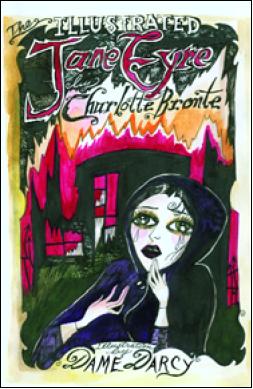
The watercolours by John M. Burns are completely in keeping with the script adaptation. His artwork is beautiful, clear and always illustrative(7). His choice of colours and general style evoke even a period-look not at all unrelated to the traditional kind of drawing and colouring used by Mr Burns as opposed to other more modern techniques, such as the one used by Dame Darcy in her illustrations of Jane Eyre. As Bear Alley has noticed in his review, Burns's work tries to bring to life not only the main events but also the imagery of fairies and green men with which Jane is associated by Rochester or the many bird metaphorical allusions of the novel(8) as well as Jane's drawings or dreams.

We have noticed, however, that this Jane Eyre is somewhat beautified in some of the illustrations, but not so much so that it interferes with the narrative. Along this line, we have also observed that her eyes are depicted à la Rochester, that is, hazel rather than green(9). Like Jane, we also excuse the mistake.

Both editions include a short but rather good biography on Charlotte Brontë(10), a Brontë family tree, a chronology and a letter from Charlotte to her publisher dated 24th September 1947, concerning the first part of Jane Eyre.

It is said that a book review should judge the book for what it set out to achieve, not for what the reader expected of it. In this case, we can confidently say that Classical Comics have both achieved, by and large, what they aimed at when they conceived this project, and have earned - or should earn - any lover of Jane Eyre's respect by treating this well-loved novel with such respect and care. But it doesn't stop there: they are also paving the way for future lovers of Jane Eyre who will find - to their amazement, no doubt - that the classics in general and Jane Eyre in particular are not dead things of the past, but stories very much alive and enjoyable. For our part, what can we say? We are extremely looking forward to Classical Comics' forthcoming Wuthering Heights, but preferably in the Original Text edition.

Notes

(1) The Shakespeare adaptations are also published in plain text editions.
(2) An incomplete list would include such titles as Classics Illustrated, No 39, Illustrated by Harley M. Griffiths, 1947; Classics Illustrated No 39, Illustrated by H.J. Kihl, 1962; Jane Eyre, Limewire Graphics, Ed. Philip Page & Marilyn Petit, Hodder & Staughton, 2003.
(3) Except for the prologue (not in the original novel) which recounts the facts pertaining to Jane Eyre's parents and Mrs Reed's promise to keep her as her own daughter.
(4) Somewhat unexpected because the scene both visually and dramatically leaves a lot to the imagination.
(5) We are aware that this is a naïve interpretation because even an objective reading is a reading of sorts. Furthermore, the script - consciously or unconsciously - excises some of the best-known quotations from the novel. The comic doesn't begin with the famous There was no possibility of taking a walk that day... and, though rephrased, the Quick Text version is more similar to the original opening than the Original Text version. The women feel just as men feel speech is absent as well. There isn't even a Reader, I married him -it has been subsituted by a more laconic I married him in the Original Text version and by a more to-the-point We had a quiet wedding in the Quick Text version. Also on the negative side we can quote several French typos in Adèle's speeches (p. 40). By the way, in the Quick Text version Adèle's French becomes a laughable parody of English with French accent.
(6) A Breath of Fresh Eyre. Intertextual and Intermedial Reworkings of Jane Eyre. Edited by Margarete Rubik and Elke Mettinger-Schartman,
Rodopi, Amsterdam/New York, NY, 2007.
(7) Curiously enough this wasn't the first Brontë experience of John M Burns in his long career in the comics world. He adapted Wuthering Heights for the comic publication Diana for Girls (No 42. 7th December 1963).

(8) Interestingly, the famous I'm no bird... quotation has been left out.
(9) As Rochester says in the novel (ch. XXIV): "... This little sunny-faced girl with the dimpled cheek and rosy lips; the satin-smooth hazel hair, and the radiant hazel eyes?" (I had green eyes, reader; but you must excuse the mistake: for him they were new-dyed, I suppose.)
(10) Curiously, and although it is stated that Charlotte Brontë was pregnant when she died, her death is attributed to tuberculosis, thus overlooking other, most probable causes, particularly hypemeresis gravidarum.

Categories: , ,

Monday, April 13, 2009

Monday, April 13, 2009 12:02 am by M. in , , ,    1 comment
We are very grateful to The Salariya Book Company for sending us copies of these comic books.

Wuthering Heights (Graffex)
(Paperback)
by Jim Pipe (Adapter), Nick Spender (Illustrator)

  • Paperback: 48 pages
  • Publisher: Book House (1 April 2009)
  • ISBN-10: 1906370133
  • ISBN-13: 978-1906370138
Jane Eyre (Graffex) (Paperback)
by Fiona MacDonald (Adapter), Penko Gelev (Illustrator)
  • Paperback: 48 pages
  • Publisher: Book House (1 May 2009)
  • ISBN-10: 1906370117
  • ISBN-13: 978-1906370114
Comic adaptations of Brontë novels have never ceased to be published in the last decades, normally linked to some sort of educational purpose. As a way to introduce children to the pleasures of reading, as a sort of magical key to make classical literature appealing to teenagers. Usually following the local curriculum guidelines. The quality of the adaptations is usually proportional to the ambitions and original purposes of the enterprise. As a general rule, the more focused on just being a complement to the general syllabus, the more mediocre the results. More than just be faithful or not to the text, a successful adaptation has to be able to offer an original view, a raison d'être, a coherent approach to, and interpretation of, the original novel.

We have recently seen very ambitious approaches to Jane Eyre (the Burns & Corzine Classical Comics adaptation) and other very modest in ambition and results (Paper Movie Books). Concerning Wuthering Heights, Classical Comics is preparing its own adaptation, a new French adaptation by Édith & Yann has just been published in France(1). Classics Illustrated is preparing UK reissues of the original 1947 Jane Eyre(2) and the 1960 Wuthering Heights for this summer. The two new proposals discussed here are somehow in between of these two poles. They constitute honest and original adaptations but their scope and target(3) is clearly more reduced than the Classical Comics approach.

Each comic in this collection is introduced by a quotation from the original work on a full two-page spread trying to capture the soul of the approach. For Wuthering Heights Jim Pipe uses the well-known "You said I kill you -haunt me then" whereas Fiona Macdonald recovers the poignant soliloquy when Jane Eyre is wandering around the moors after running away from Thornfield Hall: "Shall I be an outcast again this night?". The adaptation is divided into minichapters two-pages long with a heading summarising the action which takes place. The story advances basically through simple explanations and basic drawings of the characters' psychologies accompanying each of the (sometimes much too small) panels. Very little original text is preserved in the speech bubbles whose intention is not to explain the action but to punctuate several particular moments and feelings. Footnotes defining vocabulary are used with moderation.

Wuthering Heights is retold by Jim Pipe and illustrated by Nick Spender. Emily Brontë's novel certainly isn't the easiest of books to be reduced into a 41-page comic adaptation (which portrays both generations even) and the result is not altogether convincing. We wonder if a reader unfamiliar with the novel, as the potential public target are, will be able to understand not only the motivations behind the characters' behaviour but some of the twists and turns of the action. Nick Spender works with vivid colours, bright shapes and a highly contrasted inking. Generally focused on faces and expressions, backgrounds and settings are just barely sketched. In a novel which integrates so deeply the landscape (the moors) into its own characters this is a drawback that weighs on the work. The comic is completed with some information about Emily Brontë, a background of the book with some trivia and interesting details, a timeline of Emily Brontë which places Emily's life events into her historical and social context and an incomplete and highly arbitrary commentary of other adaptations of Wuthering Heights.

Jane Eyre is retold by Fiona Macdonald and illustrated by Penko Gelev. This is, in our opinion, a more satisfying adaptation. Fiona Macdonald makes a good work, with the obvious limitations of the enterprise, retelling Charlotte Brontë's narrative. More fragments of the original wording are retained and this contributes to the coherence of the approach. Penko Gelev's palette is quite restrained: greys and muted colours which added to a very idiosyncratic and peculiar style weave a very particular, and charming, atmosphere. The extra contents in this case are a biography of Charlotte Brontë(4), a timeline with the main British Women's Education and Legal Rights events in the whole 19th century, a list with the other novels by Charlotte Brontë and some contemporary reactions to the first edition of the novel. Finally, another selection (again arbitrary and incomplete) of other Jane Eyre adaptations.

Notes:
(1) Les Hauts de Hurlevent d'Emily Brontë, Volume 1; Artwork by Édith, Adaptation by Yann, Éditions Delcourt, Collection: Ex-Libris, April 2009, ISBN: 978-2756013800
.
(3) We don't know yet which version: Classics Illustrated, No 39, Illustrated by Harley M. Griffiths, 1947 or Classics Illustrated No 39, Illustrated by H.J. Kihl, 1962.
(3) Which is Key Stage 2/3 (UK) or Grades 5-8 (US) more or less. We wonder if with several obvious modifications these comics could not be also addressed to students learning English as a foreign language.
(4) With a couple of drawbacks. Charlotte Brontë's cause of death is given as a fact to have been due to typhus and no mention is made of the more 'popular' hyperemesis gravidarum hypothesis. And Branwell's death is placed in 1849 after Anne's and Emily's deaths. This is wrong. Branwell was the first one to die in 1848.

Categories: , , ,

Sunday, February 07, 2010

Sunday, February 07, 2010 12:03 am by M. in , , ,    No comments
Masterpiece Comics
R. Sikoryak
Drawn and Quaterly (September 1, 2009)
# ISBN-10: 1897299842
# ISBN-13: 978-1897299845
Colour, 64 pages, Hardcover
R. Sikoryak's Masterpiece Comics is a collection of adaptations of classical books belonging to the Western opus using several iconic comic styles of the latest century(1). The result cannot be considered a parody of the original novels (which in general are treated with great respect) but more like a sort of post-modern recreation within the self-imposed aesthetic parameters and internal codes of well- known American comic creators.

The tensions between the original stories and comics resolve in an enjoyable dialogue between them that sometimes turn into an ironic reading of the novel but mostly the object of the ironies are the original comics. The case that interests us here is The Crypt of Brontë, the adaptation of Wuthering Heights read as a Tales from the Crypt EC Comic(2).

At sixteen pages long it is the longest adaptation of the collection and probably the one where the story and the comic framework are more corresponding(3). Up to the point that the adaptation sometimes reads even as a legitimate comic adaptation (not far from the Classics Illustrated adaptations more or less contemporary to the Tales from the Crypt series). The adaptability and richness of motives of the original work by Emily Brontë obviously helps. The coordinates of this approach are the Gothic elements of the novel which are conveniently sorted out and highlighted. We have a Nelly Dean surprisingly well suited as the Crypt-Keeper now aptly renamed the House-Keeper(4). Heathcliff is revamped as a dark-skinned (in a way like Siku's latest comic adaptation(5)) unwanted boy who turns into a sadist eager for revenge, Catherine appears as the spoiled brat she is and Linton is no more than a parody of himself.

As Mr Sikoryak tells us at the end of the story in the final Masterpiece Queries, the adaptation has shifted towards those elements prominent in the Tales from the Crypt comics:
[T]hose gruesome morality tales always emphasized wickedness (even when thwarted) over goodness (which was considered tedious). Besides as those stories were eight pages ore less, it was vital to carefully choose of events: the punching, the dying, the apple-sauce-tossing, the violent kissing, and the grave-tampering. (Professor Scholar)
And the illustrations stress those points with plenty of wide open and blood-stained eyes and abundant sweating drops.

The final result is less hilarious than it is funny. In all probability, it could have been more shocking if the novel by Emily Brontë had been adapted into a less obvious style. Like Hester Prynne's The Scarlet Letter adapted as a Lulu comic or the amusing Action Camus covers where Albert Camus meets Siegel & Shuster's Superman comics. But, as it is, it reveals once again the almost fractal ability of Emily Brontë's only novel to embrace all kinds of approaches.

Notes
(1) The comics appeared previously in several publications. The Crypt of Brontë was first published in Drawn and Quarterly Anthology Vol. 5 (2003).
(2) Tales from the Crypt was a bi-monthly horror comic anthology series published by EC Comics in the early 1950s. Al Feldstein devised the Crypt-Keeper's origin story and Jack Davis illustrated many of the issues.
(3) Being respectful to the eight-page length of the original Tales from the Crypt stories. The Crypt of Brontë is divided into two consecutive stories: The Heights! and The Depths!
(4) The Governess and The Tenant are the equivalents of the original Old Witch and Vault Keeper.

(5) "Wuthering Heights": The Graphic Novel by Adam Strickson (Author), Siku (Illustrator), Bradford Metropolitan District Council (2006)

Categories: , , ,

Saturday, July 04, 2009

Saturday, July 04, 2009 12:08 am by M. in ,    No comments
Classic Comic Store Ltd is reprinting several Classics Illustrated comics. On this month Wuthering Heights is scheduled to appear. These are the details of the original comic:
Wuthering Heights
  • Paperback: 48 pages
  • Publisher: Classic Comic Store Ltd; 1 UK edition (1 Jul 2009)
  • ISBN-10: 1906814236
  • ISBN-13: 978-1906814236
Classic Illustrated No 59
Originally Published in 1949.

Art work: Henry C. Kiefer
All artwork re-coloured and covers digitally enhanced.
The cover of the present reprinting seems to be the Painted Cover of the original second printing. The artist was Geoffrey Biggs. Next September Jane Eyre is scheduled to be released.

Categories: ,

Thursday, November 14, 2013

Thursday, November 14, 2013 10:29 am by Cristina in , , , , , , ,    2 comments
Fans of classic novels adapted into comics will be glad to hear the following, as reported by Associated Press.
Hundreds of literary classics adapted and illustrated as comics in the pages of "Classics Illustrated" are going digital.
Comics purveyor Comixology said Wednesday it made a deal with Trajectory Inc. to bring the entire 120-issue run of "Classics Illustrated" to its digital storefront within several months, with the first titles to include adaptations of H.G. Well's "The War of the Worlds," James Fenimore Cooper's "The Last of the Mohicans" and Charlotte Brontë's "Jane Eyre," among others.
The adaptions were originally published from 1941 through 1971, first as "Classic Comics" before adopting the current title in 1947. Publisher Albert Kanter decided to adapt the works into comic form in a bid to introduce young readers to the classics.
The Teton Valley News has an article on a more conventional, schoolroom kind of approach to classic novels and banning reading certain books such as Bless Me, Ultima by Rudolfo Anaya.
There is an alternative novel to “Bless Me, Ultima,” but students opting to read the alternative would not have in-class discussions or the same in-depth analysis of the text. The alternate proposed was Emily Brontë’s “Wuthering Heights.”
“As a department,” said Pence, “we chose “Wuthering Heights” because it was a classic novel that we didn’t think anyone would raise an objection to reading.”
Diane Green, another English teacher at Teton High, elaborated saying it is, “fair to say it’s clean. Is that the standard we want to use for selecting literature?” (Jason Suder)
Yes, Wuthering Heights is clean: killed puppies, abused women, etc. Aseptic. We do like the fact that it's being read, but it being 'clean' would be the right argument for it. (And why would a novel need to be 'clean' to be readable anyway?).

The Telegraph also discusses the classics in the schoolroom.
My mother’s “home readers’’ list – not her set texts, but what she was expected to read in her own time – issued by her South Wales grammar school in 1950, featured Sir Walter Scott and the Brontës as a warm-up. It would terrify her granddaughter, who studied The Go-Between and other emaciated volumes for AS level. (Allison Pearson)
The Spectator reviews John Sutherland's A Little History of Literature where
He refers to the ‘Great Tradition’ (without crediting Leavis) and donates Conrad’s place in it to the Brontës. Yadda yadda. All this may look like nitpicking, but what I mean to get at is that this is best used as a guidebook rather than a work of reference. (Sam Leith)
The Auburn Villager features local author Marian Carcache, who recalls her mother's reading habits:
When she was a very young child, Carcache remembers her mother becoming immersed in “Wuthering Heights by Emily Brontë, “Jane Eyre” by Charlotte Brontë and “Rebecca” by Daphne du Maurier, and she found herself amazed that anything could make her mother sit down and relax.
“My momma was like white lightning, running around cleaning her house, and later mine, but when she was reading those books, I just remember her being enthralled by them,” Carcache said. “I think it somehow transmitted to me that writing must be a mighty powerful thing for it to have my mother calm down and actually read. I think that’s why I wanted to be a writer.” (Allison Blankenship)
Wochenblatt (Germany) recommends an audiobook of Jane Eyre.
Kaufen Sie sich dieses Hörbuch, ja, Sie lesen richtig, ein Hörbuch. Nicht irgendeines, sondern genau dieses: Jane Eyre, ein Roman von Charlotte Brontë, gelesen von der wunderbaren Sophie Rois. Und sie sind geheilt, oder schon so tief unten, dass ich Ihnen leider nicht helfen kann. (Karl M. Sibelius) (Translation)
Salon also mentions Jane Eyre in an article wondering why 'we love loooong novels'.
Much of the special appeal of a good long novel is rooted in the imaginative dynamics of reading fiction — assuming, that is, that you’re reading for the particular form of pleasure I’m celebrating here. The moment a reader turns to the first page of any novel, an intricate dance begins. “Do I believe this?” might be the first thing the reader asks. “Do I care?” is surely, then, the second. A character and a conflict are the most reliable way to lure the reader further into the story, but a setting, if skillfully evoked, can do the job, too: David Copperfield’s cold stepfather, Jane Eyre’s stifled pride, the glittering ballrooms of Tolstoy’s Russia, the threat posed to Middle-earth. Gradually, the words on the page stop being words on the page and seem to enter our minds as wholly formed sights and sounds and feelings. (Laura Miller)
A columnist from The Heights doesn't really like the novel but enjoyed Cary Fukunaga's take on it.
One of Hollywood’s latest literary renditions, Cary Fukunaga’s Jane Eyre, is actually one of my favorite literary cinema spins, despite the fact that I really disliked Charlotte Brontë’s magnum opus (yes, I prefer Emily Brontë). He used panoramic views of the English moors to evoke the romantic elements, and the camera focuses on meaningful details such as the way in which a character clears his throat or clasps her hands. In so doing, Fukunaga was able to show the audience all the major plot lines and character back-stories in only 120 minutes by mostly telling the story in a series of flashbacks. This is definitely an instance where cinema actually conveyed the true meaning of the novel as a visual experience, which is one of the benefits of literature in film: an experiential immersion for the mind and senses. (Tiffany Ashtoncourt)
Metro gives 3 stars out of 5 to Bridget Christie's A Bic for Her.
The title refers to an old Bic marketing campaign rooted in less enlightened times – ergonomically designed pens for feminine hands and in pastel shades ‘to get us out of our moods’.
A nice flight of fancy that imagines what the Brontës would do with such a device follows but generally her take on the issues feels a little obvious and curiously out of date. . . (Sharon Lougher)
The Craven Herald vindicates Charles Dickens as part of the literary heritage of Yorkshire too.
[Clair Challenor-Chadwick, managing director of Harrogate’s specialist fundraising and marketing company, Cause UK] said: “[A rare 1844 specially bound edition of A Christmas Carol] is currently housed at York University and this will be the first official outing. “It’s important as many people in Yorkshire get to see it as it’s a remarkable legacy to one of the most seminal books in history. Dickens deserves to be part of Yorkshire’s literary heritage, just as the Brontës or Bram Stoker.”
Bob Duckett looks back to the time when Bradford's Public Library used to publish books in The Telegraph and Argus.
The first title I did was The Siege of Bradford. It was based on a rare pamphlet in the stock of the Library. We got a historian from York’s Castle Museum to write an introduction, a student on placement to do a modern-day text to accompany the gothicky facsimile of the 1643 original.
Elvira provided some maps, Anthea Bickley of the Museum’s Service provided some illustrations and a super coloured picture of a battle scene for the cover. The Siege sold like hot cakes and was quickly reprinted.
This was followed by Brother in the Shadow, an anthology of stories and cartoons by that black sheep of the Bronte family, Branwell. 
Interesting Literature shares 'Ten Interesting Facts about Emily Brontë’s Wuthering Heights'.

Friday, September 12, 2008

Friday, September 12, 2008 12:06 am by M. in ,    No comments
Alert reader Jill Melvin has brought to our attention the upcoming publication of another Jane Eyre comic adaptation (not to be mistaken with the more ambitious Classical Comics adaptation whose development we have been following in the past months).

Paper Movie Books
, apparently located in South Africa, publish
a new kind of books, half text, half graphic novel.
Jane Eyre will be the first one to be launched, along with several others, by the end of the year. You can check some samples (like the one on the left) here.

Jill has also alerted us to the re-release of some of the Classics Illustrated comics by Jack Lake Productions Inc. After getting in touch with them about the availability of their Jane Eyre and Wuthering Heights adaptations they replied the following:
We are currently deciding on our next lot of titles. We should have our selections done by end of September.
We'll have to wait then.

Categories: ,

Saturday, July 16, 2011

Saturday, July 16, 2011 12:02 pm by M. in , , , ,    1 comment
Movie Line traces a profile of Ralph Fiennes from Heathcliff to Voldemort:
Wuthering Heights (1992)Like any respectable British thespian, Fiennes studied acting at the Royal Academy of Dramatic Art before logging a few years in the Royal Shakespeare Company. From there, Fiennes earned his first film role in Peter Kosminsky ’s adaptation of Emily Brontë’s Wuthering Heights. As the tortured Heathcliff, the actor exuded a “dark sexuality” that Steven Spielberg would later cite as the reason for casting the newcomer in Schindler’s List the next year. “I saw sexual evil,” Spielberg explained. “It is all about subtlety: there were moments of kindness that would move across his eyes and then instantly run cold.” (Julie Miller)
metro times reviews Harry Potter and the Deathly Hallows: Part II and wonders if Harry will have the status of a classic:
Nevermind that J.K. Rowlings’ final book in the series was actually published years ago. Or that there is always the possibility of prequels (ask George Lucas about that one), next generation sequels or, if it’s truly the classic it’s billed as, adaptations by generations yet to come. After all, how many times has cinema returned to the Peter Pan, Jane Eyre and Alice In Wonderland literary well? (Jeff Meyers)
The Express interviews Dame Judi Dench:
She continues to work hard and will be seen next playing Mrs Fairfax in a fi lm version of Jane Eyre out later this year. Another thing she insists upon is working with actors who have a sense of humour. (Garth Pearce)
In The Guardian, Romola Garai who talks about the prepare her portrayal of Bel Rowley in The Hour:
When I was a teenager I spent every weekend locked in my dark green bedroom imagining I was Jane Eyre. (Rebecca Nicholson)
Anne Rice's Interview with the Vampire is going to be adapted as a comic. The author says in Publishers Weekly:
Rice grew up reading Classics Illustrated comics and horror comics like Tales from the Crypt. "I remember reading Jane Eyre in the Classics comics and how much I loved the details and seeing the madwoman in the attic in those little panels and seeing the whole novel play out," she said. (Brigid Alverson)
The writer D.J. McIntosh remembers in the National Post:
I’ve been an avid reader all my life, beginning with the Nancy Drew books I loved so much that mysterious illnesses would afflict me, causing me to have to stay home from school, where naturally, I’d get to…read. Or I’d race home from school to Jane Eyre, L.M. Montgomery’s Story Girl and Emily series. 
All Africa finds another Brontëite. The latest winner of the Caine Prize for African Writing, NoViolet Bulawayo:
Who are some of your favourite writers?
Daniel Defoe, The Brontes, Jhumpa Lahiri, Yvonne Vera, Petina Gappah, Barbara Kingslover, J.M Coatzee, Maxine Hong Kingstone, Chimamanda Ngozi Adichie, the list is endless so I better stop here.  (Fatuma Noor)
The New York Times reviews Conquistadora by Esmeralda Santiago:
In fiction, plantation mistresses have tended to be either unbridled despots (often with a touch of the “madwoman in the attic” à la “Jane Eyre”) or demure creatures who stay in the Great House, civilizing everyone in and around it. (Gaiutra Bahadur)
TV Line posts a recap of the most recent episode of Big Brother:
We spent the first part of the episode watching their union crumble due to Rachel’s new nickname for Brendon, “Booki,” which she hollered across the courtyard like Cathy to Heathcliff in Wuthering Heights. (Louis Viertel)
NBC makes a list of things you have to pack just in case you get stuck somewhere for the weekend:
Your first-edition copy of Wuthering Heights. (Kevin Patra)
normblog interviews the writer Emma-Lee Potter:
Who are your cultural heroes? > Jane Austen, Elizabeth Gaskell, George Eliot, Charlotte Brontë, Patrick Heron, Colm Tóibin, Ian McEwan, Seamus Heaney.
La Voz de Utrera (Spain) interviews the writer Montserrat Romero Arispón:
¿Qué libros son tus preferidos?
¡Uf!, llenaría varias páginas. Si tuviera que elegir quizás me decantaría por los siguientes: “Viento del Este, Viento del Oeste” “La Gran Dama” ambos de Pearl S. Buck, “El Jardinero” de Tagore, “Jane Eyre” de Charlotte Brontë (...) (Translation)
ABC (Spain) talks about the discovery of some Foster Wallace juvenilia poems which had been donated to the Harry Ransom Center:
«Tenemos muchos ejemplos de la juventud temprana de grandes escritores, como unos maravillosos diarios y libros de cuentos ilustrados que Evelyn Waugh hizo desde muy joven», dice Schwartzburg. Otro de los tesoros del centro es un manuscrito en miniatura de un relato de Charlotte Brontë, escrito cuando tenía 17 años. «No estamos seguros de por qué es tan pequeño, pero una teoría es que estaba pensado para ser leído por los soldaditos de juguete de su hermano». (Antonio Villarreal) (Translation)
Elvira Lindo talks about brothers and sisters in El País (Spain):
Las hermanas sublimes, de talento excepcional, como las Brontë. (Translation)
ADN (Spain) interviews the author Elif Batuman:
¿En qué anda? Estoy dando clases en una extrañísima Universidad de Estambul, de ambiente muy gótico. Además, releí Jane Eyre. Me temo que todo esto me está llevando a la novela gótica. (Begoña Gómez) (Translation)
Out Now (Switzerland)  reviews Jane Eyre 2011 after being screened at the NIFFF 2011:
Die neuste Jane-Eyre-Adaption ist eine solide Umsetzung eines Literaturklassikers, fast schon wie aus dem Lehrbuch. Schöne Bilder, überzeugende Darsteller und eine annehmbare Länge machen den Film zur perfekten Unterhaltung für einen gehobenen Romantikabend. Für den ganz grossen Wurf reicht's leider nicht. Fassbenders leidenschaftliche Interpretation des Mr. Rochester dürfe jedoch alleine schon ein Grund sein, dass frau den Weg ins Kino findet. (Translation)
And we have one more Czech review of the film after Karlovy Vary:
Týden: Fukunaga se scenáristkou Moirou Buffiniovou předlohu pochopitelně řádně zhutnili a opatřili ji divácky vděčným vypravěčským rámcem, ale jinak knize zůstali věrní. Pro jeden typ diváků to bude výhoda, pro jiné nedostatek. Jana Eyrová je vzorovým románem červené knihovny a obsahuje dlouhou řadu romantických ingrediencí typu nedoručeného dopisu, nečekaného dědictví, reliktu z temné minulosti atd. Fukunaga se svými spolupracovníky takový materiál nijak neozvláštnil, neaktualizoval, nepošpinil ironickým odstupem. Je to přístup legitimní, ale bohužel nemůže nabídnout víc než jen přepečlivou ilustraci petrifikované předlohy. (Vojtěch Rynda) (Translation)
Klassekampen (Norway) discusses Jane Eyre:
Romanen Jane Eyre har vært en av de sentrale inspirasjonskildene for den romantiske kiosklitteraturen. Men Jane Eyre er, på tross av sin litterære arv, ingen dameroman. Det skriver litteraturkritiker Laura Miller på nettstedet Salon.com, i et forsvar for Charlotte Brontës klassiske fortelling om kjærlighet og galskap. Mens den tjuende filmatiseringen av Jane Eyre ruller over norske kinolerreter ser Klassekampen på romanens gang fra revolusjonerende melodrama, til tannløs klisjé, og tilbake til barrikadene. (Read more) (Karine Gullvik) (Translation)
I Hate everything honours its name and hates all Jane Eyre adaptations; Make a wishlist, Seis Milênios (both in Portuguese) and My Strength is not my Own post about Wuthering Heights; Pensamentos de Uma Batata Transgênica reviews Jane Eyre 1983 (in Portuguese).

Categories: , , , ,

Wednesday, May 20, 2009

Wednesday, May 20, 2009 1:57 pm by Cristina in , , , , ,    1 comment
Not that we precisely like to echo this papparazzi sort of new but The Sun and other news outlets are publishing photographs of Gemma Arterton's stay in the Canary Islands. What interests us, of course, is the fact that soon after being announced as the newest Cathy she is to be found with what looks very much like a copy (it looks like this edition actually, which is even more clearly seen here) of Wuthering Heights in her hand. Surely that's a good start!

And speaking of film adaptations. The eternal debate of what makes a good adaptation is briefly touched upon in an article from the Guardian.
I have been in France for a few days, during (but not at) the Cannes film festival, and noticed that there has been quite a lot said about the relationship between literature and film. The usual question was posed: why do so many superb novels turn into such poor films? I have long sought to discover the holy grail of a novel and a film version that could be considered equally brilliant.
Merely a very good film of a great novel wouldn't be enough. To put it another way, if the novel in question is widely regarded as being in the top 20 or 30 of all time, the film must have an equivalent status. There is another necessary criterion. The film must follow the book closely. A loose adaptation, using the outline of the book as a vague foundation for a film different in mood, feel and emotion, will not do. Can the film director stray from the novelist? Would, say, putting the characters in modern dress or setting the film in a different country disqualify it? Not necessarily. Apocalypse Now, Francis Ford Coppola's interpretation of Conrad's Heart of Darkness, might be a candidate, though it's not good enough to make my finals.
I've considered some very good films of English classics - Dickens's Great Expectations, Brontë's Wuthering Heights - but none achieve greatness. Thomas Mann's Death in Venice was wonderfully filmed by Luchino Visconti, but the novella was a lesser achievement. I have two films that might meet the test, just: John Ford's cinematic The Grapes of Wrath, by John Steinbeck, and John Huston's Moby Dick, from Herman Melville's classic. Finally though, only one film meets all the criteria: Visconti's The Leopard from the novel by Giuseppe Tomasi di Lampedusa. (Marcel Berlins)
We may (or may not) agree with the first criterion but we certainly don't agree at all with the second one. We actually recently wrote briefly about this in connection with Tamasha's Bollywood-style adaptation of Wuthering Heights.

Also in the Guardian we read about Roy MacLean's first introduction to the Classics:
I spent the summer holidays of my Canadian childhood reading comic books. Not Batman or the Beano which were too parochial for my taste – i.e. testosterone-pumping heroics in Gotham City and daft larks in the Midlands – but rather The Iliad, Moby Dick and the Lord of the Rings. In those days an inspirational American publisher named Albert Kanter produced a series called Classics Illustrated. Over 30 years he adapted 169 literary masterpieces into evocative graphic storybooks. Dickens, Dumas, Emily Bronte, Walter Scott, Gogol and Jules Verne, I read them first as illustrated comics. Kanter's objective was to bring intelligent literature to young people and his work remains the most noble in the history of illustrated children's magazines.
The Guardian's Books Blog is also worth a mention as they are trying to decide 'Who is the most famous fictional character?'
A bit of investigative research (an email sent out to a dozen well-read friends) produced some interesting findings. Suggestions ranged from Odysseus to Harry Potter, via Hamlet and Mr Darcy. Some nominations were endearing ("Heathcliff and Cathy from Wuthering Heights should also get a shout out") (Lisa Kjellsson)
Names can be suggested in the comments and we are surprised to find that neither Jane Eyre or Mr Rochester have yet got a mention...

Indeed if a character's fame could be measured by the number of bizarre, crazy comparisons it receives, Heathcliff would undoubtably be number one. Case in point #764365, from the TV blog of The Washington Post on American Idol's final performance night:
Not surprisingly, Adam picks "Mad World" and once again, he's going to perform it while bathed in blue light. Only this time he's wearing some long Victorian duster coat and heavy boots, and is standing ankle-deep in dry-ice fog, looking for all the world like Heathcliff searching for his Catherine on the moors. [...]
Randy, on the other hand, loves the whole Emily Bronte thing Adam has going on: "I love the long coat -- love the fog!" Randy enthuses. "I'm going to give you an A-plus!" Ditto Paula: "You look astonishingly handsome," she simpers. The American Idol Decency Police rappel down from the balcony seats. (Lisa de Moraes)
The video of the performance can be seen here. Judge for yourselves...

The Washington Post also reviews Sarah Waters's new book, The Little Stranger.
For Faraday such a transformation would be an unthinkable tragedy, and the Ayreses act as though they can forestall the inevitable. "They seem to pride themselves on living like the Brontës out there," a man in town observes. They carry on "gaily at gentry life," even while furtively reusing postage stamps. (Ron Charles)
The Atlantic Free Press discusses education in China and we read that,
Within these various English courses, the job is to memorize a lot of facts, as given by the professors, who come into the classrooms, lecture didactically and leave: no interaction. They are told, "This is what this story or novel means." As in, War and Peace means "war is hell." That's why Tolstoy wrote it. Let's move on. EM Forster's The Road to Colonus is just a little story of an old man on vacation in Greece who has an odd experience and then returns home to banging pipes and irritation. Jane Eyre is a love story, a feminist love story. So is Pride and Prejudice, though there is a social comment involved. . .centred on love, of course. Doris Lessing's stories are about class issues--class conflict. Metaphor counts for naught. Symbolism is an unknown, unmentionable. . .thing. And there is no theory of literature. Ah!--I feel Edgar Allan Poe writhing in his Baltimore grave. (James Secor)
On the blogosphere, Dovegreyreader interviews author of The Taste of Sorrow Jude Morgan. And Insensatos en Moriacity posts in Spanish about Jane Eyre. YouTube user BrendanGCarroll surprises us by uploading a trailer of the infamous 1946 Hollywood film Devotion with the original soundtrack by Erich Wolfgang Korngold playing in the background.

Categories: , , , , ,

Wednesday, November 30, 2011

Wednesday, November 30, 2011 10:28 pm by M. in , , , ,    No comments
Little White Lies reports the latest meeting of the Curzon Book Club devoted to Wuthering Heights 2011:
In her version Arnold has tried to juxtapose the old with the new, adding a subtext of racial tensions in a film set in the 19th century. She has also opted for a 4:3 aspect ratio, often rejected for the widescreen in this modern age.
The camera style is raw, particularly whilst depicting the rugged Yorkshire landscapes, Heathcliff and Cathy’s relationship blossoming. The close-ups of her wild hair, being pinned down and muddied by a ravenous Heathcliff, are certain to evoke sexual connotations.
Symbolism is rife, the most striking and vivid that of a black beetle struggling about its way about this cruel landscape, metaphorically depicting Heathcliff’s quandary. The sound design is mainly diegetic, adding to the realist, raw style; it’s only at the end of the film that we hear music needle-dropped in a stylised fashion, which advocates the point that it appears that Arnold loses focus with the latter part of the film, moving from the realist approach to one of a more stylised fashion.
The style that prevails at the beginning disperses and the acting changes, clearly consequential with the change in Heathcliff and Cathy’s ages, but also loses the quality that Solomon Glave and Shannon Beer ooze onscreen. The work of Kaya Scodelario and James Howson as the older Cathy and Heathcliff is not overtly in tune with the characters that Brontë describes in her novel, lacking the rugged traits these characters are distinctly known for.
Most in the book club have declined to finish Wuthering Heights in the same way that it seems feasible that some cinema-goers may opting out half-way through. As viewers perhaps we should not be as harsh on Arnold’s rendition of Brontë’s prose. Yet an injection of passion was missing from this book club meeting; a little ironic when you consider that passion is so central to this classic text. (Keira Brown)
By the way, Mac Birmingham gives away a Wuthering Heights 2011 bundle.

Stuart Kelly makes the following question in The Guardian:
I'm sure that you'll all correct me, but I'm rather surprised that there are no meta-literary uchronias: Jean Rhys brilliantly interpolated a story into Jane Eyre, but what about a story where Jane Eyre marries St John Rivers?
Well, Oranges are Not the Only Fruit explains something similar, albeit in a different context.

Carey Mulligan says in The Daily Beast how at the school she read the Brontës:
“I didn’t study it in school [The Great Gasby]. We read Austen and Dickens and Brontë,” she said. “I felt more recently the weight of the responsibility. Everyone who has read The Great Gatsby or seen the film has their own version of Daisy, and I have mine ... I have never seen The Great Gatsby. When I was doing The Seagull in London, I made the great mistake of watching Vanessa Redgrave, and so I played Vanessa Redgrave playing Nina for the next three nights.” (Lorenza Muñoz)
Enid News & Eagle announces an upcoming Christmas festival with a bit of Brontë:
The ninth annual program performed by Thom Whittaker, music director at First United Methodist Church, and Christianne Chase begins at 4 p.m. in the sanctuary of the church, 401 W. Randolph. Whittaker, an accomplished organist, will play some new carols mixed with old standbys like “What Child is This,” “God Rest Ye Merry Gentlemen,” “Joy to the World,” and “Hark, the Herald Angels Sing.” (...)
Poetry includes works by Longfellow, Ann (sic) Brontë, Ann Weems and a special selection of Dylan Thomas, “A Child’s Christmas in Wales.” (Robert Barron)
The Jewish Daily Forward talks about Adina Bar Shalom, founder of the Haredi College:
The JTA story also reported that Bar Shalom was always worldly, and it said that she “read everything: “Jane Eyre,” “Gone With the Wind” and the works of Ayn Rand, but was forbidden from learning formal academic studies and instead studied sewing and got married at 18. (Elana Sztokman)
Cosmic Log explores how comics can help in teaching science:
Educational comics are nothing new, of course: Classics Illustrated, for example, was delivering comic-book versions of English lit and science class back in the '50s. (I still get the heebie-jeebies when I recall the Classics Illustrated version of "Jane Eyre" that sat in the comic-book box at Grandma's house.) (Alan Boyle)
The Pittsburgh Historical Fiction Examiner interviews the author Ella March Chase:
What three novels could you read over and over? 
"Jane Eyre" by Charlotte Brontë, "Little Women" by Lousia May Alcott and "A Little Princess" by Frances Hodgson Burnett.  I know two of them are children's books, but they take me back to my roots as a writer.  I read all three at least once a year 'medicinally' when I need a literary 'hug'.  They comfort me, center me and remind me how powerful a good book can be.
BlogHer is not very optimistic about the reading habits of young women:
I find this more and more in women's fiction, this wishful longing for the reader to know that they really love the classics. No, really love them. They want us to think that their families sit around debating Chaucer or the Brontë sisters. That their parents connected with their children through the reading of Yeats poems. That they were young women who lay in fields clutching their copy of worn copy of Sense and Sensibility.
I know lots of young women, many of whom are very smart. They may lay in fields, but you know what they're reading?
Twilight. (Colleen Blooms)
The Ledger-Enquirer loves Out of Print Clothing:
But I came across this site, Out of Print Clothing, which has t-shirts, tote bags, note cards and more, all inspired by great literary works.
For the bookworm in your life, this could be a God-send.
I'm particularly fond of the t-shirts for Wuthering Heights, Atlas Shrugged, The Bell Jar and Pop Poe, which gives E.A. Poe the Andy Warhol treatment. (Katie McCarthy)

The Squeee reviews Claire's Not-So-Gothic by Bonnie Blythe:
Chick lit, it may be, but it's not a re-telling of Jane Eyre, because for that, you need to at least parallel the plots, and this doesn't.  (Traxy)
Several Spanish blogs are eager to see Jane Eyre 2011: Bandejadeplata, ...el abismo te devuelve la mirada, Cinempatía. Leeds Book Club reviews the film. Newly Domesticated posts about Jane Eyre's costumes; thelibrarianreads re-reads Wuthering Heights (and includes an original poem); Foglie d'Autunno reviews Jane Eyre in Italian.

Thursday, November 28, 2019

Thursday, November 28, 2019 11:12 am by Cristina in , , , , , ,    No comments
The National features Mary Beard on the podcast Books of My Life. You can listen to her speaking about Jane Eyre about 9 minutes into it.

Sardines Magazine reviews a recent performance of BlackEyed Theatre's Jane Eyre, giving it 4 stars.
One of the most compelling, intelligent adaptations of Jane Eyre I’ve ever seen, Nick Lane’s five-hander version for the ever reliable Blackeyed Theatre stays remarkably true to Charlotte Brontë’s iconic novel. It retains the essence of the radical feminist philosophy which underpins the novel but which is often sidelined by sentimentalist adaptors. Yes, of course the plot is simplified by leaving out or conflating minor characters but it cuts adeptly and smoothly to the chase.
I liked the way Lane has used a certain amount of narration to audience by Kelsey Short as Jane to connote the novel’s autobiographical format. And the sensitive integration of very accomplished actor musicianship with atmospheric folksy Yorkshire song, drawing room numbers and a lot more (music by George Jennings) works nicely. The sinister col legno cello to suggest the creepy, gothic invasion of Jane’s bedroom is an exceptionally good moment.
All five cast members are strong with Camilla Simson’s versatility as a homely Mrs Fairfax, disdainful Mrs Ingram and gibbering pitiful Bertha (among other roles) being a striking showcase of acting talent.
Short’s Jane has delightful resolute control, tempered with passion. Her silences are as good as anything she says too because this Jane thinks visibly. It’s a near perfect interpretation.
Ben Warwick is suitably gruff but ultimately warmly attractive as Rochester. He ensures that the audience feels huge compassion for this man as his predicament unrolls and he loses, or nearly loses, everything.
Eleanor Toms as Blanche, Adèle, Mary Rivers and Oliver Hamilton (excellent violin playing) as St John, Richard Mason and John Reed both convince completely each time they switch persona.
This elegant, rather beautiful production is another triumph for Blackeyed Theatre and a real tribute to director Adrian McDougal. What a pity, therefore that it clearly hadn’t been well publicised in Luton. I was one of an audience of just 18 people at the matinee I attended. (Susan Elkin)
A contributor to The Christian Science Monitor discusses comic books.
Comics introduced me to word play, jokes, and the rules of trading (the neighborhood was replete with comics), not to mention the rich, imaginative worlds of true literature found in the “Classics Illustrated” comics series. “Jane Eyre” was a book, too? And “The Hunchback of Notre Dame”? (Sue Wunder)
BuzzFeed has selected '55 Of The Cutest, Saddest, And Most Romantic Movies Of The Decade'. One of them is recommended to fans of Jane Eyre.
35. Far From the Madding Crowd (2015)
Fox Searchlight Pictures
"A stunningly beautiful period movie shot in the English countryside. Carey Mulligan and Matthias Schoenaerts have incredible chemistry, especially in their stolen glances (since they can’t be together for most of the movie). I was disappointed it never gained momentum during awards season. I recommend it to anyone who likes Pride and Prejudice/Jane Eyre type movies. (ladyinredpen)
iCrewPlay (Italy) reviews the book Questo libro ti farà dormire (which translates as "this book will send you to sleep").
All’interno possiamo infatti trovare l’entusiasmante biografia del carciofo, la dettagliata analisi dell’economia dell’Unione Sovietica durante la Guerra Fredda, un’esaustiva presentazione del sistema postale indonesiano e persino le condizioni meteorologiche all’interno del romanzo Cime tempestose di Emily Brontë! Curiosità interessantissime e di grande utilità… per conciliarti il sonno, come puoi ben constatare. Dopo averne provata una, sicuramente non saprai più vivere senza! (Alessia Baraldi) (Translation)
William Smith Williams posts about Mother of the Brontës by Sharon Wright. Jane Eyre's Library (in Spanish) writes about what Charlotte Brontë read.

Friday, May 18, 2012

Friday, May 18, 2012 12:02 am by M. in , ,    No comments
Trajectory Inc. has released a collection of Classics Illustrated comics for Ipad, Iphone and Ipod Touch. Including the 1947 Jane Eyre issue, illustrated by Harley M Griffith and adapted by Harry Miller:
Jane EyreBy Charlotte Bronte
Genre: Romance
Number of Original pages: 48
One of the world's most beloved novels, Jane Eyre is a startlingly modern blend of passion, romance, mystery, and suspense. Immediately recognized as a masterpiece when it was first published in 1847, Jane Eyre is an extraordinary coming-of-age story featuring one of the most independent and strong-willed female protagonists in all of literature. Poor and plain, Jane Eyre begins life as a lonely orphan in the household of her hateful aunt. Despite the oppression she endures at home, and the later torture of boarding school, Jane manages to emerge with her spirit and integrity unbroken. She becomes a governess at Thornfield Hall, where she finds herself falling in love with her employer-the dark, impassioned Mr. Rochester. But an explosive secret tears apart their relationship, forcing Jane to face poverty and isolation once again. Beautifully illustrated, this classic tale will capture children's interest and spark their imagination inspiring a lifelong love of literature and reading.


Friday, May 04, 2007

The Collecting Place project and exhibition is in the news. We read on the project's blog:
Many thanks to you all for coming on Sunday and making it an occasion! The video was up and running on Monday morning (with your suggested improvements) and you will be getting a copy of the DVD in the post, if it hasn't come already, along with the catalogue which I'm very pleased with.

I've just heard that the TES are using quite a big picture in this week's issue, out tomorrow Friday 4 May. There was a nice write-up and picture in the Keighley News on 19 April, and there may have been a news item in Amateur Photographer on 18 April, but I've not seen that. There is a full-page feature and pictures in the May edition of Worth Valley Mag. This is a free magazine delivered to local households, also available at Haworth Post Office for example.

Northern Life magazine (monthly) are meant to be running a story about the project.This is another free publication but I don't know where you can find it. (Simon Warner)
We haven't found (yet, here it is) the TES article or the news item in Amateur Photographer, but this is the link to the Worth Valley Magazine (see picture).

On the same blog Andrew McCarthy's opinion about the exhibition can be found:
Congratulations to everyone involved in the Collecting Place. The exhibition is fantastic and offers a genuinely fresh view of some of the places the Brontës knew. I’ve learnt a huge amount about photography and it was wonderful to work on such an unusual project. Visitors are enjoying the exhibition and it’s good that so many people will get to find out about the project through visiting the museum and taking away the catalogue – hope you all liked the catalogue.
We don't know if the very precocious author Nancy Yi Fan (Swordbird) likes photography, but we know that Jane Eyre can be counted among her influences:
Nancy Yi Fan, the 13-year-old author of Swordbird, a New York Times children's best-seller, was working on the fowl fable's prelude and planning a trilogy about the bird story. (...)
I read many, many types of books in Chinese and in English. (...)
"A few years ago I read JANE EYRE". (Xinhua-People's Daily Online)
Ok, that's an exceptional case. On HomeschoolBlogger they suggest that a good way to introduce classics to high school students can be through comic adaptations. The Classics Illustrated Comic Books have been featured previously on this blog, but now we can provide a link to read a whole comic online: Wuthering Heights (Classic Illustrated No 59, 1949), illustrated by Henry C. Kiefer.

Let's finish with a comment extracted from an article published in The Mail&Guardian about plagiarism and identity theft in modern literature:
Of course, the greatest identity theft and character plagiarism in literature was when the second part of Don Quixote was put out under the name of Alonso Fernandez de Avellaneda, even as Miguel de Cervantes Saavedra was completing his part two. Cervantes at least had the chance to hit back directly, writing into his story some of the false Quixote’s absurdities and lampooning them and their author.
Dead writers have no such recourse. So it is that Charlotte Brontë, Virginia Woolf, Daphne du Maurier, Conan Doyle and Margaret Mitchell, among legions, have had their characters filched -- and more often than not abused.( Darryl Accone)
Categories: ,,, , ,

Wednesday, July 29, 2009

Wednesday, July 29, 2009 12:03 am by M. in , , ,    4 comments
We are very grateful to Real Reads for sending us two review copies of the following books.
Wuthering Heights
by Gill Tavner
Vanessa Lubach (Illustrator)

# Paperback: 64 pages
# Publisher: Real Reads (30 Jul 2009)
# ISBN-10: 190623020X
# ISBN-13: 978-1906230203
Jane Eyre
by Gill Tavner
Vanessa Lubach (Illustrator)

# Paperback: 64 pages
# Publisher: Real Reads (30 Jul 2009)
# ISBN-10: 1906230218
# ISBN-13: 978-1906230210


What's the best way to introduce children to classic literature? This is a recurring topic which each generation resurfaces and one which inevitably generates confronted positions. Is it better to quote from the original without adapting? Is an abridged version which reshapes the original language to each new group of potential readers most advisable? Is it better to completely modernise the settings and situations? Or maybe a visual approach (via comic or with illustrations à la page) can be more successful? In recent years we have seen examples of all these approaches(1) some of them more accomplished than others but all of them sharing a common goal: bringing the classics to future readers.

The Real Reads collection is one more of these attempts. It consists in brief illustrated retellings (some 50 pages and 20 illustrations plus the cover in a dustjacket, addressed to children 8-13 years old) of widely known English classics by Jane Austen(2), Charles Dickens, William Shakespeare and, of course, the Brontë sisters among others. Charlotte Brontë's Jane Eyre and Emily Brontë's Wuthering Heights are unsurprisingly the choices. Each Real Read contains the following sections: The Characters with a brief summary of each character and an appropriate illustration, The Story were the illustrated retelling can be read and a final section: Taking the Things Further where a call to read the real thing is made, Filling the Void highlights the main points of the original narrative that have been skipped or altered, Back in Time briefly places the author and the book in its time, Finding out More suggests books, films or websites and Food for Thought offers prompts to start a discussion about the book.

Both Jane Eyre and Wuthering Heights are retold by Gill Tavner and illustrated by Vanessa Lubach. Gill Tavner says on the RealReads website:
I have long thought that there must be a way of making the qualities of ‘classics’ accessible to most readers, but I was unconvinced that abridging was the answer. As a mother of two young children, I have endured the pain of reading abridged fairy tales and Disney films. These often machine-gun the reader with a list of events. Rarely do they offer the reader an opportunity to develop interest in or appreciation of varied vocabulary, style or themes. Do abridged versions need to be like this? Surely there is a way to make an abridged version an enjoyable and enriching rather than simply informative reading experience? Surely this is an important distinction if we aim to nurture keen, confident readers?
Surely. And Gill Tavner tries hard to retell the novels preserving some of the original language or structure. This is considerably better achieved in Jane Eyre than Wuthering Heights. The complicated structure of Emily Brontë's masterpiece is so inextricably weaved into to the novel itself than any attempt to alleviate it is doomed to fail. The machine-gun effect that Ms Tavner alludes to it in the aforementioned text is very hard to get around. Jane Eyre, however, stands the abridging/adapting process much better. The bare bones are there and some of the feeling of Charlotte Brontë's writing can be glimpsed. It is remarkable that Ms Tavner has managed to get Gateshead, Lowood, Thornfied, Moor House and Ferndean... in 50 pages! Of course, the pace is too fast and there's no psychological depth in the characters but this is the unavoidable price to pay in an approach such as this one.

Vanessa Lubach is in charge of the illustrations. This is not the first time she approaches these novels. Recently, she also created the list of Characters of the Worth Press editions (check our review here) and of course some of her previous creations have been recovered for the present editions. Only Rochester's depiction presents a clear change in tone(3). Helen Burns or Adèle Varens also present minor changes. Vanessa Lubach's drawings are in colour pencil with a watercolour underwash in many of her illustrations. This gives a naïf tone that works well with the children stages of both novels and not so well with the rest of it. A mention should be made, nevertheless, to the excellent first illustration of Wuthering Heights with Lockwood fighting in the snow to arrive to Wuthering Heights.

Concerning the final section, the constant reminding of the necessity of reading the original novel to be able to have the full experience is remarkable. The contextualising sections are just testimonial but even so it's unforgivable that Haworth is, once again, wrongly and consistently spelt Howarth and the bibliography and webs selected are highly improvable. There's a wide selection of possible Brontë biographies (fictionalised or not) available for children and, frankly, quoting the wikipedia as a possible visiting website is, to put it mildly, a bit poor. The Food for Thought section is hardly useful to teachers and educators but this seems to be on its way to being solved as some schemes of work for primary teachers have been released on their website. Not for the Brontë titles yet, but they promise more releases.

Notes
(1) You can check our section of reviews to see some of the titles: Classical Comics' Jane Eyre, Graffex Comic Adaptations of both Jane Eyre and Wuthering Heights for instance. And new ones are announced as the Classical Comics' Wuthering Heights or Jane Airhead by Kay Woodward.
(2) A very interesting interview with Gill Tavner about her Jane Austen Real Reads adaptations can be read on AustenProse.
(3) A softened version in this case, as the WorthPress characterisation was more in accordance to a Mary Shelley novel than a Charlotte Brontë one. It's also a good choice to obviate Bertha from the characters list as it will give too many clues to new Jane Eyre readers.

Categories: , , ,

Wednesday, August 16, 2006

Wednesday, August 16, 2006 1:22 am by M.   No comments
Well, technically it's an illustrated edition of the novel but, now that CBR News publishes a very interesting article on Dame Darcy's rendition of Jane Eyre it's a good time to go back to this upcoming edition (next September) that has already appeared previously on this blog.

Dame Darcy is just one of many who've been influenced by "Jane Eyre." Her gothic/neo-Victorian artistic style has been hailed by many, including the New York Times who said, "Darcy's comics are aesthetic manifestos… Darcy is a star." The creator of Fantagraphics' "Meat Cake" as well as a member of the band Death By Doll will shortly bring her unique artistic style to the pages of "The Illustrated Jane Erye," an illustrated novel from Viking Studio, an imprint of Penguin Books. The book is the perfect pairing of words and art as it reprints Brontë's original story accompanied by hundreds of Darcy's illustrations. The book sees publication September 21st. CBR News spoke with Darcy by phone last week about the book and why she was attracted to this project.

Darcy discovered she had fans at Penguin through her work on "Meat Cake." In 2003, Darcy completed her graphic novel "Gasoline" and asked her literary agents to shop it around. As they pitched it around town, they discovered that Penguin was doing a classics series and were interested in having Darcy illustrate "Jane Eyre." "I was so elated by that news - it's one of the best things that's ever happened to me in my life," Darcy told CBR News. "I really love 'Jane Eyre' as a classic feminist novel, but also I'd like to do other ones in the future, like 'Wuthering Heights.' I hope this one goes well so that I can do that one.


"It's weird because Jane's psychology is really interesting," continued Darcy. "She approaches feminism in a really different way than I do, but I'm really glad that someone in the 1840s was feminist and was writing stuff like this and that it's lived on to today. It can still apply to today's world. It's a classic for a reason." (...)

Illustrating "Jane Eyre" took Darcy almost two years, beginning work on it in 2004 and finishing in 2005. She explained she was left to choose which elements of the story she felt were worth bringing to life with her illustrations. "When I was reading the book I'd choose those scenes that felt the most visual to me," said Darcy. "That's usually how it works with all my freelance work. Someone will hire me to illustrate a book or an article for a magazine or paper, I'll read it and then whatever scene comes to my mind is what I'll sketch out and send to the client. Once they approve it, I'll finish it up. People usually don't ask me to change that much or have a problem with what I pick. I'd say 90% of the time people are pretty chill with my choices."

Darcy was first exposed to "Jane Eyre" while in art school where it had an immediate impact on her. "It's just so gothic and awesome. I really like how all this surreal weird stuff goes down, while the rest of the time is spent drinking tea and staring out the window - which I think is actually kind of cool. I enjoy doing that, too! [laughs]"

Penguin gave Darcy a lot of room to play with in working on "The Illustrated Jane Eyre" and every illustration she created for the book will see print. "What's really great is they asked me to do the cover and it could have been any image from the entire book, but I thought the way to make it really kind of punk rock for the new generation of goth girls that it'll appeal to was to take the scene where Jane Eyre is freaking out while the giant mansion is burning behind and Jane Eyre is written in bloody red letters. That's how hard core Jane Eyre gets! People think it's this classic about a governess, but it's not necessarily about that - I mean, she gets called a witch about 7000 times and everything demented and tragic goes down during the book. I thought that should be portrayed. Plus, she's seriously Catholic-damaged, which is probably true for most of my fan base. [laughs]"

Darcy described the process she went through to illustrate the novel. "I draw everything in pencil and once I get the pencils approved I'll go and ink them," said Darcy. "After that I'll paint over top. Lately I've been doing this thing where I paint with acrylics, but I water them down to use them as water colors because I want them opaque or translucent depending on the need. When they dry, I put this kind of sepia tone wash over the top to make them look a little older. Now, you can't do that and still have a water color effect with water colors, but you can with the acrylics."

While hundreds of illustrations accompany the book, there is one scene in particular that Darcy enjoyed illustrating the most. "There's one piece where Jane has had a dream, and in the dream she saw the burnt down mansion and the full moon rising over the top and bats were living in the burnt down mansion and she's holding a crying baby and is just staring at it. That's my favorite one, I think. I think it captured what dreams are like."

The pictures are courtesy of the Comic Book Resources website, where you can find more. Click to enlarge them.


Categories: , , ,