Podcasts

  • S4 E8: With... Rebecca Marks - For the final episode of series 4, Sam and Mia are joined by historian, author and content creator Dr Rebecca Marks! Rebecca holds a Master's in Art Hist...
    3 weeks ago
Showing posts sorted by relevance for query ostrowski. Sort by date Show all posts

Wednesday, May 31, 2017

Wednesday, May 31, 2017 10:21 am by Cristina in , , , , , ,    1 comment
Source
Keighley News reports that the land art depicting Branwell Brontë on a bicycle created for the Tour de Yorkshire has been shortlisted for an award.
A piece of Worth Valley land art produced to celebrate this year's Tour de Yorkshire is in the running for a top accolade.
The work – depicting Branwell Brontë riding a bicycle – by Worth Valley Young Farmers Club and Haworth Primary School, is among 12 pieces across the region shortlisted for a public vote to select people's favourite.
To vote, visit letouryorkshire.com/landart. The winner will receive a trophy from Sir Gary Verity, chief executive of Welcome to Yorkshire.
"We were blown away by the sheer number, range and quality of land art which featured on this year's race route and it was extremely difficult to select just 12 pieces," he said.
Voting is open until midnight on June 13. (Alistair Shand)
Eryk Ostrowski's new book Tajemnice wichrowych wzgórz - claiming that Branwell wrote Wuthering Heights - is featured on Radio Poland.
In his new book entitled “The Secrets of Wuthering Heights”, Ostrowski said that Branwell Brontë (1817-1848) was not the black sheep of the Bronte family as history had made him out to be, and that even during the siblings’ lifetimes claims were made that only one author was behind all the Brontës’ works.
Branwell Brontë’s three sisters are all known for their contributions to 19th-century British literature.
The eldest sister, Charlotte Brontë (1916-1855) is famous for “Jane Eyre” and wrote three other books. Emily (1918-1948) is credited with writing the most famous of the Brontë works, “Wuthering Heights”, which was written under the alias of “Ellis Bell”, while Anne (1820-1849) penned two less-known books.
But Ostrowski claimed Branwell Brontë, who is often portrayed to have been an alcoholic and morphine addict, was also a talented painter and author.
According to Ostrowski, letters, poems, prose and stories written by Branwell Brontë are similar to the work of Ellis Bell.
“Branwell Brontë’s prose and poems show many scenes and dialogues which are repeated in ‘Wuthering Heights’,” Ostrowski said.
“We can even see prototypes of the main characters of ‘Wuthering Heights’ in some of his early works,” he added.
Ostrowski also said that a letter, written by the brother at about the same time as “Wuthering Heights” was being completed, includes a description of “a secret novel”. The description fitted “Wuthering Heights” to a tee, the Polish author said.
“We are probably dealing with the biggest hoax in modern literature. Everything that we know about the Brontë sisters comes from the oldest, Charlotte,” Ostrowski said.
“She corresponded with and talked to publishers. The manuscripts of Emily and Anne Bronte do not exist, and the first publisher to see them said they were written in the same handwriting.” 
Two more Polish sites - albeit in Polish, not English - feature it too: Super Stacja and Gazeta Prawna.

The Times of India has a 'micro review' of the book The Little Teashop of Lost and Found by Trisha Ashley, which takes place in Brontë country.
Alice Rose is a foundling brought up by a kindly, adoring father but an uncaring adoptive mother. When her father dies, her mother casts her out and Alice is left to fend for herself with the assistance of a few old friends. Just as she starts running a hikers' cafe belonging to Dan, her fiance, a second blow comes in the news of Dan's death in a climbing accident. When Alice further finds that Dan was a married man and his scheming ex-wife turns up to claim Dan's property, it is about all she can take before she succumbs to a breakdown. Still reeling from her travails, Alice rushes into purchasing a run-down cafe which she spots online, tempted by the fact that it is in Haworth, the Yorkshire town in which she was found as a new-born baby, stuffed under a rock on the moors and presumably left to die. The cafe is in an appalling state and Alice finds too that the antique shop across the road belongs to Nile Giddings, a handsome but haughty Yorkshireman, somewhat reminiscent of Heathcliff (this is Brontë country, after all). (Jaishree Mishra)
Herald.net has an article on the 5th Avenue high school awards and mentions one of the nominees:
Edmonds Heights, “Jane Eyre”: Honorable mentions for music direction, chorus, supporting actress Darian Conn as Mrs. Fairfax, featured ensemble actress Olivia Elliott as Helen, and special student achievement award to Sophie Burnett. (Gale Fiege)
The Des Moines Register tells about Archibald Coolidge, a university professor who
said the most romantic line in all literature was when Catherine in "Wuthering Heights" said, “I am Heathcliff.” (Look it up. It didn’t end well for Catherine and Heathcliff.) (Callista Gould)
Beating the Bounds shares a walk that starts at what used to be in part still is Cowan Bridge (with pictures).

Thursday, July 25, 2013

Charlotte Brontë wrote all the Brontës novels. This is the thesis of an upcoming Polish book by Eryk Ostrowski, Charlotte Brontë i jej siostry śpiące (Google Translates it as Charlotte Brontë and her sisters sleeping). Wait a moment... this sounds familiar. Two years ago we posted:
It seems that the conspiracy theory (in the words of Lucasta Miller) of John Malham-Dembleby arguing that all the writings by the Brontës were in fact written by Charlotte and Charlotte alone (Malham-Dembleby published his The Key to the Brontë Works in 1911 and in 1954, his wife published The Confessions of Charlotte Brontë where more of his "extraordinary revelations" were made public) has resurfaced with a freemasonry twist in the ebook world.
We were talking about Charlotte Brontë's Thunder. The Truth Behind Brontë Genius, ebook by Michele Carter (who recently published a fictionalized account as The Brontë Code). But, this Polish contribution to the Big Brontë Conspiracy has extraordinary similarities with both Malham-Dembleby and Carter:
Jeśli w czasie wakacji zabłądzisz czytelniku na smętne wrzosowiska, koniecznie musisz dzierżyć pod pachą pierwszą polską monografię Charlott Brontë. Eryk Ostrowski postara się dowieść, że najstarsza z pisarskiego rodzeństwa jest autorką nie tylko „Dziwnych losów Jane Eyre”, lecz także książek przypisywanych tradycyjnie jej siostrom. (Beata Górska-Szkop on Xiegarnia) (Translation)
The literary magazine Odra published in December 2012 an article (Charlotte Brontë i jej siostry śpiące) by the author. Eryk Ostrowski was also behind a multidisciplinar event based in his own poems devoted to Charlotte Brontë. The event took place last year in Krakow.

If you are interested and fluent in Polish you can listen to Polskie Radio as they will interview him today, July 25 at 20.30 h (local time):
Czy Charlotte Brontë stworzyła legendę o trzech piszących siostrach? Kto w rzeczywistości jest autorem "Wichrowych Wzgórz"? Czy Heathcliff i Katarzyna mogli istnieć naprawdę?

Eryk Ostrowski, poeta i eseista młodego pokolenia, stawia w swojej pracy bardzo odważne tezy, odsłaniając kulisy życia pisarki. Obfitowało ono w liczne dramatyczne wydarzenia. Brontë zadbała, aby wiele z nich nigdy nie dotarło do wiadomości publicznej. Autor ukazuje, w jaki sposób jej osobowość kształtowały skomplikowane relacje z mężczyznami – najpierw z bratem, z którym w latach młodzieńczych dzieliła tożsamość literacką i sympatię do doktryny masońskiej, później z belgijskim nauczycielem, w którym była zakochana, wreszcie z jej wydawcą, którego miała nadzieję poślubić. Stara się też rozwikłać niejasne okoliczności śmierci pisarki i wyjaśnić, czy jest możliwe, jak przypuszczali niektórzy z jej przyjaciół, że Charlotte Brontë została zamordowana…
Na audycję zaprasza Elżbieta Łukomska.
25 lipca (czwartek), godz. 20.30  (Translation)
Bristol Post announces the Bristol Old Vic autumn/winter programme which includes a two-part adaptation of Jane Eyre by Sally Cookson (February 2014).

Felicity James reviews Terry Eagleton's How to Read Literature in Times Higher Education:
Admittedly, a certain nostalgia is evident. “Like clog-dancing,” we learn, literary analysis is “almost dead on its feet”, as if English departments were filled with hapless artisans whittling away at a neglected craft. But if the tone is nostalgic, the prose is energetic and the values consistent: this is, in some ways, a reaffirmation of some key critical ideas, a swift tour of long-beloved books and themes. Heathcliff, for instance, pops up on page one and lurks throughout.
We already published time ago that Jane Austen was the first and final candidate to appear in English banknotes. PopBlend thinks that Charlotte Brontë would not have been pleased:
The woman the bank has chosen is none other than novelist Jane Austen, which would likely be a bummer to the Brontë sisters and George Eliot if they were alive to see the currency. (Jessica Rawden)
The Women's Library relocation to the London School of Economics and Political Science is discussed on Kensington & Chelsea Today:
The Women's Library has a large and exceptionally fine collection of material relating to the lives of women. The collection sheds light on women's century long struggle for equality. It includes over 60,000 books, many pamphlets, periodicals, press cuttings and photographs. The collection also has banners and posters.
Mary Wollstonecraft's 'A Vindication of the Rights of Woman' is a prized possession as is a first edition of the Brontë's works. (Marian Maitland)
Country Life remembers that there are still a few days left to see Victoria Brookland's A thousand thousand gleaming fires exhibition at the Brontë Parsonage Museum:
An exhibition of new drawings xploring the passionate heroine in literature and poery and how women writers have employed the Gothic genre to reveal hidden aspects of our own nature. 6 June - 29 July at the Brontë Parsonage Museum, Church Street, Haworth, West Yorkshire, BD22. (Mary Miers)
Reuters reviews the new Wolverine movie:
"The Wolverine" works best in the scenes between Logan and Mariko - readers of the original Marvel Comics know the key role she plays in his life, although they may be surprised that the big-screen Logan speaks not one lick of Japanese - and when the Wolverine fights side by side with psychic Yukio (Rila Fukushima), an impoverished orphan adopted, "Wuthering Heights"-style, as a young girl to be a companion for Mariko. (Alonso Duralde) 
We found the story of  Ramnath Subramanian, contributor of El Paso Times quite fascinating:
This was Thomas Hardy's land, and the land of the Brontë sisters. I cannot adequately describe the transcendence I felt gadding about the streets of England or walking along the Thames and the Avon.
Then there was the special thrill when a friend drove me to Bradford, West Yorkshire, for a wedding. Howarth (sic), the village where the Brontë sisters lived and wrote, was only a short distance away, and I got my fill of moorlands, charming pathways, and ruins, all of which had informed the writing of "Wuthering Heights" and "Jane Eyre."
The Spectator recomends re-reading this summer:
This is the time to pick up your well-thumbed copy of Dickens, Austen, Hardy, Forster, Eliot (either of them), Brontë, and all those other authors whose black spines glower darkly from your bookcases. (Emily Rhodes)
We suppose there is a joke hidden somewhere here but we don't get it:
It was probably someone like Jane Austin (sic) or Charlotte Brontë or Emily Brontë or their brother Richard Bronte or the science fiction writer and all round great human being Kurt Vonnegut who once said “write what you know”. (Joshua Burt in Sabotage Times)
HP/De Tijd (Netherlands) talks about pseudonyms, you know why:

Ook de zussen Charlotte, Anne en Emily Brontë, bekend van klassiekers als Jane Eyre en Wuthering Heights, publiceerden onder mannelijke pseudoniemen. Als de broers Currer, Acton en Ellis Bell distantieerden ze zich net als Evans en Dupin van het negatieve imago dat vrouwelijke schrijvers rond 1850 hadden. (Lisa Bouyeure) (Translation)
La Huella Digital (Spain) reviews Historia Torcida de la Literatura by Javier Traité:
En contrapartida, se echa en falta un análisis más riguroso de los autores, y es que el concepto “desenfado” no debería estar reñido con la tendencia a la caricaturización de una disciplina (por ejemplo: hablar de Casanova como un pichabrava, tratar con tanta frivolidad Fausto, de Goethe, o pasar de puntillas por el maravilloso Cumbres Borrascosas son matices que nos dejan, como poco, sorprendidos). (Rocío Martínez) (Translation)
BookRiot posted some days ago the results of their '20 Books You Pretend to Have Read' survey. A couple of Brontës are in the list:
15. Jane Eyre (27 mentions)
17. Wuthering Heights (23 mentions)
An student and Jane Eyre reader in The Modesto Bee; Wom*News publishes the following article by Kita Marie Williams, Themes and Characters in Charlotte Brontë’s Novels; No Wasted Ink and Clutter Uncluttered review Jane Eyre and Rosie's Period Journal its 1997 adaptation.

Sunday, May 28, 2017

Sunday, May 28, 2017 1:10 am by M. in , ,    No comments
A conspicuous member of the BBC (Big Brontë Conspiracy) is Eryk Ostrowski who some years ago enlightened us with his Charlotte wrote-it-all hardly original theories. Now, he comes with another classic of the BBC people: maybe, after all, Charlotte didn't write all the novels. Wuthering Heights was written by Branwell, of course. The mother of all Brontë conspiracies since Grundy until Ostrowski, by way of Mr Meyerburg in Cold Comfort Farm:
Tajemnice wichrowych wzgórz
Eryk Ostrowski
Wydawnictwo Naukowe PWN
28.04.2017

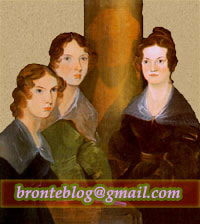
Według świadków miał być prawdziwym autorem powieści Wichrowe Wzgórza. Na słynnym autoportrecie z siostrami pozostała po nim smuga cienia. Jego imię stało się symbolem przekleństwa. Miał zmarnować swój talent, jak twierdziła jego starsza siostra. Tymczasem fakty były inne.
Branwell Brontë, legendarny brat trzech słynnych pisarek, Charlotte, Emily i Anne, pozostaje jedną z największych zagadek literatury nowożytnej. Jako prekursor gatunku fantasy i twórca poematu psychologicznego wyprzedzał swoją epokę niemal o całe stulecie.
Tajemnice wichrowych wzgórz to pierwsza wspólna biografia Branwella i Charlotte. Eryk Ostrowski tworzy fascynujący portret psychologiczny genialnego rodzeństwa, które przez lata łączyły wspólne doświadczenia – dzieciństwo w cieniu śmierci, pasja pisania, marzenia o literackiej sławie, pierwsze uczuciowe rozczarowania, pozamałżeńskie miłości.
Co sprawiło, że siostrzana miłość zmieniła się w nienawiść?
Dlaczego Branwella należało wymazać?
Autor bestsellerowej książki Charlotte Brontë i jej siostry śpiące odsłania nieznane fakty z dziejów rodziny Brontë. Charlotte poczyniła wiele starań, by pewne informacje nigdy nie wyszły na jaw. Odnalezione w ostatnich latach dokumenty każą na nowo spojrzeć na tę historię i oddzielić prawdę od mitu, a zapomniana twórczość oraz korespondencja dają klucz do poznania tajemnicy dzikich wrzosowisk zachodniego Yorkshire.
Książka zawiera nigdy dotąd nietłumaczone na język polski listy Branwella i Charlotte Brontë oraz fragmenty ich nieznanych utworów.
If you feel like it, you can listen to the man on Polskie Radio.

Saturday, March 31, 2012

Saturday, March 31, 2012 1:45 pm by Cristina in , , , , ,    No comments
Mia Wasikowska continues receiving praise for her role as Jane Eyre, particularly now that she has landed a role as Emma Bovary:
Bright Young Hollywood thing turned Miu Miuse turned director, Mia Wasikowska, has already proven her corset drama acting chops delivering an outstanding and nuanced performance as the titular protagonist of Cary Fukunaga's Jane Eyre. . .  (Nick on Pedestrian TV)
Fresh off proving that she can totally rock a corset (plus, you know, poignantly bring to life one of literature’s most renowned characters) in last year’s Jane Eyre, young Aussie Mia Wasikowska is set to lead another adaptation of a 19th Century classic in the form of Madame Bovary.  (Matt Currie on Collider)
The Times announces the arrival of Jane Eyre 2011 to Sky Box Office:
The director Cary Fukunaga’s feature debut, Sin Nombre, was  an extraordinary, visceral tale of illegal immigrants and South American gang culture. That he can move so effortlessly from the vivid violence of the nameless refugees to the smouldering gothic threat of Charlotte Brönte’s [sic] Jane Eyre only serves to underline his remarkable skill and versatility. Mia Wasikowska is a thoughtful, self-contained Jane, and man of the moment, Michael Fassbender, is a smooth and sexual presence as Rochester, in this restrained artfully constructed adaptation. (David Chater)
And more film news, as Variety reports on the afterlife of Wuthering Heights 1939:
Warner Bros. Home Entertainment Group has agreed with the Samuel Goldwyn, Jr. Family Trust on terms for the North American homevid release of 74 titles from the Goldwyn library, including "The Best Years of Our Lives," "Pride of the Yankees," "Wuthering Heights," "Hans Christian Andersen" and "Guys and Dolls."
Companies said the pact represents nearly every film produced by Samuel Goldwyn between 1925 and 1955, including some that have never before been available to the home entertainment market. Titles could be released on Blu-ray, DVD, electronic sell-through and VOD as early as the fourth quarter.
"The acquisition of the stellar Samuel Goldwyn library reaffirms WBHEG's commitment to the classics and ownership through physical and digital distribution to consumers," said Warner exec Jeff Baker. "Our library, already boasting such crown jewels as 'The Wizard of Oz,' 'Gone With the Wind,' 'Citizen Kane' and 'Casablanca,' to name just a few, will be strengthened even further with Goldwyn's fine titles from American film history." (Dave McNary)
And still on Variety, this is how they describe Great Expectations 2011:
In the mode of recent cinematic renditions of "Jane Eyre" and "Wuthering Heights," this is a grittier, earthier "Great Expectations," brimming with dark, portentous atmosphere and handsomely lensed by Florian Hoffmeister ("The Deep Blue Sea") with attention to natural light. (Geoff Berkshire)
Queerty mourns the death of poet Adrienne Rich and quotes her quoting from Jane Eyre:
Responsibility to yourself means refusing to let others do your thinking, talking, and naming for you…it means that you do not treat your body as a commodity with which to purchase superficial intimacy or economic security; for our bodies to be treated as objects, our minds are in mortal danger. It means insisting that those to whom you give your friendship and love are able to respect your mind. It means being able to say, with Charlotte Brontë’s Jane Eyre: “I have an inward treasure born with me, which can keep me alive if all the extraneous delights should be withheld or offered only at a price I cannot afford to give.”
—Celebrated lesbian poet Adrienne Rich, who died Tuesday at age 82, in c. (Dan Avery)
She was the author of an influential paper, one of the earliest feminist readings of Jane Eyre in "Jane Eyre: The Temptations of a Motherless Woman," (1973) reprinted in her On Lies, Secrets, and Silence: Selected Prose 1966-1978 (New York: Norton, 1979).

The Telegraph 'fictionalises' Anne Brontë's love for bluebells:
For its fleeting appearance is part of the bluebell’s magic. Like spring itself, it never lasts long. There is a sad joy about it which is, no doubt, why it so appealed to the Brontë sisters.
Anne — on her way to York to become a governess — was characteristically gloomy until she “looked upon a bank” and her “wandering glances fell upon a little trembling flower, a single sweet bluebell”. The sight cheered her up no end, which — bearing in mind Anne Brontë’s character — was a wonderful achievement in itself. (Roy Hattersley)
The Spanish press, magazines and blogosphere are literally flooding with Wuthering Heights 2011 informative articles:
Fotogramas, El Periódico de Catalunya, Ara (in Catalan), Noticine (including interviews with Andrea Arnold), Interfilms, La Crónica Virtual,  Gara, Cinemastic, Zinema, Berria (in Euskera)
or reviews:
Positive:
Fotogramas, Cinemanía, El Cultural, El Periódico de Catalunya, El País, El Mundo, La Vanguardia, NoTodo.com, Los 35 milímetros, Magnolia, Cinema Ad Hoc, CINeol, Radiocine, Butxaca (in Catalan), Número Cero, La Guía de tu Zona, Go-Mag, La Finestra Digital (in Catalan)
Lukewarm:
La Razón, The Cinéfagos, La Mirada de Ulises, La Butaca, La Casa de los Horrores, En Bandeja de Plata, El Cadillac Negro.
Negative:
La Script (Cadena Ser), Vanitatis, Cadena COPE, Ambos Mundos, El Imparcial, 20 Minutos, No Sólo Cine, Guía del Ocio Madrid, Individuo Kane, Fila Siete.

WP.pl announces that film will open in Poland next April 20. Also in Poland, an event took place yesterday, March 30 in Krakow, Poland. The poet Eryk Ostrowski presented a new poem devoted to Charlotte Brontë in a multidisciplicinar event:
Podgórska Scena Poezji przedstawia Eryk Ostrowski: Charlotta Brontë, przedstawienie nowego poematu E. Ostrowskiego w 157 rocznicę śmierci Charlotty Brontë, połączone z premierą wierszy zebranych E. Ostrowskiego „Daremne piękna 1994 – 2010”, 30 marca godz. 18.00
Recitation: Bozena Boba-Dyga, Marzena Niezgoda, Eric Ostrowski
Video art: Jacek Kabziński
Paintings: Anna Ostrowska-Paton
Talk by Prof. Wojciech Ligęza, moderated by Wlodarska-Ewa Lorek.
The Italian writer Bianca Pitzorno (author of La Bambinaia Francese (2004), a sequel of Jane Eyre) recalls her love for Jane Eyre in Il Corriere della Sera:
«Da ragazzina, con i primi soldi, mi sono comprata i romanzi di Jane Austen e delle sorelle Brönte (sic)». Bianca Pitzorno- 70 anni ad agosto, la più nota delle scrittici italiane per ragazzi - ricorda le sue prime letture «da grande»: «Frequentavo il classico, studiavo i greci e i latini, ma appena potevo mi buttavo Jane Eyre di Charlotte Brontë. Mi conquistò e mi sconvolse al punto che quando ho scritto L a bambinaia francese ce l' avevo ancora in profondità». (Translation)
7 Días (Dominican Republic) has an article about Jean Rhys and, particularly, Wide Sargasso Sea. The Province recalls that Charlotte Brontë died on a day like today in 1855. The Chicago Tribune features a book club who has recently read and enjoyed Jane Eyre. Ellinky features Jane Eyre-inspired objects. Heliosse II (in French) and Zvirzdins at large post about Jane Eyre 2011. Le Mange-Livres (in French) reviews Sheila Kohler's Becoming Jane Eyre; Larysa recenzuje writes in Polish about the recently translated Shirley. A Fashionable Frolick takes a look at Charlotte Brontë's wardrobe.

Monday, September 29, 2014

Monday, September 29, 2014 12:28 am by M. in , ,    No comments
A collection of unfinished Charlotte Brontë novels (we suppose the same ones that appeared in the 1993 collection published by Alan Sutton Publishing)  has been published in Poland:
Niedokończone opowieści
Charlotte Brontë
Translator:  Maja Lavergne
MG
ISBN: 978-83-7779-216-2 Paperback
ISBN: ​978-83-7779-219-3 Ebook

Charlotte Brontë jest bez wątpienia autorką trzech niezwykłych książek: Jane Eyre, Shirley i Villette. Do dziś nie wyjaśniono, czy pozostałe powieści sygnowane nazwiskiem Brontë (Wichrowe Wzgórza, Agnes Grey oraz Lokatorka Wildfell Hall) wyszły spod jej pióra czy też rzeczywiście całe rodzeństwo było na równi utalentowane i mamy do czynienia z twórczością trzech sióstr.
Niewątpliwe jest również to, że Charlotte zostawiła w swoich papierach cztery Niedokończone opowieści. Jest to równie niezwykła proza, jak wszystko co wyszło spod jej pióra. Dlatego też dziś proponujemy czytelnikom i miłośnikom geniuszu Brontë te cztery niedokończone utwory, wierząc, że dalsze ich wątki rozwinie Wasza wyobraźnia.
Sekretu osobowości autorki Charlotte Brontë nie sposób do końca wytłumaczyć, można jedynie snuć przypuszczenia. Obserwując jej życie, decyzje i drogę twórczą, trudno nie zauważyć, że Brontë kapitulowała przed samą sobą. Rozwój jej talentu wyznacza właściwie dążenie do samopoznania. Jego eskalację odzwierciedla zaledwie rozpoczęta powieść, Emma, urywająca się po dwóch rozdziałach. Tu można postawić pytanie: dlaczego Charlotte odłożyła tę pracę, skoro nie zadecydowały o tym żadne gwałtowne okoliczności? Może dlatego właśnie, że przeczuwała, iż dojdzie w niej do samookreślenia?
                                                                                        Eryk Ostrowski
With Mr Ostrowski, we are always on the verge of conspiranoia.

A review of this edition can be read on Z pasją o dobrych książkach i nie tylko...

Tuesday, September 17, 2013

Tuesday, September 17, 2013 8:15 am by Cristina in , , , , , ,    No comments
The Times publishes 'a quick guide to everything you should know about culture'. Today, 25 books that changed the course of literature. One of them is Jane Eyre:
You might think that Mr Darcy would provide enough passionate smouldering for any woman. Not for Charlotte Brontë, who called Austen's writing a "carefully fenced, highly cultivated garden" - which, in the Victorian era, was stern criticism indeed. She instead invented a hero who was not carefully fenced (he admits to having had three mistresses) and who smouldered even more than Darcy: the Gothically brooding Mr Rochester. Equally passionate was Jane Eyre, the heroine with whom he eventually falls in love. Brontë chose to tell her life of "plain" Jane Eyre in the first person; a device associated from Roman elegy onwards with heightened emotion. She has been called "first historian of the private consciousness" and so the literary progenitor of Proust and Woolf. There was a little too much emotion for contemporary critics who accused if of being "coarse" - particularly when they learnt that its "male" author, Currer Bell, was one Charlotte Brontë. Brontë was ready for them: Jane Eyre, often described as a feminist novel, contains lines that could have pre-drafted for such carping. As Jane says, "it is narrow-minded... to say [women] ought to confine themselves to making puddings and knitting stockings... It is thoughtless to condemn them... if they seek do more."
What to say: Reader, I married him. But not before I taught him a thing or two about the evils of the patriarchy and of androcentric hegemony.(Paul Dunn, Tom Gatti, Melissa Katsoulis, Derwent May, Catherine Nixey, John Sutherland and Helen Zaltzman)
Onet Kultura (Poland) reviews Charlotte Brontë i jej siostry śpiące by Eryk Ostrowski. It's the book claiming that Charlotte Brontë wrote all the Brontë novels.
W tym samym roku do życia powołano Ellisa i Actona. Wydane przez Thomasa Newby "Wichrowe Wzgórza" i "Agnes Grey" nie spotkały się z tak dobrym przyjęciem jak powieść Currera. Jest to o tyle ciekawe, że obecnie byroniczny Heathcliff z "Wichrowych Wzgórz" jest najprawdopodobniej najlepiej rozpoznawalną postacią powołaną do życia przez którąkolwiek z sióstr. Historia toksycznej miłości Heathcliffa i Katy doczekała się wielu ekranizacji (w tym świetnej z Juliette Binoche i Ralphem Finnesem) i nieskończonej ilości adaptacji teatralnych. Zaś po "Dziwne losy Jane Eyre" sięgają głównie studenci filologii i pasjonaci.
Charlotte, która pieczołowicie tworzyła legendę trzech sióstr zaczęła mylić się w zeznaniach. Dodatkowo obaj wydawcy: William Smith Williams i Thomas Newby zaczęli podejrzewać, że bracia Bell są w istocie jedną osobą. Williams, który prowadził intensywną korespondencję z podkochująca się w nim Charlotte był przekonany, że Currer jest kobietą. [...]
"Charlotte Brontë i jej siostry śpiące" to fascynujące, choć trudne i wymagające doskonałej znajomości całego dorobku i życiorysów sióstr Brontë, dochodzenie literackie. Ostrowski dokonuje wnikliwej analizy wszystkich powieści, zestawia je z fragmentami listów (dziwnym trafem zachowały się przede wszystkim te pisane przez Charlotte, korespondencji Emily i Anne jest jak na lekarstwo) i wydarzeniami z życia lokatorek Haworth.
Nie sposób nie zgodzić się z przytaczanymi przez niego dowodami, z których jasno wynika, że autorką zarówno "Agnes Grey", "Wichrowych Wzgórz" czy "Lokatorki Wildfell Hall" była jedna i ta sama osoba: Charlotte. Czy książka ta sprawi, że kolejne wydanie "Wichrowych Wzgórz" będzie opatrzone imieniem Charlotte? Raczej nie, bo dla miłośników dramatycznych historii trzy siostry Brontë są niewątpliwie lepsze niż jedna. Choćby bardzo utalentowana i sprytna. (Aleksandra Kisiel) (Translation)
Gaffa (Denmark) comments on the new song and music video by Brontëite singer Emmelie de Forest.
Om selve teksten siger hovedpersonen selv:
"Nummeret er faktisk inspireret af filmen "Roman Holdiday", som havde Audrey Hepburn i hovedrollen, og udspringer af følelsen af pludselig frihed og mulighed for at gøre, hvad man altid har drømt om. Midt i sangskrivningsprocessen tog omdrejningspunktet i sangen en drejning mod det mere mørke og mystiske, inspireret fra "Twilight"-serien og den vilde natur i "Wuthering Heights" (roman af Emily Brontë fra 1847, også inspiration for Kate Bush-sangen af samme navn, red.) og de forvirrende og intense følelser i mellem hovedpersonerne Heathcliff og Catherine." (Sidsel Thomassen) (Translation)
DR's Grand Prix (Denamrk) also features the video.
Videoen er baseret på den klassiske historie 'Wuthering Heights' - på dansk 'Stormfulde højder', som udspiller sig i et skandinavisk miljø, forklarer Emmelie. (Translation)
BlogLive (Italy) discusses pseudonyms. The Story Girl compares Charlotte Brontë and Jane Austen. An update on Septemb-EYRE from Estella's Revenge. And also an update on the second week of reading Agnes Grey from Unputdownables. Gay Delta Reviews has a couple of poems inspired by Brontë novels: Jane Eyre and Wuthering Sleights.

The Brontë Parsonage Facebook page is - as usual - full of interesting tidbits: Emily's comb, what the exhibition room looked like in the 1970s and this year's Christmas cards.

Sunday, November 24, 2013

Eric Ostrowski, the author of Charlotte Bronte i jej siostry śpiące is interviewed on Polskie Radio. Once again his odd/bizarre/controversial (put the adjective you prefer) theories are explained (you know, that Charlotte was the only author of all the Brontë novels):
Eryk Ostrowski, poeta i eseista młodego pokolenia, stawia w swojej pracy bardzo odważne tezy, odsłaniając kulisy życia pisarki. Obfitowało ono w liczne dramatyczne wydarzenia. Brontë zadbała, aby wiele z nich nigdy nie dotarło do wiadomości publicznej.
Autor ukazuje, w jaki sposób jej osobowość kształtowały skomplikowane relacje z mężczyznami - najpierw z bratem, z którym w latach młodzieńczych dzieliła tożsamość literacką i sympatię do doktryny masońskiej, później z belgijskim nauczycielem, w którym była zakochana, wreszcie z jej wydawcą, którego miała nadzieję poślubić. Stara się też rozwikłać niejasne okoliczności śmierci pisarki i wyjaśnić, czy jest możliwe, jak przypuszczali niektórzy z jej przyjaciół, że Charlotte Brontë została zamordowana…
W audycji z cyklu "Ćwiczenia z myślenia" zadajemy słuchaczom pytania związane z tematem spotkania. Dla osób, które jako pierwsze dodzwonią się do studia Dwójki i poprawnie odpowiedzą na pytanie - czekają nagrody książkowe!  (Translation)
Women in the World discusses the drawings of Sylvia Plath and the envelope scrawlings of Emily Dickinson:
A born seducer, [Ted] Hughes pulled her aside for a kiss, ripping off her headband; she responded by biting his cheek and drawing blood. Their mutual raw power whipped through their poesy, blackening the literary world like the barren heaths and hardscrabble crags of Hughes’s Yorkshire moors. Plath drew this “substanceless blue/pour of tor and distances” during a 1956 visit to Haworth, in her sketch Wuthering Heights Today; five years later, on a visit to her in-laws, she wrote her “Wuthering Heights” poem about that stony, savage place: “If I pay the roots of the heather/Too close attention, they will invite me/To whiten my bones among them.” Decades after her death, Hughes wrote a response breathtaking in its bleak and desolate beauty: “You breathed it all in/With jealous, emulous sniffings. Weren’t you/Twice as ambitious as Emily? … what would stern/Dour Emily have made of your frisky glances/And your huge hope? Your huge/Mortgage of hope.” (Katie Baker)
DVD Verdict reviews the Blu-ray edition of Jane Eyre 1944:
Whatever its other flaws or virtues, this is certainly a lean, fast-paced version of the tale—at 96 minutes, it's shorter than every other big-screen adaptation. Even so, nothing feels particularly compromised or short-changed—it's simply that Stevenson and his co-writers John Houseman and Aldous Huxley (!) don't have much interest in digging too deep below the surface of the novel or indulging the sort of moody, atmospheric material that has played a key role in other adaptations of this tale (though there are certainly some moments of gothic melodrama). (...)
Jane Eyre (Blu-ray) has received a 1080p/Full Frame transfers that highlights Greg Barnes' effectively moody cinematography (the film's other primary virtue). There are, unfortunately, quite a few scratches and flecks present throughout, largely due to the fact that the film hasn't been terribly well-preserved over the years. The image is also wobbly and soft at times—it looks better than it did on DVD, but not by a huge margin. The DTS HD 1.0 Master Audio track is similarly mixed, suffering from some occasional hiss and never really permitting Herrmann's score to sound as robust as it ought to. Dialogue is generally pretty clean, though. Supplements include two audio commentaries (one with Joseph McBride and actress Margaret O'Brien, another with Julie Kirgo, Nick Redman and Steven C. Smith), a featurette called "Locked in the Tower: The Men Behind Jane Eyre" (19 minutes), a propaganda short directed by Stevenson called "Know Your Ally Britain" (42 minutes), an isolated score track and a trailer. Props to Twilight Time for delivering a strong supplemental package this time around rather—hopefully it's a trend that will continue. (Clark Douglas)
The Hebden Bridge Times talks about researching your roots and heritage:
Jan Bridget, who has been involved with setting up the group, will speak about her own family history at the meeting at 1pm. (...)
“My interest has become, to be honest, a bit of an addiction, especially when I discovered that one of my ancestors was a role model for Heathcliff and that not only had a booklet been published on the topic but also several academic papers, culminating in a film documentary in 2009,” she said.
The Ventura County Star reviews Death of a Schoolgirl, the first of the Jane Eyre Chronicles novels by Joanna Campbell Slan:
Literary Happenings: Jane Eyre turns sleuth in new series. Fans of Charlotte Brontë's classic "Jane Eyre" can rejoice. Thanks to author Joanna Campbell Slan, the quiet governess-turned-passionate Mrs. Rochester has a newfound calling. (Jo Ellen Heil)
The Star (Malaysia) reviews The Signature of All Things by Elizabeth Gilbert:
The beginning chapters of Signature is reminiscent of Wuthering Heights, with Gilbert tracing Henry’s rags-to-riches story like Emily Brontë does with Heathcliff. (Dinesh Kumar Maganathan)
The Scotsman on Sunday reviews Unfashioned Creatures by Lesley McDowell:
Unfashioned Creatures – the title comes from Mary Shelley’s Frankenstein – neatly captures the fevered menace of later 19th-century classics such as Wuthering Heights or indeed Frankenstein itself, along with the era’s fascination with the supernatural. Isabella sees ghosts – chiefly that of the dead sister whose widower she married, breaking a Biblical and legal taboo. (Mary Crockett)
The Dallas News recommends ten works not to be missed at the local Kinsall Art Museum:
Frederic Leighton
Portrait of May Sartoris, c. 1860
This is among the handful of pictures owned by Kay and Velma Kimbell to be shown regularly at the museum they founded. Its combination of precise descriptive painting and a moody, almost Brontë-like subject make it one of the most enigmatic British portraits of the 19th century. (Rick Brettell)
The Hindu explains what to do to fight boredom:
The famous Brontë sisters who wrote some of the finest work in literature were brought up in an isolated environment where their only form of entertainment was to create stories and go for long walks in the moors. Their novels (Jane Eyre, Wuthering heights) explore the complexity of the human relationships and their stories reflect great depth and sensitivity. (Anuradha Shyam)
The Guardian interviews the actress Marine Vacth and describes her like this:
She's wearing jeans, boots and a rough-knit shawl and, with her hair vaguely dishevelled, looks as if she's just been auditioning to play the part of Cathy in Wuthering Heights. (Jonathan Romney)
PTC (Serbia) announces the screening on PTC1 tonight (21:08) of Jane Eyre 2011; the Christmas activities of the Brontë Parsonage Museum reach national newspapers with this mention in The Independent; The Times mentions Moira Buffini (author of the screenplay of Jane Eyre 2011) in an article about the presence of women in the British film industry; also in The SundayTimes, an interview to the actress Lorna Quinn mentions that she was Jane Eyre in a 2008 City Theatre production; Denis Billamboz posts about his love and admiration for the Brontës on Les Belles Phrases (in French).

Sunday, November 03, 2013

Sunday, November 03, 2013 2:30 pm by M. in , , , , ,    No comments
Keighley News talks about the biographical book by Andrew Heaton, Never Had a Better (see this old post):
A descendant of a Haworth family who had links with the Brontës has written a book tracing his origins.
Andrew Heaton said the lineage could be followed back a thousand years.
And the family fortunes fluctuated, from the height of influence as medieval knights to the depths of life in the workhouse.
“You never know what you’re going to find when you begin researching your family history, and it was fascinating – you get hooked,” said Mr Heaton, 62, a former dairy farmer. (...)
“That got me interested in looking further into it, and I found a lot of information in Keighley and Bradford libraries and, of course, on the internet – that’s an amazing resource,” he added.
The Heatons are inextricably linked with Haworth through an inscription on a stained glass window at the village’s parish church, which reads: ‘In memory of the Heatons of Ponden – Trustees of Haworth Church 1560 to 1897.’ And the family had associations with the Brontës. Indeed, Allan’s great grandmother – Elizabeth Heaton – was baptised by the Rev Patrick Brontë. (...)
The book – entitled Never Had A Better – retails at £12.95, and is available from the Brontë Parsonage Museum in Haworth or by e-mail from Mr Heaton at peelpark@btinternet.com. (Alistair Shand)
Also in Keighley News we find more information about the proposed improvements at the Brontë Parsonage Museum. It seems that they are not only related to moving the ticket desk:
The ticket desk at the entrance to the literary shrine could be moved further inside.
And other proposals include the provision of touch-screen information facilities, in the foyer and exhibition room.
Ann Dinsdale, collections manager at the parsonage, said: (...)
“We are consistently trying to find new ways of improving the visitor experience, and this is part of that.
“It is also planned to restore, and improve the appearance of, the entrance area.”
An article about drone attacks to Taliban objectives with a Brontë reference? In The Nation (Pakistan):
Good and evil are overlapping concepts in this twisted Victorian romance. The US is no Mr Darcy, and Hakimullah Mehsud is no Heathcliff. (Syed Hassan Belal Zaidi)
Gaceta (Poland) interviews Eric Ostrowski, the author of  Charlotte Brontë i jej siostry śpiące where, as we have told before, he maintains that Charlotte Brontë is the only author of all the Brontë novels (well, in the interview he adds that he is not so sure about Wuthering Heights. Branwell probably had something to do with it). It's a long interview but basically all his opinions rely on Anne being unable to write because she was a sort of religious fanatic and the publisher who read the manuscripts of the novels first and thought they were written by the same hand. He even mentions this alleged picture of the Brontë sisters as if its authenticity had been confirmed.
Życie Charlotte Brontë to niemal same tajemnice. Ona naprawdę wzięła do grobu wszystko, co chciała. Nie pozostawiła nam nic prócz domysłów. I wiedzy oficjalnej - mówi w rozmowie z TOK FM Eryk Ostrowski, autor książki "Charlotte Brontë i jej siostry śpiące". - Kto napisał "Wichrowe wzgórza"? To bardzo złożona sprawa. Ale na pewno nie Emily, której przypisuje się autorstwo. Nie mogła tego zrobić - przekonuje.
Książki sióstr Brontë (m.in. "Dziwne losy Jane Eyre", "Lokatorka Wildfell Hall") uznawane są za dzieła wielkiej wagi dla emancypacji kobiet. Powieści do dziś są podpisywane imionami trzech sióstr. Najsłynniejsze, "Wichrowe Wzgórza", wydawane są jako dzieło Emily. Rzecz w tym, że rękopisy powieści Emily i Anne Brontë nie istnieją. Wydawca, który je widział, twierdził, że były napisane jedną ręką... Czy to najstarsza, Charlotte, stworzyła legendę o trzech genialnych siostrach? W Radiu TOK FM rozmawialiśmy z autorem książki "Charlotte Brontë i jej siostry śpiące" Erykiem Ostrowskim. (Read more) (Karolina Głowacka) (Translation)
The writer Teresa García in El País (Uruguay) recommends:
Un libro. Cumbres Borrascosas, de Emily Brontë. Es una historia de amor que te trastorna, no podés irte del mundo sin leer esta novela que es prosa y poesía, no te lo olvidás nunca. (Translation)
Romanzi 2.0 (in Italian) posts about Wuthering Heights; Ramiels Bücherschrank (in German) review Jane Eyre; Alison Wheatley uploads to Flickr a recent picture of Anne Brontë's grave in Scarborough. Finally, the October Brontë Society newsletter is now out with these contents:
Newsnight Presenter Kirsty Wark Visits Yorkshire for Two Brontë Events
Fall, Leaves, Fall by Emily Brontë
Spooky half term fun at the Brontë Parsonage
Capturing the Brontës: New Exhibition Opened by High Sheriff of West Yorkshire
Christmas is coming to the Brontë Parsonage!
Find the Perfect Christmas Gift at the Brontë Museum Shop
Ann Sumner is guest speaker at 20th annual Brontë Rotary Club dinner

Saturday, November 30, 2013

counterpunch reviews A True Novel by Minae Mizumura:
Here’s something different: shifting Emily Brontë’s Wuthering Heights to Japan with the audacity of calling it “a true novel.” But wait a moment—as my mother-in-law used to say—you don’t really mean that, do you? Well, I don’t, but Minae Mizumura does, so let me explain. Mizumura sets up an elaborate façade: the story we eventually read is purported to be what literally happened to a man called Taro Azuma, whose life in many ways parallels Brontë’s Heathcliff. There are also suggestions at the beginning of the novel that Japanese readers do not like first-person narratives, so it is necessary to create an observer/witness who can relate Azuma’s story, though in fact two people narrate the story, one of them being Minae Mizumura herself, the author of A True Novel and an accomplished Japanese novelist. (...)
It is, thus, from Yusuke’s perspective that we learn about Taro’s early years—before he went to the United States. The second narrator is a woman named Fumiko (ten years Taro’s elder, and the equivalent of Ellen Dean, the housekeeper in Wuthering Heights) who relates the more recent events, after Azuma’s so-called disappearance. (...)
And because of the sympathy of the matriarch of the family Fumiko worked for, that boy (Azuma) became the close companion of one of the matriarch’s granddaughters, Yoko (the equivalent of Catherine in Brontë’s novel). (...)
Are the parallels between the two novels convincing? I’d say yes, particularly the replicated characters and romanticism of Brontë’s masterpiece. That noted, I’m not so certain that the 876 page story will grip Western readers as much as Asian ones. There are quite a few lengthy digressions that add little to the main story. Some of the other anomalies of A True Novel (such as a series of photos of traditional buildings in the country) appear to be little more than superfluous. You may want to read A True Novel out a sense of curiosity, especially if you are a Brontë fan. (Charles R. Larson) 
Los Angeles Times recommends the book as a gift book:
Some are almost traditionally rendered, such as Japanese novelist Minae Mizumura's ambitious "A True Novel" (Other Press, boxed, $29.95 paper). It is published as a two-volume boxed set including photographs and inspired, in some sense, by "Wuthering Heights," while also raising questions about where the line between fiction and remembrance lies. (David L. Ulin)
The Telegraph talks about the jeweller Annina Vogel:
At her concession in Liberty, hand-selected antique rings are engraved with quotations from Victorian luminaries such as Oscar Wilde and Charlotte Brontë while the customer waits. (Wendy Douglas)
Joe Queenan in Wall Street Journal has read the mind of this half of BrontëBlog:
Here is my basic problem. I like to put nutritious things with lots of roughage and fiber in my head. Shakespeare, the Brontës, Vermeer. Except when I watch sports, I never fill my brain with the intellectual equivalent of trans-fats: game shows, talk shows, reality-TV shows.The concerts and plays I attend, the paintings I look at, the books I read, are all, in their own way, every bit as nutritious as beets and organic zucchini and walnuts. To my way of thinking, Michelangelo is nothing more than cerebral kale.
But I don't like healthy food. I never have. 
Los Angeles Review of Books reviews the new film Mary, Queen of Scots by Thomas Imbach:
A sort of dark fairytale cut from the same cloth as Jane Eyre and Farewell, My Queen, Imbach’s biopic Mary, Queen of Scots is sumptuously photographed and less interested in history than atmosphere. (Michael Nordine)
Cricket and Jane Eyre in The Guardian:
This is the joy of [Jonathan] Trott, who has for the last four years acted as a kind of Jane Eyre of the top order, England's own winningly stubborn little 19th-century governess of a No3 batsman, the player you weren't supposed to fall in love with, of whom you may have even been rather grandly scornful – this mousey creature, this pinafored artisan – before finding yourself seduced, irresistibly, by his quietly insistent rhythms. (Barney Ronay)
Leeds Student reviews a performance by The Leeds Tealights at the Library Pub:
Stephen Rainbird was the dark horse of the evening in my opinion and his facial contortions were unparalleled. His gestures were very much Mr. Beanesque; a childish silliness which had everyone in stitches. The Wuthering Heights routine in particular was nothing short of ridiculous. (Polly Gallis)
The Shields Gazette reviews a recent concert by the band China Drum:
Biscuit Barrel, Wipe Out, Baseball In The Dark, Fiction Of Life, God Bets, Wuthering Heights and, finally, weirdly, a cover of Erasure’s A Little Respect were all delivered with power. (Paul Taylor)
Rzeczpospolita talks about the Polish publication of a new translation of Villette and the (in)famous book  Charlotte Brontë i jej siostry śpiące by Eryk Ostrowski:
Śpią także zmarli spoczywający na cmentarzu w sąsiedztwie ponurego budynku. Za to z pokoju stołowego dochodzi dziwny stukot. To trzy siostry chodzą wokół ogromnego stołu. Najstarsza Charlotte, młodsza Emily i najmłodsza Anna. Jest jeszcze brat Branwell, alkoholik, opiumista i mason, ale on jeszcze nie wrócił z oberży Pod Czarnym Bykiem, by jak co noc zwalić się na posłanie i czekać na kolejny dzień swego zmarnowanego życia. Po co one tak chodzą? Zobacz na Empik.rp.pl
Eryk Ostrowski, autor książki poświęconej trzem siostrom Brontë, nie daje jednoznacznej odpowiedzi na to pytanie. Raczej sugeruje, że to właśnie podczas tych dziwacznych spacerów mogły powstawać fabuły, które złożyły się potem na takie książki, jak „Jane Eyre", „Wichrowe wzgórza", „Shirley" czy „Vilette". Klasyki literatury europejskiej powstałe w Anglii podczas długiego panowania królowej Wiktorii.
Życie Charlotte Brontë było nacechowane nieopisaną stratą. Nastąpił feralny rok 1848. Najpierw odszedł Branwell, z którym Charlotte od dzieciństwa była bardzo związana. Zapił się i zaćpał do szczętu. Nie to jednak było najgorsze – w grudniu na gruźlicę umiera Emily, a w maju następnego roku z powodu tej samej choroby odchodzi 29-letnia Anna. Stukot kroków jednej już tylko kobiety wypełnia stołowy pokój. Charlotte wciąż chodzi. Oczywiście w tym czasie są już wydane książki trzech sióstr, które ukrywały się pod męskimi pseudonimami jako Currer, Ellis i Acton Bell. W książce Ostrowskiego mamy opisaną ze szczegółami tajemnicę sióstr, o której zresztą spekulowano już za ich życia: twierdzono bowiem, że autorką wszystkich książek sygnowanych pseudonimami jest tylko jedna osoba, czyli Charlotte, która – chcąc zapewnić byt swym obydwu siostrom – zdecydowała się na rozdzielenie praw autorskich do honorariów. A jak było naprawdę?
Chodzi i chodzi wokół stołu. Strata po ukochanych osobach jest dojmująca. Z żałobnego stukotu powstanie najbardziej dojrzała powieść Charlotte zatytułowana „Vilette", opublikowana w trzech tomach w roku 1853. Po 100 latach wzbudzi zachwyt m.in. w Wirginii Woolf, która nazwie dzieło: „najlepszą powieścią Charlotte Brontë". (Wojciech Chmielewski) (Translation)
Wuz (Italy) reviews Amorino by Isabella Santacruce:
Siamo a Minster Lovell, freddo e austero villaggio inglese. E al tempo stesso "paradiso terrestre" del romanticismo nero. Un luogo fatato che è già da solo un romanzo - un luogo, si direbbe, non troppo dissimile dalla brughiera selvaggia delle sorelle Brontë.  (Claudia Consoli) (Translation)
Targatocn (Italy) posts some biographic data of the Brontës presenting Wuthering Heights:
Immaginatevi una storia triste. Poi immaginatevi la vita dell’autrice dietro questa storia ancora più triste.
Bisogna sempre fare attenzione a cercare negli spunti biografici dell’autore una lanterna che ci guidi nel testo: ma nel caso di “Cime tempestose”, il faut conoscere la vita dell’autrice. Perché leggendo la sua biografia, non si capisce più dove finisce il romanzo e inizia la vita. (Marta Gas) (Translation)
Zaman (Turkey) talks about Byzantium by Neil Jordan:
İrlandalı Neil Jordan’ın ‘Byzantium’u başka bir gözle izlendiğinde ise Viktoryen hikâye anlatıyor seyirciye. Clara ve kızı Eleanor’un erkekler dünyasında, erkeklere rağmen ama onların yardımını umarak var olma savaşı, vampir öyküsünden bağımsız olarak Kraliçe Viktorya’nın 19. yy. İngiltere’sini resmediyor. Bu yönüyle Clara ve kızı Eleanor’u Dickens, Doyle, Conrad, Eliot ve Wilde gibi erkek yazarlar karşısında çetin bir var olma savaşı veren Brontë Kardeşler, Emily Dickinson ya da Christina Rossetti’ye benzetebiliriz. (Ali Koca) (Translation)
The Bibliophilic Book Blog  interviews the writer Jac Wright:
Q. What are you currently reading?
I am re-reading ‘Wuthering Heights’ because it is one of the all-time greatest love stories. I read it in my early 20s.
Keighley News gives more details about the campaign against the closing of the Haworth Central Park's public toilets; Le Nouvel Observateur (France) describes Twilight as a mixture between Wuthering Heights and Romeo and Juliet; bibliodevafiliala3 (in Romanian) posts about Jane Eyre;  Or Up to the Stars reviews one of its most recent retellings, Tina Connolly's Ironskin; the Brontë Parsonage Facebook publishes a picture of Anne Brontë's last letter.

Wednesday, November 18, 2009

Wednesday, November 18, 2009 11:35 am by Cristina in , , , , ,    3 comments
Via Flavorwire we have come across a recent article from the Guardian on the forthcoming auction Capture the Imagination: Original Illustration & Fine Illustrated Books to take place next December 9th in New York at Bloomsbury Auctions. One of the illustrations piqued our curiosity when it was described as follows:
An "extremely rare" edition of Maurice Sendak's first picture book Good Shabbos, Everybody – commissioned after the illustrator Leonard Weisgard saw one of Sendak's window displays for FAO Schwartz in New York – is also on offer, as well as a poster Sendak drew for a 1979 New York book festival, showing a Wild Thing relaxing against the Empire State Building, eating a (big) apple and reading Villette. (Alison Flood)
You can see said poster here on the right though we will have to take their word for it as the the title - Villette - on the spine can be barely guessed at in this low-res image. This is Bloomsbury Auctions' description of this item:
317. SENDAK, Maurice (b. 1928) New York Is Book Country Colored poster for the first annual autumn festival of books on Fifth Avenue, September 16, 1979 (60 x 48 mm). warmly inscribed to james marshall in ink and dated “sept. ‘79.” Framed. Provenance: James Marshall.Depicts a Wild Thing relaxing against the Empire State Building as he enjoys a big apple and a good read-- Villette by Charlotte Brönte [sic].
est. $500 – $800 (Picture source)
More plans for December, as seen on BroadwayWorld (Pittsburgh).
Pittsburgh Irish & Classical Theatre is staging an elaborate new theatrical version of Charlotte Brontë's masterpiece Jane Eyre for the holiday season! The production opens on December 3rd in the Charity Randall Theatre at the Stephen Foster Memorial in Oakland, and runs through December 20th.
Young Jane Eyre is abandoned by cruel relatives and left to her fate at the harsh and imposing Lowood School. She grows into a plain but intelligent young woman, and travels to the mysterious Thornfield Hall to work as governess. The Byronic master of the gothic mansion, Edward Fairfax Rochester, sweeps her off her feet -- but a dark secret from his past threatens to tear them apart. Will true love overcome all obstacles? Written in 1847, Jane's inner strength and determination to overcome adversity make her one of the most endearing heroines of classic literature.
A family-friendly adaptation by PICT Associate Artist Alan Stanford (Salome), Jane Eyre set box office records at the Gate Theatre in Dublin, Guthrie Theatre in Minneapolis, and Maintoba Theatre Center. This huge hit presents the audience with not just one Jane, but three! The play begins with young Jane (Jenna Lanz), the orphaned child left to fend for herself in a harsh world. As young Jane ages, she becomes middle Jane (Allison McLemore) - the simple governess whose inner beauty and intelligence win the heart of the stolid, implacable Mr. Rochester (David Whalen). Throughout the play, Shelley Delaney guides the audience through the story as older Jane, sharing her life story with us as it unfolds.
Scott Wise directs, and Douglas Levine returns to the PICT stage with an original music score. Costumes are designed by Diane Collins. Gianni Downs and Andrew David Ostrowski bring the world to life through set and lighting.
The brooding, mysterious Mr. Rochester will be played by Pittsburgh favorite David Whalen. Whalen is currently starring as the tortured doctor in City Theatre Company's production of Dr. Jekyll and Mr. Hyde. His previous PICT credits include The Shaughraun, Julius Caesar, Stuff Happens, The Lieutenant of Inishmore, Pride and Prejudice, An Ideal Husband, and King Lear. Whalen is the recipient of the 2007 Pittsburgh Post-Gazette Performer of the Year and 2008 Kevin Kline Award for best actor (St. Louis Rep, The Lieutenant of Inishmore).
Allison McLemore makes her Pittsburgh debut in the role of Jane. Her credits include the role of Jo in Little Women with Peterborough Players, Roxanne in Cyrano de Bergerac for the Pennsylvania Shakespeare Festival, and Eliza Doolittle in Pygmalion at Creede Repertory Theatre, for which she won the Denver Post Ovation Award. Most recently she was in The Madras House at the Mint Theatre.
Also making her PICT debut is Shelley Delaney, playing senior Jane. Head of the Professional Actor Training Program at Ohio University, Delaney's credits include Free Man of Color at Victory Gardens (Joseph Jefferson nomination), numerous productions at Capital Repertory Company including Sylvia (Best Actress, Metroland Newspapers), and numerous productions at Two River Theatre Company including The Dining Room (Best Supporting Actress, New Jersey critics/Star Ledger).
Kate Young returns to Pittsburgh to play the dual roles of Mrs. Fairfax and Hanna. A former Pittsburgh resident and professor at Point Park University, Young currently resides in Chicago. Her previous PICT credits include Doubt, Synge Cycle (Riders to the Sea, The Well of the Saints), Salome, Endgame, James Joyce's The Dead, The Cripple of Inishmaan, Major Barbara, and Faith Healer.
Scott Wise, who directed PICT's hugely-successful productions of Pride and Prejudice and James Joyce's The Dead, returns to direct Jane Eyre. Wise is a professor in the School of Theater at Point Park University, and was the founder and artistic director of Pittsburgh International Folk Theatre, for which he was awarded the Pittsburgh Magazine Harry Schwab Award. His many directing credits include recent productions of the musicals The Rocky Horror Show with Point Park Conservatory, and the world premieres of Streets of America (also with the Conservatory) and Eastburn Avenue at The Rep.
Original music for Jane Eyre is composed by Douglas Levine, whose PICT credits include original music for Pride and Prejudice, The Shaughraun, as well as Mother Courage and Peer Gynt for The Rep, and Mimoun for Pennsylvania Dance Theater. Levine was also the composer of the musical Eastburn Avenue, which premiered at The Rep in 2008. As an arranger, Levine has worked on PICT's Boston Marriage and Private Lives, and was the featured pianist in PICT's production of The False Servant.
Costume designer Diane Collins makes her PICT debut with Jane Eyre. Locally, Collins has worked with Dance Alloy, Pittsburgh Opera Theatre, CMU Opera and School of Drama, Three Rivers Shakespeare Festival, City Theatre at Hartwood, and Pittsburgh Ballet Theatre. She has also worked extensively in film, with credits including costume design for Hollywood & Wine and The Bridge to Nowhere, and wardrobe supervisor for Shelter and Dogma.
Returning to PICT are scenic designer Gianni Downs, whose many PICT credits include Boston Marriage, Stuff Happens, Lieutenant of Inishmore, What the Butler Saw; and Andrew David Ostrowski, whose designs for PICT include Private Lives, King Lear, and Doubt.
The production also features Courtney Bassett, Christine Clark, Julia Concolino, James FitzGerald, Lisa Ann Goldsmith, Jeremy Hois, Jenna Lanz, Larry John Meyers, Catherine Moore, Joel Ripka, Laurel Schroeder, and Anna Van Valin.
Jane Eyre runs December 3rd through 20th at the Charity Randall Theatre in the Stephen Foster Memorial, 4301 Forbes Avenue in Oakland. Special student matinees are scheduled for December 2nd and 8th at 10 a.m. Tickets are on sale now, and are available by calling ProArtsTickets at 412.394.3353 or visiting ProArtsTickets online at www.proartstickets.org. To schedule a group for the student matinees, contact Eric Nelson at 412-561-6000 x206 or email enelson@picttheatre.org More information about the play is available on the PICT website, www.picttheatre.org. WDUQ-FM is the media sponsor for Jane Eyre.
More details on the theatre's own website.

Remember a few days ago when we first heard of D.H. Lawrence's opinion of Jane Eyre? Today the Daily Mail also reviews Poisoned Pens: Literary Invective from Amis to Zola by Gary Dexter and touches briefly on it:
Of the Brontes, D.H. Lawrence announced 'Verging towards pornography' - what a quote for the paperback! (Roger Lewis)
We would just like to point out that D.H. Lawrence's opinion was on Charlotte Brontë, particularly on Jane Eyre. Not on Emily, not on Anne.

Now for our almost-daily Twilight section. The Mirror has an A-to-Z on the saga and reminds us where the male protagonist's name comes from:
Edward: Our romantic hero’s name was inspired by “Edward Fairfax Rochester” from classic Charlotte Bronte novel Jane Eyre.
Zap 2 It suggests a few books that you may like if you enjoy Twilight. Wuthering Heights is of course on the list.
Wuthering Heights by Emily Bronte
Bella wants to jump Edward Cullen's bones, but he refuses, he knows it's a bad idea... so honorable, yet so frustrating too. "Wuthering Heights" has the same sort of deal going down: a crazy passionate love between Heathcliff and Catherine Earnshaw which simply cannot be. It'll drive you insane. And it's pretty dark too.
Encore Online has an article on noticeably fake accents. Kevin Costner makes it to number 1 thanks to his Robin Hood accent, which is described as follows:
1. Kevin Costner—Robin Hood: Prince of Theives [sic].
Yes, it’s an easy target—but that’s because it sticks out like a fireball in a coal mine. His accent was lazy and off-putting, something made even worse by the actual Englishman playing the supporting roles. To be fair, this accent wouldn’t have been convincing in a 3rd-grade dinner theater production of Jane Eyre. (Anghus Houvouras)
On the blogosphere, Jane Eyre is reviewed by The Bookshelf and Ready to Read. xo.sorcha.ox posts about Wuthering Heights. And Fly High! and vvb32 reads have joined Laura's Reviews All About the Brontës Challenge.

Categories: , , , , ,

Saturday, October 03, 2015

First, a couple of unmissable articles in The Times Literary Supplement on the (in)famous T.J. Wise and Clement Shorter team (thanks to alert reader Elizabeth for pointing to it):
The unholy alliance of Clement Shorter and T. J. Wise, and how they profited from ‘the first family of English literature’ (...)
In the spring of 1914, one of the most famous images of authorship in English literary history went on public display for the first time. Branwell Brontë’s portrait of his sisters, Charlotte, Emily and Anne, had been discovered in Ireland, on top of a ward-robe at Hill House, Banagher, formerly the home of Arthur Bell Nicholls, Charlotte Brontë’s widower, together with a portrait fragment of Emily Brontë from a lost work by Branwell, known as the “Gun Group” (Nicholls had cut the fragment from the painting and destroyed the rest).
Hurriedly purchased by the trustees of the National Portrait Gallery in London, at “a very moderate cost”, and relined but not restored, the heavily creased painting of the three sisters – folded at one time to an eighth of its original size – was hung next to a portrait of Robert Louis Stevenson. The portrait of Emily, purchased at the same time, was displayed directly beneath. As the public flocked to see the two paintings, articles in the press focused on “The Three Sisters” group, marvelling at its chance rediscovery, “negligible” status as a work of art, and compensating value as a historical relic. A few dissident voices attacked the late Mr Nicholls for his neglect of the painting and the consequent damage to it, as well as for his desecration of the “Gun Group”. “Oh, the barbarism of Charlotte’s husband”, lamented a reporter in the Daily Graphic. (Read more) (Mark Bostridge)
In the same TLS issue, Claire Harman  expresses her doubts that this photography which is believed to be of Charlotte Brontë is really her:
Not until 1985, at any rate, when it was rediscovered in the Seton-Gordon donation. No one seems to have recognized Ellen Nussey’s distinctive handwriting, or if they did, they willed “Within a year of CB’s death” to mean “CB within a year of her death”: two quite different things. But Ellen’s label makes it clear that the subject is not “CB”, and the existence of an identical carte de visite in the Brontë Parsonage Museum, inscribed in pencil in an unknown hand “Miss Ellen Nussey, friend of Charlotte Brontë , c.1860”, leaves little doubt as to the sitter. Ellen lived long into the age of photography and proved very keen on having her picture taken. Lined up next to later images, the Seton-Gordon carte certainly looks like a younger version of the same person: well fed, nice-looking, genteel. No massy brow, large nose or luminous eyes; no agitation, no charisma. The presence of the photograph in Smith’s archive can be accounted for by Ellen’s involvement in the preparation of The Life of Charlotte Brontë and her protracted efforts to get her own Brontë material published in the 1860s, 70s and 80s (see the article by Mark Bostridge).
The Yorkshire Post traces a profile of the writer Caryl Phillips, author of The Lost Child:
The two may seem worlds apart but Caryl Phillips’s latest novel takes Wuthering Heights as its starting point before charting the struggles of a single mother struggling to bring up her children on a bleak Sixties housing development. The result is a startling exploration of alienation and family breakdown that highlights the continuing relevance and originality of Emily Brontë’s work.
The Lost Child begins with a traumatised Heathcliff, the offspring of a wealthy merchant and a former slave woman, struggling to support his ailing mother on the Liverpool docks. It examines Emily Brontë’s own dysfunctional relationship with her father, Patrick, but the juxtaposition of the story of Monica Johnson’s failed marriage to a Caribbean graduate student is a reminder that Yorkshire novelists also changed the literary landscape in the 20th century.
The Frisky talks about the recent Reddit thread on favourite female literary characters:
It’s not until pretty far down on the list that you come across characters like Scout Finch from Harper Lee’s To Kill a Mockingbird, Cathy Ames from Steinbeck’s East of Eden, or Charlotte Brontë’s titular Jane Eyre – that is, female characters who aren’t in genre fiction novels and graphic novels. (Rebecca Vipond Brink)
Financial Times reviews Ted Hughes: The Unauthorised Life by Jonathan Bate:
Bate draws, as closely as he is legally able, on Hughes’s dream journals to argue that he was haunted by her. The image that recurs — one that was played with by Ted and Sylvia in their early relationship — is Wuthering Heights. He is “Hughescliff”, she is Catherine, the ghost who will never let go. Bate also suggests, rather less credibly, that Hughes’s “infidelity in later relationships was partly a function of his fidelity to the memory of Sylvia”. Certainly in his years of fame, married to Carol, his infidelities went beyond flagrant into something resembling satyromania. It is not easy to see it as fidelity. (John Sutherland)
Den of Geek! lists Andrea Arnold as one of the 25 great directors outside mainstream:
Yet she kept her naturalistic style for her Wuthering Heights adaptation, a move that did alienate audiences expecting your normal middlebrow Austen film. (Will Jones)
The Northumberland Gazette publishes an account of a recent talk at the Glendale History Society on Thomas Bewick:
His natural history prints are well-known. He has been described as the David Attenborough of the 19th century and one of the top 100 Geordies. He was well known to authors and artists. Charlotte Brontë, who wrote Jane Eyre, said: “Each picture told a story ... with Bewick on my knee I was happy.”
The Telegraph reports the shooting of the new Cary Fukunaga film which seems to be a real (physical) challenge:
Fukunaga’s previous film was an adaptation of Jane Eyre, in which the biggest challenge had been leaving the requisite 90 minutes between takes for Mia Wasikowska and Michael Fassbender to change costumes. From his sweltering sick-bed in Accra, Thornfield Hall seemed a very long way away. (Robbie Collin)
Daily Mail on haunted homes:
At this point, you're probably imagining the sort of dark, foreboding property that might loom from the pages of Wuthering Heights, Jane Eyre or one of the classic English ghost stories by M. R. James. (Peter James) (Translation)
The Sydney Morning Herald reviews The Meursault Investigation by Kamel Daoud:
Like Foe, like Wide Sargasso Sea, The Meursault Investigation is very much in the line of post-colonial narratives that recast classic metropolitan literature (if that is what The Outsider is) to reveal its blind spots and prejudices and let the subaltern speak. (Owen Richardson)
Irish Examiner and Scandinavian interior style:
I sank back against a sheepskin tossed over a 70s leather sling-chair feeling very Jane Eyre. (Kya deLongchamps)
The Australian publishes a fragment of a Charlotte Brontë letter included in the recent Letters of Note,  compiled by Shaun Usher.

El País (Spain) has an article promoting Ángeles Caso's Todo ese Fuego (the first chapter of the novel can be read, for instance) and summarises the Brontë story:
¿Quién dijo que las hermanas Brontë no se enamoraron?
La bruma sobre el milagro literario que protagonizaron Charlotte, Emily y Anne entre 1846 y 1847, en su casa rodeada del viento frío a orillas de los páramos y del cementerio de Haworth, se despeja cada vez más. Allí, en esa casa del condado inglés de West Yorkshire, vivieron y en ese breve lapso escribieron algunos de los clásicos universales del Romanticismo: Jane Eyre, Cumbres borrascosas y Agnes Grey.
Contrario a lo dicho, “sus novelas estarían basadas en sus experiencias amorosas y en la educación intelectual que recibieron con la complicidad del padre, el reverendo Patrick Brontë”. Lo recuerda Ángeles Caso, luego de investigar varios años el misterio de las Brontë y de tener en cuenta los últimos hallazgos e hipótesis de expertos. A partir de ahí, la escritora, expresentadora de televisión y licenciada en Historia del Arte, novela la vida de esa familia bajo el título de Todo ese fuego (Planeta). (Winston Manrique Sabogal) (Translation)
Gente Digital (Spain) interviews the author, Ángeles Caso:
Tres escritoras en un mundo de hombres, ¿por qué has rescatado ahora su historia?
Me impresiona mucho la vida tan dura y tan limitada que tuvieron y cómo, a pesar de eso, supieron alimentar desde niñas el talento que tenían. Además, todas las horas que dedicaron a sus novelas, las tres en la misma habitación, son como un milagro de la historia de la literatura y de la historia de las mujeres. (A.B.) (Translation)
artPapier (Poland) publishes an interview with Eryk Ostrowski, author of the controversial (but by no means original, the dubious honor of the Charlotte is the only author of everything idea should  go on John Malham-Dembleby) Charlotte Brontë i jej siostrach śpiących. He enriches his colourful hypothesis attributing Branwell Brontë the authorship of Wuthering Heights (been there, read that) and threatens to publish a new Branwell biography in the near future:
Michał Paweł Urbaniak: Twoja ostatnia książka – pierwsza polska biografia Charlotte Brontë – odniosła niewątpliwy medialny sukces. Życie i twórczość trzech uzdolnionych pisarsko, przekraczających swoje czasy córek pastora, wciąż fascynuje kolejne pokolenia czytelników, literaturoznawców i artystów. W „Charlotte Brontë i jej siostrach śpiących” niszczysz tę piękną opowieść, przeganiając z panteonu pisarzy Emily i Anne Brontë…
Eryk Ostrowski: Uważam, że historyk literatury powinien kierować się dokumentami, a nie wiarą, czy pragnieniem, by coś było takie, a nie inne – a tak jest z legendą Emily, a także Anne Brontë. Historia literatury to nie mitologia. Można, oczywiście, osnuwać legendami biografie pisarzy, ale w tym wypadku nie chodzi o życiorysy, lecz autorstwo dzieł i, w moim odczuciu, tu obowiązuje trzymanie się faktów, a nie mgły nad wrzosowiskami. (...)
M.P.U.: Dużo miejsca w swojej nowej książce poświęcasz „Wichrowym Wzgórzom”. Kontrowersje wokół autorstwa od zawsze towarzyszą tej powieści. Choć przypisano ją ostatecznie Emily, niektórzy współcześni rodzinie Brontë twierdzili, że autorem (lub współautorem) jest Branwell. Co tu jest legendą a co faktem?
E.O.: Legendę stworzyła Charlotte w „Szkicu biograficznym Ellisa i Actona Bellów” oraz swej przedmowie do „Wichrowych Wzgórz”. Są to bardzo poruszające i zarazem niezwykle enigmatyczne teksty, w których całkowicie przemilcza istnienie brata, z którym przez wiele lat była przecież najbliżej związana. Ich wspólne marzenia o literackiej sławie przypisała siostrom, które nigdy takowych nie miały. Po śmierci Branwella jego przyjaciele opublikowali wspomnienia, w których ogłosili, że to Branwell jest autorem „Wzgórz”. Teksty wywołały sensację i za wszelką cenę usiłowano podważyć ich wiarygodność (wówczas rozpoczął się już kult Emily Brontë). W związku z tym Francis A. Leyland, brat najbliższego przyjaciela Branwella Brontë, opublikował biografię Branwella. Poświęcił w niej osobny rozdział kwestii autorstwa „Wichrowych Wzgórz”, pokazując, że istnieje realna możliwość, iż kontrowersyjna hipoteza jest prawdziwa. Kilkadziesiąt lat później wątek ten rozwinęła Alice Law w pierwszej dwudziestowiecznej biografii Branwella. Oboje przedstawili przekonujące dowody powołując się na rozmaite dokumenty, w tym utwory literackie Branwella. (Translation)
Sicilia Journal interviews the Italian publisher Surya Amarù:
Ultima domanda, anzi è più una curiosità. Qual è il tuo libro preferito?
«Ci sono due libri in particolare a cui sono molto legata, che ho letto in gioventù, uno è “Cime Tempestose” di Emily Brontë e l’altro è “L’amore ai tempi del colera” di Gabriel Garcìa Màrquez. Ma in realtà sono un po’ snob nelle mie letture perché vado sempre a ricercare libri particolari e autori poco conosciuti; però questi due testi sono quelli che ho amato sin da subito e che mi porto dietro da sempre» (Agnese Maugeri) (Translation)
Lifeboxset (Spain) has no idea about who Heathcliff really is:
Heathcliff (Lawrence Olivier) en Wuthering Heights: en una historia de amor desgarradora este hombre es el ejemplo perfecto de lo que significa ser cool y clásico al mismo tiempo. (Translation)
The Ruination of Wycoller Hall on English Histroical Fiction Authors.