Podcasts

  • S3 E8: With... Corinne Fowler - On this episode, Mia and Sam are joined by Professor Corinne Fowler. Corinne is an Honorary Professor of Colonialism and Heritage at the University of Le...
    3 months ago

Tuesday, March 31, 2009

Tuesday, March 31, 2009 12:06 am by Cristina in ,    1 comment
During her last illness, we believe the anonymous Charlotte Nicholls took over the literary giant that was Currer Bell. Up until the very last moments, this newly-married woman seems to have reported her new-found happiness to her friends with nothing short of surprise.

We don't believe this Charlotte Nicholls, however had closed the door on Currer Bell on the literary world. We just think that she had left it slightly ajar in order to enjoy her new life for a while.

When she died on March 31st, 1855, her husband, her father and her friends - both literary and otherwise - mourned her death. But we are sure that they all knew - even then - that she'd live on as a great writer, as she does.

Categories: ,
12:01 am by M. in , ,    No comments
The Salariya Book Company through its imprint Book House publishes this April a comic adaptation of Wuthering Heights. Next month (May 2009) Jane Eyre appears :
Wuthering Heights (Graffex) (Paperback)
by Jim Pipe (Adapter), Nick Spender (Illustrator)
  • Paperback: 48 pages
  • Publisher: Book House (1 April 2009)
  • ISBN-10: 1906370133
  • ISBN-13: 978-1906370138
Set in the aptly named "Wuthering Heights" manor, this classic story tells of the unresolved love between one of literature's most complex figures, Heathcliff, and the free-spirited Catherine Earnshaw. This darkly dedicated re-telling of tormented romance and family feuds remains faithful to Emily Brontë's only - but none-the-less highly acclaimed - novel. Specially commissioned full-colour artwork brings excitement and atmosphere to this stirring tale. Speech bubbles work with the main text to emphasise and enhance the retelling. A running glossary at the foot of each page helps young readers with any challenging vocabulary without disrupting their reading experience. Endmatter provides information about the author, the historical background to the period in which the author lived and a timeline of world events that places the work in its historical context.
Jane Eyre (Graffex) (Paperback)
by Fiona MacDonald (Adapter), Penko Gelev (Illustrator)
  • Paperback: 48 pages
  • Publisher: Book House (1 May 2009)
  • ISBN-10: 1906370117
  • ISBN-13: 978-1906370114
Widely considered to be one of the greatest novels in the English language, Charlotte Bronte's semi-autobiographical epic masterpiece is brought to life in one concise volume. The classic story of a strong-willed woman growing up in 19th Century England is presented as an exciting and fast-paced graphic novel which remains faithful to Brontë's original text. Specially commissioned full-colour artwork brings excitement and atmosphere to this stirring tale. Speech bubbles work with the main text to emphasise and enhance the retelling. A running glossary at the foot of each page helps young readers with any challenging vocabulary without disrupting their reading experience. End matter provides information about the author, the historical background to the period in which the author lived and a timeline of world events that places the work in its historical context.
Categories: , ,

Monday, March 30, 2009

Monday, March 30, 2009 1:34 pm by Cristina in ,    No comments
Apart from today's meagre newsround we have this hot-from-the-oven press release from the Brontë Parsonage Museum:
BRONTË PARSONAGE MUSEUM ANNOUNCES NEW CONTEMPORARY ARTS PROGRAMME

The Brontë Parsonage Museum has announced a new contemporary arts programme to run from April to September 2009. The new season will include Ghosts, an exhibition of landscape photographs of the moors around Haworth by major British artist Sam Taylor-Wood. A series of photographs of Writers’ rooms, serialised in The Guardian each Saturday by photographer Eamonn McCabe, will also be exhibited at the Parsonage.

The museum will also be developing its programme of literary readings and events, following recent funding from Arts Council England to develop literary events that showcase and celebrate women’s writing. Bestselling author Kate Atkinson will begin the new programme on Thursday 23 April, reading from her latest novel When Will There Be Good News? Writers Justine Picardie, Joanne Harris, Amanda Craig and Jude Morgan, along with Mills & Boon author Kate Walker will be taking part in literary events in June. Playwright and critic Bonnie Greer will be reading from her new novel at the Parsonage in September.

“The contemporary arts programme is going from strength to strength and continues to inspire artists and writers of the highest calibre to work with us. What is more, the Arts Council funding marks an exciting new stage for the arts programme. The Brontë sisters were pioneering women writers and this project will enable the museum to celebrate their legacy by working with both established and emerging women writers and supporting a new Writer in Residence scheme at the museum”.
Jenna Holmes, Arts Officer

As part of the literature project, the museum will also be launching a new monthly book group on Wednesday afternoons to discuss contemporary fiction and the work of visiting authors.

Brontë Parsonage Museum’s Contemporary Arts Programme April – September 2009, full programme details:

Kate Atkinson
Thursday 23 April, 7.30pm
The Old Schoolroom, Church St, Haworth

Kate Atkinson’s first novel, Behind the Scenes at the Museum won the 1995 Whitbread Book of the Year Award. She is the author of a collection of short stories, Not the End of the World (2002), and of the critically acclaimed novels Human Croquet (1997), Emotionally Weird (2000), Case Histories (2004) and One Good Turn (2006). Case Histories introduced her readers to Jackson Brodie, former police inspector turned private investigator, and won the Saltire Book of the Year Award and the Prix Westminster. Her latest novel, When Will There Be Good News, also features Jackson Brodie.

Tickets are £5 and should be booked in advance.
Bookings: 01535 640188/ jenna.holmes@bronte.org.uk

Writers’ Rooms
Friday 1 May until Monday 6 July
Brontë Parsonage Museum

Renowned photographer Eamonn McCabe publishes the series Writers’ Rooms, documenting the writing spaces of novelists, biographers and poets, in The Guardian each Saturday. This exhibition of prints from the series offers a fascinating glimpse into the desk spaces of some of the most important writers working today.

Eamonn McCabe made his name as a sports photographer for The Observer in the late 1970s and 1980s. In 1988 he became Picture Editor of The Guardian and has been awarded Picture Editor of the Year six times. In 2001 he returned to full-time photography, specialising in portraiture. A selection of photographs from his series Artists and their Studios was exhibited at the National Portrait Gallery, London in 2008.

Free on admission to the museum

The Infernal World of Branwell Brontë
Friday 5 June, 3.30pm
West Lane Baptist Centre, Haworth

To coincide with the museum’s new special exhibition focusing on Branwell Brontë, Juliet Barker and Justine Picardie discuss the life and creative legacy of the reprobate Brontë brother.

Juliet Barker was educated at Bradford Girls' Grammar School and St Anne's College, Oxford, where she obtained a doctorate in medieval history. From 1983 to 1989 she was the curator and librarian of the Brontë Parsonage Museum. Her books include The Brontës, which won the Yorkshire Post Book of the Year Award and was short-listed for both the AT&T Non-Fiction Prize and the Marsh Biography Award, The Brontës: A Life in Letters, Wordsworth: A Life and, most recently, Agincourt: The King, The Campaign, The Battle and The Tournament in England 1100 – 1400. In 2001 she was elected a Fellow of the Royal Society of Literature.

Justine Picardie is the author of Daphne (2007) which tells the story of Daphne du Maurier’s obsession with Branwell Brontë; If the Spirit Moves You (2001); Wish I May (2004) and My Mother’s Wedding Dress (2005). She has also written introductions to the Virago Modern Classics editions of Daphne du Maurier’s The Infernal World of Branwell Brontë (2004) and The King’s General (2004). Formerly the features editor of British Vogue, she is a columnist for the Sunday Telegraph Magazine and writes for Harpers Bazaar.

Admission is £5.00 and advance booking is not required.

The Brontës and Romance
Saturday 6 June, 8pm
West Lane Baptist Centre, Haworth

The Brontës’ novels are often described as being amongst the greatest love stories of English literature. This discussion, chaired by Justine Picardie, examines the influence of the Brontës’ works on the romance genre.

Amanda Craig is the author of six novels, including Love in Idleness (2003), a modern retelling of A Midsummer Night’s Dream, and most recently Hearts and Minds (2009). Amanda contributes regularly to The Independent on Sunday and The New Statesman and is a columnist for the Sunday Times. She has written and contributed to several articles on romantic fiction, describing it as one of the oldest and most distinguished genres in literature.

Joanne Harris was born in Barnsley and has published eight novels including Chocolat (1999), which was shortlisted for the Whitbread Novel of the Year Award and made into an Oscar-nominated film starring Juliette Binoche and Johnny Depp; Holy Fools (2003), Gentlemen and Players (2005) and The Lollipop Shoes (2007). Her books are published in over 40 countries and have won a number of British and international awards. Her novel Five Quarters of the Orange (2001) was shortlisted for the 2002 Parker Romantic Novel of the Year award.

Jude Morgan studied on the University of East Anglia MA Course in Creative Writing under Malcolm Bradbury and has published five critically acclaimed historical novels, Symphony (2006); Passion (2005) and The King’s Touch (2002). His nineteenth-century romances, An Accomplished Woman (2007) and Indiscretion (2006), have been likened to the works of Jane Austen and Georgette Heyer. Jude Morgan’s most recent book, The Taste of Sorrow, is published in May 2009 and tells the extraordinary story of the Brontë family.

Kate Walker has written over fifty books for Mills & Boon. A huge admirer of the Brontës, she wrote her MA thesis on the work of Charlotte and Emily Brontë and one of her most recent novels, Bedded by the Greek Billionaire (2008) is loosely inspired by Wuthering Heights. Kate is also the author of The 12 Point Guide To Writing Romance which won a Cata Romance award and she lectures on romance writing.

Tickets are £10 and should be booked in advance.
Bookings: 01535 640195 / peter.morrison@bronte.org.uk

The Brontës in the World of the Arts
Friday 3 July, 7.30pm
West Lane Baptist Centre, Haworth

The Brontës were passionate about the visual arts, but little critical attention has been paid to the influence of music, theatre and material culture on their lives and literature. This panel discussion, chaired by Patsy Stoneman, brings together the contributors of a newly published collection of essays The Brontës in the World of the Arts, which presents new research on the Brontës’ relationship to the arts more widely. Christine Alexander, Sandra Hagan, Meg Harris-Williams and Juliette Wells discuss the significance of the creative arts on the Brontës’ writings.

Admission is £5 and should be booked in advance.

Ghosts
Friday 17 July until Monday 2 November
Brontë Parsonage Museum

Sam Taylor-Wood’s landscape series, Ghosts, was shot on the moors around Haworth, where the fictional Wuthering Heights is set, and documents her own emotional response to that landscape and the novel’s brutal take on desire and suffering that she finds expressed within it. Ghosts was originally exhibited as part of Sam Taylor-Wood’s most recent exhibition Yes I No at the White Cube Gallery, London in October 2008 and the museum has worked with the artist to create new prints of the photographs for exhibition at the Brontë Parsonage Museum.

Sam Taylor-Wood was born in London in 1967 and has had numerous group and solo exhibitions, including the Venice Biennale (1997) and The Turner Prize (1998). Solo exhibitions include Kunsthalle Zurich (1997), Museo Nacional Centro de Arte Reina Sofia, Madrid (2000), Hayward Gallery, London (2002), State Russian Museum, St Petersburg (2004), MCA, Moscow (2004), BALTIC, Gateshead (2006), MCA Sydney (2006) MoCA Cleveland (2007) and the Contemporary Art Museum, Houston (2008).


Bonnie Greer
Wednesday 9 September, 2pm
The Old Schoolroom, Church St, Haworth
Bonnie Greer is a playwright, critic, broadcaster and novelist and she will be reading from and discussing her new novel, Entropy (2009), as well as the influence of the Brontës. Born in America, Bonnie Greer studied theatre in Chicago with David Mamet and in New York with Elia Kazan and wrote a number of plays for American theatres in Chicago and New York. She has won the Verity Bargate Award for best new play and has had numerous plays produced for BBC Radio 3 and Radio 4. Her previous novel is Hanging by Her Teeth (1994).

Admission is £3 and advance booking is not required.
Quite a remarkable series of events, we think.

Categories: ,
1:15 pm by Cristina in , , ,    No comments
Not much on the news front today. Chowk has an article on so-called 'PVC relationships' and Emily Brontë is called in to help illustrate the concept:
The expected result is that each partner loses on personal front and the sense of 'personal' loss drives any possibility of mutual capacity growth even farther. The relationship, in itself, becomes a hollow facade of something far deeper, far stronger; a true depiction of what Emily Bronte' once called, 'hollow, servile, insincere'. (leenah Nasir)
The quotation comes from I Am the Only Being.

A few blogs: Imagine the Kiss posts about Jane Eyre as does Orgulho e Preconceito, who also has a post on the Brontë sisters (both posts are in portuguese). El Nido del Cuco writes in Spanish about Wuthering Heights.

Categories: , , ,
12:02 am by M. in ,    No comments
Two new amateur productions of Jane Eyre open in the UK today March 30 and next Wednesday, April 1:

1. In Bingley, West Yorkshire:
The Bingley Little Theatre presents

Jane Eyre, adapted by Charles Vance
Mar 30-Apr 4, 7.30pm

This adaptation faithfully conveys the exceptional emotional power of the original novel. Focusing on the love story between Jane and Rochester, the play begins as Jane arrives in 1846 to act as governess to Rochester’s ward at Thornfield Hall, a place of mystery and fear. This version is a must for the romantics among us, and the lovers of good classic novels will not be disappointed.

Directed by: Jan Darnbrough, Sponsored by: Sponsored by Peter and Audrey Flesher
The Telegraph & Argus gives more information and several pictures (Picture source):
The classic Charlotte Bronte novel Jane Eyre is brought to the stage later this month by Bingley Little Theatre.
Performances take place during the anniversary week of Charlotte's death and burial in 1855. (...)
The production of a well-known Charles Vance adaptation is directed by leading BLT member Jan Darnbrough.
She has acted and directed for almost 30 years with the society, as well as performing for Keighley Playhouse and in many local musicals.
Jan said: "To adapt the whole story of Jane Eyre for the stage would be an impossible task.
Charles Vance has therefore chosen to focus on the love story between Jane and Rochester.
"He has produced an adaptation which remains faithful to the text, even incorporating some of the words Charlotte wrote."
Playing the title role, and making her debut with the Bingley theatre group, is Sally Edwards.
Sally has been a tutor with BLT's youth drama group Kaleidoscope since September 2007. She also writes plays for children and runs drama workshops throughout the area.
Also making her BLT debut is Michaela Morris who plays both Bertha and Blanche Ingram.
Playing Rochester is Jason Evens, an Edinburgh Fringe performer who last appeared with BLT last June.
The large cast includes Bingley regulars Marilyn Baines, Ian Atkinson, Stephen Mason, Vicky Bandy, Helen Clarke, David Elliott and Alice Smithson. Jane Eyre ones from March 30-April 4 at 7.30pm in Bingley Ascot Centre.
Tickets cost £7 (concessions £6) from 01274 432000, or from Keighley town. (David Knights)
2. In Sleaford, Lincolnshire an original adaptation by Sue Robey of Jane Eyre:
The Sleaford Little Theatre presents

Jane Eyre
, adapted by Sue Robey
Directed by Sue Robey

Wednesday 1st to Saturday 4th April 2009 7.30 pm

More information can be read in The Sleaford Standard:

SLEAFORD Little Theatre group will be joined by their youth section for the forthcoming spring production of the Charlotte Bronte classic, Jane Eyre.
This brooding story featuring the life of orphaned Jane Eyre from a very young age through to adulthood has been adapted for the Sleaford stage by Little Theatre member Sue Robey. Sue has also produced directed and costumed the period show which follows Jane through her childhood, her deposit to Lowood School together with tyrannical headmaster and subsequent meeting of Mr Rochester where she eventually finds the warmth and attention she has missed out on all her life. (...)
Mrs Robey is no newcomer to adapting a good classic as she re-worked Charles Dickens' A Christmas Carol for Sleaford Little Theatre which was a huge box office hit in December 2003.
Performances for Jane Eyre at The Playhouse, Westgate, Sleaford will be on April 1-4 at 7.30pm.
The box office will be the Tourist Information Centre, Moneys Yard, Sleaford. Tickets are priced £5.50 for stalls and £6.50 for gallery (£1 off for concessions). Telephone bookings can be made on 01529 414294.
More pictures of the rehearsals can be seen here.
(Picture: Sleaford Little theatre in rehearsals at St Denys' Church for their forthcoming production of Jane Eyre at Sleaford Playhouse. From left - Jane Webster, Karen Davey and Charlotte Shearsby. Source)


Categories: ,

Sunday, March 29, 2009

Sunday, March 29, 2009 12:28 pm by M. in , , , ,    No comments
The Hartford Courant in its Irreconcilable Differences column has
Gimme those girl books. Gimme Mary Higgins Clark, gimme Jody Picoult, gimme Anna Seyton, and wrap them up with pages from the whole Bronte tribe (except for the useless brother). (...)
I would rather have tea with Charlotte Bronte than drinks with Ernest Hemingway; I would entirely enjoy a road trip with Mary Higgins Clark but despair at the idea of chugging along with Jack K.
The Iowa City Press-Citizen reminds the local readers of the ongoing exhibition Fresh Threads of Connection: Mother Nature and British Women Writers at the Old Capitol Museum (University of Iowa). More information on this old post.

CHUD.com announces the Spring Film Series at the North Carolina Museum of Art in Raleigh, NC:
Next week begins the Spring Film Series, which has an adaptation theme and will be introduced by local authors most nights. The only two exceptions are ON THE TOWN, which will be introduced by one of the dancers in the film, and JANE EYRE (May 8) starring Orson Welles, which the curator Mrs. Boyes will be introducing. What can you do, it's her show? (Isaac Weeks)
Musings reviews Rachel Ferguson's The Brontës Went to Woolworths (Bloomsbury will publish a new edition next August), So I can remember... posts about Wuthering Heights and Sitting in the House of God has visited Haworth among other places. Labyrinthine finds inspiration in a Jane Eyre quote for a picture.

Categories: , , , ,
Yoshishige (Kijû) Yoshida (喜重 吉田)'s 1988 take on Wuthering Heights: 嵐が丘, also known as Onimaru or Arashi ga oka, has been released on DVD in France (Region 2) by Carlotta Films.
Les hauts de hurlevent (Arashigaoka)
Direction : Kijû YOSHIDA

With : Yûsaku MATSUDA, Yûko TANAKA, Eri ISHIDA, Tatsurô NADAKA, Tomoko TAKABE, Masato FURUOYA, Rentarô MIKUNI (Imdb link)
  • Format : Couleur, Dolby, PAL
  • Language : Japonais
  • Subtitles : Français
  • Region : 2
  • Studio : Sony Pictures Home Entertainment
  • Release date: 24 mars 2009
DVD extras: Introduction by Kijû Yoshida and Trailer.
The film was previously released in 2005 on a Japanese DVD edition.

Le Monde devotes an article to several of Yoshida's recent DVD releases in France and concerning this film adds:
Les Hauts de Hurlevent en 1988, adaptation hallucinée du roman d'Emily Brontë dans le Japon du Moyen Age et placée sous l'invocation de Georges Bataille. (Jacques Mandelbaum) (Google translation)
EDIT:
More articles about this release:
Parutions:
Pour son premier film d’époque, Kijû Yoshida transpose sur les pentes du Mont Fuji, dans le Japon du Moyen-Age, le roman d’Emily Brontë, saisi, dira-t-il, par un texte de Georges Bataille sur ce roman (voir l’entretien en complément). Il se saisit des passions noires de cette grande histoire romantique, et garde un récit sur trois générations. Il interroge des thèmes universaux et des fondements anthropologiques. Onimaru rompt les tabous (inceste, nécrophilie). Il est l’homme sacrilège.
Kijû Yoshida puise dans le romantisme européen, les grands thèmes tragiques et la tradition japonaise avec rituel inspiré du Kabuki. Sa mise en scène est classique, loin des effets de déconstruction du récit de films antérieurs. Les guerres de clans rappellent les films de Kurosawa. Yoshida s’appuie avec précision sur l’architecture des demeures japonaises pour des plans intérieurs dépouillés ouverts sur l’extérieur, des effets de recadrage à l’intérieur du plan. Puissance solitaire et désertique du Mont Fuji, brumes, décor étrange de portiques à franchir pour le rituel de la Montagne de feu, combats sur les pentes arides et cendrées, érotisme tragique, résistance des femmes, propagation de la violence, présence des esprits, Les Hauts de Hurlevent donne à voir des êtres et des figures, des fous et des démons, des étreintes nues et des heurts, des spectres et des guerriers. (Benoît Pupier) (Google translation)
Femmes.com:
« L’érotisme, c’est l’acceptation de la vie jusque dans la mort. » C’est dans un texte consacré aux Hauts de Hurlevent, que Georges Bataille écrivit ce propos définitif. C’est à partir de cette phrase que Yoshida a lu puis adapté le chef d’œuvre d’Emily Brontë.
Son interprétation d’une passion par-delà la mort est donc résolument dépourvue de tout sentimentalisme. Les liens y sont d’autant plus forts, plus cruels, plus déchirants. Kinu (Yuko Tanaka) – incarnation nippone de Catherine –, la fille du gardien de la montagne Sacrée, et Onimaru (Yusaku Matsuda) – le Heathcliff de Brontë –, un enfant perdu recueilli par la famille, sont irrésistiblement attirés l’un par l’autre.
Dans le Japon médiéval, où Yoshida a transposé l’action, les rôles sont figés, les règles ne peuvent pas être transgressées. Chacun vit, parle et agit selon sa classe sociale. Ainsi, chaque personnage à une démarche bien particulière : les femmes avancent par tous petits pas, entravées qu’elles sont par leur robe ; les hommes font de grandes enjambées guerrières ; les serfs se déplacent les jambes ridiculement pliées comme leur condition de subalterne l’exige…
Tous se côtoient, mais ne se rencontrent pas. Le désir qui saisit les deux héros fait exploser cette théâtralité. Une ceinture qui se dénoue, un kimono qui tombe, deux corps qui se rapprochent : Kinu et Onimaru sont liés pour l’éternité, l’ordre social est détruit, la tragédie se déchaîne. Rarement une adaptation aura rendu aussi palpable l’incandescence des Hauts de Hurlevent. (Mélanie Simonet) (Google translation)
Il était un fois le cinéma has a bad review:
Les choses, malheureusement, se gâtent avec Les Hauts de Hurlevent (1988). Au regard des enjeux esthétiques développés dans les précédents longs-métrages, Les Hauts de Hurlevent, en effet, n’est pas un bon film. Transposant le roman homonyme d’Emily Brontë dans le Japon médiéval, Yoshida semble passer à côté du travail qu’on pouvait attendre de lui et, cruellement, parait manquer de l’inspiration qu’on lui connait.
Si les thèmes (le sexe, la mort et le pouvoir) font référence à tout un pan de l’œuvre antérieure du cinéaste, celui-ci tend péniblement à affirmer les événements (la nécrophilie du personnage principal) et à montrer les choses pour ce qu’elles sont (viols, meurtres). Le mode d’expression emprunté dans le film ne soulève aucune hypothèse et ne sollicite aucune preuve de tact, comme si le réalisateur se contentait de filmer un scénario sans aucun recul. On peut imaginer qu’il s’agit là d’une tentative de renouvellement, voire d’une remise en cause des conceptions chères à Yoshida ; pourtant, à bien y regarder, Les Hauts de Hurlevent semble bien moins procéder d’un élargissement des formes que de leur appauvrissement. (Nicolas Debarle) (Google translation)
Categories: ,

Saturday, March 28, 2009

Saturday, March 28, 2009 3:54 pm by M. in , , , , ,    No comments
Susie Boyt's column in the Financial Times contains the following (retroactive) question:

“Mum, do you think I’m the only person in the world right now reading Jane Eyre in bed wearing a red leotard and yellow socks?”
“Maybe.”
Reader, do you think you are the only person in the world right now reading a post about the Brontës...? We rather think not.

Contactmusic interviews the actor and musician Matt Berry and unearths a curious anecdote with some Brontë-related content:
And what about the album itself? Unlike Opium, which was extremely dark and was based around the 'horrors of the city'-covering subjects such as decadence and debauchery, drugs and sex-Witchazel, although still dark, is about the horrors of the country. 'But it's not just horrors, its kind of melancholic horrors of the country' he explains. In fact he described it on 6 Music as sounding like 'folk from 1978', and the inspiration for the album came from a childhood experience. 'One of the most memorable and frightening things when I was four or five was Kate Bush doing Wuthering Heights. She did it outside, in a forest and she did this thing where she looked straight into the camera and it's the most frightening thing for a kid to see, but it just stuck in my head'. He adds 'I thought the countryside was full of sexy witches like that, and that's what I wanted to base it on'! (Robyn Burrows)
The New York Times reviews BBC's Little Dorrit 2008 and compares Dickens's heroines to the Brontës':
Dickens heroines are rarely spirited or saucy; his world was not populated by the likes of Jane Eyre or Elizabeth Bennett. Mostly, they are closer to the mold of the meek, self-sacrificing girl in “The Old Curiosity Shop,” who drove Oscar Wilde to joke, “One must have a heart of stone to read the death of little Nell without laughing.” (Alessandra Stanley)
The Albany Herald reviews an old acquaintance of this blog: Diane Setterfeld's The Thirteenth Tale:
Diane Setterfield produced a wonderful debut novel with “The Thirteenth Tale.” Told in the gothic tradition, it reminds the reader of classics such as “Wuthering Heights” and “Jane Eyre.” (Michele Barsom)
El Diario Vasco quotes once again the Brontës as the mothers of so-called chick-lit:
Son dos maneras diferentes de referirse a un género que muchos definen como novelitas románticas, sin más, y que otros comparan a las creaciones de Jane Austen y las Brontë, ni más ni menos. (Elena Sierra) (Google translation)
The Cleveland Plain Dealer talks about the latest book by actress Isabel Gillies, Happens Every Day: An All-Too-True Story. She describes her husband like this:
"Happens Every Day" is Gillies' new memoir about living in one of Oberlin's grandest brick homes, married to the handsomest professor -- "He was Heathcliff with an earring" -- only to have him unceremoniously dump her and their toddler sons for the new instructor in 18th-century English literature. (Karen R. Long)
Recensieweb reviews Mensje van Keulen's Een goed verhaal. Concerning the story Bedevaart, the reviewer says:
In het derde verhaal, ‘Bedevaart’, gebruikt Van Keulen een andere strategie. Hierin draait het niet om een relatie, maar om een individu. Een vrouwelijk hoofdpersonage wordt op de voet gevolgd op haar reis naar het geboortedorp van de gezusters Brontë. Bijna iedere handeling wordt beschreven, en ook haar gevoelens, gedachten en mijmeringen. Toch zorgt ook dit niet voor helderheid. Want nog veel meer vragen blijven nu onbeantwoord: wie is de vrouw? Waarom maakt ze deze reis? Wat verklaart haar handelingen en de volgorde ervan? Die raadselachtigheid wekt geenszins irritatie maar fascineert juist, en het laat tevens zien dat Van Keulen niet slechts een trucje herhaalt, maar steeds bewust kiest voor de verteltechniek die bij een bepaald verhaal of personage past. (Marleen Louter) (Google translation)
A couple of additional Brontë references can be found on Digitalvd in a review of the German DVD release of The Duchess and The Twilight-Wuthering Heights connection is mentioned in this article on the Italian magazine Step1.

The Ghosts Hunters Journal talks about some Bradford "paranormal activity" including the purported ghost of Emily Brontë:
West of Denholme, what is reputed to be the ghost of Emily Bronte has been seen in a pub in Haworth’s Main Street. A ghostly woman wearing a long white dress also thought to be Emily Bronte has been seen walking near the Bronte Falls area of Haworth. These sightings date back some time. The Haworth area is also home to a snow ghost, the ghost of a woman draped in long clothes seen only when it has snowed, her appearance being accompanied by the sound of a galloping horse.
The Long and The Short of It interviews the author Eliza Knight, not mentioned here for the first time:
Eliza has a wide range in her list of favorite authors. "Jane Eyre by Charlotte Bronte is my absolute favorite book" she told me.
Finally, The Temple analyses Rocherster's character.

Categories: , , , , ,
12:03 am by M. in ,    No comments
A new Wuthering Heights ballet adaptation opens today, March 28, in Bern, Switzerland:
Sturmhöhe (Wuthering Heights) Ballettabend III

Stadttheater Bern

March 28; April 3, 9, 28; June 3, 5, 12 and 24 19:30h
April 26 18:00 h

Choreography by Cathy Marston
Music by: Dave Maric
Stage: Jann Messerli
Costumes: Dorothee Brodrück

With: Paula Alonso , Chien-Ming Chang , Erick Guillard , Erion Xhevdet Kruja , Martina Langmann , Emma Lewis , Gary Marshall , Bruce McCormick , Denis Puzanov , Ihsan Rustem , Izumi Shuto , Jenny Tattersall , Hui-Chen Tsai By: Paula Alonso, Chien-Ming Chang, Erick Guillard, Erion Xhevdet Kruja, Martina Langmann, Emma Lewis, Gary Marshall, Bruce McCormick, Denis Puzanov, Ihsan Rustem, Izumi Shuto, Jenny Tattersall, Hui-Chen Tsai

Musicians: Dave Maric, Mich Gerber

„Sturmhöhe“ heisst der von der Familie Earnshaw bewirtschaftete Gutshof auf einer windgepeitschten Anhöhe im Hochmoor von Yorkshire. Dort wachsen das Findelkind Heathcliff und seine Stiefschwester Catherine Earnshaw auf, die als Jugendliche in leidenschaftlicher Liebe zueinander entbrennen. Doch soziale Differenzen lassen sie nicht zueinander kommen, und letzten Endes zerstört ihre uneingelöste Liebe die beiden Seelenverwandten und viele andere um sie herum.
Diese Geschichte von Leidenschaft und sozialem Aufstieg, von Verweigerung, Stolz und Rache hat seit dem Erscheinen des Romans im Jahre 1847 Generationen von Künstlern – Maler, Schriftsteller, Popmusiker, Filmemacher und Komponisten inspiriert. Zusammen mit dem Dramaturgen und Librettisten Ed Kemp wird Cathy Marston nun den Roman für das Ballett adaptieren. Die von Dave Maric komponierte Musik wird zwei Live-Musiker und einen elektronischen Soundtrack verbinden.
(Google translation)
A flyer can be found here and an interview with the choreographer, Cathy Marston, can be read on this old post.

The production will be performed in May 2009 at the Royal Opera House, Linbury Theater in London.

Categories: ,

Friday, March 27, 2009

Frances Wilson reviews in The Times the controversial book Jane's Fame: How Jane Austen Conquered the World by Claire Harman. We highlight just a couple of Brontë references:
Austen even brings out the best prose of those who dislike her novels. Charlotte Brontë thought Pride and Prejudice “a carefully fenced, highly cultivated garden, with neat borders and delicate flowers; but no glance of a bright, vivid physiognomy, no open country, no fresh air, no blue hill, no bonny beck”. Mark Twain went further: “every time I read Pride and Prejudice I want to dig her up and hit her over the skull with her own shin-bone”.
Claire Harman offers some killer comments of her own, such as her comparison of the first biography to be written of Charlotte Brontë with the first memoir of Austen. “If Mrs Gaskell’s stylistic model for her Life of Charlotte Brontë was the romantic novel, that of James Edward’s Memoir of Jane Austen was the form most familiar to him, the sermon.” Harman’s own literary model is Lucasta Miller’s The Brontë Myth, but the styles of the two books are as different as Emma is from Jane Eyre.
Another book review is the one of Black Rock by Amanda Smyth, published in The Independent:
There are echoes of the archetypal "mad woman", if not in an attic then in a marital room in the Caribbean, with scenes reminiscent of Jean Rhys's Wide Sargasso Sea. Smyth ties up her loose ends rather too neatly, but this is a vivid and compelling story, exploring the extent of our control over our destinies. Celia attempts to challenge the assertion of her father: "I believe you follow your life... You don't lead your life". (Anita Sethi)
The Christian Science Monitor reviews a book that was featured on BrontëBlog several days ago: A Reliable Wife by Robert Goolrick. Yvonne Zipp finishes her review like this:
But Goolrick is a solid wordsmith, and he handily manages the impressive task of making readers care about a woman bent on cold-blooded murder. And generating the proper Gothic ambience in Wisconsin is no mean feat.
What’s next? “Wuthering Heights” set at the Mall of America?
Juliette Binoche confesses to The Age something we already suspected:
"I made a choice once, I said no to a film ... but after I hung up I had this terrible feeling in my gut, I've got to do it, I've got to do it." So she rang back and said yes. The film, she added later, was Wuthering Heights, in which she played Catherine and Ralph Fiennes was Heathcliff, and, she said with a hoot of laughter, "I shouldn't have done it." (Philippa Hawker)
Los Angeles Times reviews the performances of The Mystery of Irma Vep at the Ark Theatre (Los Angeles, CA):
Subtitled "A Penny Dreadful," the narrative slinks around Mandacrest, where Daphne du Maurier and the Brontes would feel right at home. The master is a devoted Egyptologist, newly remarried after the death of his first wife -- the titular, anagrammatical Irma Vep, whose crazed portrait practically leaps out from designer Shelley Delayne's faux-grim setting. (David C. Nichols)
The Spenborough Guardian talks about the organ at Birkenshaw Methodist Church which is being dismantled and transported to Germany.
Christian Goeb, who is buying the organ, has just spent a week, helped by volunteers from the congregation, dismantling smaller parts and taking them by road and ferry to Cologne. (...)
During his six day stay in West Yorkshire, Christian fitted in visits to the Yorkshire Dales and Haworth and soaked up the Bronte history. He also flexed his musical talents on the organ at St Paul's Church in Birkenshaw. (Gemma Ryder)
WWD Fashion is a bit confused about Heathcliff's characteristics:
Forget urban Zen. Angst and aggression informed Banana Republic’s fall collection (...)
In men’s, Banana is planning to cozy up to its customer. Thus, chunky sweaters, soft scarves and plush outerwear were designed to “make people feel like they’re in a cocoon,” said Kneen. The collection was heavy on black, but there were pops of brights to help provide a bit of hope. “It’s sort of like a modern Heathcliff,” Kneen said, “romantic and optimistic at all costs.”
The San Francisco Chronicle's podcast Ask Mick LaSalle briefly discusses several movie adaptations of Wuthering Heights and Jane Eyre (just go some 24' into the podcast) and Lavender Pages discusses Jane Eyre.

Let's end this newsround with a post published on Womenstake, theblog of the National Women's Law Center. Gina Nespoli vindicates with passion Anne Brontë (even though she transplants Anne to two centuries before her time).
Rarely in the17th century (sic) , or even hundreds of years after, were religious and social issues addressed so plainly in published work, especially by a woman who published under no male pen name (both Charlotte and Emily used male pen names). This is evidence of her revolutionist and radical nature which should be praised as an example of a pioneering feminist. Anne embodied strength, drive, intelligence and realism in her works. Her wit shone through the words and embraced a new area of revolution. Not only did she question the things you should not question, but she created a woman who was more than a character of love or affection!
All of the Brontë sisters and their fellow women authors should be admired and exalted as pioneers in women’s rights, but today I would like to extend my gratitude especially to the works of Anne Brontë.
She has changed my perspective of women in that period. She inspires me to question the environment I have become so comfortable in. While the world around her was consumed by dominant, condescending male figures, she stepped out of the confines of her gender role and created fabulous literary works within stagnant political and religious surroundings.
Categories: , , , , , , ,
12:04 am by M. in ,    No comments
A new amateur production of Jane Eyre (adapted by Willis Hall) opens today, March 27, in Reading (UK):
Chiltern Players Amateur Dramatic Group

Jane Eyre
Adapted for the stage by Willis Hall
Directed by Jane Brough

Fri/Sat 27th/28th March & 3rd/4th April 2009
at 8 pm

At Peppard Memorial Hall, Rotherfield Peppard
More information and a picture can be found on the local newspaper, the Reading Evening Post:
This weekend, you can enjoy The Chiltern Players production of Jane Eyre.
This is an abridged version by Willis Hall of the Charlotte Brontë classic – but still containing the emotional power and dramatic impact of the original 19th century masterpiece.
It features a large cast, most of whom are taking on dual, triple and sometimes quadruple roles.
The parts of Jane and Rochester, the penniless governess and her charismatic employer whose doomed passion are the centre of this Gothic tale, are performed by Serena Jones and Peter O’Sullivan.
Serena is pictured above right with some of the actors playing her servants.
Picture source.

Categories: ,

Thursday, March 26, 2009

Thursday, March 26, 2009 2:21 pm by M. in , , , , , ,    No comments
Several news websites announce that Wuthering Heights 2009 will be broadcast in Australia through ABC in the near future:
ABC, Australia's national public broadcaster, has also acquired Mammoth Screen's new four-part adaptation of Emily Bronte's Wuthering Heights for ITV. The drama, which stars RocknRolla actor Tom Hardy as Heathcliff, is yet to get a confirmed TX date in the UK.
Wuthering Heights and The 39 Steps will form part of ITV Global Entertainment's drama slate. (Will Hurrell in Broadcastnow)
Four parts? The version we know is just 142 minutes long.

The Guardian brings back an article from 1955 which reports a visit to Haworth and the Brontë Parsonage in the year of Charlotte Brontë's death centenary:
The Bronte shrine - shivers and gloom live
26 March 1955
Norman Shrapnel

"Bronte Products - Cabinet Makers, Undertakers," a weathered signboard announces, and one sees what it means. None of the British literary shrines is stronger or more faithful in atmosphere. Haworth, for all its lively beckonings to the tourists who are now being drawn to it by Charlotte's centenary, cannot help conveying a sense of isolation and mortality.
A scowl of dark stone, hewn as it seems out of a recalcitrant hilltop, the place preserves a rigour that the Bronte postcards, the Bronte Guest House, the Bronte Cinema Company, the Bronte buses and tours, the Bronte fisheries, house furnishers, and cafe, and the Bronte Lodge of Buffaloes are quite unable to soften. And they would be wrong if they wanted to. For no true pilgrim would come here - however gay his plastic mac, however uneerie the Yorkshire pudding he can eat in the lurching main street without expecting to shiver a little.
Shiver he does. The humanisers may try their best but the ghosts win, hands down. The living seem upstarts. To all appearance it might still be, as it was then, a manufacturing village in the Honour of Pontefract, with 4,668 inhabitants. Now there is this other industry, bringing some 50,000 visitors in a good year. The Bronte Society runs its affairs with taste and restraint, and yet it is impossible to visit Haworth Parsonage, now a museum, without feeling that one is intruding upon a passionately private life.
The air is domestic, unbearably mournful, yet reproachfully vital. Samplers worked by little dead Brontes, those other sisters, are on the walls. Here is a Bronte book of music, published in 1894, with fugues built on the notes of the sisters' initials. But such light relief is a mere holding back of the pervasive sadness.
Emotion is the last thing you expect to feel in a literary shrine; here, even to the most stalwart non-reader of Charlotte Bronte, it is in every nook and corner. From Charlotte's window upstairs the outlook is much as she knew it. And there by the window, as if watching and listening for Branwell's tipsy return, stands Charlotte's lavender silk dress surmounted by an alert bonnet. This centenary summer will bring visitors from many countries. The silent watcher by the window in Charlotte's room will no doubt forgive the mass intrusion. Her legend and Haworth's are now one.
Back in Haworth the Baptist Church ladies are showing signs of a reaction against this atmosphere of female doom. They are producing a Yorkshire dialect sketch entitled "Anastasia Joins t'Domino Club". (Norman Shrapnel)
The writer Sarah Shun-Lien is interviewed in the San Diego Reader:
What book has been most life-changing for you?
“Jane Eyre completely killed me when I read it in eighth grade — it’s one of my favorite middle-school memories. I was totally gripped by the story, and I felt such a connection to Jane and was swept up by the figure of Mr. Rochester. And I think, in part because they had a picture of Charlotte Brontë on the cover, that it was the first time I began to think about the writer, the person out of whose imagination the story arose. I’ve read the book at many different points in my life — it’s interesting because Jane Eyre is also a teacher, and the book describes her both as a child and as a young woman. I never thought of the connection between Jane Eyre and Ms. Hempel Chronicles, but it’s funny to think that they cover somewhat similar territory. (Sonia Eliot)
What's on Stage reviews a Prima Artists entertainment showcase to clients in the cruise industry (verbatim) and finds the most improbable Brontë connection of the month:
The second Elvis impersonator of the day was another hunk of burning love by the name of Mario Kombu. This particular version of the king of rock and roll was of the sultry, brooding variety, more a Heathcliff of the Elvis world really. (Mark Ritchie)
Another highly improbably Brontë landscape is Spanish Bay (in Pebble Beach, California). But not according to the Monterey County Herald:
First, let me say unequivocally that no one can argue with the view off the patio that looks onto bonny, undulating greens and out to sea. Scanning that windswept horizon, you fully expect to see Heathcliff roaming about, tearing his hair and calling for Cathy. (Mike Hale and Melissa Snyder)
Austinist reviews the latest album by The Decemberists: Hazards of Love:
Leaning heavily on imagery from Wuthering Heights, Kate Bush's Hounds of Love, almost every Greek tragedy ever written and of course, Andrew Lloyd Weber, The Hazards of Love does live up to the story-telling heights Meloy aimed for. In terms of the music, we find it a bit stunted. (Paige Maguire)
EDIT: The Indie Credential gives more clues about the "Wuthering Heights imagery":
In fact, the characters in this tale remind me a bit of Heathcliff and Kathy (sic) in Wuthering Heights - another haunting tale - but one in which the lovers got what they deserved because of their own inability to handle their emotions and act like decent human beings.
It doesn't come as a surprise as The Decemberists covered Kate Bush's Wuthering Heights in the past.

The Chestnut Hill Local compares a passage of Jane Eyre to TV addiction:
Confessions of an addict: A power higher than any couch potato has mandated the switch to digital TV. The time has come to give in.
What followed was a passage equal in horror and desperation to Bronte’s description of Mister Rochester’s mad wife in Jane Eyre. You know, the hidden loony, the “dark secret” of the family, sitting in the gloomy attic, all hope gone.
It seems that, following the federal mandate to switch from analog to digital TV, Melissa was enticed to get Cable TV with some “On Demand” options. The addiction began almost immediately. (Hugh Gilmore)
Here are a few blogs: Gone to Falmouth writes about Jane Eyre and Wide Sargasso Sea and Hidden Attraction posts justs about Jane Eyre. The Absurd Heroine doesn't want Villette to end. And Inbetweenies reminisces about a trip to Haworth a couple of years ago. Incidentally, the road to the Brontë Falls is the subject of this picture uploaded to flickr by Charlotte.Taylor83. Finally on youtube, Jim Clark has posted a poem animation of Charlotte Brontë's Mementos.

Categories: , , , , , ,
12:03 am by M. in , ,    No comments
The new issue of Brontë Studies (Volume 34, Issue 1, March 2009) is already available online. We provide you with the table of contents and abstracts:
Editorial : pp. iii-iv(1) Author: Adams, Amber M.

Articles

The Column in Branwell's 'Pillar' Portrait Group
pp. 1-19(19) Author: Heywood, Christopher
Abstract:
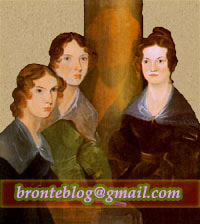
Branwell's group portrait of his sisters in the National Portrait Gallery, posthumously titled the 'Pillar' group, includes a self-portrait that has been obscured by the eponymous pillar. Although this item has been attributed to Branwell, its technical, pictorial and symbolic features distinguish it sharply from his output in graphics and oils. The three readily visible portraits in the picture lack the beginner's errors in the use of oils that have led to the browning (tobacco) of the column's pigments, its semi-transparency, and the surfacing of the self-portrait (bleeding). The provenance and technical characteristics of the picture lead to the conclusion offered here, that the pillar was painted by Charlotte as part of her effacement of her disgraced brother from the image of her family that she presented to Elizabeth Gaskell.

The Gendering of Art and Science in Charlotte Brontë's Villette
pp. 20-30(11) Author:
Lydon, Susan
Abstract
In her novel Villette, begun around 1850, Charlotte Brontë explores the semantic opposition that was emerging between the terms 'art' and 'science' during the time she was writing. The terms were no longer interchangeable as they had been in the eighteenth century, though they remained closely associated. At first glance, it appears that Charlotte positions the nascent binary of art and science along gender lines: most of the men in Villette are characterized by scientific associations, and most of the women are distinguished by artistic sensibility, the most prominent of which is the opposition between Doctor John and the narrator, Lucy Snowe. Since Charlotte's narrative is told from the first-person point of view of a somewhat irrational and artistically inclined woman who seems thwarted by science, it would appear that Charlotte directs the reader's sympathy towards art, women and the irrational. Given that Victorians perceived male-dominated scientific pursuits as a masculine control of nature and, by extension, control of the female sex with whom nature has long been linked, it would follow that Villette overthrows male authority as it overthrows rational thought. However, Charlotte also collapses the distinctions she makes between the terms art and science and the two genders over the course of her novel. In blurring these binaries, she strives to dissolve what the Victorians perceived as the binary natures of men and women.

Lord Byron's 'The Dream' and Wuthering Heights
pp. 31-46(16) Author: Holland, Meridel
Abstract
The link between Byron's overhearing Mary Chaworth's cruel words at age 15, his running away and his autobiographical account of his tragic love in 'The Dream', and the episode of Heathcliff's overhearing Cathy's words at age 15, and running away, has already been noted. This paper traces what seems to be a consistent parallel between the story narrated in 'The Dream' and the story of Heathcliff in Wuthering Heights. Both narratives deal with a love that begins with a quasi-sibling relationship which develops into a love where the boy is unswerving in his affections, but the girl is less faithful. The boy in each case goes abroad; by the time he returns the woman is married, whereupon he enters a disastrous marriage. The woman in both narratives declines into sickness and delusion, and the man enters a paranormal world. In addition, aspects of the description of Heathcliff echo words applied to Byron's hero in 'The Dream'.

Perils of Biography: Charlotte Brontë and Tennyson
pp. 47-56(10) Author: Hoddinott, Alison

Abstract

It has been generally accepted by biographers that Charlotte Brontë thoroughly disliked Tennyson's poetry. This belief is based on a remark made by Elizabeth Gaskell in a letter written shortly after her first meeting with Charlotte. This article challenges the accepted view and explores the literary connections between The Princess and Shirley and between In Memoriam and Villette and argues that Tennyson had a complex influence on Charlotte Brontë's last two novels.


Eating and Drinking in Wuthering Heights
pp. 57-66(10) Author: Tytler, Graeme

Abstract
One aspect of Wuthering Heights that has elicited little critical response hitherto is the part played by eating and drinking. Although there are comparatively few references to food and drink in the novel, some such references can be seen to fulfill certain symbolic and thematic functions. We also note that meals not only constitute backgrounds to some important episodes in the narrative but are occasions in relation to which the characters tend to reveal something significant about themselves and their circumstances.

Charlotte Brontë and Henrietta Asseretti: Neighbouring Governesses?
pp. 67-75(9) Author: Parsons, Diana

Abstract
In March 2004, an article appeared in Down Your Way entitled 'A mysterious Yorkshire tombstone'. The stone in question stands in the churchyard of St Mary the Virgin, Wath, North Yorkshire and bears the simple inscription 'Henrietta Vallé Asseretti, died 8 July 1842, aged 52 years'. The author of the article posed several questions: who was Henrietta, and, in particular, had she known Charlotte Brontë, who, in June and July 1839, stayed at Swarcliffe Hall, Birstwith approximately fifteen miles from Wath? Had Charlotte visited the village with its Jacobean mansion known as Norton Conyers, which is believed to be the model for Thornfield in Jane Eyre, and was the nearby church the setting for the ill-fated 'wedding' between Jane and Rochester? Lastly, why had Henrietta been interred at Wath, approximately four miles from her home village which had its own parish church? Was it because Henrietta was the mistress of Sir Bellingham Graham, the owner of Norton Conyers, and that he arranged for her burial there? The purpose of this paper is to examine these theories in the light of further evidence.

Remembering Sir James Roberts
pp. 76-80(5) Author: Whitehead, Stephen

Abstract
The traditional church service that precedes the Annual General Meeting of the Brontë Society took the form on 7 June 2008 of a service of thanksgiving and remembrance commemorating Sir James Roberts's gift of the Parsonage to the Brontë Society. St Michael and All Angels was full for the service, which was conducted by the Rector of Haworth, the Revd Jenny Savage. Bible readings were by Sir James Roberts's grandson, Anthony Roberts, and by his great-grandson, James Roberts; Cathy Geldard, who presented the posy to Lady Roberts in 1928, also attended the service. Sir James Roberts's address at the opening of the Parsonage Museum was read by Lyn Glading, and Sally McDonald read the reply of the Society's then president, Sir Edward Brotherton. As 7 June is also the anniversary of the death of Patrick Brontë, Leslie McDonald read Juliet Barker's account of Mr Brontë's death, and Stephen Whitehead gave the address that is presented here.


Note from the Brontë Parsonage Museum

Winifred Gérin's Papers at the Parsonage!
pp. 81-81(1) Author: Bland, Judith


REVIEWS pp. 82-92(11)
Categories: , ,

Wednesday, March 25, 2009

Wednesday, March 25, 2009 3:53 pm by Cristina in , , , ,    No comments
Let's start with one (well, two, actually) of those unexpected associations: the Brontës and architecture. Manchester Confidential pauses to look at Byrom Street in Manchester and some of the doorways there are reminiscent of the following:
These doorways are the novel Frankenstein, the poets Shelley and Byron messing about being epic in Italy, Wordsworth sheep bothering in the Lakes, the Bronte sisters and the vapours. They represent the age of laudanum better than anything else in Manchester methinks. Indeed this style of dream up Gothic gets its own title Gothick with a k. They’re something unusual in Manchester’s built environment too. (Jonathan Schofield)
We never ever thought we'd discover the doorway equivalent of the Brontë sisters.

The Telegraph and Argus opts for another architectural feature: the fireplace. An article on Exley Hall and its fireplace points out that, to its owners' knowledge, the other two similar fireplaces have Brontë connections:
The couple have certainly done their research when it comes to the history of this property.
“The only fireplaces of a comparable size which we have found are at East Riddlesden Hall in the main hall, and at Wycoller in the ruined hall which was used by Charlotte Bronte as her model for Ferndean Manor in Jane Eyre,” says Bruce. (Sue Ward)
Here's a picture of the intriguing ruins at Wycoller with their huge fireplace and its mysterious side 'chamber'. And of course East Riddlesden Hall has recently been the model for Wuthering Heights on the latest screen adaptation.

The rest of today's newsround focuses on Wuthering Heights, although the book of the day should be Elizabeth Gaskell's controversial biography The Life of Charlotte Brontë which was first published 152 years ago today.

The Daily Sound has an article on a project called Edible Book Festival (yes, books that you can eat) which takes place today from 2-4 p.m. today inside the Luria Library at Santa Barbara City College (among other places and countries). Thirty students and faculty members have participated, some of them coming up with titles such as,
Think “Green Eggs and Ham,” “Tortilla Flat,” or “Wuthering Heights,” changed to “Wuthering Bites,” as [Elizabeth] Bowman [the campus librarian who has organised the festival] said one person is doing. (Colby Frazier)
Voxy writes a piece entitled 'Chronicles of Poverty or How I Spent the Recession'. One of the suggestions leans towards the Classics.
Ways to find mirth when on the bones of one’s arse sometimes require stealth: party throwing to restock the booze cabinet is an oldie but a goody, reacquainting oneself with the classics is educational: abandoned on your bookshelf since you finished university are all the books you never read- was Wuthering Heights always so erotic? That Heathcliff. (Lisa Scott)
The Michigan Journal favours the 1939 film version of the novel:
"Wuthering Heights." If you thought the ending to "Titanic" was depressing, you haven't seen anything yet. This film is the ultimate love story. No film has come close in decades. It's really that heart wrenching; it's really that good. (Olivia Vizachero)
And an indirect mention to the novel comes from The Times of India, which records (?) a conversation between a man and his wife which touches on the subject of books.
"Which one of her books have you read?" "I glanced through the Interpreter of Maladies. I didn't read Namesake because we had already seen the movie. It was quite thought-provoking." But rather than satisfying her curiosity, it provoked her further and she asked who my favourite author was. I told her i hadn't read enough to have such pretensions, fighting shy of mentioning names like Jane Austen, Emily Bronte and Kiran Desai. (Satish K Sharma)
The focus is also on Wuthering Heights on a couple of blogs: Becky's Book Reviews and Clarissa's Book Blog. Literary Lunch has posted a brief biography of Anne Brontë. And Factual Imagining posts about Jane Eyre.

Categories: , , , ,
12:03 am by M. in ,    No comments
1. A very special production of Wuthering Heights (adapted by Marion Johnson, recently premiered in the London Ontario Fringe Festival) opens today in Toronto:
The Glenvale Players present Emily Brontë's "Wuthering Heights"
adapted for the stage by Marion Johnson

The Glenvale Players, Canada's premier theatre company featuring blind and vision-impaired performers announce their production of Emily Bronte's "Wuthering Heights" adapted for the stage by award-winning playwright Marion Johnson. Performances will be held March 25 to 29 at the Palmerston Library Theatre, 560 Palmerston Avenue, Toronto.

Heathcliff, a waif found on the streets of Liverpool by the benevolent owner of Wuthering Heights, never really fit in as planned with the rest of the family. Now in his late thirties, his overwhelming resentment and hatred for those who mistreated him in his youth is combined with a frustrated love for Cathy, the woman who shunned him and whose ghost torments him to madness.

Playwright Marion Johnson's stage adaptation of Wuthering Heights provides a snapshot of the final year of Heathcliff's life, encapsulating his mad quest for vengeance, his goal of an intimacy with the long deceased Cathy, and the emergence of a new and possibly more peaceful generation.

Produced by: Kurt Thomsen
Directed by: Paulo Santos
Stage Manager: Heather Beaton
Featuring:
Angela Froese as Nelly Dean
Naomi Vondell as Cathy Earnshaw
Kelly MacDonald as Heathcliff
Nancy Gray as Catherine Linton
Rami H. Taha as Hareton Earnshaw
Akshay Sharma as Linton Heathcliff
Diana Czainski / Tomeko Cummings as Isabella Linton
Brad Salmon as Lockwood

Show Dates and Times:
Wednesday March 25 to Saturday March 28 at 7:30 pm
Saturday March 28 and Sunday March 29 at 3:00 pm

Location:
The Palmerston Library Theatre, 560 Palmerston Avenue, Toronto

For further information, please contact The Glenvale Players: Phone: 416-461-7253
E-mail: info@glenvaleplayers.org
More details about the play, here.

2. And an amateur production of Polly Teale's After Mrs. Rochester in Guildford, Surrey, UK:
After Mrs Rochester by Polly Teale
Performed by Guildburys Theatre Company at the Electric Theatre, Guildford.
BOX OFFICE 01483-444789
March 25-28 @ 7.45pm.

After Mrs Rochester is a powerful and compelling play which tells the story of writer Jean Rhys (1889-1979) who was the author of the acclaimed Wide Sargasso Sea – which tells the back story to Bertha, the first Mrs Rochester, and is the accepted prequel to Jane Eyre. Echoes from Jean’s life intertwine with those from Wide Sargasso Sea and from Jane Eyre.

Jean Rhys looks back on her life, watching scenes as they appear and disappear. The empathy Jean felt with Bertha Rochester created a life long obsession which culminated in the publication of Wide Sargasso Sea. Key moments, both real and imagined are played out, showing Jean’s desperate attempts to ‘belong’ to somewhere - or to someone.

When the outside world and her relationships become too difficult to handle, Jean escapes into scenes from Jane Eyre, played out as the gripping story of her life unfolds. The madwoman in the attic becomes Jean’s constant companion and her tormentor – a shadow visible and audible only to her and to us. The character of the first Mrs Rochester is both her demon and her muse as Jean tries to exorcise her through her writing.
Categories: ,

Tuesday, March 24, 2009

Tuesday, March 24, 2009 12:56 pm by Cristina in , , , , , ,    No comments
We have quite an assortment of news and mentions today.

Motion/Captured on HitFix discusses the forthcoming Pride and Prejudice and Zombies and the purported similar adaptations of Wuthering Heights and Jane Eyre. The conclusion reached is quite right:
First one to the marketplace might score a hit, but if all of these projects as well as the crazy "Jane Eyre" and "Wuthering Heights" mash-ups all try to claw their way onto the screen, I think it's going to be a long, long, redundant, redundant couple of years, and it'll create some genuine antipathy towards the also-rans as they stack up, one after another after another. (Drew McWeeny)
Not to mention that there is also a remake of I Walked with a Zombie in the works.

EquestrianMag brings our attention to a touring exhibition in the USA: The Literary Horse: When Legends Come True. The magazine describes this exhibition which first opened nearly a year ago as follows:
The exhibit, Vanessa Wright’s The Literary Horse: When Legends Come to Life, pairs up to 100 photos of today's horses and riders with family-friendly, secular, and cited public domain quotations from the world's great books. [...]
Showcasing first-time riders through Special Olympic and Olympic champions, and equestrian disciplines ranging from carriage driving and show-jumping to jousting and vaulting (gymnastics on horseback), The Literary Horse provides visitors with a real-life tour of world classics, such as the Iliad, Richard III, and Jane Eyre, as well as beloved children's tales, such as Black Beauty, Cinderella, and King Arthur and the Knights of the Round Table. [...]
The Literary Horse: When Legends Come to Life will be touring public and school libraries worldwide through 2012. For more information, a tour schedule, activities, and a booklist, visit http://www.theliteraryhorse.com/.
The exhibition's website has a blog which has an entry with a Jane Eyre reference.

The National Post reviews All the Living by C.E. Morgan and a Jane Eyre reference crops up:
Aloma is alone. At least, she feels alone. Her aunt and uncle, with whom she lives, are always “fine to her,” but when she is about to turn twelve, in a moment reminiscent of Jane Eyre, they send her to a mission school in the Kentucky mountains. (Daryl Sneath)
Jane Eyre is also mentioned in an article about the much-awaited Hobbit film which has just gone into production on The Observer Online:
Five years ago, I sat weeping in front of the television watching Peter Jackson and Fran Walsh kiss as they both held their Oscars aloft, having finally achieved the greatest honor filmmakers can receive, at the 76th Academy Awards. It was the culmination of a three year journey for me, going from complete Tolkien ignorance in the seventh grade to full-blown obsession in the ninth. At that point in time I was a movie-quoting, elvish-speaking Ringer with a full class presentation on the history of Arda under my belt. (Convincing my Honors Brit Lit teacher that the formation of Middle-earth was relevant to "Jane Eyre" was an achievement unto itself.) (Stephanie DePrez)
TravelMuse reminds its readers that they are still on time to book your trip to Brontë Country with The Wayfarers.

Here are a few blogs: Not Quite Write posts about recently reading Wuthering Heights for her book club. Christians Bücherkiste writes in German about Emily Brontë and Gondal. And A Fair Prospect is thrilled to have found a shawl similar to that worn by Jane Eyre in the 2006 adaptation.

Categories: , , , , , ,