Podcasts

  • S4 E4: with... Eliza Goodpasture - On this episode, Mia and Sam sit down with art historian and writer Eliza Goodpasture! Eliza has written the introduction to a new edition of Emily Bront...
    5 days ago
Showing posts with label Humour. Show all posts

Wednesday, August 05, 2026

Wednesday, August 05, 2026 3:06 am by M. in , ,    No comments
Tomorrow, August 6, is finally the day. Jane Eyre Convention premieres at the Edinburgh Fringe 2026: 
A production of Theatre Caddis
Writer: Eleanor Zeal
Director: Danielle Arkwright
With Eleanor Zeal, Rachel Overd, Georgia Harris and Ben Everett Rile
6th - 28th (not 10th and 18th) August at 12.25pm
Just The Snifter Room at Just The Tonic at The Mash House, venue number 288

At the world's first ever Jane Eyre Convention, slightly neurotic aficionados gather to reenact their favourite novel. They squabble and fight over the best bits, correct interpretation etc. Real emotions are experienced as they follow Jane on her journey, including running wailing across the moors. They also attempt to rescue shackled Bertha in the attic. Finally they gain new insights and generally feel better. Show contains unrealistic violence, bonnets and minimal raunch. It may be mildly therapeutic and audience participation is optional. Double Fringe First winners.

Friday, July 24, 2026

Friday, July 24, 2026 2:52 am by M. in , ,    No comments
 A few weeks before the Fringe performances, last chance to see Jane Eyre Convention in London:
Theatre Caddis presents
by Eleanor Zealy
July 24-25
The Hope and Anchor, 207 Upper St, London N1 1RL, United Kingdom

In a farcical and hilarious production, Jane Eyre fanatics gather to re-enact their favourite novel. Squabbles over the best lines and interpretations ensue. Real emotions and revelations are experienced as the attendees navigate Jane's rags to riches story.
Optional audience participation. Unrealistic violence.
Mild raunch.
Bonnets.
EDIT: The Theater Reviewer posts about the production:
 The Jane Eyre Convention is an inventive, charming and genuinely funny piece of fringe theatre which celebrates both its literary inspiration and the wonderfully passionate people who adore it. Cleverly written, confidently directed and performed by a cast clearly having as much fun as the audience, it proves you don't need to know every page of Jane Eyre to have a thoroughly enjoyable evening. (Jack Stevens)

Sunday, June 28, 2026

Sunday, June 28, 2026 11:31 am by M. in , , , , ,    No comments
Let's open with the new cartoon by Tom Gauld for the latest issue of New Scientist:
The Oman Observer (Oman) reviews the novel Home Before Darik by Riley Sager:
The final twist reveals that the true source of terror is not ghosts, but Marta Carver, a disturbed woman who has been secretly living within the house. This shift from supernatural horror to human menace, similar to renowned gothic stories like Charlotte Brontë's Jane Eyre, makes the story more unsettling and grounded.
Country Living lists the UK's most inspiring gardens to visit this summer:
Best restoration
Parnham Park, Dorset 
(...) Just ten minutes from the Jurassic Coast, the gardens at Parnham are being thoughtfully brought back to life as part of a dramatic restoration of both house and grounds. The house was devastated by a fire several years ago, lending the estate a romantic, distinctly Jane Eyre feel as it slowly returns to glory. (Helen Daly)
Good Housekeeping has a quiz with one-sentence descriptions of "love stories or romance novels". Can you guess this one:
8. A young woman falls for the wealthy, mysterious man whose dark secrets threaten their future together. (Joanne Finney)
TVInsider recommends some films for streaming:
Don’t expect high fidelity to Emily Brontë’s 1847 novel about lovers brooding on the 19th-century English moors. Only the novel’s first half is covered here with Margot Robbie as the ill-fated Cathy and Jacob Elordi as her paramour Heathcliff. The bold costumes and sets make up for storytelling liberties. Streaming now, HBO Max  (Michael Fell)
Libero Magazine (Italy) and others comment on a recent edition of the local version of  Wheel of Fortune, La Ruota della Fortuna. They decided to use Wuthering Heights for one of their panels, but they were quite sloppy. The episode of 19 June 2026 featured a literary round called Se la sai raddoppi, themed entirely around Wuthering Heights (Cime Tempestose), and it produced two separate errors about the same book.
Error 1: "Set in the Victorian era"
Contestant Francesco failed to solve this clue, which turned out to be the answer anyway — and the answer was wrong. The novel runs from 1771 to 1802, firmly pre-Victorian. The Victorian era begins in 1837 with Queen Victoria's reign and ends in the early twentieth century. 
Error 2: "A love story on the English moors"
Francesco did solve this one and went on to win the episode. The show seems to confuse the book with its recent film adaptation throughout, getting both the historical period and the thematic substance wrong.

Finally, a German radio alert. 
Bayern 2 Salon – Buchgefühl: Emily Brontë, Sturmhöhe (Saturday 27 June 2026, 14:05–15:00 CET; also available as podcast via ARD Sounds). In this episode of Bayern 2's literary reading-and-conversation format, host Judith Heitkamp talks with prize-winning Dutch author Anjet Daanje — whose novel Das Lied von Storch und Dromedar (recently longlisted for the International Booker Prize) imagines the afterlife of Emily Brontë through literature — about why Wuthering Heights has fascinated her since childhood. Daanje argues that film adaptations almost always cover only the first half of the novel, losing something essential: Brontë's portrait of how the next generation survives after the parental one has burned itself out. She also reflects on Brontë's elusiveness as a biographical subject ("you learn more about the biographers than about Emily Brontë herself"). Readings are performed by Irina Wanka, the German voice of Sophie Marceau. In German.

Thursday, June 11, 2026

Thursday, June 11, 2026 7:41 am by Cristina in , , , , , , ,    No comments
Everything Theatre reviews the play Jane Eyre Convention giving it 3 stars out of 5.
As a reviewer, it doesn’t pay to make overly quick judgments. However, within minutes of Jane Eyre Convention opening, I had come to the firm conclusion that the team behind the show had picked a difficult book for a comedy parody. Jane Austen lends herself to the amusing because she is often a quick-witted, funny writer herself. In comparison, getting laughs from Charlotte Brontë’s doom-laden gothic romance feels peculiarly like hard labour. 
However, the valiant cast of four (Eleanor Zeal, Ben Everett Riley, Georgia Jackson and Rachel Overd) throw themselves into the task with unfazed, drama-school-level enthusiasm. This isn’t a criticism. I love drama school energy. It certainly carried the room in this case, on an otherwise quiet Tuesday night in Clapham. Playing guileless attendees at a Jane Eyre reenactment society meeting, the foursome tackle everything fearlessly, including occasional clumsy hints at a Gen Z world beyond a safe literary space. Controlling, violent boyfriends, ADHD, absent dad trauma, race, and post-colonial reflection all pop up briefly. Some references seem flippant. Others unnecessary. This only becomes a real problem with gender politics. Riley, as the only guy in the cast, is sometimes asked to embody misogyny and decry it at the same time. It’s just a bit of a mess that fails to land, either as humour or serious commentary. Not everything needs a contemporary eyebrow raise, and, perhaps, Rochester is allowed to just be a sexy older man. 
Clunky missteps aside, it is all a jolly romp with plenty of good gags. I enjoyed, at various times, the embodiment of the moon, Rochester’s slightly camp horse, running (or walking fast) across the moors, and death by tuberculosis. I warned you, all very doom-laden and gothic. The team gets through the novel that many of us recognise from school curricula at a pace. It’s a book that Zeal, who writes as well as stars, obviously loves in detail. The most effective moments are undoubtedly when Brontë’s words are quoted directly, unadorned. Passages are surprisingly theatrical. It left me a bigger fan of the Haworth writer’s work than I was before. Job done, then I guess. 
For me, Jane Eyre is best represented by the 1943 film starring Orson Welles. Others will love the 2011 film with Mia Wasikowska and Michael Fassbender. Many might turn to director Sally Cookson’s mighty version that landed at the National Theatre in 2015. Realistically, Jane Eyre Convention is not going to trouble anyone’s list of definitive versions. But if you enjoy the book, there is probably sufficient fun to be had among fellow fans here. Knowing that classic works of literature catch the eye in a festival programme, I reckon this is a show with an exciting future at Edinburgh, where, fortunately, it appears it is heading after this Clapham run. (Mike Carter)
Harper's Bazaar wonders 'Why Is Romance So Universally Appealing Right Now?'
Coming off Fall 2026 fashion month this past March, we were left with a lingering, wistful feeling of romance. The Wuthering Heights press tour was in full swing, and there seemed to be a startling overlap between the subverted feminine tropes playing out onscreen and those walking down the runways. [...]
And, of course, Wuthering Heights ties a bow around it all: a romance novel turned film with a fashion-forward press tour in which lead actress Margot Robbie, styled by Andrew Mukamal, took to international red carpets in Dilara Findikoglu corsets cinched up tight. [...]
In Forbidden Fruits, the four main characters host a séance in frilly Rodarte dresses embellished with lace and ribbons. The costumes may conduct a romantic feel, but the plot does not—someone's about to get initiated into a cult. Wuthering Heights may look romantic but it doesn't really feel romantic. Each is provocative in its plotline, heart-wrenching, scary, even gross, at times despite the overt presence of ribbon and corsetry. Whereas releases like Office Romance or People We Meet on Vacation (based on a romance novel) feel more like romance in substance if not costume. Is something romantic purely because it has a Victorian element? Or because it takes place on the moors of England? "I got an Instagram ad for these dresses that literally looked cut-and-paste from the set of Wuthering Heights, and I think that's when people miss the mark," Biga posits. "Can you imagine somebody wearing a whalebone corset in Prospect Park? They would look like they were in a play." (Camille Freestone)
A contributor to The Wall Street Journal has selected five books where houses are important and one of them is
Wuthering Heights
By Emily Brontë (1847)
2. In her story of ill-starred lovers and class divisions set on the bleak moors of Yorkshire, England, Emily Brontë creates two contrasting visions of home. Catherine Earnshaw, raised in the “disorderly, comfortless” gothic abode of Wuthering Heights, is seduced by the refinement of the neighboring Thrushcross Grange, “a splendid place carpeted with crimson.” She transforms herself from “a wild, hatless little savage” into a lady, which estranges her from her childhood companion and besotted admirer, Heathcliff, a foundling who lives with her family. Losing Catherine to Edgar, the heir of Thrushcross Grange, prompts Heathcliff, the perpetual outsider, to vow vengeance; he maneuvers to gain financial control of both houses with the aim of destroying each one’s inhabitants. “The more the worms writhe, the more I yearn to crush out their entrails.” Brontë subjects her characters to the competing influences of the two houses; those who venture too close to the Heights—such as Catherine’s daughter, years later—get sucked into the abject darkness within. Heathcliff is unable to find solace in either mansion. For him, home can only be one shared with Catherine, and he must escape his earthly bonds to unite with her spirit. (Manil Suri)
A columnist from The Argus says that 'Scientific classics deserve a place beside great novels'.
When people talk about reading classical literature, they often talk about it as if it were a kind of cultural passport, a document you must get stamped with Dickens, Austen, the Brontës and Hardy before you’re allowed to pass through the gates of polite society. Admit that you haven’t read Bleak House or that you stalled halfway through Jane Eyre, and you can watch their expressions shift from surprise to a faint, pitying amusement.
Yet the same people who treat nineteenth-century fiction as a universal benchmark will, without hesitation, dismiss the great scientific works of the same era as unreadable, irrelevant or impossibly dense. They will recoil at the idea of opening Darwin’s Voyage of the Beagle or The Expression of the Emotions in Man and Animals, even though these books were written for general readers and sold in their thousands to ordinary Victorians who had less scientific training than most of us today. (James Williams)
A contributor to Ethic (in Spanish) writes in defence of Anne Brontë.

Monday, May 25, 2026

Monday, May 25, 2026 10:33 am by M. in , , ,    No comments
According to Winter is Coming, if you loved Outlander you need to read Jane Eyre:
Fans of Outlander will recognize familiar elements immediately: a passionate romance, gothic atmosphere, and a fiercely independent heroine. Jane Eyre even contains a subtle supernatural element: Jane and Rochester’s bond, despite being at times problematic and tragic, is tightly woven by a mysterious power–typical of gothic novels–difficult to detect, but impossible to ignore.
Jane’s unwavering emotional and moral equality in her relationships feels very modern and close to Claire’s worldview. Both women are passionate, loyal, steadfast in their beliefs, and possess an inner strength that makes them remarkable. If you empathize with Claire, you almost certainly will love Jane, one of literature’s great heroines. (Noelle Mazzoni)
Broadway World talks about the upcoming performances of Jane Eyre Convention at The Bread and Roses Theatre and Hope Theatre, Islington:
The show is set at the world's first ever Jane Eyre Convention, where we find a group of slightly neurotic Bronte-aficinados gathered to reenact scenes from their favourite novel.
As the group share their passion for all things Jane Eyre, they squabble and fight over the best bits, and conflict over authentic interpretations; also experiencing real emotions as they follow the character of Jane on her journey, including wailing running across the moors! More memorable scenes from the book are relived, as the group attempt to rescue shackled Bertha from the attic. (...)
Jane Eyre Convention is performing June 9-13 at The Bread and Roses Theatre, Clapham  and will have another engagement from July 24-25 at the Hope Theatre, Islington. Tickets are available to purchase online from venue websites or box offices. (Marissa Faith Curley)

AnneBrontë.org posts about Anne's Last Journey to York.

Tuesday, May 19, 2026

Broadway World Scotland reports that the play Jane Eyre Convention will be part of this year's Edinburgh Fringe after a run in London.
Double Fringe First winners Theatre Caddis are set to bring their comedy, Jane Eyre Convention to Edinburgh Fringe this August, following a run in London earlier this Summer.
The show is set at the world's first ever Jane Eyre Convention, where we find a group of slightly neurotic Brontë-aficinados [sic] gathered to reenact scenes from their favourite novel.
As the group share their passion for all things Jane Eyre, they squabble and fight over the best bits, and conflict over authentic interpretations; also experiencing real emotions as they follow the character of Jane on her journey, including wailing running across the moors! More memorable scenes from the book are relived, as the group attempt to rescue shackled Bertha from the attic.
In this fast-paced farce, the enthusiasts feel that they gain new insights and a better understanding of the story of Jane Eyre, and potentially one another. The show promises audiences a funny, uplifting and quirky jaunt - with unrealistic violence, bonnets, and minimal raunch! The show has enjoyed sell-out runs at Lambeth Fringe, and recent shows at the Bread and Roses Theatre, London.
The show may also appeal to Brontë fans who enjoyed the recent hype around Emerald Fennel's [sic] adaptation of Wuthering Heights. Theatre Caddis is a London-based theatre company known for staging new, eclectic work, showcasing performances that blend humor, literary homage, and character studies.
Jane Eyre Convention is performing at Edinburgh Festival Fringe 6th - 28th (not 10th and 18th) August at 12.25pm (60 mins), Just The Snifter Room at Just The Tonic at The Mash House venue number 288). (Stephi Wild)
According to Grazia Magazine, human hair jewellery is making a comeback.
Perhaps no artifact captures the intimacy of Victorian hair work quite like a small bracelet housed in the Brontë Parsonage Museum in Haworth. Composed of six light brown braids belonging to each of the three sisters – Emily, Charlotte, and Anne – it remains one of the most talked-about pieces of hairwork in existence. The bracelet is technically unwearable now; the clasps are open and one of the braids has come loose. Its power lies not in its intricacy, as the braids themselves are simple up close, but in the identity of its owners. The fact that the Brontë sisters belonged to a lower-middle class family only reinforces how universal the practice was.
This very bracelet recently found its way back into popular culture. When Margot Robbie attended a London premiere of Emerald Fennell’s take on Wuthering Heights, she wore a dress adorned with light brown braids inspired by the Brontë piece. Robbie even accessorized her look with a replica of the bracelet itself – a gesture that bridged Victorian sentimentality and contemporary red-carpet fashion in one deliberate styling choice.
Hair charms also appear in the literature the Brontës produced. In Emily Brontë’s Wuthering Heights, Heathcliff removes a lock of Edgar Linton’s hair from Cathy Earnshaw’s corpse’s locket and replaces it with his own, sending a piece of himself and their love off with her spirit. The plan unravels when Nelly, the housemaid and narrator of the novel, entwines Linton’s hair with Heathcliff’s. Scholar Deborah Lutz described this act as opening up the possibility of a postmortem storm of jealousy between the two men. Though it is the only Brontë novel to directly reference mourning jewelry, the scene underscores how central hair work was to Victorian emotional life.
The latest episode of Fox 5 Kusi Now's podcast Read All About It! is about Wuthering Heights 2026.
On this episode of “Read All About It!,” the four hosts give our long-awaited review of the film “Wuthering Heights.
Hosts discuss whether the film is a true adaptation, as many characters were omitted entirely from the movie. (Vanessa Hanna)

Tuesday, April 21, 2026

Tuesday, April 21, 2026 12:30 am by M. in ,    No comments
Underdog. The Other Other Brontë gets performed in Northwich, UK:
by Sarah Gordon
22-25 April 2026, including Saturday matinee
Directed by Carole Shinkfield
With Emily Duffy, Miranda Chance, Laura Elizabeth, Tom Lilly, Gareth Leadbetter, Paul Roman, Daniel Tolley, and Steve Bird.

Charlotte Brontë has a confession about how one sister became an idol, and the other became known as the third sister. You know the one. No, not that one. The other, other one… Anne.
This is not a story about well-behaved women. This is a story about the power of words. It’s about sisters and sisterhood, love and jealousy, support and competition.
Sarah Gordon’s new play is an irreverent retelling of the life and legend of the Brontë sisters, and the story of the sibling power dynamics that shaped their uneven rise to fame.
The Northwich Guardian gives some more information:
Director Carol Shinkfield said: "They were the feminists of their time and I love the sense of anarchy within the play, which has allowed us to explore and subvert the traditional view of the Brontë sisters." (...)
Quick-witted in tone, the piece dismantles the notion of the Brontës as reclusive and reserved, instead presenting them as progressive thinkers navigating the challenges of a male-dominated literary world.
Carol, who recently completed an MA in theatre directing at the Arden School of Theatre, brings a fresh perspective to the show. (Jessica McKeown)

Friday, April 03, 2026

Friday, April 03, 2026 11:58 am by M. in , , , , ,    No comments
University Times (Ireland) reviews Wuthering Heights 2026:
Adaptations have never been obligated to reproduce their sources with documentary precision and to some, it is entirely possible to enjoy a film that misreads its literary predecessor. As I’ve stated before in a review on Guillermo Del Toro’s adaptation of Frankenstein (2025), the question is not simply whether the film works, but what it works as. When a reinterpretation has stripped away major elements that give the classic novel its disturbing force, what remains may still function as an engaging piece of cinema, but only that. In my opinion, Fennell’s film succeeds in theatres, but not on the terms that matter most, and certainly not as Wuthering Heights. (Lily Braumberger)
Hidustan Times lists "savage reviews that are more fun than the movies they trash":
Wuthering Heights (2026). After two movies with no real plot, Emerald Fennell’s next victim was Emily Brontë’s classic. She turned the gothic novel about class and racism into smutty fanfic. Letterboxd user Allian complained: “Emily Brontë died of tuberculosis 177 years ago, yet this adaptation is still the worst thing that has ever happened to her.” RIP Margot Robbie’s Catherine, you would have loved Fifty Shades of Grey. (Tanya Syed)
The Times recommends watching the film, now streaming:
 Emerald Fennell directs this loose adaptation of the 1847 novel by Emily Brontë. Jacob Elordi and Margot Robbie as Heathcliff and Catherine in the Yorkshire moors, who are bonded by the shared trauma of abuse by her father (an excellent Martin Clunes). But when she is swept up into the world of a wealthy neighbour, Edgar Linton (Shazad Latif), Catherine is torn between the desire for Heathcliff and the chance of stability and wealth. It’s a bold film that divided critics — now it’s your chance to decide from the comfort of your sofa. (Jake Helm and Tim Glanfield)
Also in The Times, Brian Cox jokes about the film:
Today Cox will even go “full Dundee” on a film he hasn’t even seen. I know Laurence Olivier and Merle Oberon’s 1939 film adaptation of Wuthering Heights is a favourite of his and wondered what he made of the new one starring Margot Robbie.
“ ‘Keith Cliff! It’s me, Cathy!’ ” he declaims suddenly in a cod Australian accent (Robbie was once in the Australian soap Neighbours). “‘How ya doing, Keith? Awright?’ ‘Yeah, I’m awright!’ ”
Cox enjoys a hearty chuckle before composing himself.
“Margot Robbie is far too beautiful for that role. I mean, I think there should be something more of the Gypsy about her but it’s wrong of me to judge. It may be a brilliant film.” (Michael Odell)
Movie-Locations publishes a comprehensive list of all the locations of the film:
The radical new version of Emily Brontë's Wuthering Heights uses the real moors of North Yorkshire, South Yorkshire and West Yorkshire, while surprisingly also including a little glimpse of Kent, too. Now find out exactly where.
Far Out Magazine retells the story of how the birth of Because the Night by Bruce Springsteen and Patti Smith... and, in a way, Emily Brontë:
However, the final piece of the puzzle comes from far off from New York. Part of it came from Michigan as Smith, on the track in one night, yearned for a call from her then-boyfriend but soon-to-be husband, Fred Smith, who was on tour at the time. But really, her masterclass in yearning came from years before and miles away, rooting all the way back to Haworth in Yorkshire, and to Brontë country. 
The Brontë sisters, and in particular, Emily Brontë’s Wuthering Heights, were by no means a new reference to her in the late 1970s. Instead, this was a book she’d loved since being a kid, but had come to understand better and better with each re-read as she grew up. By 1977, when she was now in her 30s and intensely in love with the man she’d marry, the adoration and emotion written by Brontë in that book took on new life. She was yearning for a man who was far away, just as Cathy and Heathcliff spent a lifetime yearning for one another. 
With the chorus of a love song on her hands, Wuthering Heights came to mind as the ultimate Patti Smith way to finish it off, allowing her to bring in poetry and literary reference. The result was a huge hit, giving Smith her first commercial smash and Springsteen another victory under his belt.
In 2014, Smith wrote a foreword for a new version of the book, musing, “In the writing of Wuthering Heights, she did not give what she wanted; she gave what she had”. It seemed to be the case for her song, too, as her more impassioned tune came together in one night. But her passion is matched by her love for the Brontë’s, as in 2013, she played a concert in the tiny Yorkshire town simply to raise money to keep their home open to the public. (Lucy Harbron)
A first edition copy of the novel, a thing we're sure Patti Smith would enjoy seeing, is at the Rare Books Collection at the University of Buffalo
With a new film adaptation of “Wuthering Heights” now in theaters, interest in Emily Brontë’s iconic novel is once again on the rise. But more than 175 years before the story returned to movie screens, one of its earliest printed forms had already quietly found a home in Buffalo.
UB’s Rare Books Collection offers an illuminating window into one of fiction’s most enduring stories — and the lengths one woman went to tell it.
The collection holds a first British edition of “Wuthering Heights,” the only novel written by Emily Brontë. Published in December 1847 under the pen name Ellis Bell, the book was issued in three volumes — a common format for British fiction of the period, known as a “triple-decker” novel. While the exact print run of this edition is unknown, it is thought to have been only 250 copies. 
It is worth noting that “Wuthering Heights” comprises only the first two volumes of the set. The third contains “Agnes Grey,” a novel by Anne Brontë — a reminder that the triple-decker format sometimes bundled works together to meet the required length. (Denise Wolfe)
BBC Bitesize publishes a hilarious a "social media parody" with Jane Eyre and Mr Rochester. Part of the Literally1 Social Media Parodies series:
Mr Rochester and Governess Jane Eyre take the on the polygraph lie detector test in this social media parody.´

Jane Eyre was chosen as the best novel to read on a rainy day, as it is recalled in Parade

More Jane Eyre references. Like this article in The Times about weddings from hell in fiction: 
Just in time for wedding season to kick off in earnest, The Drama is released in cinemas today. It joins a formidable canon of disastrous wedding stories stretching back to Victorian marriage novels (remember how Jane Eyre’s nuptials are rudely interrupted by the revelation that Mr Rochester is already married?), via 1930s Hollywood screwballs (there’s a beautiful shot of Claudette Colbert fleeing the altar in Frank Capra’s It Happened One Night, yards of tulle streaming out behind her). (Susie Goldsbrough)
Regrettably, not everybody loves Jane. The author Sarah Hall doesn't, as she confesses in The Guardian:
The book I could never read again
Jane Eyre by Charlotte Brontë. Glad to have met Jane, but I seem to remember the book was quite whingey (forgive me, Brontë congregationalists). It led me to Wide Sargasso Sea by Jean Rhys, which I gladly return to.
The Express Bank Holiday Quiz includes the question:
 Which Brontë sister wrote the novel Agnes Grey?
The New York Review explores the poetry of Alfred Tennyson:
The brooding atmosphere at Somersby rectory recalls that of the Brontës’ Haworth parsonage, eighty miles due north, and headed by another weapon-wielding, Cambridge-educated clergyman. Like the Brontës, the Tennysons shunned outside company and clung together in what sounds like intense trauma bonding. (Kathryn Hughes)

If you're interested in looking at how a bunch of TikTokers film in Haworth and Bronté country, and you enjoy second-hand cringe, check this post

Friday, March 20, 2026

Friday, March 20, 2026 8:57 am by Cristina in , , , , ,    No comments
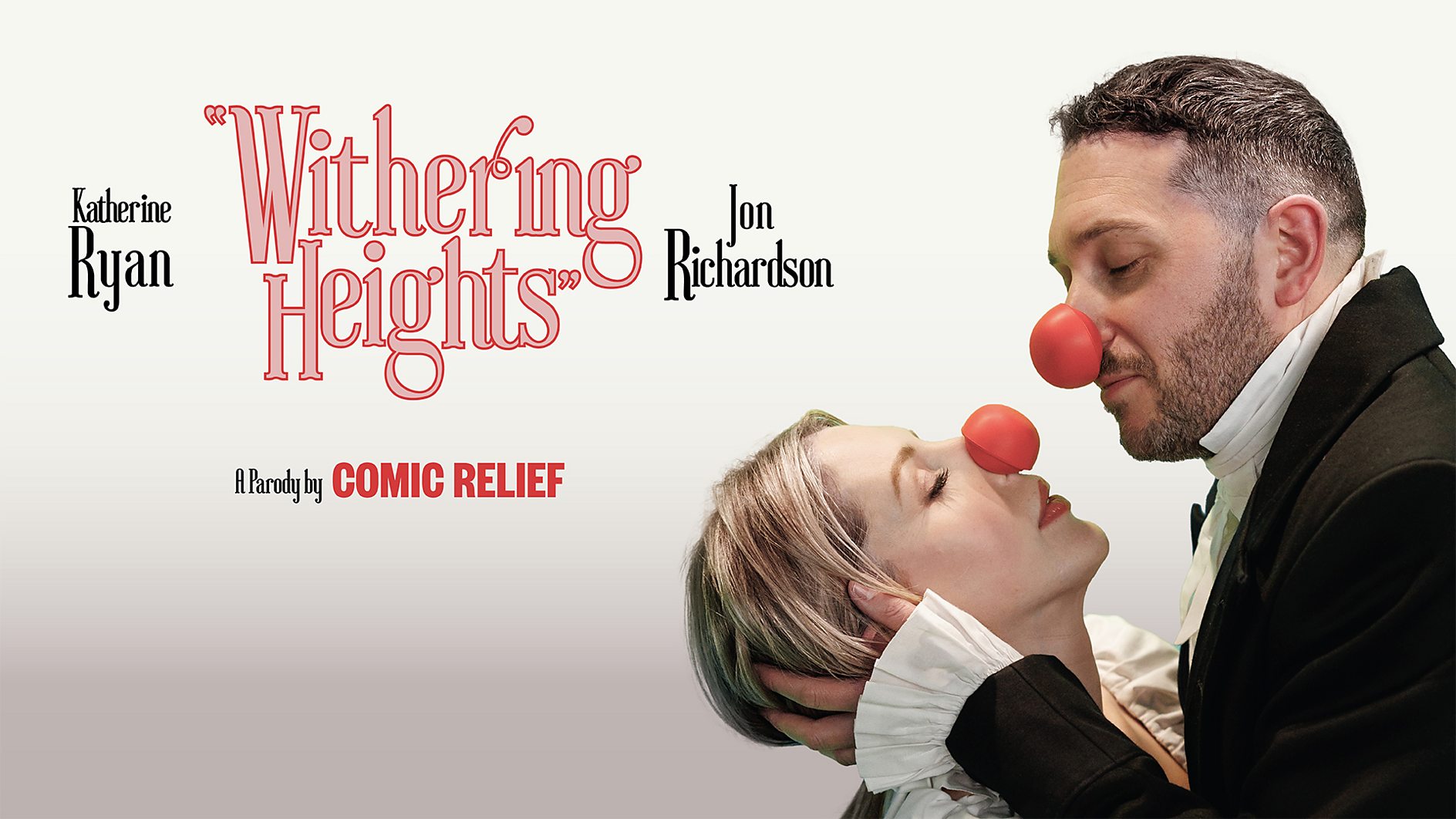
BBC announces the spoof of Wuthering Heights that will be broadcast at 7pm UK time later today.
In an exclusive sketch for Comic Relief: Funny for Money, Katherine Ryan and Jon Richardson are set to embody Cathy and Heathcliff in an unmissable Wuthering Heights sketch this Red Nose Day.
Have you ever wondered who else may have auditioned for the leading roles in smash-hit film Wuthering Heights? Or rather, why Margot Robbie and Jacob Elordi ended up in the role? Fret no more, as this Red Nose Day we are set to get a sneak peek at the exclusive audition tapes as Katherine Ryan takes on the role of Cathy, and Jon Richardson gives it his best Heathcliff, in ‘Withering Heights’.
Comic Relief: Funny for Money is live from MediaCityUK in Salford on BBC iPlayer and BBC One on Friday 20 March from 7pm, and for the very first time, live streamed simultaneously on the official BBC YouTube channel.
The money raised this Red Nose Day could help people access food, shelter and safety – the vital essentials everyone needs to survive.
There are some sites talking about the original, though. The Boar gives it 2.5 stars:
The reduction of the novel to a story of toxic love means that people who haven’t read the book will come away from this film with a completely different view of the story. Although the unsettling atmosphere might still be present, the characters seem completely different (Elordi’s Heathcliff would never have dug up Cathy’s corpse).
All this being said, I did still cry at the end when (spoiler alert) Cathy dies.
There are some good costume choices. Heathcliff’s outfit upon his long-awaited return is my favourite, and doesn’t seem out of place, unlike some of the music choices. I think I could have recovered from my disappointment about Kate Bush’s song ‘Wuthering Heights’ not appearing in the film if it still felt like Fennell had kept the core of the novel intact. But I suppose Charli XCX will have to suffice… (Abbie Fox)
From Inklings:
Despite being over two hours, Fennel managed to capture my attention throughout the whole film. There wasn’t a single moment where I wasn’t anxious to see what happened next, whether that be because I was nervous or excited for what was to come. On top of that, the cinematography, set and costumes were insane.
I had been warned about the ending being tragic. And it was. Looking back on it, I should’ve seen it coming, but it still left me in shambles. I was a crying wreck. But, it also made me see the true reality of a relationship and that not all love stories have happy endings. (Sutton Bulkeley)
A contributor to Her Campus reviews it too.

Hero features a conversation between Margot Robbie and Alison Oliver.
MR: Can we talk about Isabella? Obviously, your character in Wuthering Heights, and she is my favourite thing ever. You’re so funny in the movie. Your physicality for Isabella is so distinctive and perfect and hilarious. People are going to lose their minds when they see you. I’m so excited for this moment. I remember seeing you find that character and I saw how rigorous you are in your preparation. Your notebook that you would check in between takes with tons and tons of writing in it. I’m curious – what was your process for Isabella, and then what’s your process in general?
AO: Isabella felt very clear to me. Emerald’s writing is so amazing, that character just jumps out at you when you read her. In our version, she’s a ward, and she’s actually lived in India until she was around eight, and then was sort of orphaned, taken in by the Lintons, and moved to England. Mary from The Secret Garden was actually a really big reference for the character, because she had that same beginning. But for Isabella, she’s obviously been so sort of, infantilised by Edgar and kept in this child state. I was just really curious about characters that have a kind of peculiarity to them. I remember Polly [Bennett, movement director] said something to me which was really interesting. We talked a lot about that era and how much is repressed, how much is not allowed, and how you’re almost trained and bred into being a good little girl. Then when anything repressed is let out, it’s really messy and unorganised. With Isabella, there’s so much in her, but she has to lock so much of it away – she’s like, reverberating. Desperately wanting to kiss someone – or strangle someone.
MR: She’s practically vibrating. I’m so bummed the scene didn’t make the cut where Isabella’s saying her prayers before bed, but then pulls out this 18th-century porn. [both laugh] And that book, which, by the way, is a real book, is crazy.
AO: It’s actually horrific.
MR: The images in it. When people are like, “I’m so worried about the youth of today, because what they’re seeing online is giving them an extreme idea of sex,” honestly, looking at this book, I was like, what on earth did people back then think sex was? The illustrations in this 18th-century porn book – essentially a porno – honestly, it was like Cirque du Soleil. [laughs]
AO: It was completely awful. But that’s the repressed thing: if it’s all so shameful, then when you let it out, it’s this fucking weird thing. That’s sort of Isabella. I loved playing her so much.
MR: Do you think she’s the funniest character you’ve played?
AO: Yes. Emerald is also so great; she really lets you push things or let go. It’s such a freeing thing when the person you’re working with is really encouraging you to find that. I think there are loads of different ways of interpreting that character, and the way Emerald interpreted her was so exciting to me. What’s interesting about Isabella and Cathy is that Isabella is the reverse of Cathy. It’s like there’s an uncorseting of Isabella that happens. But in that uncorseting, she’s actually free. Whereas in reverse, you are coming from something wild and passionate and crazy, and then it all sort of gets cleaned up. But that’s actually not the answer. It’s an interesting study of that time for women: the options available, or the life available to you, was so limited. I don’t know if you found this, but when I was in the Wuthering Heights house, I was like, “I feel so free.” As beautiful as Thrushcross Grange is, it’s quite contained.
MR: I had the opposite. It’s actually when we were outside on location that I felt the most free. Wuthering Heights for Cathy, I think, is oppressing and dirty. Then she gets to Thrushcross Grange, and it’s so beautiful and clean. But then, like you said, there’s something stagnant about it. It’s kind of frozen, and that’s unnerving as well – but in a new version of oppression that takes her a while to realise is being inflicted. I just loved when we were on location – the landscape is so incredible, wild, harsh, and magical. And then on top of that, our personal experiences: we all got to hang out at the pub every day. [laughs] The best thing was that you guys were only actually needed for a couple of days out there…
AO: Two scenes, but we were there for the week.
MR: More than a week. You came and stayed out there just to hang. [both laugh] It was so fun. Every day I’d be messaging you guys, because everyone would be at the pub, and I’d be like, “Oh, I’ve still got another scene to go.” Then on our group thread, you guys are like, “Look at this waterfall we found,” or, “Look at this walk we went on, and we found a new pub we should try.” Jacob and I would just be like, “Shit. We gotta wrap this scene up so we can get to everything!” [both laugh]
AO: That was so much fun. I was thinking the other day about when we shot all of those montage pieces, and how much fun that was, and so crazy. At the end of big days where we’d done big dinner scenes or where loads of people were in, they’d be like, “OK, we’re going to do the picnic!” or “OK, we’re going to do Christmas!” It was just like, it’s Christmas now.
MR: And we’d always have fifteen minutes or something – it was mayhem. But the thing about Emerald is she uses every single bit of footage that she films; it all ends up being in the movie. There are even shots from the camera test that ended up in the movie. Cathy wandering in the courtyard – that was just a camera test shot. She uses every single scrap of film. Having said that, some scenes can’t make it, like Isabella praying and then pulling out the porno. Also that amazing scene where we do the walk around the library. Isabella’s so funny in that scene too, asking Heathcliff if he’s a man of science and pretending that she doesn’t care about that stuff as well. I loved that so much.
AO: Emerald’s ability to create on the spot is amazing.
MR: She’s both an insane preparer and an amazing improviser, actually – a lot like you, because you seem to be an insane preparer, and then also you can completely improvise. It’s so fun to be able to play at both ends of the spectrum.
AO: I sometimes feel like I can only do improvisational stuff if I’ve prepared in an insane way. Maybe it’s a confidence thing, and I feel like I have to have done my homework before I can let go like that.
MR: I feel like we are similar in that way – we approach things similarly. I have to do so much prep and so much work so that I can walk on set and throw it all away.
AO: Because you work so fucking hard. I’ll never forget seeing I, Tonya and finding out that was you. I was like, “What the actual hell?!” And when we were making Wuthering Heights, seeing you stepping in, giving the most incredible performance, then stepping out and being like a producer, getting on a Zoom call, then coming back in, doing another take – I was like, “How in the living hell are you doing this?” It’s mind-blowing to me. How have you found having those different hats on set?
MR: Honestly, I feel like I thrive on the multitasking nature of it. I don’t have a problem compartmentalising. I can sit in the edit on a film that I’m in and have no issue separating myself from the character on screen. And then [it’s also] loving the thrill of doing so many exciting things all at the same time. I feel like you have that too, because when you’re acting, you’re very aware of everything happening around you. You can feel if you’re moving out of your light or if someone’s blocking your light. I see you adjust, I see that you are conscious of where the crew members are, and you’re adapting your performance so that it works within the context of what everyone else is doing. So much of brilliant acting is lost because if you can’t be conscious of all the things happening around you, it’s not going to work in the edit, it’s not going to work on screen. Whereas you’re one of those actors who makes it work so that it’s going to end up being in the movie. And in order to do that, you have to be conscious. And in order to be conscious of everything else, you do have to be able to compartmentalise so many things. You have to be like, “I’m taking note of that – the camera, the lens, the light, what this actor is doing, how much time we have.”
AO: I’m actually not just saying this, I swear to god, I learned so much from you. I’ll never forget the day where, you know, that long scene you had…
MR: The hair-pull scene?
AO: Yes. You have a million things going on in that scene. There were so many different elements. And I remember you were sat on the couch, and people were coming over going, “OK, can you make sure you sit like this? Can you not put your hair that way? Also the camera’s going to be coming in here, so you need to do that.” And you were like, “Yeah, no problem.” Then I was watching the scene, and I was like, “You did all of it.” I’m really not just saying this, but I actually feel like that was something I was so conscious of when I was making the movie – watching how you did that. I was really trying to learn from it. (Ella Joyce)
Good Housekeeping has a book quiz on classic novels illustrated by a picture of Wuthering Heights 2026 even if the only Brontë-related novel in the quiz is Jane Eyre. Discussing pen names, Mirror mentions the Brontës in passing.

Sunday, February 22, 2026


Next, we turn to The Sunday Times Bestsellers week list, because in the Fiction paperbacks section we found Wuthering Heights in the number 8, which is truly astonishing.

According to The Mirror, Whitby is "UK town where every day is like a scene from Wuthering Heights":
A view of Whitby Abbey framed by a whalebone arch under a cloudy sky, showcasing historical architecture in North Yorkshire, England.
Sometimes, when a storm hits the UK, rain batters the pavements and wind whips the trees, it's easy to feel swept up in the kind of awe-inspiring conditions that helped Emily Brontë to write her classic novel, Wuthering Heights.
There is a little town in Yorkshire, 100miles from Cathy and Heathcliff's home, but steeped in as much Gothic drama, where every day feels like you've tumbled into such dark Victorian melodrama. (...)
If you walk along the coast from the nearby villages of Saltmoore and Sandsend, the gothic ruins stay within your sightline. Lucky hikers will get to see the sea fog - which locals used to believe was the fiery breath of a dragon - come in to cover the abbey. You'll feel like you're trekking the same paths Heathcliff did as he searched for Catherine's ghost, not least because Emerald Fennell's new film was shot about two hours away, in the Yorkshire Dales. (...)
The most remarkable sight comes when you walk back towards Whitby, as when the fog clears, the Abbey can be seen looming through a gap between the cliffs. It's terrifying and awe-inspiring all at once. I felt drawn towards the ruins, much as Cathy is drawn to Heathcliff or as an entranced Lucy is drawn to Dracula. How could anyone resist such a terrible sight? (Yasmin Vince)
Some American students visit Hampstead for the first time in Ham & High:
I was advised to visit Hill Garden and I’m so glad I did. The sun shone down on the terrace, and it was a nice place to sit and gather my thoughts after having walked around for a couple of hours. I’ve been reading Wuthering Heights in preparation for the new movie that’s coming out in a few days, and I couldn’t help but feel like Hill Garden came straight out of a Brontë novel. (Helena Sauriat)
Elmira Tanatarova in the Daily Mail rewrites the Brontë story in pure Daily-Mail-tabloid style. Are you prepared? Here it comes with some helpful comments from our own:
The brutal Brontës! Wuthering Heights author Emily beat up her dog, toothless Charlotte spitefully held back Anne's career and all three died close to their 30th birthdays... not to mention their opium addict brother.
NO TEETH, NO MANNERS, NO MERCY: THE BRONTË SISTERS' HORRIFYING SECRET FACES REVEALED!
The famous family of writers endured everything from opium addiction to water contaminated by a cemetery, as well as a string of tragically early deaths that saw three out of four siblings - including their only brother, Branwell - deceased within a year of one another, all close to their 30th birthdays.
And their precocious beginnings are almost as well documented as their 'spiteful' attitudes, with biographers remarking on the sisters' history with animal abuse, disdain of young children and 'anger management issues'.
As revealed by literary critic Claire Harman in Charlotte Brontë: A Life, there was also the matter of the sisters' 'plain' and 'poorly' appearance.
According to the writer, Emily had a large protruding tooth, while Charlotte had hardly any teeth at all.
Undersized and undernourished, she was described by her fellow novelist, Elizabeth Gaskell, as having a forehead that was 'square, broad and rather overhanging'.
Emily, for one, while posted at Law Hill School in Halifax, reportedly said she 'preferred the company of the house dog' over her pupils, as shared by author Juliet Barker.
SHE WOULD RATHER CUDDLE A DOG THAN TEACH YOUR CHILD — AND SHE WASN'T SORRY! 
And while not as combustible as her sister, Charlotte wasn't to be trifled with either. When she taught at a girls' school in Brussels, she gave any student who displeased her a tremendous tongue-lashing.
'If those girls knew how I loathed their company, they would not seek mine as much as they do,' she wrote in her journal.
In fact, several of her pupils seemed to have loathed her as much as she loathed them - one even threw a stone at her.
SHE CALLED HER OWN SISTER'S MASTERPIECE "A MISTAKE" — CHARLOTTE BRONTË'S UNHINGED BETRAYAL EXPOSED!
Charlotte's family, it seems, were not immune from her criticisms. In an introduction to her sister Anne's second novel, Charlotte shared that 'Wildfell Hall it hardly appears to me desirable to preserve'.
'The choice of subject in that work is a mistake – it was too little consonant with the character – tastes and ideas of the gentle, retiring, inexperienced writer,' she continued. 
Historians have dubbed the jabs an attempt to 'consign her sister’s novel to oblivion'.
Emily's temperament was also well known and has been a topic of discussion for historians - despite claims that Charlotte had tried to 'clean up' her sister's image posthumously.  
And so on....

But this is not the worst sensationalist headline we read today. The Daily Star is not only concerned about the hordes of tourists descending upon Haworth... 
Sex-mad doggers are romping in the countryside that inspired Wuthering Heights
As new raunchy film version of Wuthering Heights has just hit cinemas randy revellers are getting frisky where the Brontë sisters penned their acclaimed books.
And we can reveal that randy revellers are getting frisky where the Brontë sisters penned their acclaimed books. There’s plenty of bodice-ripping action as lust-crazed couples invade the moors around the picturesque parish of Haworth for bawdy al-fresco frolics. (John Ward)
The New York Post highlights that "Wuthering Heights’ lives up to the hype, takes No. 1 at box office for second Friday in a row". Free Ex columnist Louise Perry and senior newsletter editor Emma Camp chat about the film in this Wall Street Journal clip. The South China Morning Post introduces Charlotte Mellington, who plays young Cathy in the film. The Sun interviews Jacob Elordi on, you know, hot scenes and all that:
And Jacob reveals there was ­sizzling chemistry between him and Margot, who plays love-struck Cathy, from the moment they met.
He said: “It’s like, ‘Action’ and it’s like a horse at the race track — straight out of the gates.”
But he insists that sex scenes are actually “no different to choreo- graphing a fight scene or a dance sequence”, explaining: “It’s super- technical, especially the scene where, it’s not a sex scene, but where I’m on top [of Margot] with my hands — that’s choreographed because, in that kind of light, you only have so much space to move. (Nadia Cohen)

A (Leeds) reader of The Sunday Times defends Jacob Elordi's Yorkshire accent in the film.

Nicolette Jones in The Times argues that
Most film adaptations of Wuthering Heights leave half the story untold. And while Emerald Fennell’s steamy adaptation may have caused a surge in sales of Emily Brontë’s novel, it is very much a different creation. The Easy Classics version follows the original far more literally.
Still, more reviews of the film:
However, the true failing of “Wuthering Heights” lies in its unwillingness to offer anything genuinely new. We are, perhaps, well past the cultural moment where explicit sex alone can pass for provocation. The shock value has dulled, and what remains feels curiously dated. The omission of the novel’s second half, a section frequently sacrificed in screen adaptations of Wuthering Heights, further positions this film as just another iteration: more polished, glamorous and decidedly raunchier than its predecessors, yet reluctant to meaningfully reinterpret its source material. The whirlwind sexual crescendo ultimately achieves little. Cathy’s fate is preordained and her death carries no tragic inevitability when the emotional groundwork has been hollowed out. 
Gothic literature thrives on transgression and repression: on the past’s refusal to remain buried. Strip away those tensions, and what remains is superficial. Here, the Gothic is reduced to aesthetic texture: wind-swept moors, crimson palettes, feverish bodies, a dark synth-pop soundtrack. Its spirit—moral rot, psychological cruelty, generational obsession—is conspicuously, and regrettably, absent. In the end, while “Wuthering Heights” may dazzle the eye, it hollowly fails to evoke Brontë’s corrosive psychological and social commentary in favour of lavish spectacle, sexualised shock, and aestheticised cruelty. (Hannah Tang in Strand Magazine)

I am a deeply proud Northern lass, and not many media pieces ever acknowledge our little corner of the world. Emily Brontë and her sisters were deeply inspired by the Moors in which they resided. It influenced their writing and greatly impacted their local community for what is now well over the past 170 years. It saddens me that Emily’s deeply intelligent work is being passed off as what is essentially explicit fanfiction (seriously, what was up with kneading the bread?) If this piece wins any awards, I will be questioning Hollywood’s, obviously declining, sanity. (Lily Orton in HerCampus
 Does all this contemporary hindsight into the fabric of Brontë’s epic novel make for a quintessential “Wuthering Heights?” Even allowing that such a thing were possible, probably not. While it presents a stylishly crafted and thrillingly cinematic take on this complex classic, richly enhanced by a superb and adventurous cast, it’s not likely to satisfy anyone looking for a faithful rendition, nor does it reveal a new angle from which the “romance” at its center looks anything other than toxic — indeed, it almost fetishizes the dysfunction. Even without the thorny debate around Heathcliff’s racial identity, there’s plenty here to prompt purists and revisionists alike to find fault with Fennell’s approach.
Yet for those looking for a new window into to this perennial classic, and who are comfortable with the radical flourish for which Fennell is already known, it’s an engrossing and intellectually stimulating exploration of this iconic story in a way that exchanges comfortable familiarity for unpredictable chaos — and for cinema fans, that’s more than enough reason to give “Wuthering Heights” a chance. (John Paul King in Los Angeles Blade)
 Robbie puts in the worst performance of her career by turning Catherine into a bratty, unbearable hypocrite; meanwhile, Elordi’s script must have only said, ”Stare maniacally”.
The film also struggles with its presentation. So much of it feels like a scene from Alice in Wonderland, but without the charm. It’s drab and gross.
Even the scenes in Edgar Linton’s mansion, which is supposed to be a grander-than-life setting, have an unsettling, unnatural sheen. It’s like the entire film was shot on a stage, but instead of sets, the film chooses to have a nasty greenscreen backdrop.
Funnell committed a terrible practical joke by releasing this film on the weekend of Valentine’s Day. Every couple expecting an intimate, romantic depiction of a famous novel will instead be subjected to a cruel and unusual parody.
The film is a miserable experience and is the first truly horrible movie of 2026.
Wuthering Heights is showing in cinemas around the country. (Jarryd Rowley in Region)

 Then again, maybe Fennell is just having a laugh at our expense. If you want to watch a spiritually faithful adaptation of Wuthering Heights, complete with sexually charged graveyard visits, a decades-long real estate scheme, and uh, yearning in spades, Saltburn is already that movie. It’s hard not to suspect that Fennell, in her clever and cynical way, just wanted to see if she could get away with turning fantasy casting plucked from the recesses of Tumblr into a major motion picture. Because the only other explanation I can conjure for the gooey mess that is “Wuthering Heights” is that Fennell doesn’t realize her promising artistic vision has been cuckooed by something all too ordinary instead. (Nicole Penn in The Dispatch)

 The film "Wuthering Heights" is an anti-love story that goes for visual feast and shock factor with the way the characters fulfilled their sexual fantasies rather than an exploration of a fierce love that defies class and convention. (Rachelle Siazon in Philippine Entertainment Portal)
“Cumbres borrascosas”, el libro, el clásico, no se parece a nada porque lleva los vínculos al límite. 
Heathcliff no es un héroe trágico: es la violencia que una sociedad ejerce sobre él y la que él mismo reproduce, implacable. Catherine queda atrapada entre su deseo y la necesidad de encajar en un orden que la asfixia-
Por eso el libro sigue ahí, embrujándonos a todos, y mucho más arriesgado que esta adaptación que le baja el voltaje y la convierte en una versión vistosa, hot y descremada. (Verónica Bonacchi in Diario Rio Negro) (Translation)
 Brontë no buscaba la perfección romántica; creó un universo de pasión desmedida, de frustración y de tormento. Un amor áspero, inquietante, que deja el alma en desasosiego. La película, en cambio, parece desconfiar de la inteligencia del espectador, como si fuera necesario subrayarlo todo, explicarlo todo, hacerlo más evidente —incluso a través de escenas prescindibles— para garantizar su comprensión.
El final, además, da la impresión de cerrar definitivamente la puerta a la continuación de la historia, como si la segunda generación nunca hubiera existido.
En conclusión, si deseas disfrutar plenamente de la película, quizá sea mejor no haber leído la novela. Pero si lo que buscas es comprender la intensidad, la oscuridad y la complejidad del amor que imaginó Emily Brontë, entonces acude al libro… y no esperes demasiado de la película. (María Beatriz Muñoz Ruiz in Diario Sabemos) (Translation)
 El resultado es una película que traiciona el espíritu del libro en nombre de una supuesta autenticidad. Porque el corazón de Cumbres borrascosas no es el sexo; es la imposibilidad. Es la herida abierta de un amor que no encuentra lugar en el mundo. Es el resentimiento que fermenta durante años. Es la crueldad que nace del abandono. La novela es violenta, pero su violencia es moral, psicológica, casi metafísica. Aquí, en cambio, la violencia se sexualiza. El dolor se erotiza. Y el espectador asiste a una saturación de escenas íntimas que no construyen personaje ni conflicto: solo ocupan tiempo.
Y, sin embargo, la película ofrece una paradoja que la redime parcialmente. En su tramo final, cuando el frenesí carnal se agota y los cuerpos dejan de ocupar el centro del encuadre, algo cambia. De repente, el silencio vuelve a tener peso. Las palabras, esas grandes ausentes durante buena parte del metraje, recuperan su lugar. Los personajes hablan, se enfrentan, se reprochan, se reconocen. Y entonces, casi milagrosamente, la película encuentra la profundidad que había estado buscando a golpes de piel.
Es en ese último acto -cuando el deseo ya no se expresa en sudor sino en diálogo- donde asoma la grandeza que el conjunto prometía. Las miradas pesan más que los cuerpos. Las frases hieren más que cualquier escena explícita. El dolor se verbaliza y, al hacerlo, adquiere una dimensión trágica que conecta, por fin, con el espíritu de la novela. Resulta irónico que la adaptación alcance su mejor momento precisamente cuando renuncia a su estrategia más insistente. (Amanda Ramos in El Plural) (Translation)
Mariana Enríquez also reviews the film for Página 12 (Argentina). And she goes straight to the major problems of the film:
 Una adaptación es una lectura, y las lecturas se definen no sólo por lo que se conserva del original, sino por lo que se elimina. Esa chica de 14 años, si le creemos a Fennell, quería más sexo, y por qué no. Cathy y Heathcliff se lo merecen. Pero hay muchas otras cosas que llevan al infierno en Cumbres Borrascosas, y acá es donde aparecen los lectores con el texto en la mano, porque esas otras cosas son esenciales y no están en la película, ni en texto ni en subtexto.
Fennell decide que Heathcliff no sea un abusador, un golpeador y un hombre cruel. ¿Por qué? Heathcliff, de origen incierto, es una víctima de abusos, está tan dañado que se transformó en un monstruo vengativo y solo se hizo rico para destruir a quienes lo rechazaron, maltrataron, degradaron y aislaron. El Heathcliff de Fennell recibe una paliza, pide permiso hasta para besar y jamás resulta peligroso. ¿Por qué llamarlo Heathcliff, entonces? ¿Si no se suicida, es Ofelia la de Hamlet? Fennell también cambia a la esposa de Heathcliff, Isabella, que en la película tiene una relación sadomasoquista con él, más o menos consentida, y chistosa. Elegir como alivio cómico a una mujer en cuatro patas, atada a la chimenea de lo caliente que está con Jacob Elordi es una provocación, por supuesto. Pero resulta que en la novela, esa mujer, después de ser golpeada, y (seguro) violada y encerrada, logra escapar con siete meses de embarazo y tira su anillo a la chimenea de marras, y esto en 1847, cuando la esposa era propiedad del marido. Es muy radical. ¿Por qué convertirla en alguien de quien reírse?
Los ejemplos pueden seguir, pero la decisión es clara: la tragedia está aplanada y sustituida por la historia de dos enamorados pasionales separados por las circunstancias y enloquecidos de deseo. En la novela, Heathcliff no vuelve en plan recuperar a su amada, regresa como una tormenta de odio que condensa y perpetúa toda la injusticia social que provocó su daño irreversible. No es cuestión de purismo.(...)
A veces, ser ligero y provocador es un alivio, es frescura y fiesta, una forma de desafío al poder. Y otras veces, como en estas Cumbres borrascosas, esa ligereza resulta hueca y reaccionaria. (Translation)

La visione di Fennell, innegabilmente personale, piena di gusto per l’iperbole e di forte intensità visiva, si scontra in definitiva con ciò che rende 'Cime tempestose' un classico: la sua capacità di trasformare dolore e desiderio in un’esperienza narrativa che non si esaurisce nello sguardo ma scava nelle viscere del lettore. Così alla fine, uscendo dalla sala, resta la sensazione di aver assistito a qualcosa di intenso ma incompleto. Come se il film avesse scelto di incarnare la tempesta, rinunciando deliberatamente a mostrarci le sue conseguenze. (Dario Vassallo in PrimoCanale) (Translation)

Filmink rescues a 1959 Australian TV adaptation of Wuthering Heights (likely lost):
The best -known adaptation (until this year) is probably the 1939 film with Laurence Olivier and Merle Oberon – although AIP tried their luck with Timothy Dalton in 1970, and Cliff Richard did a musical Heathcliff, and there was a very respected 1953 BBC television version starring Richard Todd from a script by Nigel (Quatermass Experiment) Kneale. In fact, that BBC version was so respected that in 1959 the ABC decided “wow let’s use 1700 pounds to shoot this script even though it would be cheaper just to import a kinescope of the BBC production and we could have spent the rest of the funds on shooting a something local.” Incidentally, the BBC filmed Kneale’s script again in 1962 with Claire Bloom and Australia’s own Keith Michell in the leads – so, even if Kneale wrote it very hastily, by his own admission, he did pretty well out of it.
We’ll be upfront – we haven’t seen the 1959 ABC TV film of Wuthering Heights. It’s entirely possible that no copy survives – but we’ve read a lot about it and reproduce what knowledge we’ve ascertained below. (...)
The driving force behind the production was director Alan Burke, who specifically asked to do it. Burke was a competent director and from all accounts a very nice man, but like many Australian directors of his time (and now) he really wanted to be directing foreign scripts rather than local ones. (...)
Burke’s production of Wuthering Heights starred deejay Lew Luton as Heathcliff, Delia Williams as Cathy, Annette Andre as Isabella, and Richard Davies as Hindley. It was shot in Sydney and was mostly done live with some prerecorded segments. (Read more) (Stephen Vagg)
The Telegraph & Argus talks about the jet-setting trend (to travel to the real-world locations behind beloved films and television series), but it is basically an advert for the Wuthering Heights movie Airbnb at Holdsworth House. BuzzFeed lists film adaptations that "That Actually Slap Unlike That Trainwreck "Wuthering Heights" Movie We All Suffered Through":
Jane Eyre 2011
If you’re looking to put more of the psychological in psychological romance, this movie should do it. It’s what Fennell’s movie should have had, with more book accuracy and a weird plot twist. (Hannah Trimble)
NewsNine also includes Jane Eyre among "books that capture stormy love as intense as Wuthering Heights". QueVer (Spain) recommends Wuthering Heights 2009 as one of the most faitthful to the novel. RAI PlaySound announces the contents of its programme Racconti d'autore (RAI Radio 1):
Ragioni e sentimenti - radici dei classici e narrazione contemporanea - è il tema di “Incontri d’Autore”, la trasmissione coordinata da Francesca Cosentino, a cura della redazione Cultura e Spettacoli del Giornale Radio Rai, in onda domenica 22 febbraio su Rai Radio1 alle 00.40, per parlare di libri, di letteratura e di tutto quanto ci gira intorno. (...) Natalia Augias racconta della biografia di Charlotte Bronte scritta da Eleonor Houghton. Classici e cinema, le tante versioni di "Cime tempestose” - il servizio è di Baba Richerme. (Translation)

The Brussels Brontë Blog posts a summary of a recent talk by Jones Hayden, who set out to prove that the Brontë sisters had a genuine sense of humour, drawing on comic moments, witty character names, and laugh-out-loud exchanges from across their novels.

Thursday, October 23, 2025

Thursday, October 23, 2025 1:30 am by M. in , ,    No comments
A new comedy to be performed at the Lambeth Fringe:
Theatre Caddis presents
Jane Eyre Convention
Writer: Eleanor Zeal
Director: Danielle Arkwright 
Ben Riley, Alana Hillenaar, Whit Senior.
Morley College Drama Studio, 61 Westminster Bridge Road London SE1 7HT. 
Date & Time: Friday 24th October @8pm

Double Edinburgh Fringe First winners bring the first-ever live reenactment of Charlotte Bronte’s Jane Eyre to a community hall somewhere in West Norwood, South London.
Diverse, opinionated and quarrelsome aficionados gather together at the convention to squabble over lines, scenes and interpretations. Themes of loss and abandonment, bullying and abuse vie with poverty and heartbreak. Hope and perseverance are key to our protagonists.
Beneath the arguing and scene-stealing, real-life stories and events emerge and actual feelings and emotions run amok. Audiences will be swept up in the rags to riches story as our attendees bring it to life.
Frocks and bonnets welcome.

More information on Brixton Blog

Saturday, October 04, 2025

Saturday, October 04, 2025 9:12 am by Cristina in , , , , , , ,    No comments
Good Housekeeping features writer Jacqueline Wilson on the books that changed her life.
The book that changed the way I think
When I first read Jane Eyre by Charlotte Brontë, I was astonished. It was a joy to discover that a literary heroine could actually be small, plain and poor. (Joanne Finney)
Columbia Missourian has an article on Makayla Dublin, a Ph.D. candidate and graduate instructor in the English Department who taught a Taylor Swift-related class last fall.
Last fall, she asked students to make fictional Facebook profiles for characters in “Jane Eyre” and post the imagery inspired by connections to Swift’s lyrics. Copies of the posts were pinned to the wall, and students added comments about the work of their classmates.
Another assignment asked students to create a playlist of Swift’s songs that were connected to one of the four classics in the course.
Blair Wieberg chose “Jane Eyre” and built a playlist of six titles: “I Hate it Here,” “It’s Nice To Have A Friend,” “Mad Woman,” “You’re On Your Own, Kid,”Evermore” and “Invisible String.
As part of the assignment, she drew a parallel between a line in Swift’s song and one spoken by Mr. Rochester in “Jane Eyre.”
“Mr. Rochester has this line, ‘As if I had a string somewhere under my left ribs, tightly knotted to a similar string in you,’” Wieberg said. “And Taylor has the line where she says, ‘One single thread of gold tied me to you.’ The song is about that same pull.” (Boo May)
Haworth locals didn't enjoy having their real village compared to the fictional Stars Hollow from Gilmore Girls, according to Yorkshire Live.
A new breed of travel broadcasters are discovering the best that Yorkshire has to offer.
Older readers might remember globetrotters Judith Chalmers or even Alan Whicker, but modern travel broadcasters and online "influencers" can be found on social media platforms TikTok, Instagram and so on. And their ability to spread the word about interesting places in Yorkshire probably shouldn't be underestimated.
The latest place to catch their eye is Haworth, famous for cobbled streets, independent shops, good pubs and, of course, the famous literary family the Brontes.
Six weekends of exciting events announced at Halifax Piece Hall
'Friendly' pub reopens with message for 'incredible' Huddersfield villagers
One TikTok user, lilyjbet, compared Haworth favourably with the fictional town of Stars Hollow from Gilmore Girls - but she didn't mention the Brontë connection.
Stars Hollow is a fictional Connecticut town where Gilmore Girls is set. The real-world inspiration for Stars Hollow is said to be Washington Depot, Connecticut, which is said to have "cute storefronts".
Lilyjbet posted a video of shops and streets in Haworth and wrote: "Just found England’s very own Stars Hollow.
"Haworth, a dreamy Yorkshire village, feels like stepping straight into Gilmore Girls - filled with cosy cafés, charming bookshops, and the sweetest little independent stores.
"Easily reached by train to Keighley and a short bus ride, it’s the perfect autumn escape."
Her video has reached more than 100,000 people and attracted more than 100 comments. But not everyone was impressed by Lily's take on Haworth. Josephine said: "An insult to compare it to an American sitcom...that's Brontë country and it's famous for far better writing."
Charlotte agreed, posting: "Absolutely, and us locals don’t need to see any *influencers* wafting their hair about down main street."
But Jemma backed the TikToker, writing: "Gilmore Girls isn’t a sitcom, it’s a good show with well written characters and drama.
"I’m not saying it’s Brontë level but this is such a snotty comment on someone just trying to make a nice autumnal cosy video."
While Martina said: "Omg this is too cute need to go here urgently." And another user said: "Those poor locals boutta lose their town to influencer tourism."
And Emily posted: "It’s a gorgeous place! It’s where the Brontë sisters grew up, their parsonage is just around the corner from those shops. Steeped in history!" (Andrew Robinson)
Screen Idle jokes about the trailer for Wuthering Heights 2026 having 'lengthy speeches extolling the virtues of communism'.

Friday, September 12, 2025

Friday, September 12, 2025 7:27 am by Cristina in , , ,    No comments
A contributor to The Harvard Crimson discusses the deliberate use of anachronism on film.
A bony wire frame peeks through the glittering (alleged) polyester of white skirts. Block eyebrows arch over contoured cheeks. (Allegedly) bleached blonde hair sweeps into the iconic half-up-half down style that no woman in the 19th century ever wore.
Behold: Margot Robbie in the upcoming 2026 film adaptation of “Wuthering Heights.”
Photos of Robbie in the wedding costume were leaked in March, sparking outrage from devout Emily Brontë fans, people who’ve seen a period drama at some point in their lives, and individuals who know that polyester wasn’t manufactured until the mid-1930s.
And then the official trailer was released this past week — and my abject hatred morphed into confusion. [...]
It’s surrealist — the trailer shows a blue room with walls completely coated in diamonds. Strange red glassware, like oversized thrift store vases, grace the gilded tables. Robbie’s “peasant” costume is constructed of striking scarlet and blue checkered fabric, jarring viewers out of 19th century Yorkshire into some warped fairy tale, while the background of the stable scene looks like a modern mansion in California with some historical refuse thrown on the ground here and there. Like Joe Wright’s 2012 adaptation of “Anna Karenina,” the set is designed to look like a theater stage rather than reality.
Wuthering Heights” is playing a dangerous game. [...]
The surrealist visuals of “Wuthering Heights” paired with its over-the-top eroticism may reach this level of artistic success, entering a dialogue with the original text and revealing themes of sexual repression and female empowerment. Watching the trailer is an experience both uncomfortable and intriguing, suggesting that Fennell may know what she’s doing.
Or it could be nothing more than a blatant cash grab, mushing the famous novel with risque sex scenes to draw more numbers at the box office. Who can say — for now? (Laura B. Martens)
The Onion jokes that 'Emerald Fennell Assures Fans ‘Wuthering Heights’ Will Be Faithful Adaptation Of ‘Twilight’'.
Promising a “dark, brooding romance,” Wuthering Heights director Emerald Fennell assured fans Thursday that her new movie would be a faithful adaptation of Twilight. “When you take on a classic, people are understandably going to have strong feelings, but trust me on this—you’re going to love it,” said Fennell, who stressed that the upcoming film was practically a “scene by scene” adaptation of the supernatural-fantasy novel written in 2005. “The respect I have for Twilight is tremendous. In fact, I gave hardcover copies of it to the entire cast. I can’t wait for the world to finally see this film. The performances of Jacob [Elordi] and Margot [Robbie] as Edward and Bella are going to blow everyone away!” Reacting to the news, many fans insisted Fennell would never be able to top the Twilight adaptation that starred Laurence Olivier.
The Badger discusses 'Mad Women and the Legacy of Female ‘Insanity’ in Literature'.