Podcasts

  • S4 E8: With... Rebecca Marks - For the final episode of series 4, Sam and Mia are joined by historian, author and content creator Dr Rebecca Marks! Rebecca holds a Master's in Art Hist...
    2 days ago
Showing posts sorted by relevance for query classical comics jane eyre. Sort by date Show all posts

Wednesday, October 22, 2008

Wednesday, October 22, 2008 12:05 am by M. in , ,    2 comments
Our thanks to Classical Comics Ltd. for sending us a review copy of each of these books.
Jane Eyre. The Graphic Novel
Charlotte Brontë
Script Adaptation: Amy Corzine
Artwork: John M Burns
Lettering: Terry Wiley

Design & Layout: Jo Wheeler & Carl Andrews
Publishing Assistant: Joanna Watts
Additional Information: Karen Wenborn
Editor in Chief: Clive Bryant

UK Publication Date: 29th September 2008
Format: 144 pages
full colour, paperback
246x168mm
Versions: Original Text (abridged) and Quick Text (2 different books)
Cover Price: £9.99


This comic adaptation of Jane Eyre belongs to an ambitious project carried out by Classical Comics whose aim is to bring to young people great works of British literature (following the guidelines of the UK syllabus) in a more attractive and exciting format. But we know what you are thinking - this is not the first time that we have heard of something similar. And you are right. However, this is not just one more honest (or not) effort. What Classical Comics is trying to do is not only entice young readers to read, giving them a glimpse of the classics, but trying to do all that with quality and high standards in the art department as well as in the scripts. All their releases appear at least in two versions: Original Text, where the original novel or play is abridged but most of the times quoted almost verbatim and a Quick Text version which might be more controversial in its editorial decisions(1).

Focusing now on Jane Eyre, the first thing we realises as soon as we had the graphical novel in our hands was that this adaptation was one of the Brontë events of the year. It is a long (long) way from other comic adaptations of Jane Eyre(2). Not only because the book is beautifully presented but also because, despite the unavoidable abridging, this adaptation is over 130 pages (which clearly shows the scope and ambition of this enterprise) divided into 38 chapters, exactly like the original novel(3).

We have been pleasantly surprised by the Original Text script adaptation which manages to aptly quote not just dialogues but also several descriptions and as much of Charlotte Brontë's beautiful, unique prose as possible. Of course, this also constitutes one of our main concerns about the Quick Text version (and about many other juvenile/abridged adaptations). If you extirpate Charlotte’s own memorable words from the story, what are you left with exactly? Only the bare bones of the story, which may retain some of the grace of the full body, but are not as exciting or interesting to look at and examine.

Both the script adaptation by Amy Corzine and the artwork by John M. Burns are highly respectful to the original novel, something which was practically a must in a collection named Classical Comics. There is no trace of any of the many critical readings which the novel has known since its publication. There are no parallels between the Red Room scene (which is somewhat of a disappointment in the final version of the comic(4)) and Bertha's imprisonment, and Bertha is treated in a pre-Wide Sargasso Sea fashion. She's nothing but the mad woman in the attic, the maniac... even her character profile is nothing short of a beast. The absence of a personal reading of the novel should not be understood as a drawback but as a conscious choice. Nowadays we are so used to subjective interpretations in most adaptations that an objective one is quite a rara avis(5).

As opposed to other comic adaptations of the novel meant for young readers (like the 1941 or 1962 Classics Illustrated versions) the structure of this version doesn't overdo Jane Eyre's childhood. For instance, Norbert Bachleitner shows in Jane Eyre For Young Readers. Three Illustrated Adaptations(6) how the 1941 Classics Illustrated version devotes 50% just to describe the childhood episodes. Classical Comics Jane Eyre devotes just 23% (as compared to 17% in the original novel). The other main stages of Jane Eyre's story are distributed like this: Thornfield Hall: 42% in the comic vs 51% in the novel, Moor House: 13% vs 22%, and probably the most relevant difference in this new version: the Ferndean Manor scenes represent 18% of the comic, whereas they are a mere 7% of the novel. This may be a conscious decision, taking into account that rushed endings are among the most common criticisms to different Jane Eyre adaptations.

The watercolours by John M. Burns are completely in keeping with the script adaptation. His artwork is beautiful, clear and always illustrative(7). His choice of colours and general style evoke even a period-look not at all unrelated to the traditional kind of drawing and colouring used by Mr Burns as opposed to other more modern techniques, such as the one used by Dame Darcy in her illustrations of Jane Eyre. As Bear Alley has noticed in his review, Burns's work tries to bring to life not only the main events but also the imagery of fairies and green men with which Jane is associated by Rochester or the many bird metaphorical allusions of the novel(8) as well as Jane's drawings or dreams.

We have noticed, however, that this Jane Eyre is somewhat beautified in some of the illustrations, but not so much so that it interferes with the narrative. Along this line, we have also observed that her eyes are depicted à la Rochester, that is, hazel rather than green(9). Like Jane, we also excuse the mistake.

Both editions include a short but rather good biography on Charlotte Brontë(10), a Brontë family tree, a chronology and a letter from Charlotte to her publisher dated 24th September 1947, concerning the first part of Jane Eyre.

It is said that a book review should judge the book for what it set out to achieve, not for what the reader expected of it. In this case, we can confidently say that Classical Comics have both achieved, by and large, what they aimed at when they conceived this project, and have earned - or should earn - any lover of Jane Eyre's respect by treating this well-loved novel with such respect and care. But it doesn't stop there: they are also paving the way for future lovers of Jane Eyre who will find - to their amazement, no doubt - that the classics in general and Jane Eyre in particular are not dead things of the past, but stories very much alive and enjoyable. For our part, what can we say? We are extremely looking forward to Classical Comics' forthcoming Wuthering Heights, but preferably in the Original Text edition.

Notes

(1) The Shakespeare adaptations are also published in plain text editions.
(2) An incomplete list would include such titles as Classics Illustrated, No 39, Illustrated by Harley M. Griffiths, 1947; Classics Illustrated No 39, Illustrated by H.J. Kihl, 1962; Jane Eyre, Limewire Graphics, Ed. Philip Page & Marilyn Petit, Hodder & Staughton, 2003.
(3) Except for the prologue (not in the original novel) which recounts the facts pertaining to Jane Eyre's parents and Mrs Reed's promise to keep her as her own daughter.
(4) Somewhat unexpected because the scene both visually and dramatically leaves a lot to the imagination.
(5) We are aware that this is a naïve interpretation because even an objective reading is a reading of sorts. Furthermore, the script - consciously or unconsciously - excises some of the best-known quotations from the novel. The comic doesn't begin with the famous There was no possibility of taking a walk that day... and, though rephrased, the Quick Text version is more similar to the original opening than the Original Text version. The women feel just as men feel speech is absent as well. There isn't even a Reader, I married him -it has been subsituted by a more laconic I married him in the Original Text version and by a more to-the-point We had a quiet wedding in the Quick Text version. Also on the negative side we can quote several French typos in Adèle's speeches (p. 40). By the way, in the Quick Text version Adèle's French becomes a laughable parody of English with French accent.
(6) A Breath of Fresh Eyre. Intertextual and Intermedial Reworkings of Jane Eyre. Edited by Margarete Rubik and Elke Mettinger-Schartman,
Rodopi, Amsterdam/New York, NY, 2007.
(7) Curiously enough this wasn't the first Brontë experience of John M Burns in his long career in the comics world. He adapted Wuthering Heights for the comic publication Diana for Girls (No 42. 7th December 1963).

(8) Interestingly, the famous I'm no bird... quotation has been left out.
(9) As Rochester says in the novel (ch. XXIV): "... This little sunny-faced girl with the dimpled cheek and rosy lips; the satin-smooth hazel hair, and the radiant hazel eyes?" (I had green eyes, reader; but you must excuse the mistake: for him they were new-dyed, I suppose.)
(10) Curiously, and although it is stated that Charlotte Brontë was pregnant when she died, her death is attributed to tuberculosis, thus overlooking other, most probable causes, particularly hypemeresis gravidarum.

Categories: , ,

Saturday, October 20, 2007

Saturday, October 20, 2007 12:45 pm by M. in , , , ,    2 comments
Jane Eyre is all over the news today:

The Brontë Parsonage Blog publishes an interview with Amy Corzine, the script adaptor of the upcoming Classical Comics adaptation of Jane Eyre that has appeared previously on BrontëBlog:

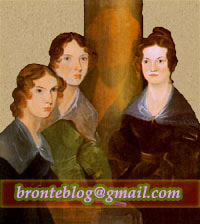
Picture Source.
Writing the graphic adaptation of Jane Eyre for Classical Comics gave me a fantastic excuse and tremendous opportunity to immerse myself in its author’s mind. It quickly became obvious that Brontë was propounding the belief, perhaps gleaned from her Irish forebears, that real spirituality arises from a natural goodness in human beings that is inextricable from Nature.

A potent mixture of Christianity and British folklore established a powerful psychological background for the love affair between Jane Eyre and Mr. Rochester. Symbolism made the novel sparkle. Jane’s show of strength was linked with the moon rising. Mr. Rochester was described as a bird of prey. He often called Jane a tiny bird of one sort or the other, or a fairy sprite. (Amy Corzine)
Check some of the illustrations that we posted some months ago and you will understand more clearly how these symbolisms are treated.

Book Outlook posts about Confinement in Jane Eyre. The article introduces some interesting points in need of a further discussion:
(...) But of the veritable prisons Jane Eyre is forced to endure, many of these confinements do more to protect her than they keep her from liberty. If she hadn’t been locked away from Mrs. Reed and her cousins, she may have suffered a similar fate; she may have become as shallow, as wayward, as stilted or as resentful as any in the class of her “superiors”. If she had not endured the confinements of reason, she might have fulfilled the reputation of her childhood, and if she had not learned to control her reason she could have become as deranged as Bertha. (...)
Rare Finds, the blog of Bauman Rare Books, informs about this magnificent first edition of Jane Eyre, available for just 68000$:
(BRONTË, Charlotte) BELL, Currer. Jane Eyre: An Autobiography. Edited by Currer Bell. London: Smith, Elder, 1847. Three volumes. Octavo, contemporary three-quarter brown calf gilt, raised bands, red morocco labels, marbled boards and endpapers. Housed in custom half-morocco clamshell box. $68,000.

First edition of one of the greatest and most popular novels in English literature in contemporary binding.

Charlotte Bronte’s decision to publish under the pseudonym “Currer Bell” aroused great public curiosity regarding the author’s true identity. Thackeray, Bronte’s literary hero, was sent a pre-publication copy, prompting this reply: “It is a fine book... Some of the love passages made me cry... I have been exceedingly moved & pleased by Jane Eyre . It is a woman’s writing, but whose?” (Barker, 535). The demand for Jane Eyre “was almost unprecedented. The first edition... was published on 16 October 1847; it had sold out within three months... By any standard, Jane Eyre was a resounding success” (Barker, 535-37). Bronte “had learned to combine extraordinary power of expressing passion with an equally surprising power of giving reality to her pictures which transfigures the commonest scenes and events in the light of genius” (DNB). Bound without half titles in Volumes I and II; and without publisher’s advertisements in Volume I. Wolff 826. Smith 2.

Page 13 of Volume I with repaired closed tear, occasional light foxing to text, binding about-fine. A rare classic, exceptional in handsome contemporary binding.
Darque Reviews interviews Lilith Saintcrow, author of the Dante Valentine series, who among very different influences confesses that:
I also am a big Stephen King fan, and I reread Jane Eyre and Sleeping With The Enemy at least once a year.
Finally, the only non-Jane Eyre item today: some days ago we presented the current performances of Roberto Pieri's adaptation of Wuthering Heights, Cumbres Borrascosas in Spanish, in Buenos Aires, Argentina. Here you can find a non official blog about the production.

Categories: , , , ,

Saturday, October 11, 2008

Saturday, October 11, 2008 12:05 am by M. in ,    No comments
As we have been informing, Classical Comics has just released a Jane Eyre graphic novel in two versions: Original Text (abridged) and Quick Text. It's certainly one of the most expected Brontë events of the year and BrontëBlog will publish a review in the coming days.
Jane Eyre. The Graphic Novel
Charlotte Brontë

"I scorn your idea of love and the counterfeit sentiment you offer.
And I scorn you when you offer it."

The Bronte classic from 1847, is brought to vibrant life by the artist John M Burns. His sympathetic treatment of the classical romance will delight any reader with its strong emotions and wonderfully rich atmosphere.

Script Adaptation: Amy Corzine
Artwork: John M Burns
Lettering: Terry Wiley

UK Publication Date: 29th September 2008
Format: 144 pages
full colour, paperback
246x168mm
Versions: Original Text (abridged) and Quick Text (2 different books)
Cover Price: £9.99

Charlotte Bronte's classic Jane Eyre is brought to vibrant life by legendary artist John M Burns. Perhaps best known for his daily newspaper comic strips (such as The Seekers, Modesty Blaise, Danielle, and George and Lynne), John has also worked on Dan Dare, Judge Dredd, and Trueno; he co-created Bendatti Vendetta for the Judge Dredd Megazine, and is lead artist of Nikolai Dante. John's sympathetic treatment of this classical romance from 1847 perfectly matches Amy Corzine's inspired script adaptation. (Booktrade)
The two versions include a biographical account of Charlotte Brontë, a Brontë Family Tree, a Chronology, a letter from Charlotte Brontë to W.S. Williams concerning Jane Eyre (the original and a transcription) and a brief 'making of' of a page creation.

As a complement to the publication, Classical Comics also releases a Study Guide, aimed at upper Key Stage 2 and above.
Classical Comics Study Guide: Jane Eyre
Black and white,
spiral bound A4 (making it easy to photocopy)
Price: £19.99
ISBN: 978-1906332-12-9
Published: October 2008
Categories: ,

Friday, July 09, 2010

The Independent reviews Michèle Roberts's Mud. Stories of Sex and Love:
This is a delicious book, to be savoured mouthful by mouthful like caviar – or perhaps as a child comes to know the world, by stuffing every object we encounter into our mouths. For that is how these stories work. Black suede shoes "look good enough to eat"; a handful of moist earth or the rich, squidgy mud itself demands to be relished intensely by all senses . (...)
Several times Roberts invites us to imagine ourselves at the periphery of a well-known Victorian classic, for instance as a servant in the house of Jane Eyre's Mr Rochester, observing the governess and watching Adele make friends with the mad woman in the attic. (Elaine Feinstein)
The Smart Set reviews Inseparable: Desire Between Women in Literature by Emma Donoghue:
As [the author] recounts in her introduction, "I remained a greedy reader, and when I found myself falling for a girl, at 14, I began seeking out stories of desire between women." Inseparable is the result of her decades-long search. I was afraid the book would be reminiscent of oh so many women's studies classes, teasing out hidden or nonexistent lesbian themes from classic works, inspecting the orphanage scenes of Jane Eyre to determine whether young Jane and Helen crossed over from friends to something more. (Jessa Crispin)
More websites interviewing Mia Wasikowska who is presenting Lisa Cholodenko's The Kids Are All Right which is a Focus Features production like Jane Eyre. From BlackBook:
You just finished shooting Jane Eyre. Is it a pretty straightforward adaptation?
Yeah. It’s very much a classic Jane Eyre. Things will be flushed out in a way that maybe hasn’t been done in previous adaptations. Cary’s an usual choice for the director: his last film was about illegal immigration. He’s going to bring some interesting things to it, a lot of elements that aren’t as focused on. It’s dialogue heavy, obviously. It’s a wonderful role with intense conversations. (Ashley Simpson)
The Belfast Telegraph interviews singer (and Brontëite) Eddi Reader:
But the prospect of playing the Brontë Music Club, located in the heart of the paternal homeland of the famous Brontë sisters around Rathfriland, elicits an even more excited reaction from the star.
“I’m a mad fan of Wuthering Heights,” confesses the 50-year-old Glaswegian excitedly.
“I'm drawn to anything that has a little bit of artistic thought put to it!” (...)
Romance is an integral part of Reader’s music and, judging from our interview, her personality (indeed the Wuthering Heights references pop up periodically during our chat). (Matthew McCreary)
So many readers, critics and scholars discussing the sexual tension between Jane Eyre and Rochester in Jane Eyre, when a journalist from the Orange County Weekly reviewing a local production of Spring's Awakening knows better:
Most of the characters seem as though they’ve walked off the pages of a Charlotte Brontë novel, overshadowing the seething sexual tension and bogging down the rather salacious events. (Joel Beers)
Blessed ignorance.

Twilight zone today:
Meyer says each of her four Twilight novels was inspired by and loosely based on a classic work of literature, such as "Pride and Prejudice" or "Wuthering Heights." If she decides to continue the series, publishers are touting several familiar books for inspiration. We might soon see "Pat The Bunny -- and Then Drink His Blood" and "The South Beach Diet: Join The Walking Dead." (Danny Tyree in Marshall County Tribune)
PRLog presents Bedtime Stories for the Faint of Heart by Jeva Singh-Anand whose main influences come from
Edgar Allan Poe, Robert Bloch, Roald Dahl, and Emily Brontë.
Emily Brontë of "Wuthering Heights?"
“Wuthering Heights has been billed as this kitschy Victorian romance, but the novel is actually a chilling insight into the mind of a brutal sociopath, an emotional domestic abuser, whose lust for revenge destroys nearly everyone in his intimate circle. Eventually, it leads to his own destruction,” he said.
Blackcurrants farmers with a thing for Kate Bush's Wuthering Heights in Canterbury Times, a song which inspires this writer of Free Betting Online, Vanishing Point publishes a new Jane Eyre trading card: Jane Eyre, Age 10, Month Long Challenges is reading Jane Eyre, Coffinmaker from SparkLife is blogging about Wuthering Heights, with a peculiar sense of humour. The Squeee publishes a (bad) review of Hilary Bailey's Mrs Rochester. The Sequel to Jane Eyre (1997), Book Nut reviews briefly the Classical Comics' adaptation of Jane Eyre. Linocutboy proposes an original book cover for Jane Eyre.

Categories: , , , , , , ,

Monday, January 21, 2008

Monday, January 21, 2008 4:08 pm by Cristina in , , , ,    No comments
First of all, good news. As if looking forward to the release - scheduled for July - of the Classical Comics edition of Jane Eyre wasn't enough, we have just heard that a Classical Comics edition of Wuthering Heights is being prepared for autumn 2009. Here is the description from their website:
Wuthering Heights
Emily Bronte

Emily Bronte's only novel is famous the world over - not least because of Kate Bush's 1978 "tribute song" - but don't let that trivialise this classical masterpiece. Hardship, insanity and ghosts; what more could you want from a book?
Script: Sean M Wilson
Artwork: John M Burns
Available Autumn 2009
It's also nice to see the continuity of the work, as John M Burns is in charge of the Jane Eyre artwork as well, which we like a lot.

On to other topics. John Mullan's Anonymity is still doing the rounds. Mark Ravenhill in his Guardian blog reflects on writers and pseudonyms, and Currer Bell turns up.
The most popular author of his day - Walter Scott - published anonymously, as did his contemporary, Jane Austen. Defoe and Swift were anonymous scribes, and Jane Eyre was first published under the name Currer Bell.
Not only Jane Eyre, but each and every Brontë novel was, even Villette, even if by then Charlotte could no longer keep her real identity a secret.

And courtesy of the Ledger-Enquirer comes one of those mentions where a Brontë reference seems to be added for no reason at all:
Browne, with her sharp wit and gaudy get-up, drew laughs from the 50 or so women (and a few men) gathered Sunday, as she gave a brief talk at a table in front of the historic library's classics section.
Part of her comments came from a reading from a chapter in her latest book, "The Sweet Potato Queens' Guide to Raising Children for Fun and Profit" (Simon and Schuster, $22.95). The reading, however, may have made Jane Eyre blush. It is about boys' fascination with their privates, and her interpretations thereof. (Allison Kennedy)
*sigh*

Before we move on to look at some blogs, we would like to make a parenthesis in the purely Brontë stuff and report that, according to the Guardian, the BBC1 has just announced that we will be watching a new, four-part adaptation of Thomas Hardy's Tess of the D'Urbervilles next autumn. If there is a classic that can't absolutely be altered to tell a rosy story - as was the one of the main arguments of the historical drama fatigue - then that's Tess.

So, blogs. Draydel talks about Jane Eyre 2006 and Pride and Prejudice vs Jane Eyre. Allan Hunter looks into life paths and Jane Eyre. Leituras & Releituras has a post in Portuguese on Wuthering Heights.

And finally a vintage, movie tie-in edition of Wuthering Heights dating from 1939 is for sale at Thomasina's Etsy shop.

Categories: , , , ,

Tuesday, June 24, 2008

Tuesday, June 24, 2008 8:27 am by M. in , , , ,    No comments
Classical Comics, which as we have been publishing will publish a Jane Eyre comic adaptation this fall prepares also a Japanese version:
Against the tide of Japanese inspired graphic novels hitting western shores, Classical Comics have signed a deal with Ittosha Incorporated of Japan to translate and publish their series of graphic novel adaptations of literary classics in Japanese.

The influence of Manga on western media art is unquestionable, and the style is hugely popular amongst British teenagers in particular. This trend is not new - even Monet was influenced by Japanese artwork that he saw exhibited in the late nineteenth century. With the popularity of series like Pokemon and Yu-Gi-Oh! that have helped form multi-media standards amongst today’s youth, it’s easy to see how the Manga phenomenon has taken hold in the UK.

Although the word “Manga” is merely the Japanese word for comic book art, it has come to represent a style of drawing, typified by abstract features of large eyes and small mouths, so often seen across the globe in today’s media-rich society; which makes this particular deal all-the-more interesting as it goes against the established east-to-west culture flow.
Chairman of Classical Comics, Clive Bryant said,

“Our multiple text versions of well-loved classic literature have already proven to be a huge success around the globe, particularly with students and teachers who welcome this vibrant, colourful way of introducing these wonderful books. Language translations are a natural extension to this. Not only are we exporting Great British literature, but we’re also delivering part of our deep culture at the same time. Just as westerners nd the Japanese culture intriguing, we think that there are many people in Japan who will be equally fascinated by our heritage.”

Terumasa Hirano, Chairman and Executive Editor of Ittosha Inc. added,
“When we first came across the Classical Comics range, we immediately saw the potential for a Japanese translation. While the artwork is very different to what we see over here, that is part of their appeal and helps to deliver these famous stories."

Ittosha Inc will launch the winter 2008 season with the first two Shakespeare books in the series: Henry V and Macbeth. Jane Eyre (Brontë), Frankenstein (Shelley), Great Expectations (Dickens), and A Christmas Carol (Dickens) will follow, as will all of the titles published by Classical Comics in the UK and the US.
Greater Kashmir publish an article about the reliability of narrators in literature. The author of the article knows his Brontës:
For example a Nelly Dean of Wuthering Heights, the novel by Emily Bronte, is unable to understand fully the relationship between Heathcliff and Catherine. She is so prejudiced towards Cathrine that she once remarks while catherine is ill:
“She is fainted or dead I thought so much the better. Far better than she should be dead than lingering a burden and a misery maker to all about her”. It is the ideology of Nelly Dean that prompts her to voice her feelings like that and she does not understand Cathrine and Heatcliff (sic) the way we do. (...)
Charlotte Bronte was once asked why she and her sisters resorted to pseudonyms. She replied that it made their work the focus of attention of a critic rather than their personal life which amounts to true literary criticism. (Tanveer Ahmad)
Près de la plume... au coin du feu talks about Wuthering Heights (in French). Incurable Logophilia reviews The Professor:
The novel stands on its own. Taken as a whole, I didn’t find The Professor as well-constructed as Jane Eyre, nor its main characters as fascinating – but broken up into scenes and ideas, it’s a wonderful study. And its supporting cast are quirky and wonderful – Mr. Hunsden, Mlle Reuter, Mr. Pelet. I could see a lot of Rochester in Hunsden.
Categories: , , , ,

Monday, April 13, 2009

Monday, April 13, 2009 12:02 am by M. in , , ,    1 comment
We are very grateful to The Salariya Book Company for sending us copies of these comic books.

Wuthering Heights (Graffex)
(Paperback)
by Jim Pipe (Adapter), Nick Spender (Illustrator)

  • Paperback: 48 pages
  • Publisher: Book House (1 April 2009)
  • ISBN-10: 1906370133
  • ISBN-13: 978-1906370138
Jane Eyre (Graffex) (Paperback)
by Fiona MacDonald (Adapter), Penko Gelev (Illustrator)
  • Paperback: 48 pages
  • Publisher: Book House (1 May 2009)
  • ISBN-10: 1906370117
  • ISBN-13: 978-1906370114
Comic adaptations of Brontë novels have never ceased to be published in the last decades, normally linked to some sort of educational purpose. As a way to introduce children to the pleasures of reading, as a sort of magical key to make classical literature appealing to teenagers. Usually following the local curriculum guidelines. The quality of the adaptations is usually proportional to the ambitions and original purposes of the enterprise. As a general rule, the more focused on just being a complement to the general syllabus, the more mediocre the results. More than just be faithful or not to the text, a successful adaptation has to be able to offer an original view, a raison d'être, a coherent approach to, and interpretation of, the original novel.

We have recently seen very ambitious approaches to Jane Eyre (the Burns & Corzine Classical Comics adaptation) and other very modest in ambition and results (Paper Movie Books). Concerning Wuthering Heights, Classical Comics is preparing its own adaptation, a new French adaptation by Édith & Yann has just been published in France(1). Classics Illustrated is preparing UK reissues of the original 1947 Jane Eyre(2) and the 1960 Wuthering Heights for this summer. The two new proposals discussed here are somehow in between of these two poles. They constitute honest and original adaptations but their scope and target(3) is clearly more reduced than the Classical Comics approach.

Each comic in this collection is introduced by a quotation from the original work on a full two-page spread trying to capture the soul of the approach. For Wuthering Heights Jim Pipe uses the well-known "You said I kill you -haunt me then" whereas Fiona Macdonald recovers the poignant soliloquy when Jane Eyre is wandering around the moors after running away from Thornfield Hall: "Shall I be an outcast again this night?". The adaptation is divided into minichapters two-pages long with a heading summarising the action which takes place. The story advances basically through simple explanations and basic drawings of the characters' psychologies accompanying each of the (sometimes much too small) panels. Very little original text is preserved in the speech bubbles whose intention is not to explain the action but to punctuate several particular moments and feelings. Footnotes defining vocabulary are used with moderation.

Wuthering Heights is retold by Jim Pipe and illustrated by Nick Spender. Emily Brontë's novel certainly isn't the easiest of books to be reduced into a 41-page comic adaptation (which portrays both generations even) and the result is not altogether convincing. We wonder if a reader unfamiliar with the novel, as the potential public target are, will be able to understand not only the motivations behind the characters' behaviour but some of the twists and turns of the action. Nick Spender works with vivid colours, bright shapes and a highly contrasted inking. Generally focused on faces and expressions, backgrounds and settings are just barely sketched. In a novel which integrates so deeply the landscape (the moors) into its own characters this is a drawback that weighs on the work. The comic is completed with some information about Emily Brontë, a background of the book with some trivia and interesting details, a timeline of Emily Brontë which places Emily's life events into her historical and social context and an incomplete and highly arbitrary commentary of other adaptations of Wuthering Heights.

Jane Eyre is retold by Fiona Macdonald and illustrated by Penko Gelev. This is, in our opinion, a more satisfying adaptation. Fiona Macdonald makes a good work, with the obvious limitations of the enterprise, retelling Charlotte Brontë's narrative. More fragments of the original wording are retained and this contributes to the coherence of the approach. Penko Gelev's palette is quite restrained: greys and muted colours which added to a very idiosyncratic and peculiar style weave a very particular, and charming, atmosphere. The extra contents in this case are a biography of Charlotte Brontë(4), a timeline with the main British Women's Education and Legal Rights events in the whole 19th century, a list with the other novels by Charlotte Brontë and some contemporary reactions to the first edition of the novel. Finally, another selection (again arbitrary and incomplete) of other Jane Eyre adaptations.

Notes:
(1) Les Hauts de Hurlevent d'Emily Brontë, Volume 1; Artwork by Édith, Adaptation by Yann, Éditions Delcourt, Collection: Ex-Libris, April 2009, ISBN: 978-2756013800
.
(3) We don't know yet which version: Classics Illustrated, No 39, Illustrated by Harley M. Griffiths, 1947 or Classics Illustrated No 39, Illustrated by H.J. Kihl, 1962.
(3) Which is Key Stage 2/3 (UK) or Grades 5-8 (US) more or less. We wonder if with several obvious modifications these comics could not be also addressed to students learning English as a foreign language.
(4) With a couple of drawbacks. Charlotte Brontë's cause of death is given as a fact to have been due to typhus and no mention is made of the more 'popular' hyperemesis gravidarum hypothesis. And Branwell's death is placed in 1849 after Anne's and Emily's deaths. This is wrong. Branwell was the first one to die in 1848.

Categories: , , ,

Monday, April 18, 2011

This reviewer of the Minnesota Opera production of Bernard Herrmann's Wuthering Heights doesn't seem very fond of the sprechgesang technique. In the Pioneer Press:
It's a staging full of wonderfully imaginative ideas from director Eric Simonson and designers Neil Patel and Wendall K. Harrington. But you're not likely to come away wondering why this work hasn't been hailed as a modern masterpiece. (...)
Herrmann is a great writer for orchestra, but he rarely gives his best music to the singers. Instead, much of the exposition is delivered in recitative fashion, entire phrases remaining on one note, arias rarely taking wing.
If only the tunes were as evocative as their words. Instead, the most swoon-ready love songs are given to Cathy's supposedly stiff-upper-lipped husband, Edgar — and are sung splendidly by Eric Margiore.
Similarly, Adriana Zabala makes Heathcliff's neglected wife a compelling character in a gripping fourth-act aria. And bass Ben Wager brings resonance and some welcome wild-eyed abandon to Cathy's hard-drinking madman of a brother.
If you're wondering how the star-crossed Cathy and Heathcliff could have "Wuthering Heights" stolen out from under them by their spouses and siblings, you can blame it on Herrmann.
Sara Jakubiak and Lee Poulis bring voices of power and beauty to the roles, doing their best to draw our sympathies toward two characters who, when all is sung and done, aren't very likable. But the score never allows their love to touch a listener's heart. (Rob Hubbard)
This blogger who attended the dress rehearsal was more enthusiast:
The use of these scrims created an amazing effect, and really made the show, otherwise grim and bleak in its Brontë way, quite dazzling. Not to mention, the effects made the spooky parts exceptionally chilling.
I can't believe I've written all of this and I haven't even touched on the music. The music! Daniel Zillmann, the Communications Manager at the Minnesota Opera, explained the music best when he said that it's like a mix between Turner Classic Movies and the opera. Certainly it wasn't a sound that I could conjure before actually hearing the score, but once I heard it the explanation struck me as spot on. It really was something to see all of these unbelievably talented, and dedicated people bring to life the obsession of one man, a musical genius who never was able to see his project come to life. (Courtney Algeo)
Jane Eyre 2011 is still being reviewed:

The Daily Titan:
It’s easy to go wrong when adapting a classic book into a two-hour film for the big screen, but Jane Eyre is proof it is possible as long as the director stays true to the crucial elements of good storytelling, compelling characters, rich dialogue and balanced tension.
For anyone interested in Victorian-style classic time pieces, Jane Eyre is a delight to view on the big screen and a must see. (Flor Edwards)
WWLP 22 News:
 "Jane Eyre" is a timeless classic and this stirring production hits home with 3 stars. Take my advice, make a date with "Jane Eyre." (Sy Becker)
Women's Voice for Change:
From the stellar cast and fine-tuned screenplay to the flawless costumes, sets, sound and lighting, Fukunaga’s Jane Eyre is a deeply satisfying film, and one of the best I’ve seen so far this year. (Alexandra MacAaron)
In the same review we find this nice appraisal of the novel's merits and vigency:
This year, thousands of high school English classes will assign Jane Eyre (and tens of thousands of high school students will complain about it). But then, something magical will happen. Young women accustomed to the sarcastic chatty prose of the Gossip Girl series will get swept up in Brontë’s luxurious language. They will be enthralled by Jane’s story, her strength and determination. She is the thinking girl’s heroine, and they will see themselves in her. Because of Jane, generations of young women have been — and will continue to be — reassured that even if they are “poor, obscure, plain, and little,” they can still make a happy ending if they are true to themselves. (Alexandra MacAaron)
Nevertheless, we still think that not only young women can react this way to Charlotte Brontë's novel.

Rock'n Roll Ghost interviews Cary Fukunaga and Mia Wasikowska:
Cary Fukunaga: To get the film, the Bob Stevens’ version of the book, was definitely a challenge. I had thought about adapting it myself when I was waiting for Sin Nombre to go into production. When I was in the U.K. doing promotions for Sin Nombre I found out that BBC had a Jane Eyre project in theatrical slate. So I asked to read it and I liked what the screenwriter had done with it. So I met with the producer and the writer. I told them I liked their project. They told me they liked me.
indieWire comments on the movie's box office:
“Jane Eyre” continues to play, though it seems like the picture has already peaked, currently at $6.6 million with smaller theater counts.
Nevertheless, it seems that the film was quite successful at the Northwest Filmfest:
The 18th annual Northwest Filmfest was a great success! We had nearly 4,000 patrons enjoy 17 diverse films from around the world — a very respectable turnout. People seem to like the two-Sunday format.
The top attendance hit was Jane Eyre, while Music From the Big House and Steam of Life also performed well, reflecting the specific local interest in both films. (The Chronicle Journal)
Dita 40's Blog complains about why Jane Eyre is not premiered in her town.

The film opens this weekend (April 21st) in Portugal and Porta-Livros celebrates the tie-in Portuguese edition of the novel.Conspiração das Letras gives away a copy of another Jane Eyre Portuguese edition.

On the blogosphere: Ryan The Movie Critic,Teri Parris Ford's Blog, StephanieVandrickReads, Cindy's Book Club, TV, Me and Potpourri, Maestroreviews, Desirous of Everything, 

The Yorkshire Post interviews Ben James-Hill:
If you were hosting a dinner party, which three other guests would you invite from your town and why?
Me? The host of a dinner party? Well, I’ll have to just imagine this one. I would invite Charlotte Brontë, Sir Alan Ayckbourn and Robert Palmer. That would be an interesting conversation of memories of Scarborough.
The Independent has an article about the difficulties in the treatment of morning sickness associated with pregnancy. The most extreme case of morning sickness, hypemeresis gravidarum, is mentioned in connection to Charlotte Brontë:
In some women hyperemesis gravidarum used to prove fatal. Charlotte Brontë died with pregnancy sickness, describing in her letters how she had "strained until my vomit was mixed with blood." (Jeremy Laurance)
The Guardian tells the story of Tasha Onwuemezi, one of the collateral damages of the tuition fees increase of the Cameron-Clegg UK government:
In the second interview, I quoted the introduction of Lolita because it's my favourite part of the novel and I like quoting things, and I linked the language used in Lolita to the grandiose language of Othello, which is my A-level text. Granted, I did confuse "Ode to a Nightingale" with "Ode on a Grecian Urn", but it wasn't as though I thought Charlotte Brontë wrote Hamlet or anything and I corrected myself and continued with my analysis of Romantic literature. I thought I did pretty well.
Kindle Author interviews the author Bonnie Blythe:
David Wisehart: What can you tell us about Claire's Not-So-Gothic Romance?
Bonnie Blythe: It's a light retelling of Jane Eyre through the eyes of Claire, who's something of a misfit.
Keighley News has a reminder of Catherine Bertola's exhibition at the Brontë Parsonage Museum, To Be Forever Known; nachtsichtgeräte reviews Jane Eyre 1944 (in German); So Many Books reviews Shirley by Charlotte (not Anne) Brontë; Flixchatter lists Heathcliff as one of their favorite period drama heroes; The QuickWitLitniks of Springfield-Greene County posts about the Classical Comics's Jane Eyre adaptation; It's the Arts and mainstdancer08 (on Youtube) review Charlotte Brontë's novel; Books of gold does the same with Wuthering Heights.

Finally Abigail's Ateliers posts her knowledgeable views on why - judging by the dresses worn - the so-called new Brontë portrait cannot be dated 1838. And for a chance to see a known Brontë portrait - that of Charlotte Brontë painted by Richmond - remember that it is on exhibition at the National Portrait Gallery until April 25th - quite a rare treat.

Categories: , , , , , , ,

Wednesday, July 29, 2009

Wednesday, July 29, 2009 12:03 am by M. in , , ,    4 comments
We are very grateful to Real Reads for sending us two review copies of the following books.
Wuthering Heights
by Gill Tavner
Vanessa Lubach (Illustrator)

# Paperback: 64 pages
# Publisher: Real Reads (30 Jul 2009)
# ISBN-10: 190623020X
# ISBN-13: 978-1906230203
Jane Eyre
by Gill Tavner
Vanessa Lubach (Illustrator)

# Paperback: 64 pages
# Publisher: Real Reads (30 Jul 2009)
# ISBN-10: 1906230218
# ISBN-13: 978-1906230210


What's the best way to introduce children to classic literature? This is a recurring topic which each generation resurfaces and one which inevitably generates confronted positions. Is it better to quote from the original without adapting? Is an abridged version which reshapes the original language to each new group of potential readers most advisable? Is it better to completely modernise the settings and situations? Or maybe a visual approach (via comic or with illustrations à la page) can be more successful? In recent years we have seen examples of all these approaches(1) some of them more accomplished than others but all of them sharing a common goal: bringing the classics to future readers.

The Real Reads collection is one more of these attempts. It consists in brief illustrated retellings (some 50 pages and 20 illustrations plus the cover in a dustjacket, addressed to children 8-13 years old) of widely known English classics by Jane Austen(2), Charles Dickens, William Shakespeare and, of course, the Brontë sisters among others. Charlotte Brontë's Jane Eyre and Emily Brontë's Wuthering Heights are unsurprisingly the choices. Each Real Read contains the following sections: The Characters with a brief summary of each character and an appropriate illustration, The Story were the illustrated retelling can be read and a final section: Taking the Things Further where a call to read the real thing is made, Filling the Void highlights the main points of the original narrative that have been skipped or altered, Back in Time briefly places the author and the book in its time, Finding out More suggests books, films or websites and Food for Thought offers prompts to start a discussion about the book.

Both Jane Eyre and Wuthering Heights are retold by Gill Tavner and illustrated by Vanessa Lubach. Gill Tavner says on the RealReads website:
I have long thought that there must be a way of making the qualities of ‘classics’ accessible to most readers, but I was unconvinced that abridging was the answer. As a mother of two young children, I have endured the pain of reading abridged fairy tales and Disney films. These often machine-gun the reader with a list of events. Rarely do they offer the reader an opportunity to develop interest in or appreciation of varied vocabulary, style or themes. Do abridged versions need to be like this? Surely there is a way to make an abridged version an enjoyable and enriching rather than simply informative reading experience? Surely this is an important distinction if we aim to nurture keen, confident readers?
Surely. And Gill Tavner tries hard to retell the novels preserving some of the original language or structure. This is considerably better achieved in Jane Eyre than Wuthering Heights. The complicated structure of Emily Brontë's masterpiece is so inextricably weaved into to the novel itself than any attempt to alleviate it is doomed to fail. The machine-gun effect that Ms Tavner alludes to it in the aforementioned text is very hard to get around. Jane Eyre, however, stands the abridging/adapting process much better. The bare bones are there and some of the feeling of Charlotte Brontë's writing can be glimpsed. It is remarkable that Ms Tavner has managed to get Gateshead, Lowood, Thornfied, Moor House and Ferndean... in 50 pages! Of course, the pace is too fast and there's no psychological depth in the characters but this is the unavoidable price to pay in an approach such as this one.

Vanessa Lubach is in charge of the illustrations. This is not the first time she approaches these novels. Recently, she also created the list of Characters of the Worth Press editions (check our review here) and of course some of her previous creations have been recovered for the present editions. Only Rochester's depiction presents a clear change in tone(3). Helen Burns or Adèle Varens also present minor changes. Vanessa Lubach's drawings are in colour pencil with a watercolour underwash in many of her illustrations. This gives a naïf tone that works well with the children stages of both novels and not so well with the rest of it. A mention should be made, nevertheless, to the excellent first illustration of Wuthering Heights with Lockwood fighting in the snow to arrive to Wuthering Heights.

Concerning the final section, the constant reminding of the necessity of reading the original novel to be able to have the full experience is remarkable. The contextualising sections are just testimonial but even so it's unforgivable that Haworth is, once again, wrongly and consistently spelt Howarth and the bibliography and webs selected are highly improvable. There's a wide selection of possible Brontë biographies (fictionalised or not) available for children and, frankly, quoting the wikipedia as a possible visiting website is, to put it mildly, a bit poor. The Food for Thought section is hardly useful to teachers and educators but this seems to be on its way to being solved as some schemes of work for primary teachers have been released on their website. Not for the Brontë titles yet, but they promise more releases.

Notes
(1) You can check our section of reviews to see some of the titles: Classical Comics' Jane Eyre, Graffex Comic Adaptations of both Jane Eyre and Wuthering Heights for instance. And new ones are announced as the Classical Comics' Wuthering Heights or Jane Airhead by Kay Woodward.
(2) A very interesting interview with Gill Tavner about her Jane Austen Real Reads adaptations can be read on AustenProse.
(3) A softened version in this case, as the WorthPress characterisation was more in accordance to a Mary Shelley novel than a Charlotte Brontë one. It's also a good choice to obviate Bertha from the characters list as it will give too many clues to new Jane Eyre readers.

Categories: , , ,

Wednesday, November 23, 2011

Wednesday, November 23, 2011 12:02 am by M. in , ,    No comments
Our thanks to Classical Comics for sending us a review copy of this book.
Wuthering Heights. The Graphic Novel
Emily Brontë
Script Adaptation: Seán M. Wilson
Artwork: John M. Burns
Lettering: Jim Campbell
Format: 160 pages full colour, sewn paperback
Original Text Version
ISBN: 978-1-906332-87-7
Quick Text Version
ISBN: 978-1-906332-88-4
In the last years on BrontëBlog we have reviewed many Wuthering Heights adaptations, revisitations, remakes, prequels or sequels. And some children adaptations with or without illustrations too. But when we address the Classical Comics' adaptation we feel as if we were travelling in quite a different country. Not because we have here a new, challenging, exciting new approach to Emily Brontë's territory full of unexplored ideas or controversial ones. No, this is not the equivalent of the Andrea Arnold's treatment of the story of Heathcliff and Catherine(1) but a very canonical, very faithful but, nonetheless, very interesting adaptation.

The effort is quite similar to the Jane Eyre adaptation that Classical Comics published some years ago. When we reviewed that book we said about the main aim of these books:
What Classical Comics is trying to do is not only entice young readers to read, giving them a glimpse of the classics, but trying to do all that with quality and high standards in the art department as well as in the scripts. All their releases appear at least in two versions: Original Text, where the original novel or play is abridged but most of the times quoted almost verbatim and a Quick Text version which might be more controversial in its editorial decisions
These high standards are maintained in this edition and Wuthering Heights. The Graphic Novel is by far the more ambitious comic approach to the novel and arguably the most engaging in the last few years. Not because of its classical (no pun intended) approach but because it's a consistent, occasionally impersonal but mostly successful proposal.

As in others Classical Comics publications, a case in point is Jane Eyre, the adaptation respects the original chaptering of the text and illustrates sometimes verbatim the story and dialogues of the book. The original text version respects much of Emily Brontë's prose and both the hardcore fans and the occasional reader will be able to enjoy it through the careful and respectful work of Seán M. Wilson. The adaptation manages to combine the double narration of the original effectively without incurring in a confusion of voices as many other adaptations regrettably do(2)

Apart from recognising the merit of Seán M. Wilson's work, it's nevertheless a matter of justice to notice that what makes this adaptation memorable is the extraordinary work of John M. Burns. Talking about John M. Burns is talking about living history of the British comic industry. He has been working since the sixties and most notably he was the illustrator of the previous Jane Eyre adaptation which we praised as:
His artwork is beautiful, clear and always illustrative. His choice of colours and general style evoke even a period-look not at all unrelated to the traditional kind of drawing and colouring used by Mr Burns as opposed to other more modern techniques
Many of the adjectives can be used again. John M. Burns's vivid, highly-detailed illustrations (illustrate is a verb that doesn't make justice to his work, he doesn't illustrate, he recreates) helped by the concise, true-to-the-novel adaptation by Seán M. Wilson, make the story leap from the page. His works excels in many points but his vision of the death of Linton with an almost cinematographical dolly-up shot towards Edgar, ending in a extreme close up of his eyes is at the same time terrifying, moving and disturbing. The meticulous choosing of the palette of colours, the careful creation of the psychological profiles of characters (Catherine vs Cathy are a perfect example) shows the impressive work of John M. Burns(3).

As usual with the Classical Comics publications the book is completed with a short biography of Emily Brontë, a Brontë family tree and a mini making-off of the creation of a comic page from the original pencil drawing up until the final result, showing the completely analogic techniques of Mr Burns.

We are quite confident that the readers of Classical Comics' graphical novel will be haunted anew by Wuthering Heights.

Notes:
(1) Which in a way (at least in its racial subtext) was already present in a 2006 comic adaptation of Wuthering Heights (this one, original and edgy) by Siku.
(2) The mechanism chosen is to give Lockwood the primacy of first narrator and introducing Nelly's voice through talking heads at the beginning of many of her narrations. The recurse is effective but a bit tiresome and repetitive when the internal logic of the narrative makes it prescindible.
(3) It's very curious and highly instructive to compare the 2011 approach to Emily Brontë's novel to the 1963-64 serialised one published in the Diana magazine. Not only showing the evolution in style and technique but also comparing the fast-paced, compressive narrative of a serial publication with the present one. Some of the pages can be seen here.

Tuesday, November 18, 2008

Tuesday, November 18, 2008 1:58 pm by M. in , , , , ,    No comments
Some British newspapers talk about the return of single-sex schools. We are not particularly happy that the reading of Wuthering Heights is mentioned as an example:
Research has also indicated that girls are more likely to be stimulated to read by classical romances such as Emily Bronte's Wuthering Heights, while boys tend to respond more to action stories. (Graham Tibbets in The Telegraph)
Researchers have revealed that girls are more likely to be stimulated to read by classical romantic tales such as Emily Bronte's Wuthering Heights, while boys are likely to be wooed by action stories. (Richard Garner in The Independent)
The Guardian talks to Laura Mackie, controller of drama at ITV, who makes the following comment about the upcoming TV adaptation of Wuthering Heights:
What didn't make the final cut of the interview but was nevertheless interesting was her discussion about the remake of The Prisoner that ITV are making in South Africa (in a co-production with AMC), her attitude to ITV doing period pieces ("We couldn't do an obscure Trollope but we were drawn to Wuthering Heights and to A Passage to India") and to Suranne Jones's posh accent in Harley Street. (Gareth McLean)
An alert for today from the University of Georgia:
Bulldog Book Club. Sponsored by the UGA Libraries. Discuss Charlotte Brontë, Jane Eyre. 11 a.m. MLC Jittery Joe's. Contact: fteague@uga.edu.
On the blogosphere, achukareviews posts about Classical Comics's Jane Eyre:
Classical Comics' second new offering is slightly more perplexing than their release of Frankenstein. With their original line up of Shakespeare stories - Macbeth and Henry V - it was clear that they had chosen 'rip roaring' stories full of adventure and action to tempt disaffected teenage boys into reading. With Jane Eyre it's less easy to see who is being targeted?
The artwork, although agonizingly beautiful, is more watercolour than Photoshop and adds to the dated feel of this comic. Walking around my class (year 6) I found it difficult to find a group that would take to a story about a young girl's turbulent journey through childhood to the heartaches of adulthood. With a GCSE class, one could position the narrative within the timeline of feminism, and the literary tradition of liberated female authors, as well as using it as a launchpad for exploring adaptations of classic stories. Therein lies the contradiction that this version of Jane Eyre never shakes off: a story undoubtedly aimed at adults, repackaged in a format that is read and adored by boys.
Finally, Reading Through History Book Club is reading Jane Eyre.

Categories: , , ,, ,

Tuesday, June 29, 2010

Mia Wasikowska has something to say about her Jane Eyre role in Jane Eyre 2011 to the Orlando Sentinel:
At 20, coming off the billion-dollar smash, Alice in Wonderland, the slight blonde can look at the movie world as her oyster. Plum roles in prestige pictures? Yes, she just finished Jane Eyre.
"The corsets," she mutters. "They're as bad as everyone says. TORTURE!" (...)
She donned a Yorkshire lilt for her turn in "a very non-traditional" Jane Eyre that was directed by Cary Fukunaga, who did the harrowing émigré drama Sin Nombre. (Roger Moore)
The Independent reviews several new novels (grown-up literature of dark desire), including Maureeen Gibbon's Thief and Michèle Roberts Mud:
The demon lover has stepped back over fiction's threshold. And in some cases he resembles not so much Dracula as the Count's great twin among Gothic archetypes: Emily Brontë's Heathcliff. Earlier this month, the American writer Maureen Gibbon published Thief, a novel in which a traumatised woman falls for a convicted but – apparently - wholly repentant rapist named "Alpha". For Julia Pascal, reviewing it in The Independent, the questions the novel raises "about abuse, attraction and damage... are so subtly explored as to make the reader want to complete the novel in one sitting".
Thief seasons the lurking horrror of an amour fou with a sanely bracing humour. That sense of saving wit as a light that shows the way through dark places of the heart also informs Mud, Michèle Roberts's new "stories of love and sex" (Virago, £13.99). Here, a series of twists allows legendary lovers from literature and history – Tristan and Isolde, Jane Eyre's Mr (and the first Mrs) Rochester, Emma Bovary, Colette – to tell a story from the other side of myth in the manner of Carol Ann Duffy's The World's Wife. The darkness here comes in the depiction of an affinity between the glamorous heroines of fable and the exploitation of urban waifs – girls adrift in the city, trafficked women – today: sisters under, and in, the skin.
With striking zest, Roberts grapples with a masculine tradition of libertine fiction that can still shock, stun and even move. (Boyd Tonkin)
An article about Morning Sickness in The Guardian mentions again Charlotte Brontë's most likely cause of death:
Before the arrival of drips, in the 1950s, women even died of it," says Barnie-Adshead. Charlotte Brontë, who died in 1855 in the early stages of pregnancy, is believed to be one of its highest-profile victims – in the weeks before her death, she complained that all food made her feel sick, and couldn't keep anything down. (Joanna Moorhead)
Alastair Harper writes in The Guardian. On this blog we (obviously) prefer his wife's opinion:
To my wife, Jane Eyre is a tear-jerking source of perennial inspiration – to me, it's a 19th-century Dawson's Creek.
The Kitsap Sun reviews the Joanna Murray-Smith satire The Female of the Species, now on stage at the Seattle's A Contemporary Theater. Among the many puns there's a Brontë-related one:
We first meet Margot (based very, very extremely loosely on 1970s feminist icon Germaine Greer) as she’s spewing F-bombs and other assorted vitriole at her publisher over her Bluetooth and nonchalantly pulling her bra off from inside her blouse. She’s made herself — and her publishing house — wealthy with her string of hear-me-roar volumes, which have deteriorated over the years into works of commercial catch-phrasing like “Charlotte Brontë: Traitor From Within.” (Michael C. Moore)
Ordnance Survey recommends the Jane Eyre Hathersage Trail:
The Jane Eyre Hathersage Trail, for instance, is full of historical and literary intrigue. Its circular route takes walkers to the various places that were visited by Charlotte Brontë and appear in Jane Eyre. In Hathersage village, walkers will find the ancient church and surrounding halls that were central to the creation of the novel.
The Yorkshire Post interviews artist Kitty North:
Name your favourite Yorkshire book.
Clichéd as it may sound, Wuthering Heights fascinates me. It is an extraordinary book that crosses generations. It is visual with extreme emotional depth – Emily Brontë must have spent time looking and thinking of the lives of the people buried in the graveyard at The Parsonage at Haworth.
You know, the usual Brontë-Twilight stuff. From The Telegraph:
According to the author, who is a Mormon, her books are "about life, not death" and "love, not lust". Each book in the series was inspired by and loosely based on a different literary classic: Twilight on Jane Austen's Pride and Prejudice, New Moon on Shakespeare's Romeo and Juliet, Eclipse on Emily Brontë's Wuthering Heights, and Breaking Dawn on A Midsummer Night's Dream. Meyer also states that Orson Scott Card and L. M. Montgomery's Anne of Green Gables series are a big influence on her writing.
“Absolutely,” [Melissa] Rosenberg said. “Stephenie’s compared it at times to ’Wuthering Heights,’ or ’Romeo and Juliet.’ You could take the straight-ahead drama part off and drop the fantastical element and still have a compelling story. But, of course, I think the fantastical elements take it to another level.” (John Anderson in the McClatchy-Tribune)
The Kennebec Journal reprints a fragment from Bedside: The Art of Medicine by Michael A. LaCombe, published by University of Maine Press. There's a Brontë reference:
And now he is wasting away on the east wing, barely alive. And he isn't mine anymore. I don't really know what I mean by that. I mean, I had always intended to go back to Stash's with him. It was going to be part of my life, someday. But the hospital bedside just isn't the same thing, my friend. The climate's different; the agenda's changed. Oh, he still taunts me about being unread, still shows me up in his gentle, teasing way:
"Quick, my good doctor, a character from Bronté (sic). ... Time's up ... Heathcliffe(sic, again). Now ... Emily, or Charlotte?"
Buzzle thinks that Wuthering Heights is one of "the best classics for young adults", the author Eve Marie Mont posts on Shooting Stars Mag:
Right now, I am revising my second novel, a YA book inspired by Jane Eyre[.]
An Adventure in Reading reviews Rachel Ferguson's The Brontës Went to Woolworths, Cubicle Confusion describes how it is to read about Helen Burns's death in a bus, Les Brontë à Paris posts a French translation of Charlotte Brontë's letter to Henry Nussey refusing his marriage proposal and celebrates the anniversary of her marriage with Arthur Bell Nichols some years afterwards. Wasatiya... moderación, camino medio posts briefly (in Spanish) about Villette, Book Girl of Mur-y-Castell reviews the Classical Comics's adaptation of Jane Eyre.

Categories: , , , , , , , ,