Podcasts

  • S4 E8: With... Rebecca Marks - For the final episode of series 4, Sam and Mia are joined by historian, author and content creator Dr Rebecca Marks! Rebecca holds a Master's in Art Hist...
    2 days ago
Showing posts with label Victorian Era. Show all posts

Saturday, August 22, 2026

Saturday, August 22, 2026 10:28 am by Cristina in , , , , ,    No comments
The New Yorker discusses 'The Boom of the Sex-Recession Movie'-
In February, I went to see Emerald Fennell’s “Wuthering Heights” at my local movie theatre, in Brooklyn. Next to me sat a man and a woman in their twenties. Early in the film, as Heathcliff (Jacob Elordi) and Cathy (Margot Robbie) breathlessly spy on a couple of servants engaging in a bout of horse-and-rider-themed roleplay, the man beside me began to squirm. This display of light bondage proved merely an amuse-bouche to the erotic banquet that Fennell had prepared. There are no sex scenes in Emily’s Brontë’s novel—the star-crossed protagonists never so much as kiss—but in Fennell’s adaptation they came and came and came: Heathcliff and Cathy snogging in a little carriage; Heathcliff and Cathy going at it on a dining table; Cathy furiously masturbating on the moors as Heathcliff sneaks up on her to watch. My neighbor reacted to such displays with a series of what Brontë would have called “ejaculations,” gasping and groaning in horrified astonishment. “Oh, my God!” he exclaimed. “He’s a sex addict!” he reported to his date, who had slipped away to the bathroom just as Heathcliff leashed up another poor girl and turned her into his willing slave. When the credits rolled, he sat, stunned, head in hands, tears rolling down his face. “That was so fucking dope,” he said, between sobs. (Alexandra Schwartz)
Spanish newspaper Público recently published an imaginary interview with Jane Eyre in which 'she' discussed beauty standards.
Opino que la apariencia no debería confundirse con la verdad. Que el aparato externo no es la esencia genuina de las cosas y que los muros blanqueados jamás deberían responder de la condición del sepulcro. Pero esta cuestión no solo ha importado en este siglo. Las mujeres que buscan alcanzar un ideal de belleza están ahí desde tiempos inmemoriales, porque mientras libran esa batalla no tienen tiempo ni fuerzas para luchar por la dignidad del alma, la independencia de la mente y la firmeza del carácter. No me malinterprete: hay mujeres bellísimas que cumplen las otras tres condiciones, pero el equilibrio es difícil porque el tiempo y las fuerzas son finitas. Nosotras debemos elegir qué guerras queremos ganar, y quizás la batalla final sea aceptar que podemos ser feas sin que nada pase.
Pero todo el mundo quiere mirarse en el espejo y verse bien.
El problema es en qué medida "verse bien" depende solamente del espíritu de cada cual. Mi marido sugirió vestirme de raso y encaje, y adornar con rosas mi cabello, igual que hacían todas las esposas de nuestra misma posición, y yo le respondí: si haces eso entonces yo no me reconocería y habría dejado de ser Jane Eyre, tu Janet. Me convertiría en una mona enfundada en una chaqueta de arlequín o en un grajo revestido de plumas de pavo real. Y añadí: yo no digo que sea usted guapo, señor, aunque le ame; precisamente porque le amo tiernamente no lo hago, así que no me adule usted a mí. La belleza es relativa, pero el ideal de belleza de una sociedad no lo es. (Antía Yáñez Rodríguez) (Translation)
A columnist from OkDiario (Spain) picks up that last sentence to discuss beauty standards as well, together with an AI-generated image of a copy of Jane Eyre (surely there's some metaphor in that?)

the latter half of the 19th century and into the early 20th century [when] there took place in some towns and villages in the Pennines of West Yorkshire what was sometimes referred to as “the annual casting off of the apron strings”. [...]
The Keighley Hen Pecked Club was the creation of Henry Thompson, the landlord of the Royal Oak on Damside.
He was better known as Harry Tap and later owned the White Horse Brewery at Hermit Hole and the inn across the road.
The idea of forming a club may well have been sparked by a popular book of the period – The Hen-Pecked Husband by Harriet Ann Scott – which focused on the domestic struggles within the Victorian household.
Although now largely forgotten, it was said to rival Jane Eyre and Wuthering Heights in popularity at the time. (Robin Longbottom)

Thursday, July 02, 2026

Fine Books Magazine features the results of the auction of the first edition of Wuthering Heights and Agnes Grey:
A first edition of Wuthering Heights together with Agnes Grey has sold at Christie’s London for £1,206,500 in its live The Exceptional Sale: Masterworks Across Cultures auction setting a new world auction record by Emily Brontë.
The set is one of the finest examples in private hands, and no textually complete copy has appeared at auction in publisher’s cloth since 1908. It survives in its original 1847 publisher’s cloth binding and retains the distinctive textual and printing irregularities of the first edition. It is also the highest price ever achieved for 19th century literature and for any printed book by a woman.
Only 250 copies of the first edition of Wuthering Heights were printed and examples in their original full-cloth binding are scarce with only five other examples known (The Blavatnik-Honresfield copy at Brotherton Library, University of Leeds; University of Oxford; British Library; Charlotte Brontë's annotated copy with pages missing sold at Christie’s New York in 2009; and Anne Brontë's annotated copy at Princeton University Library). 
This copy bound in diagonally ribbed green-grey cloth with floral patterns and arabesques stamped on the cover has been kept in the same historic house library in England since just after its publication in 1847. 
Also on The Print, Galerie and others. 

We are delighted with the record-breaking, of course, but we wonder why it's just attributed to Emily. We know Wuthering Heights is far more popular than Agnes Grey, but shouldn't the record-breaking be shared by both Emily and Anne? Or is there an actual reason why it's not?

The Week has Deborah Lutz pick her '6 favourite biographies' and one of them is 
‘The Brontës’ by Juliet Barker (1994)
A giant, door stopping account of an entire literary family, Barker’s book is a monumental achievement. But it is also riveting and tragic, telling of the passions, failures, and early deaths of the four Brontë siblings, with a specific focus on Emily and Charlotte, the authors of Wuthering Heights and Jane Eyre.
Collider has selected and ranked 'The 10 Best Classic Rock Songs Inspired by Famous Books' and among them is
7 "Wuthering Heights" by Kate Bush
Inspired by 'Wuthering Heights' by Emily Brontë
Emily Brontë's "Wuthering Heights" follows the turbulent romance between the orphan Heathcliff and the affluent Catherine Earnshaw. Having been adopted by the Earnshaw family, Heathcliff develops a close bond with Catherine — only to have his heart broken when she marries the wealthy Edgar Linton. Years later, Heathcliff returns to society, this time as a man of status and eager to exact revenge.
Kate Bush puts the novel to music with "Wuthering Heights," written from Catherine's perspective after her death. From direct references to the Yorkshire moors — "Out on the wily, windy moors" — to self-confessional lyrics reflecting the couple's passionate yet emotionally draining romance, "Wuthering Heights" reflects the same volatile nature of Brontë's seminal work. (Dyah Ayu Larasati)

Thursday, June 11, 2026

Thursday, June 11, 2026 7:41 am by Cristina in , , , , , , ,    No comments
Everything Theatre reviews the play Jane Eyre Convention giving it 3 stars out of 5.
As a reviewer, it doesn’t pay to make overly quick judgments. However, within minutes of Jane Eyre Convention opening, I had come to the firm conclusion that the team behind the show had picked a difficult book for a comedy parody. Jane Austen lends herself to the amusing because she is often a quick-witted, funny writer herself. In comparison, getting laughs from Charlotte Brontë’s doom-laden gothic romance feels peculiarly like hard labour. 
However, the valiant cast of four (Eleanor Zeal, Ben Everett Riley, Georgia Jackson and Rachel Overd) throw themselves into the task with unfazed, drama-school-level enthusiasm. This isn’t a criticism. I love drama school energy. It certainly carried the room in this case, on an otherwise quiet Tuesday night in Clapham. Playing guileless attendees at a Jane Eyre reenactment society meeting, the foursome tackle everything fearlessly, including occasional clumsy hints at a Gen Z world beyond a safe literary space. Controlling, violent boyfriends, ADHD, absent dad trauma, race, and post-colonial reflection all pop up briefly. Some references seem flippant. Others unnecessary. This only becomes a real problem with gender politics. Riley, as the only guy in the cast, is sometimes asked to embody misogyny and decry it at the same time. It’s just a bit of a mess that fails to land, either as humour or serious commentary. Not everything needs a contemporary eyebrow raise, and, perhaps, Rochester is allowed to just be a sexy older man. 
Clunky missteps aside, it is all a jolly romp with plenty of good gags. I enjoyed, at various times, the embodiment of the moon, Rochester’s slightly camp horse, running (or walking fast) across the moors, and death by tuberculosis. I warned you, all very doom-laden and gothic. The team gets through the novel that many of us recognise from school curricula at a pace. It’s a book that Zeal, who writes as well as stars, obviously loves in detail. The most effective moments are undoubtedly when Brontë’s words are quoted directly, unadorned. Passages are surprisingly theatrical. It left me a bigger fan of the Haworth writer’s work than I was before. Job done, then I guess. 
For me, Jane Eyre is best represented by the 1943 film starring Orson Welles. Others will love the 2011 film with Mia Wasikowska and Michael Fassbender. Many might turn to director Sally Cookson’s mighty version that landed at the National Theatre in 2015. Realistically, Jane Eyre Convention is not going to trouble anyone’s list of definitive versions. But if you enjoy the book, there is probably sufficient fun to be had among fellow fans here. Knowing that classic works of literature catch the eye in a festival programme, I reckon this is a show with an exciting future at Edinburgh, where, fortunately, it appears it is heading after this Clapham run. (Mike Carter)
Harper's Bazaar wonders 'Why Is Romance So Universally Appealing Right Now?'
Coming off Fall 2026 fashion month this past March, we were left with a lingering, wistful feeling of romance. The Wuthering Heights press tour was in full swing, and there seemed to be a startling overlap between the subverted feminine tropes playing out onscreen and those walking down the runways. [...]
And, of course, Wuthering Heights ties a bow around it all: a romance novel turned film with a fashion-forward press tour in which lead actress Margot Robbie, styled by Andrew Mukamal, took to international red carpets in Dilara Findikoglu corsets cinched up tight. [...]
In Forbidden Fruits, the four main characters host a séance in frilly Rodarte dresses embellished with lace and ribbons. The costumes may conduct a romantic feel, but the plot does not—someone's about to get initiated into a cult. Wuthering Heights may look romantic but it doesn't really feel romantic. Each is provocative in its plotline, heart-wrenching, scary, even gross, at times despite the overt presence of ribbon and corsetry. Whereas releases like Office Romance or People We Meet on Vacation (based on a romance novel) feel more like romance in substance if not costume. Is something romantic purely because it has a Victorian element? Or because it takes place on the moors of England? "I got an Instagram ad for these dresses that literally looked cut-and-paste from the set of Wuthering Heights, and I think that's when people miss the mark," Biga posits. "Can you imagine somebody wearing a whalebone corset in Prospect Park? They would look like they were in a play." (Camille Freestone)
A contributor to The Wall Street Journal has selected five books where houses are important and one of them is
Wuthering Heights
By Emily Brontë (1847)
2. In her story of ill-starred lovers and class divisions set on the bleak moors of Yorkshire, England, Emily Brontë creates two contrasting visions of home. Catherine Earnshaw, raised in the “disorderly, comfortless” gothic abode of Wuthering Heights, is seduced by the refinement of the neighboring Thrushcross Grange, “a splendid place carpeted with crimson.” She transforms herself from “a wild, hatless little savage” into a lady, which estranges her from her childhood companion and besotted admirer, Heathcliff, a foundling who lives with her family. Losing Catherine to Edgar, the heir of Thrushcross Grange, prompts Heathcliff, the perpetual outsider, to vow vengeance; he maneuvers to gain financial control of both houses with the aim of destroying each one’s inhabitants. “The more the worms writhe, the more I yearn to crush out their entrails.” Brontë subjects her characters to the competing influences of the two houses; those who venture too close to the Heights—such as Catherine’s daughter, years later—get sucked into the abject darkness within. Heathcliff is unable to find solace in either mansion. For him, home can only be one shared with Catherine, and he must escape his earthly bonds to unite with her spirit. (Manil Suri)
A columnist from The Argus says that 'Scientific classics deserve a place beside great novels'.
When people talk about reading classical literature, they often talk about it as if it were a kind of cultural passport, a document you must get stamped with Dickens, Austen, the Brontës and Hardy before you’re allowed to pass through the gates of polite society. Admit that you haven’t read Bleak House or that you stalled halfway through Jane Eyre, and you can watch their expressions shift from surprise to a faint, pitying amusement.
Yet the same people who treat nineteenth-century fiction as a universal benchmark will, without hesitation, dismiss the great scientific works of the same era as unreadable, irrelevant or impossibly dense. They will recoil at the idea of opening Darwin’s Voyage of the Beagle or The Expression of the Emotions in Man and Animals, even though these books were written for general readers and sold in their thousands to ordinary Victorians who had less scientific training than most of us today. (James Williams)
A contributor to Ethic (in Spanish) writes in defence of Anne Brontë.

Sunday, May 24, 2026

Jagran Josh chooses a quote of Emily Brontë as the quote of the day: 
“I’ll walk where my own nature would be leading: It vexes me to choose another guide.” The quote of the day Emily Brontë perfectly summarizes the significance of listening to your instincts and being faithful to yourself.
The author implies that there is no point to make oneself conform to the will of others, which may prove to be exhausting and uncomfortable. (Alisha Louis)

The quote comes from the poem  Stanzas (Often rebuked, yet always back returning), whose attribution to Emily Brontë is somehow controversial.

Cineuropa reviews the film Victorian Psycho:
Screening towards the end of the Cannes Film Festival, the Un Certain Regard entry Victorian Psycho, directed by Zachary Wigon, is easily one of the guilty pleasures of this year’s selection.  Based on the novel by Spanish author Virginia Feito, the film is a blend of classic Victorian novels, such as Jane Eyre and Wuthering Heights, and murder stories tinged with deprivation, as suggested by the title, which recalls American Psycho by Bret Easton Ellis and its subsequent 2000 film adaptation directed by Mary Harron. (Veronica Orciari)
Gazette & Herald announces an event in Malton:
In conjunction with the Wesley Centre in Malton, Kemps Bookstore will welcome acclaimed authors Essie Fox and Stephanie Bramwell-Lawes for an evening of gothic fiction.
Inspired by 19th-century novelists and poets, Essie is a bestselling author of gothic historical fiction and has lectured at several esteemed institutions, including the V&A Museum, the Westminster Library, and the National Gallery.
Her books include a Sunday Times Book of the Month, Dangerous, which features Lord Byron as a detective in Venice, and Catherine, an intriguing retelling of Emily Brontë’s classic Wuthering Heights from Catherine’s perspective.
Likewise, Stephanie is a lifelong admirer of Victorian literature, with her favourite novels, Charlotte Brontë’s Jane Eyre and Daphne du Maurier’s Rebecca, heavily inspiring her much-anticipated debut novel, Thornby Manor. (...)
Essie and Stephanie will be in conversation at the Wesley Centre on June 5 for a quintessentially gothic evening, perfect for fans of the Brontë sisters.
The event starts at 7.30 pm, and the doors and bar open at 6.45 pm. Tickets are £10 per person or £20 for a ticket and a book. (Karen Darley)
Love London Love Culture loves Charli XCX's Wuthering Heights, but apparently not enough to check who the author of the book is: 
Charli XCX’s album accompanying Emerald Fennell’s take on Charlotte Brontë’s Wuthering Heights is a fascinating listen, capturing the gothic nature of the story but still maintaining a contemporary lens. (...)
Overall, Charli XCX’s interpretation of Wuthering Heights through music is really fitting but can be listened to through modern music fans and how relationships can be turned toxic very quickly. In may ways it is a powerful listen.
El Diario Vasco (Spain) reviews the film How to Make a Killing 2026: 
'Jugada maestra': Heathcliff en el siglo XXI (:..)
Y es que Beckett Redfellow, rebosante de resentimiento generacional y de clase, es la reencarnación del Heathcliff de 'Cumbres Borrascosas' para esta era. O del Conde de Montecristo para este III Milenio. En un entorno de monstruoso capitalismo. Por todo eso, algunos creemos que 'Jugada maestra' es precisamente lo que su título proclama. (Begoña Del Teso) (Translation)
Cinemanía (Spain) makes an intriguing statement. Pedro Almodóvar could be a good Wuthering Heights director. The evidence? His film ¡Átame! 1989:
 '¡Átame!', la  'Cumbres borrascosas' de Almodóvar
En 1989, Pedro Almodóvar estrenó una película que recibió 15 nominaciones al Goya y no ganó un solo cabezón. Pero el tiempo la ha acabado encumbrando como una de sus obras magistrales: ¡Átame! Protagonizada por Victoria Abril y Antonio Banderas, ¡Átame! puede verse en Netflix y Movistar Plus+. Y es el argumento audiovisual que Almodóvar podría esgrimir para que le aceptasen una adaptación de Cumbres borrascosas.
Buñuel y, algo menos, Kosminsky y Fennell han subrayado la perversidad de Heathcliff, el protagonista de Cumbres borrascosas. Sin embargo, en la novela de Brontë, salvo el narrador (un hombre sin nombre que trata a Heathcliff y escucha, por parte de su criada, toda su historia) y algún personaje secundario, toda la fauna del título de Brontë es borrascosa. Empezando por Catherine, a la que se tiende a santificar en las películas o, a lo sumo, a verla como víctima de una obsesión ante el maligno Heathcliff. (Julio Mármol) (Translation)

Cathy's armpits (sic) are still discussed in many places, like Cosmopolitan, for instance. The Cinemaholic discusses how the novel features Heathcliff's race. Nothing new, really. Also in The Cinemaholic, an article about Jacob Elordi's wigs and face hair in Wuthering Heights 2026.

Tuesday, May 19, 2026

Broadway World Scotland reports that the play Jane Eyre Convention will be part of this year's Edinburgh Fringe after a run in London.
Double Fringe First winners Theatre Caddis are set to bring their comedy, Jane Eyre Convention to Edinburgh Fringe this August, following a run in London earlier this Summer.
The show is set at the world's first ever Jane Eyre Convention, where we find a group of slightly neurotic Brontë-aficinados [sic] gathered to reenact scenes from their favourite novel.
As the group share their passion for all things Jane Eyre, they squabble and fight over the best bits, and conflict over authentic interpretations; also experiencing real emotions as they follow the character of Jane on her journey, including wailing running across the moors! More memorable scenes from the book are relived, as the group attempt to rescue shackled Bertha from the attic.
In this fast-paced farce, the enthusiasts feel that they gain new insights and a better understanding of the story of Jane Eyre, and potentially one another. The show promises audiences a funny, uplifting and quirky jaunt - with unrealistic violence, bonnets, and minimal raunch! The show has enjoyed sell-out runs at Lambeth Fringe, and recent shows at the Bread and Roses Theatre, London.
The show may also appeal to Brontë fans who enjoyed the recent hype around Emerald Fennel's [sic] adaptation of Wuthering Heights. Theatre Caddis is a London-based theatre company known for staging new, eclectic work, showcasing performances that blend humor, literary homage, and character studies.
Jane Eyre Convention is performing at Edinburgh Festival Fringe 6th - 28th (not 10th and 18th) August at 12.25pm (60 mins), Just The Snifter Room at Just The Tonic at The Mash House venue number 288). (Stephi Wild)
According to Grazia Magazine, human hair jewellery is making a comeback.
Perhaps no artifact captures the intimacy of Victorian hair work quite like a small bracelet housed in the Brontë Parsonage Museum in Haworth. Composed of six light brown braids belonging to each of the three sisters – Emily, Charlotte, and Anne – it remains one of the most talked-about pieces of hairwork in existence. The bracelet is technically unwearable now; the clasps are open and one of the braids has come loose. Its power lies not in its intricacy, as the braids themselves are simple up close, but in the identity of its owners. The fact that the Brontë sisters belonged to a lower-middle class family only reinforces how universal the practice was.
This very bracelet recently found its way back into popular culture. When Margot Robbie attended a London premiere of Emerald Fennell’s take on Wuthering Heights, she wore a dress adorned with light brown braids inspired by the Brontë piece. Robbie even accessorized her look with a replica of the bracelet itself – a gesture that bridged Victorian sentimentality and contemporary red-carpet fashion in one deliberate styling choice.
Hair charms also appear in the literature the Brontës produced. In Emily Brontë’s Wuthering Heights, Heathcliff removes a lock of Edgar Linton’s hair from Cathy Earnshaw’s corpse’s locket and replaces it with his own, sending a piece of himself and their love off with her spirit. The plan unravels when Nelly, the housemaid and narrator of the novel, entwines Linton’s hair with Heathcliff’s. Scholar Deborah Lutz described this act as opening up the possibility of a postmortem storm of jealousy between the two men. Though it is the only Brontë novel to directly reference mourning jewelry, the scene underscores how central hair work was to Victorian emotional life.
The latest episode of Fox 5 Kusi Now's podcast Read All About It! is about Wuthering Heights 2026.
On this episode of “Read All About It!,” the four hosts give our long-awaited review of the film “Wuthering Heights.”
Hosts discuss whether the film is a true adaptation, as many characters were omitted entirely from the movie. (Vanessa Hanna)

Tuesday, April 28, 2026

Tuesday, April 28, 2026 7:22 am by Cristina in , , , , ,    No comments
HuffPost describes Elizabeth Gaskell as 'The Unsung Author That Jane Austen and Brontë Fans Will Love'.
And though the response to Emerald Fennell’s 2026 film version of Wuthering Heights has been pretty mixed, there’s no denying it’s brought about a bit of a Brontë boom; sales of the book have skyrocketed.
(If you ask us, that’s a good reason to adapt the two Brontë novels that have never had a TV or movie version made).
To me, that also means we’re long overdue for an Elizabeth Gaskell revival. After all, the author is said to have been influenced by Austen’s Pride & Prejudice when writing North & South (to great success, IMO).
She also wrote the world’s first controversial Brontë biography, The Life of Charlotte Brontë; she had been friends with the subject. (Amy Glover)
Far Out Magazine features Bernard Herrmann's soundtrack for Taxi Driver.
Unlike Welles, however, Herrmann was able to stay relatively prolific in the industry, as his distinctive style and endless well of ideas made him equally suited to epic dramas like Jane Eyre and The Snows of Kilimanjaro and genre classics of the sci-fi and fantasy realms, including The Day the Earth Stood Still and The 7th Voyage of Sinbad. What really separated him from his contemporaries, though, was an understanding of how to build suspense in the still relatively young medium of sound film, shedding the melodramatic swells of old Hollywood for something much fresher, more contemporary, and often experimental, including an embrace of electronic instruments. (Andrew Clayman)
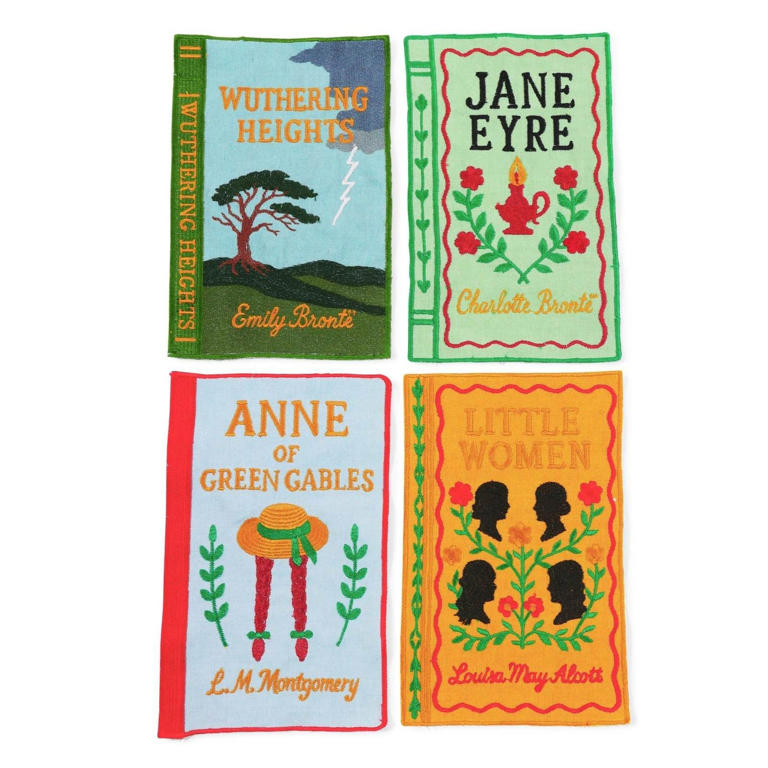
Oprah Daily shares its 'O list: Mother’s Day edition' which includes literary napkins.
Honor the heroine in your life with napkins that celebrate four female-centric literary classics: Jane Eyre, Wuthering Heights, Anne of Green Gables, and Little Women. Handmade and full of character, they’re sure to be the life of any party, whether a book club gathering or happy hour at home. (Holly Carter and Rae Ann Herman)

Sunday, March 22, 2026

Sunday, March 22, 2026 10:22 am by Cristina in , , , ,    No comments
The Telegraph and Argus reports that Haworth has just been named among the UK’s most charming for a spring staycation.
Haworth near Keighley in the Bradford district has been praised by Sophie-May Williams on The Metro’s travel team for being an “idyllic” spot, with the likes of the Brontë Parsonage Museum and Top Withens being highlighted for lovely things to do.
It comes as the area home to the newly released Wuthering Heights film was recently dubbed one of the seven wonders of the UK to visit for 2026 by Conde Nast Traveller. (Molly Court)
Aptly enough, Stylist comments on 'screen tourism'.
Screen tourism is nothing new. Ever since the Lord Of The Rings trilogy let us all know that New Zealand is an actual real-world paradise, people have been seeking out the destinations featured in their favourite films and TV shows. However, in 2026, the trend is arguably more influential than ever. You only need to take a stroll across Richmond Green to spot the hordes of American Ted Lasso fans haunting the Cricketers pub, while Saint Tropez is already bracing for a surge in luxury travel following the announcement that the next season of The White Lotus will shoot there later this year.
No surprise then that Yorkshire has seen a huge spike in tourist interest since Emerald Fennell’s headline-grabbing take on Wuthering Heights hit cinemas back in February. With Fennell putting significant focus on the dramatic vistas of the Swaledale valleys (yes, we’re talking about that rock), a whole new audience seems to have woken up to just how beautiful the Yorkshire Dales truly are. And given 2026’s other big travel trend for wholesome, outdoorsy escapes, it’s not hard to see why visitor numbers are going through the roof. Rambling and hiking through stunning scenery by day, holing up in a cosy country pub by night… what’s not to love? (George Wales)
The Gloss discusses 'Our Love/Hate Obsession With Romance'.
You could say that each generation gets the version of Emily Brontë’s Wuthering Heights it deserves. 1970 got Timothy Dalton’s impassioned glam rock Heathcliff, while 2011’s moody evocation of mizzly moorlands captured the austerity era. What does Emerald Fennell’s whip-cracking adaptation tell us about 2026?
Uncompromising in its theatricality and emotional intensity, it heralds the return of full-fat romance. This is not romance of the polite dinner date kind, but a hearty, high-octane dark gothic fantasy, crawling across brambly knolls on hands and knees. “Kiss me,” Jacob Elordi’s Heathcliff utters to Margot Robbie’s Cathy in a deep Yorkshire brogue, “and let us both be damned.” [...]
Then, of course, there’s Romanticism with a capital R, referring to the late 18th-century movement in the arts, literature and philosophy. Rebelling against the rationalism of the Enlightenment and the technological advances of the Industrial Revolution, Romanticists sought a return to primitive wisdom and unsullied nature. Though published in 1847, Wuthering Heights is set in the late 1700s, with Emily Brontë deliberately putting her earthy and sensuous characters in a pre-industrialised landscape. Though popularly thought of as a love story, it’s essentially a cautionary tale in which emotions, intuition, and social codes come into conflict. Fennell’s adaptation seeks to tap into the characters’ primal emotions and instinctive desires. Much like the 18th-century Romanticists, we seek an escape from collective anxiety around rapidly developing technologies and the fraught nature of global politics. [...]
Romance in 2026 might entail spending time away from the screen and indulging our senses: soaking in the bath, exploring the natural world, setting the table rather than scoffing dinner in front of the television. It might manifest as seizing the moment and making spontaneous plans; or asking someone on a date for their infectious laugh, not because they know their best camera angle. Ultimately, it’s about cultivating and paying attention: choosing to do less, but to fully immerse ourselves in what we do. Granted, this isn’t quite the S&M-style cavorting of Fennell’s Wuthering Heights, but in seeking out small moments of joy, wonder and heightened sensorial experience we can all cultivate a sense of much-needed romance – red latex corset optional. (Rosa Abbott)
The Guardian claims that 'clever is the new cool' because
Three years ago, we dressed in pink to go to the cinema to watch Barbie; in 2026, the mind-bendingly structured, early-Victorian masterpiece Wuthering Heights is the talk of Hollywood, and Netflix is betting big on Emma Corrin as Elizabeth Bennet in Dolly Alderton’s forthcoming adaptation of Pride and Prejudice. Intellect and glamour – which have always sat at separate tables in the high-school canteen of pop culture (you can’t sit with the cool kids if you are a teacher’s pet, everyone knows that) – are flirting hard. (Jess Cartner-Morley)
Both Wuthering Heights and Jane Eyre are among the AI-made selection of '8 Books That Every Hopeless Romantic Will Love' on Book Club.

Friday, March 20, 2026

Friday, March 20, 2026 8:57 am by Cristina in , , , , ,    No comments
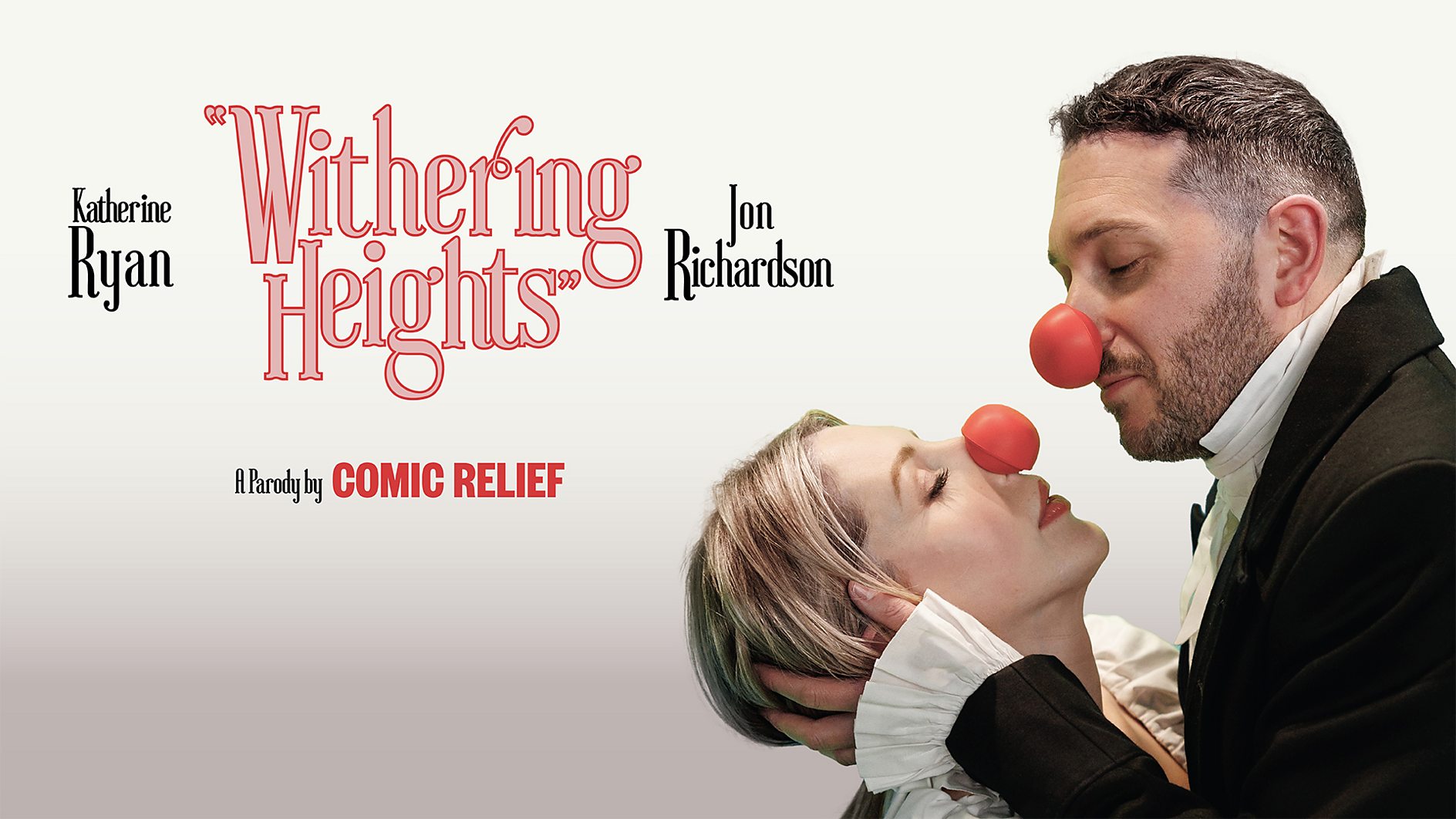
BBC announces the spoof of Wuthering Heights that will be broadcast at 7pm UK time later today.
In an exclusive sketch for Comic Relief: Funny for Money, Katherine Ryan and Jon Richardson are set to embody Cathy and Heathcliff in an unmissable Wuthering Heights sketch this Red Nose Day.
Have you ever wondered who else may have auditioned for the leading roles in smash-hit film Wuthering Heights? Or rather, why Margot Robbie and Jacob Elordi ended up in the role? Fret no more, as this Red Nose Day we are set to get a sneak peek at the exclusive audition tapes as Katherine Ryan takes on the role of Cathy, and Jon Richardson gives it his best Heathcliff, in ‘Withering Heights’.
Comic Relief: Funny for Money is live from MediaCityUK in Salford on BBC iPlayer and BBC One on Friday 20 March from 7pm, and for the very first time, live streamed simultaneously on the official BBC YouTube channel.
The money raised this Red Nose Day could help people access food, shelter and safety – the vital essentials everyone needs to survive.
There are some sites talking about the original, though. The Boar gives it 2.5 stars:
The reduction of the novel to a story of toxic love means that people who haven’t read the book will come away from this film with a completely different view of the story. Although the unsettling atmosphere might still be present, the characters seem completely different (Elordi’s Heathcliff would never have dug up Cathy’s corpse).
All this being said, I did still cry at the end when (spoiler alert) Cathy dies.
There are some good costume choices. Heathcliff’s outfit upon his long-awaited return is my favourite, and doesn’t seem out of place, unlike some of the music choices. I think I could have recovered from my disappointment about Kate Bush’s song ‘Wuthering Heights’ not appearing in the film if it still felt like Fennell had kept the core of the novel intact. But I suppose Charli XCX will have to suffice… (Abbie Fox)
From Inklings:
Despite being over two hours, Fennel managed to capture my attention throughout the whole film. There wasn’t a single moment where I wasn’t anxious to see what happened next, whether that be because I was nervous or excited for what was to come. On top of that, the cinematography, set and costumes were insane.
I had been warned about the ending being tragic. And it was. Looking back on it, I should’ve seen it coming, but it still left me in shambles. I was a crying wreck. But, it also made me see the true reality of a relationship and that not all love stories have happy endings. (Sutton Bulkeley)
A contributor to Her Campus reviews it too.

Hero features a conversation between Margot Robbie and Alison Oliver.
MR: Can we talk about Isabella? Obviously, your character in Wuthering Heights, and she is my favourite thing ever. You’re so funny in the movie. Your physicality for Isabella is so distinctive and perfect and hilarious. People are going to lose their minds when they see you. I’m so excited for this moment. I remember seeing you find that character and I saw how rigorous you are in your preparation. Your notebook that you would check in between takes with tons and tons of writing in it. I’m curious – what was your process for Isabella, and then what’s your process in general?
AO: Isabella felt very clear to me. Emerald’s writing is so amazing, that character just jumps out at you when you read her. In our version, she’s a ward, and she’s actually lived in India until she was around eight, and then was sort of orphaned, taken in by the Lintons, and moved to England. Mary from The Secret Garden was actually a really big reference for the character, because she had that same beginning. But for Isabella, she’s obviously been so sort of, infantilised by Edgar and kept in this child state. I was just really curious about characters that have a kind of peculiarity to them. I remember Polly [Bennett, movement director] said something to me which was really interesting. We talked a lot about that era and how much is repressed, how much is not allowed, and how you’re almost trained and bred into being a good little girl. Then when anything repressed is let out, it’s really messy and unorganised. With Isabella, there’s so much in her, but she has to lock so much of it away – she’s like, reverberating. Desperately wanting to kiss someone – or strangle someone.
MR: She’s practically vibrating. I’m so bummed the scene didn’t make the cut where Isabella’s saying her prayers before bed, but then pulls out this 18th-century porn. [both laugh] And that book, which, by the way, is a real book, is crazy.
AO: It’s actually horrific.
MR: The images in it. When people are like, “I’m so worried about the youth of today, because what they’re seeing online is giving them an extreme idea of sex,” honestly, looking at this book, I was like, what on earth did people back then think sex was? The illustrations in this 18th-century porn book – essentially a porno – honestly, it was like Cirque du Soleil. [laughs]
AO: It was completely awful. But that’s the repressed thing: if it’s all so shameful, then when you let it out, it’s this fucking weird thing. That’s sort of Isabella. I loved playing her so much.
MR: Do you think she’s the funniest character you’ve played?
AO: Yes. Emerald is also so great; she really lets you push things or let go. It’s such a freeing thing when the person you’re working with is really encouraging you to find that. I think there are loads of different ways of interpreting that character, and the way Emerald interpreted her was so exciting to me. What’s interesting about Isabella and Cathy is that Isabella is the reverse of Cathy. It’s like there’s an uncorseting of Isabella that happens. But in that uncorseting, she’s actually free. Whereas in reverse, you are coming from something wild and passionate and crazy, and then it all sort of gets cleaned up. But that’s actually not the answer. It’s an interesting study of that time for women: the options available, or the life available to you, was so limited. I don’t know if you found this, but when I was in the Wuthering Heights house, I was like, “I feel so free.” As beautiful as Thrushcross Grange is, it’s quite contained.
MR: I had the opposite. It’s actually when we were outside on location that I felt the most free. Wuthering Heights for Cathy, I think, is oppressing and dirty. Then she gets to Thrushcross Grange, and it’s so beautiful and clean. But then, like you said, there’s something stagnant about it. It’s kind of frozen, and that’s unnerving as well – but in a new version of oppression that takes her a while to realise is being inflicted. I just loved when we were on location – the landscape is so incredible, wild, harsh, and magical. And then on top of that, our personal experiences: we all got to hang out at the pub every day. [laughs] The best thing was that you guys were only actually needed for a couple of days out there…
AO: Two scenes, but we were there for the week.
MR: More than a week. You came and stayed out there just to hang. [both laugh] It was so fun. Every day I’d be messaging you guys, because everyone would be at the pub, and I’d be like, “Oh, I’ve still got another scene to go.” Then on our group thread, you guys are like, “Look at this waterfall we found,” or, “Look at this walk we went on, and we found a new pub we should try.” Jacob and I would just be like, “Shit. We gotta wrap this scene up so we can get to everything!” [both laugh]
AO: That was so much fun. I was thinking the other day about when we shot all of those montage pieces, and how much fun that was, and so crazy. At the end of big days where we’d done big dinner scenes or where loads of people were in, they’d be like, “OK, we’re going to do the picnic!” or “OK, we’re going to do Christmas!” It was just like, it’s Christmas now.
MR: And we’d always have fifteen minutes or something – it was mayhem. But the thing about Emerald is she uses every single bit of footage that she films; it all ends up being in the movie. There are even shots from the camera test that ended up in the movie. Cathy wandering in the courtyard – that was just a camera test shot. She uses every single scrap of film. Having said that, some scenes can’t make it, like Isabella praying and then pulling out the porno. Also that amazing scene where we do the walk around the library. Isabella’s so funny in that scene too, asking Heathcliff if he’s a man of science and pretending that she doesn’t care about that stuff as well. I loved that so much.
AO: Emerald’s ability to create on the spot is amazing.
MR: She’s both an insane preparer and an amazing improviser, actually – a lot like you, because you seem to be an insane preparer, and then also you can completely improvise. It’s so fun to be able to play at both ends of the spectrum.
AO: I sometimes feel like I can only do improvisational stuff if I’ve prepared in an insane way. Maybe it’s a confidence thing, and I feel like I have to have done my homework before I can let go like that.
MR: I feel like we are similar in that way – we approach things similarly. I have to do so much prep and so much work so that I can walk on set and throw it all away.
AO: Because you work so fucking hard. I’ll never forget seeing I, Tonya and finding out that was you. I was like, “What the actual hell?!” And when we were making Wuthering Heights, seeing you stepping in, giving the most incredible performance, then stepping out and being like a producer, getting on a Zoom call, then coming back in, doing another take – I was like, “How in the living hell are you doing this?” It’s mind-blowing to me. How have you found having those different hats on set?
MR: Honestly, I feel like I thrive on the multitasking nature of it. I don’t have a problem compartmentalising. I can sit in the edit on a film that I’m in and have no issue separating myself from the character on screen. And then [it’s also] loving the thrill of doing so many exciting things all at the same time. I feel like you have that too, because when you’re acting, you’re very aware of everything happening around you. You can feel if you’re moving out of your light or if someone’s blocking your light. I see you adjust, I see that you are conscious of where the crew members are, and you’re adapting your performance so that it works within the context of what everyone else is doing. So much of brilliant acting is lost because if you can’t be conscious of all the things happening around you, it’s not going to work in the edit, it’s not going to work on screen. Whereas you’re one of those actors who makes it work so that it’s going to end up being in the movie. And in order to do that, you have to be conscious. And in order to be conscious of everything else, you do have to be able to compartmentalise so many things. You have to be like, “I’m taking note of that – the camera, the lens, the light, what this actor is doing, how much time we have.”
AO: I’m actually not just saying this, I swear to god, I learned so much from you. I’ll never forget the day where, you know, that long scene you had…
MR: The hair-pull scene?
AO: Yes. You have a million things going on in that scene. There were so many different elements. And I remember you were sat on the couch, and people were coming over going, “OK, can you make sure you sit like this? Can you not put your hair that way? Also the camera’s going to be coming in here, so you need to do that.” And you were like, “Yeah, no problem.” Then I was watching the scene, and I was like, “You did all of it.” I’m really not just saying this, but I actually feel like that was something I was so conscious of when I was making the movie – watching how you did that. I was really trying to learn from it. (Ella Joyce)
Good Housekeeping has a book quiz on classic novels illustrated by a picture of Wuthering Heights 2026 even if the only Brontë-related novel in the quiz is Jane Eyre. Discussing pen names, Mirror mentions the Brontës in passing.

Thursday, March 19, 2026

Thursday, March 19, 2026 7:49 am by Cristina in , , , ,    No comments
Daily Star is a bit mixed up about the dates but reports that Red Nose Day 2026--Friday, March 20th--will see a spoof version of Wuthering Heights 2026.
Comic Relief bosses have made a spoof of Hollywood film Wuthering Heights which will air on Friday night (March 19) [sic] as part of the charity fundraiser
A spoof version of Wuthering Heights has been made for Comic Relief.
TV favourites Katherine Ryan and Jon Richardson play iconic characters Cathy and Heathcliff in a wacky sketch dubbed Withering Heights. It is a parody of Margot Robbie and Jacob Elordi's saucy Wuthering Heights adaptation.
A BBC spokesperson said: “The cultural phenomenon gets the Red Nose Day treatment as Katherine Ryan and Jon Richardson’s audition tapes for Wuthering Heights are set to be uncovered.
"Have you ever wondered who else may have auditioned for the leading roles in smash-hit film Wuthering Heights? Or rather, why Margot Robbie and Jacob Elordi ended up in the role?
"Fret no more, as this Red Nose Day we are set to get a sneak peek at the exclusive audition tapes as Katherine Ryan takes on the role of Cathy, and Jon Richardson gives it his best Heathcliff, in ‘Withering Heights’.”
It will air as part of Comic Relief: Funny for Money, which kicks off tomorrow at 7pm on BBC One. (Ed Gleave)
The New Indian Express examines the impact of the original story itself.
However, the film has renewed discussions about the book that has inspired several adaptations across the world, including Bollywood.  
For Aathira Suresh, a physics student and film buff, the latest film by director Emerald Fennell may be imperfect, but has spurred conversations about the many shades of Brontë’s characters.
“I read ‘Wuthering Heights’ a year ago. I can vividly remember the descriptions,” she says.
“At a time when characters were usually black and white, stories were about good and bad, she offered something raw. That people could be grey, love is not always pure. And though many nowadays call it a romance, it was actually about obsession and revenge, the often unexplored side of love. Brontë showed how wounded pride and obsession can destroy lives.”
Notably, Brontë wrote at a time when women were often treated as little more than possessions. Within the haunting, windswept moorland setting, she also explored themes that resonate with feminist thought, Aathira believes.
Cathy herself is an unlikeable character, full of human flaws and feelings. She is not the typical heroine of the time, someone striving to carve a place in society or seeking goodness in humanity. Instead, she is as imperfect as any other human.
“Selfish, in love, and brimming with desire. Well, both were obsessed, weren’t they?” Aathira smiles.
The story unfolds non-linearly and follows two families through the eyes of two outsiders: Ellen “Nelly” Dean and Mr Lockwood. They are unreliable narrators. One is a long-serving housekeeper who witnessed the lives of both families, the Earnshaws of Wuthering Heights and the Lintons of Thrushcross Grange. The other is a new tenant renting one of the houses.
“This narrative approach makes the story intriguing. Readers do not see much direct interaction between Cathy and Heathcliff. That makes it all the more interesting,” says Archana Gopakumar, founder of The Reading Room in Thiruvananthapuram.
The often-projected image of the gentry is also questioned here. Nelly, the housekeeper, becomes the one narrating their turbulent lives.
“However, beyond a study of characters, their motivations and their breaking moments, ‘Wuthering Heights’ is an atmospheric horror,” Archana says.
“Brontë describes everything — the environment, the moor, the dogs (I love them!), the supernatural, the candlelit dark rooms and the dark corners of the two castle-like homes. That itself makes this book a beautiful read about a ‘beautiful’ disaster.”
The tragedy that hangs over every page unfolds slowly. The art of smothering one so seductively is what has made her pick up the book no fewer than three times.
“And it’s witty when you don’t expect it. The satire shines through when the families interact, while the horror unfolds through a toxic love story,” she smiles.
In today’s language, it would be called a “red flag” relationship. It is a story about “two people we pray never get together”. [...]
“It is an unapologetic, raw, wild story that examines patriarchy without any reservation,” says Archana.
This is perhaps what keeps the novel relevant even today. Tania Mary Vivera, associate professor of English literature at St Teresa’s College, believes the book’s enduring relevance is reflected in the many adaptations it has inspired.
She highlights another important aspect: Heathcliff’s origins. “He is a foundling whose identity cannot be fully established. He has been portrayed variously as white, wheatish and black in different film versions, none of which satisfied audiences,” she points out.
“Heathcliff is a mixed-race foundling, and that gave him freedom from the shackles of social identity, family name and regional identity. However, above all, it adds to him being misunderstood and mistrusted by everyone.”
Though tragedy lingers, Tania adds, the book ends on a hopeful note. It brings to closure the long line of generational abuse and trauma, and the progression of lonely, isolated, orphaned individuals whose lives toggled between intense love and extreme hatred.
She hopes future readers and the current generation — who will “undoubtedly” fall under the Gothic spell woven by Brontë — will carry that hope after they turn the last page. (Krishna P S)
A contributor to The State News argues that 'We need more unfaithful adaptations'.
I’m certainly not saying that Wuthering Heights was a good adaptation; it's one thing to change it up by adding something new and another to completely miss the point. When the book was released in 1847, it was also seen as grotesque, given the unchecked passion and brutality seen in the various toxic relationships between characters. However, Brontë uses the central toxic relationship as a tool to demonstrate the violence of class and racial hierarchies disguised by social norms. That social critique is not evident in Fennel’s adaptation, the recent State News review of the film says, “the only theme seeming to emerge is that ‘being ravenous is good."
Despite this, there are a lot of people who groan at Hollywood for putting out remakes and adaptations, complaining about a lack of originality. In reality, a completely original, never-told-before plotline is hard to come by. Even if you start from scratch, it will start looking like a story someone’s already come up with pretty quickly. Think of how many times the story of star-crossed lovers has been told, and Shakespeare wasn’t even the first. But therein lies the solution to the stagnating story market: unfaithful adaptations.
The beauty of the unfaithful adaptation is that it can draw audiences in with familiar characters or the basic outline of a story, but by changing something like the framing, environment, or medium, it can create something unique and fresh in so many ways. (Isabella Cucchetti)
For Bloomberg, the latest goings-on in world politics are just like Wuthering Heights.
Like many other women, I recently partook in the fanfare of seeing Wuthering Heights in theaters. If you prefer to keep your romance movies and global politics separate, you may want to stop reading now. The film’s central romance is notably similar to the US’ current diplomatic relationships. (Christina Sterbenz)
A review of the film on Racket:
If I want Hollywood romance, I’ll watch William Wyler’s 1939 version of Wuthering Heights, with cinematographer Greg Toland demonstrating how the look of a movie deepens its emotional sweep and Laurence Olivier epitomizing what Americans want in a brooding Brit. If I want Yorkshire grit, I’ll watch Andrea Arnold’s muddy 2011 adaptation, which wrings the otherworldly elements from Brontë to offer a grubby glimpse of small-minded rural life. And if I want Wuthering Heights, I’ll just read the book. (Keith Harris)
Erie Reader gives Charli XCX's Wuthering Heights album 3.5/5 stars.
Opposed to BRAT's focus on dance and club music, Wuthering Heights is a dizzying array of sprawling orchestral strings and heartfelt melodies, carrying with it a profound understanding of Brontë's prose. The theme of finding oneself through romantic and platonic connections is channeled through Charli, as it was with Cathy in the 1847 literary classic. Much of this search for identity correlates with the pop star's real-life experiences, marrying her longtime partner George Daniel (of The 1975) in July 2025. This milestone, in turn, is indicative of the project's greater contemplative qualities. Where BRAT felt like escapism, Wuthering Heights feels like facing one's emotions head-on. While a massive departure from her 2024 smash hit, Wuthering Heights is Charli at her most emotional and experimental – truly an engaging middle ground for the literary truthers and film defenders. (Nathaniel Clark)
A selection of '10 classic songs that were inspired by great authors' on Far Out Magazine includes Kate Bush's Wuthering Heights. The Telegraph and Argus reports a boost in Yorkshire Dales holidays due to Wuthering Heights 2026. The Brussels Brontë Blog has a post on a recent local Brontë-themed event put together by Waterstones Brussels.

Wednesday, March 18, 2026

Good news for the Brontë Birthplace as reported by The Telegraph and Argus:
The Brontë Birthplace in Thornton has been awarded £1,271.92 through a grant from the 2024/2025 Lord Mayor’s Appeal, headed by the then Lord Mayor of Bradford, Councillor Bev Mullaney.
The funding comes from a series of fundraising events and donations.
Nigel West, fundraising co-ordinator for the Brontë Birthplace, said: "We are entirely self-funded and depend on grants such as the Lord Mayor’s Appeal to help continue our work.
"We are so grateful for this donation, it will help us to keep the Brontë story alive and ensure it remains an inspiring and welcoming space for generations to come." (Harry Williams)
Still locally, The Telegraph and Argus also shines the spotlight on Guiseley, which is entering the competition to become the UK's first ever Town of Culture.
St Oswald’s Church is one of Guiseley’s key historic buildings, known not only for its medieval fabric but also because the parents of the Brontë sisters, Patrick Brontë and Maria Branwell, were married there in 1812.
A copy of their marriage certificate is displayed inside. (Claire Lomax)
'How "Madwoman" Became a Literary Trope' on Mental Floss.
The more modern “madwoman in the attic” trope emerged in the novels of the early 1800s. In fact, this expression itself alludes to Charlotte Brontë’s 1847 novel Jane Eyre, in which Mr. Rochester’s first wife, Bertha Mason, is kept secretly locked away in the attic of his home, Thornfield Hall, having long ago lost her mind. 
Inspired by Brontë, the literary critics and feminist writers Sandra Gilbert and Susan Gubar famously used Madwoman in the Attic as the title of their landmark 1979 work, which explored the portrayal of women in Victorian literature. Authors like Charlotte Brontë—as well as her sister Emily, Jane Austen, and Mary Shelley, the pair argued—typically featured women in their novels that were either idealized ingenues or grotesque monsters, a dichotomy that naturally emerged in response to the distorted literary landscape (long shaped by male writers) into which their work was being taken. 
Given the understanding of mental illness at the time in the 1800s, consequently, having a female character who had lost her mind was an easy way of providing a story with a dangerous and unpredictable “monster” character—the perfect antagonist for the ingenue heroine, and a literary creation with which the reader was unlikely to sympathize. Charlotte Brontë, for instance, portrays Bertha as little more than a monstrous threat, with little agency nor much in the way of an explanation for her madness, leaving the reader to sympathize with Mr. Rochester instead. (Paul Anthony Jones)
Once again we will point out that Charlotte Brontë grew to regret her portrayal of Bertha. As she wrote in a letter to William Smith Williams on January 4th, 1848:
It is true that profound pity ought to be the only sentiment elicited by the view of such degradation, and equally true is it that I have not sufficiently dwelt on that feeling; I have erred in making horror too predominant. Mrs Rochester indeed lived a sinful life before she was insane but sin itself is a kind of insanity; the truly good behold and compassionate it as such.
A contributor to Crime Reads discusses ' 2026's Gothic Romance Boom'.
Emerald Fennell’s new film, Wuthering Heights opens with sounds of moaning and heavy breathing, which are revealed to be emanating from a man being executed by hanging, rather than in the throes of sexual ecstasy. His post-mortem erection causes an outpouring of emotion, including sexual arousal, in the rambunctious crowd. Among the audience witnessing the bizarre spectacle is the young version of the heroine of the film, Catherine Earnshaw.
As Fennell explained in an interview: “it was important to acknowledge early on that arousal and danger are kind of the same thing, and it was important that the first thing we see is Cathy, this young girl, seemingly frightened but then actually delighted. It tells us so much about who she is, but so much about Brontë, too…”
Notably, this scene is not in Emily Brontë’s 1847 novel, but it is uniquely Fennell, and also ensures the film falls squarely into the genre of Gothic Romance. The Oxford-educated Fennell is additionally making an allusion to another novel of Gothic Romance, Daphne du Maurier’s My Cousin Rachel, which opens with the narrator looking back on a moment as a seven-year-old when he witnessed a man who had just been hung. “See what a moment of passion can bring upon a fellow,” his guardian tells him.
The disturbing juxtaposition of sex and death lies at the core of Gothic Romance, and, indeed, Victorian society, as well as our own. In her article “Sex and Death in Wuthering Heights,” Maria Kosikinen observes that both sex and death were perceived as threats to rational Victorian attitudes and thus both were highly regulated and ritualized. Fennell makes her audience as complicit as the onlookers in the perverse opening scene, revealing and shocking our own 2026 sensibilities as well.
Arguably, the most important aspect of Gothic Romance, and the Gothic more broadly, explains its lasting appeal, which can be summed up by the great (Gothic) writer, William Faulker: “The past isn’t dead. It isn’t even past.” [...]
Say what you will about his character, but the only “ghosting” one can imagine Brontë’s Heathcliff doing is the literal kind, which perhaps explains his lasting appeal, even if the Byronic hero is still being blamed for today’s dating woes. In Olivia Petter’s excellent Vogue article from January, “My Love for Wuthering Heights Is Why I Also Love Terrible Men,” she blames Heathcliff, whom she deems “literature’s original fuckboy,” for inspiring her frustrating pursuit of toxic men: “The bar is absurdly low…men will get a round of applause for texting us back or booking a restaurant. Where are the ones who’ll cry for us on the moors and dig up our graves? They might not be healthy, but at least they’re interesting. [...]
Fennell’s Wuthering Heights, like the lauded 1939 adaptation, does not feature the second half of the novel, which deals with the aftermath of Cathy and Heathcliff’s toxic love-story. It therefore delves more into the romance, rather than the Gothic aspects of the plot and the repercussions of the first on subsequent generations. Why only adapting the first half of Emily Brontë’s novel was permissible in 1939 but not now is anyone’s guess. [...]
Love or hate it, any film that revives public discourse, notably among young people, around a Victorian novel written by a woman two hundred years ago can be seen as a win, especially in a time when Humanities and English departments are at all-time low enrollment.
In Gothic fiction, repressed things from the past return to haunt us. In today’s world, amidst new technologies including AI, and a far-reaching digital record, the secrets in our individual and collective pasts have never been more ephemeral, and, paradoxically, more immortal. What could be more Gothic than that? (Joanna Margaret)
Ka Leo (Hawaii) reviews Wuthering Heights 2026:
I find this all frustrating. Wuthering Heights on a filmic level — the acting, sets, and cinematography — is beautiful. But, much like the story reinterpretation, all the substance stays on the surface. Despite all the pent-up sexual tension, the greatest tease this movie was hinting at complexity. In reality, the beauty on the screen went no further. (Devin Hung)
The Justice has published a joint review of Wuthering Heights 2026 by two students. Far Out Magazine tells the story of 'How Kate Bush made ‘Wuthering Heights’ a fixture of pop culture without even reading the book'.

Friday, March 13, 2026

Culturefly reviews Catherine by Essie Fox giving it 5 stars.
It’s been a month since Wuthering Heights was released in cinemas and the Cathy/Heathcliff fever is still burning. But if Emerald Fennel’s adaptation of Emily Brontë’s classic novel deviated too far from the original story for your taste, you’re likely to find more to love about Essie Fox’s recent literary reimagining, Catherine.
Shifting the perspective from the original book’s narrators – outsider Mr Lockwood and insider Nelly Dean – to that of Catherine Linton, née Earnshaw, we follow the titular character as she forms a fierce and unbreakable bond with a foundling boy her father rescues from the streets of Liverpool. As they grow older, Catherine and Heathcliff’s friendship evolves into an intense love. But everything changes when Catherine’s father dies, leaving her bitter and pitiless brother as master of the house. Heathcliff is reduced to servitude and Catherine, desperate to save him, turns to her kindly neighbour, Edgar, believing that her marriage to a wealthy heir will free Heathcliff from cruelty. Reader, it does not. [...]
I first read Wuthering Heights almost two decades ago and whilst the specific details of the story have faded with time, that haunting backdrop and the intensity of the characters has stuck with me ever since. It’s a relief to read Essie Fox’s take on Cathy and Heathcliff’s destructive relationship and still recognise the gothic backbone that made Brontë’s story such a seminal novel. Catherine is steeped in the kind of dark and moody atmosphere that makes you live and breathe every part of the book. It helps that the setting is almost a character in itself; Fox captures the rugged, windswept Yorkshire moors with a cinematic wildness that’s both brutal and beautiful.
The same words can be used to describe the story’s central duo too. As children, they’re equally charming in their own ways – Catherine is passionate, spirited and open with her affections, whilst Heathcliff is quiet, compassionate and empathetic. It’s easy to like their younger selves, but much harder to like who they grow up to become. As a woman and a wife, Catherine’s youthful tendency towards immaturity and selfishness is amplified. Heathcliff, on the other hand, has become an entirely different person. Having shed the softness that made Catherine love him in the first place, he’s made himself into a monster purely to torture those who tortured him. And yet, toxic and terrible as they both are, they remain sympathetic characters – which is no mean feat.
By framing the narrative around Catherine’s POV, Fox gives her novel an urgency that really delves into the character’s deep inner turmoil. The book leans more heavily into parts of Brontë’s story that were only hinted at or briefly touched upon, which really ups the tragedy, trauma and emotional torment the characters wrestle with. Wuthering Heights was never supposed to be a romantic love story but there is still love to be found in all the misery, whether it’s housekeeper and mother figure Nelly Dean’s love for the children under her care, or in Catherine’s love for the daughter she never had a chance to know, or the ghost of the boy who deserved a kinder life than he was given.
If you want to read a classic novel with a modern touch, Catherine delivers all the obsessive yearning, eerie chills and untamed insanity you could hope for in a Wuthering Heights reimagining. It’s an absorbing and detailed historical novel that will please fans of the original, whilst introducing new readers to Brontë’s literary genius – which is exactly what retellings should do. (Natalie Xenos)
According to The Times, 'Wuthering Heights brings BookTok ‘frenzy’ to the misty moors'.
Grey skies, gravestones and misty moors might not seem like the obvious ingredients for a viral social media post.
Yet since the release of Wuthering Heights, influencers’ and BookTokers’ gloomy content has inspired hundreds to descend upon a village on the edge of the Pennine moors.
There has been an influx of younger visitors to Haworth in West Yorkshire, where the Brontë sisters lived, buying copies of Wuthering Heights and occasionally wearing costumes inspired by Cathy, the story’s female protagonist.
The interest in the village, which is typically busy during the summer but less so during colder months, has filled up car parks and prompted businesses to extend their opening hours.
Brontë-related attractions include the parsonage, where the family lived, the church, where Charlotte and Emily are buried, and the post office, where the sisters posted their manuscripts.
Top Withens, a ruined farmhouse on the moors above, is believed to have inspired the location of Wuthering Heights.
Although Emerald Fennell’s adaptation was not filmed in Haworth, she used locations across Swaledale and Langthwaite in the Yorkshire Dales National Park, now signposted on the Visit North Yorkshire website.
Dani Leigh, 33, a travel blogger from Manchester, decided to visit Haworth with her partner for Valentine’s Day in anticipation of the film’s release that weekend. She said it was busy with other tourists.
She posted videos of her visit, overlaid by Kate Bush’s Wuthering Heights and the caption, “If you’re a literature girlie, a dark academia lover or a whimsy traveller, you need to go to Haworth.”
Leigh told The Times: “It was amazing to wander the same streets that the Brontës would have done. With the strong winds, sweeping moors and cobbled streets, I can definitely see how Wuthering Heights came to be written.”
The film, which puts the title of the novel in quotation marks, received mixed reviews from book fans, who criticised the casting of Heathcliff and changes to the original plot. The headline stars and press tour outfits, however, helped the film gross $80 million domestically and over $130 million internationally and brought younger generations to the Brontë story.
Staff at the Brontë Parsonage Museum said they welcomed double the number of visitors this February half-term compared to the same time last year. The shop also sold 388 copies of Wuthering Heights, double the amount it usually sells in a week. 
On Saturday, March 7, the museum welcomed 590 visitors, a figure they would typically expect at the height of August.
“Comments in the visitors’ book reveal that some people have been inspired to visit after seeing the film, and we did spot a visitor last week channelling Margot Robbie’s look in the film, complete with ribbon-braided hair,” Diane Fare, a staff member, said.
Mark Graham, the operations manager at The Hawthorn restaurant and co-owner of Haworth Old Post Office café, said, “I live opposite the Brontë Parsonage, and therefore I can see the car park … and it’s full every day.
“It used to be the case that it was full in June, July, August, at weekends. Now it’s full when you look out on a Wednesday or a Thursday.
“People are parking outside the village, up on to the moors, on the road and then walking in.”
He said that the Old Post Office recently had a queue outside its door before it opened, while each weekend the café has 70 to 80 bookings a day despite only accommodating 50 covers.
“Haworth used to be coach trips, pensioners, there’s now a lot of younger people, and you’re seeing your sales rise of things like matcha, Valencia lattes,” he said.
He added that the café had been selling 20 copies of Wuthering Heights a week.
Jamila Juma-Ware, 42, co-owns Writers Bloc, a bar which hosts book clubs and serves Brontë Bramble cocktails.
“It’s gone from being almost like a ghost town in January, February, when it’s really chilly,” she said, to “an influx of influencers and people via social media coming to take a look.”
“I don’t think anything of our time has kind of had this much impact in terms of this tourist drive.
“It’s been such a hotly debated topic this film … I think just that kind of talk appeal mixed with social media has created this kind of frenzy.”
Cobbles and Clay, a pottery painting café, noticed the trend online when their social media platforms soared from 41,000 views in January to 98,500.
There was so much interest in a Brontë quote on display in the café that the owners offered visitors free copies of the poem the quote was taken from. In two weeks, the staff said 240 copies have been taken. 
Around 20 minutes drive from Haworth is Holdsworth House hotel, where the cast, including Margot Robbie and Jacob Elordi, stayed for the final night of filming in 2025.
Chris Meehan, the general manager, estimated the film had boosted his usual bookings during the “quieter months” by around 15 per cent.
“The film is on the tip of everybody’s tongue. Everybody’s either seen it or wants to see it,” he said, adding that more guests had pre-planned visits to the Brontë attractions.
Wuthering Heights? I don’t recall Emily Brontë writing about masturbation
Due to demand, the hotel introduced a Brontë Country Escape package, which includes tickets to the parsonage museum.
AirBnB also temporarily installed “Cathy’s bedroom” on the site, after searches for West Yorkshire Valentine’s getaways increased by 67 per cent among UK Gen Z travellers and 59 per cent globally.
In the Yorkshire Dales National Park, Andrew Hields operates both the Tan Hill Inn and the Green Dragon, near filming locations.
He said they had hosted a “smattering of influencers” at both pubs, including Italians and Germans trying Yorkshire pudding and posing by the fireplace. 
“We always say that if Cathy and Heathcliff ever went on a pub date, they would meet at Tan Hill Inn,” Hields said. (Lara Wildenberg)
On: Yorkshire Magazine also looks at tourism in Haworth, going back to its source rather than just Wuthering Heights 2026.
In early 2026, a museum employee at the Brontë Parsonage described the weeks after the release of Emerald Fennell’s Wuthering Heights adaptation as “mind-blowing”. Visitors from America were turning up in numbers the parsonage doesn’t usually see outside peak summer. People who had never read the book bought it on the way in. The cobbled main street filled up on weekday mornings. It was, by most accounts, the most concentrated burst of interest in a very long time.
None of this was new, exactly. Haworth has been doing this for over 130 years. What’s worth asking is how it started, what it actually built, and whether literary tourism – the kind that rests entirely on three writers who died in their thirties – is a stable foundation or just a very old habit.
There’s a pattern in how people approach places with a strong cultural pull. Whether someone is planning a walk to Top Withens or deciding which casinacho casino to try on a leisure trip, the decision tends to start the same way – with research, with a story someone already believes, with a destination that promises to match an expectation. Haworth has been selling that match for a very long time. The question is whether it still delivers.
How literary tourism in Haworth actually began
The Brontë Society formed in 1893, two years after Charlotte’s biography by Elizabeth Gaskell had already turned the parsonage into a place people actively wanted to visit. Earnest readers were knocking on the door through most of the 1870s and 80s – the Society simply institutionalised what was already happening. In its first year of formal operation, roughly 10,000 visitors came through. By the 1930s, when the parsonage was purchased and opened as a museum, that number had grown substantially.
What the Brontës did to Haworth was not subtle. Before the family arrived in 1820, the village was a working industrial township. Patrick Brontë’s appointment as curate brought him to a place with an estimated 1,200 working handlooms, 13 small textile mills, and public health conditions that would horrify anyone reading about them now. An 1850 report found that more than two in five children died before their sixth birthday. Average life expectancy sat under 26 years. Haworth was not a destination. It was a place people tried to survive.
The Brontës didn’t transform it while they were alive – they mostly just lived there, often miserably. The transformation came after their deaths, when their novels became canonical, their short lives became the subject of biography and mythology, and the physical place they had occupied became somewhere people felt compelled to see for themselves. That process took decades. It never really stopped.
What the economy of Haworth actually looks like now
Today, with a population of around 6,000, Haworth functions almost entirely as a tourism economy. The 2019 Retail and Leisure Study for Bradford District found that the village centre exists primarily to serve visitors rather than residents. Of 55 retail units on the main street, 28 cater almost exclusively to the tourist market – gifts, craft shops, art galleries, second-hand books. The convenience retail that a normal village needs is thin.
The Brontë Parsonage Museum draws between 70,000 and 80,000 visitors annually in ordinary years. The Bradford district as a whole attracts 12 million visitors per year, generating an economic contribution of £696 million and sustaining 14,000 jobs. Haworth accounts for a meaningful slice of that cultural draw, alongside Saltaire and the city’s other heritage sites. [...]
The parts of Haworth that have nothing to do with the Brontës
Here is where the story gets more interesting. Haworth has always had a second tourism strand running alongside the literary one, and it doesn’t involve parsonages or moors at all.
The Keighley and Worth Valley Railway opened in 1867 – six years after Charlotte’s father died in the parsonage, ending the family’s direct connection to the place. The five-mile heritage line has since appeared in The Railway Children, Yanks, Alan Parker’s The Wall, and numerous other productions. It runs its own visitor events throughout the year and draws an audience that has no particular interest in Victorian literature. It attracts railway enthusiasts, film location tourists, families on school holidays.
The annual 1940s Weekend, which fills Haworth’s cobbled street with people in wartime dress, draws coachloads from across Yorkshire. The Christmas Market does something similar in December. Neither of these events connects to the Brontës in any direct sense – they function on the village’s physical character: the stone buildings, the narrow streets, the preserved appearance of a mid-19th century settlement. The Brontës didn’t create that character. The village’s industrial past and the absence of postwar redevelopment did. The Brontës just made people look.
What happened in early 2026
The release of a major Wuthering Heights film adaptation in February 2026 produced the most immediate and measurable spike in Brontë tourism in recent memory. Staff at the Parsonage described visitor interest as unlike anything seen outside peak summer months. People arrived from North America and continental Europe specifically because of the film. The museum ran an exhibition – Haunt Me Then… and Now: Wuthering Heights on the Big Screen – to meet that interest directly.
This is not the first time a film or television adaptation has done this. Every major screen version of the novels produces some version of the same effect. The 2011 Jane Eyre adaptation added a visible peak to parsonage visitor numbers that year. The pattern is consistent: adaptation releases, visitors arrive within weeks, numbers return to baseline after several months. The spike is real. Its duration is finite.
Whether the original proposition still holds
The honest answer is yes, but with caveats. Three things keep Haworth’s Brontë tourism working across 130 years where other literary destinations have faded:
The novels are still read and still taught – they are not obscure or dated in the way that drives other literary sites toward decline; Jane Eyre and Wuthering Heights remain on school syllabuses internationally.
The parsonage is physically intact and genuinely interesting as a place – the rooms are small, the moorland setting is immediate, the family history is extraordinary enough to hold attention without being dressed up.
Screen adaptations keep arriving every decade or so, each one resetting the cultural clock and sending a new generation to Haworth who might not have gone otherwise.
The village’s second tourism strand – heritage railway, events calendar, moorland walking – absorbs visitors who arrive for the Brontës and then find other reasons to stay.
What does not hold is the idea that literary tourism is self-sustaining or risk-free. The Brontë Parsonage is a charity-run operation that depends on ticket sales, memberships, and event income. When visitor numbers drop – as they did during the pandemic and in poor weather years – the financial pressure is real and the consequences fall directly on the building and its collections.
Haworth as a place is also not without tension. The village centre reads, by Bradford’s own planning documents, as a tourist economy that serves visitors rather than residents. That works when visitors are arriving. It creates a fragile local retail structure when they are not. The butcher and the pharmacy are not the main businesses on Main Street. The souvenir shops are.
What the Brontës did to Haworth was remarkable, durable, and, on the evidence of early 2026, still capable of producing something close to frenzy when the right film lands. Whether that constitutes a solid foundation depends on what you think a foundation needs to do. It has lasted 130 years. It also needs a new film every decade to keep the numbers moving.
Palatinate discusses 'why we still fall for the unredeemable man', aka Heathcliff.
Every few years, Heathcliff trends again. A new adaptation is announced, a new actor is cast, and suddenly we are filled with declarations that this is the ultimate love story. Once more, Heathcliff is portrayed as intense, irresistible. Once more, we are invited to fall for him. And I find myself asking the question: did we read the same book?
Heathcliff is framed less as Brontë’s embodiment of obsession and cruelty, and more as a misunderstood romantic hero whose violence is merely the byproduct of heartbreak. The cultural script is familiar: he is damaged, intense, difficult. But he’s redeemable. The question worth asking is not whether the latest adaptation succeeds or fails. It is why we are so determined to rescue Heathcliff from the novel. Because the Heathcliff on the page is not merely brooding, he is methodical in his revenge. He marries Isabella Linton not out of passion, but to punish her brother; he abuses her and hangs her dog before the marriage even begins. He brutalises his own sickly son. He manipulates the young Cathy Linton to extend his resentment to the next generation. This is not moral ambiguity. It is sustained, deliberate harm.
What is often lost in adaptation, and in popular memory, is the second half of the novel. Many versions prefer to linger in the feverish intimacy of Catherine’s death, freezing Heathcliff in a posture of eternal grief. But Brontë does not grant him that romantic stasis. He lives on, not chastened but hardened. He does not simply suffer; he cultivates suffering. Even her death, so often aestheticised as tragic romance, is somewhat darker in the text. Heathcliff begs her ghost to haunt him, he asks not for peace, but for perpetual disturbance. This is not a love that seeks healing. It is not a romantic attachment but a consummating obsession. Modern adaptations keep the windswept declarations and lose the cruelty. “I am Heathcliff” survives, the bruises and manipulation don’t. The result is a softer Heathcliff, wounded rather than monstrous. In a culture obsessed with the “morally grey” man, intensity is mistaken for intimacy. Heathcliff begins to look less like a warning and more like a prototype.
The casting of Jacob Elordi in the latest adaptation makes this shift clear. Elordi arrives already seen as a romantic ideal. He is globally recognisable and algorithmically desirable. But in Brontë’s novel, Heathcliff is described as “dark-skinned gypsy,” a stray of obscure origin whose presence unsettles the household from the beginning. His otherness is racialised and classed. He is seen as foreign, animalistic. That exclusion is not incidental; it shapes both his humiliation and his rage. When Heathcliff is re-imagined as a conventionally beautiful, culturally adored leading man, the dynamic changes. The unsettling outsider becomes an object of aspiration. His persona is aestheticised. We are no longer confronted with a figure whose difference destabilises the social order; we are invited to desire him. And here the algorithm quietly hovers in the background. Contemporary culture is structured around repetition and desirability. Certain faces circulate. Certain archetypes trend. We consume variations of the same romantic template. When an idealised heartthrob plays Heathcliff, we do not meet the character neutrally. We import desire into him. The cultural machinery has already decided he is someone to want.
What cannot be so easily re-framed, however, is the extremity of Brontë’s original vision; a man who hangs dogs, terrorises children, and clings to his own resentment as a form of identity. That version resists romantic branding. It is too abrasive, too uncompromising, too uninterested in redemption. So, we adjust him. We explain his violence as trauma. We disguise his obsession as devotion. But Wuthering Heights offers no redemption arc. Heathcliff does not apologise, evolve, or transcend his bitterness. He persists in it until it consumes him. The novel’s bleakness is structural, not decorative. Love here is not glorified. The moors are not a backdrop for swooning romance but a symbol of emotional extremity.
So why do we keep re-writing him?
Perhaps because the idea of an unredeemable man is intolerable. It is easier to imagine that cruelty hides vulnerability than to confront the possibility that some forms of love are simply destructive. We want the aesthetic of darkness without its implications. Maybe the real discomfort of Wuthering Heights is that it refuses to reassure us. Heathcliff does not become better, love does not fix him, time does not soften him. The novel leaves us with a man who chooses bitterness again and again, and calls it devotion. Each generation produces its own Heathcliff. In doing so, we reveal less about what Brontë intended and more about what we desire.
The question is no longer whether Heathcliff is redeemable.
It is why we need him to be. (Lola Mandalaoui)
We have a couple of reviews of Wuthering Heights 2026. Flair gives it 4.5/5:
What makes this film so great, in my opinion, is that it refuses to be orderly. For every declaration of love, there is pitiless cruelty. For every moment of sheer tenderness, there is a wound that is reopened and left to bleed. Fennell allows room for seamless contradictions, and she does not at any point attempt to soften edges or make it more palatable. It remains erratic, selfish, obsessive, and utterly human. I will not go as far as to suggest that it is the most provocative film I’ve seen, but it is making its way up there. There is something romantic and erotic about the griminess and chaos that defines the film and subsequently Cathy and Heathcliff’s romance. It’s not meet-cute, candlelit dinner, standing-outside-your-window-with-a-boombox romantic, but rather something so deeply feral and intimate that it is destructive. 
I left the movie theater in shambles. The only other movie that makes me cry this much is Titanic (which I was not allowed to watch as a child because I would have a nervous breakdown every. single. time). But this was different. This is the type of movie that shifts something in your soul, leaving you feeling helpless and empty, yet so very full. It’s been about two weeks since I’ve seen it, and it still has me by the throat. I applaud Emerald Fennell for not trying to tame “Wuthering Heights” and letting it exist in all its wildness and glory. She embraced the obsession, brutality, and anguish that can only exist within unrequited love—and had fun doing it. It’s a visual tour de force with a soundtrack that will stop you dead in your tracks every time you hear it. 
Some films entertain you for however long they are, and some linger in your heart and head, leaving you haunted and wondering how something so fleeting can feel so eternal. 
I give it a 4.5/5. Some part of me never quite made it back from the moors. (Sama Farrag)
And a not-so-favourable review from Monticello Times:
Robbie and Elordi appear to be acting in different movies. Elordi is inert early on, wandering shirtless and brooding without much projection; later, as a sleek avenger, he’s slyly amusing but never convincingly dangerous.
Robbie fills the frame with a committed but undisciplined performance. As often happens when she lacks firm directorial guidance, she pours twenty gallons into a ten-gallon bucket.
The two leads generate neither chemistry nor heat. Considering their self-immolating bond is the story’s engine, this is disastrous.
There is no fire here. “Wuthering Heights” becomes a whirling stylistic dervish with no heart, no soul, no passion. Dirty words and dirty bits are flung at us, but without conviction. The film doesn’t end with Fennell winking into the camera — but it comes close, finishing on a smirk that says more than perhaps it intends. (C.B. Jacobson)
A contributor to Palatinate writes 'In praise of feminist retellings'.
In a 1970 interview with Peter Burton, Jean Rhys, fresh off the success of her 1967 novel Wide Sargasso Sea, was asked about her reasons for making Bertha Mason, or as she’s known in WSS, Antoinette, the central lynchpin of the novel. The consequences of this literary act are not insignificant: in writing what is effectively a prequel to Bronte’s 1847 bestseller Jane Eyre but focussing on the “horrible white indian” woman, Rhys reframes Antoinette and gives her a voice outside of her captivity. She becomes a complex, lonely woman rather than the mad villain. Rhys replied with almost comical honesty: “I had always wanted to write about her […] she’s not a true character at all, unlike Jane Eyre and Mr Rochester, so I wrote her life”. (Lottie Roddis)
BBC News picks up the news story about Cardiff University slapping a trigger warning onto a Gothic Fiction module, which includes Wuthering Heights, and which was already reported by Daily Mail a couple of weeks ago. The Economic Times discusses why readers are describing the novel as ‘toxic and immature’. Both Wuthering Heights and Jane Eyre are among '7 Amazing Books with Great Vocabulary' according to an AI-generated article on BookClub. Another AI-generated article on BookClub listing '7 Books That Are Perfect for a Second Read' includes them both as well.