Podcasts

  • S4 E8: With... Rebecca Marks - For the final episode of series 4, Sam and Mia are joined by historian, author and content creator Dr Rebecca Marks! Rebecca holds a Master's in Art Hist...
    2 days ago
Showing posts with label Haworth. Show all posts

Saturday, September 26, 2026

Saturday, September 26, 2026 10:23 am by Cristina in , , , , , ,    No comments
Liverpool Echo describes Haworth as 'The cosy autumnal village with cobbled streets, dark history and Halloween draw'.
Nestled within the Yorkshire countryside, Haworth was the former residence of the Brontë sisters: Charlotte, Emily and Anne, whose surrounding moorlands provided inspiration for Emily's novel Wuthering Heights. Their ancestral home has been converted into a museum, cementing Haworth's status as an essential stop for enthusiasts of English literature. (Christopher Megrath)
That use of ancestral deserves The Princess Bride's reply of 'You keep using that word. I do not think it means what you think it means'.

Derbyshire Times also suggests an autumnal trip to Hathersage.
4. Hathersage
Hathersage has strong literary connections - having inspired Charlotte Brontë while she was writing Jane Eyre. The nearby North Lees Hall (pictured here) also became the main inspiration for Thornfield Hall. (Tom Hardwick)
BookTrib features The Water House by Nneoma Ike-Njoku.
Where did this book even come from? “The novel started out as my thesis during my MFA at Cornell,” the author explains. “I had this idea of a girl and her brother, this sibling relationship, which is at the heart of the novel. The dynamics of this family and the relationship between the siblings, and the roots of all of that, was also something I was interested in very early on. I read Jane Eyre for the first time in graduate school (late, I know!) and soon after that I read Rebecca by Daphne du Maurier, and I was mind-blown. The Gothic as a vehicle for the story of this family started to appeal to me early on, this picture of a house that’s no longer able to hold its secrets, and the novel grew from there.
“Jane Eyre and Rebecca both play with things that are revealed and the things that are kept hidden, both from the characters and from the reader. I was also very fascinated by black Gothic, with books like Toni Morrison’s Beloved and Octavia Butler’s Kindred, and a lot of Buchi Emecheta’s work, like Second Class Citizen, which plays with the idea of not just physical confinement but psychological confinement within systems. Add to that the burden of innocence on a character when human beings and circumstances conspire to paint you guilty or deprive you of a voice.” (Neil Nyren)
Cosmopolitan (Spain) highlights the fact that during an interview with Jack Edwards, Nicole Kidman mentioned reading the Brontës when growing up. 'Then I moved into the Brontës and all of the yearning', as she put it.

More pop culture: Business Insider reviews Taylor Swift's four new tracks and finds Brontë echoes in Patient Zero:
Swift subverts the classic "scorned woman" trope by recounting these wrongs, not with vengeful rage, but with calm, chilling clarity. "When the fever turns a dreamer into a pathetic ghost / If he's killing you, I see you, I was patient zero," she sings in the song's final lines.
She's like Bertha Mason in the attic, warning Jane Eyre of Mr. Rochester's evil, or Rebecca, hovering like a wraith over her murderous husband's estate; she's the woman who haunts the narrative long after she's gone. (Callie Ahlgrim)
Ici (France) has a 3-minute radio clip on Lilia Hassaine's JE. Geeks has a post on why Jane Eyre is a masterpiece.

Friday, September 25, 2026

Friday, September 25, 2026 7:37 am by Cristina in , , , , , , ,    No comments
The Telegraph and Argus reports that the Old School Room in Haworth has just been given a 'facelift'.
The Old School Room in Haworth, whose original section was constructed in 1832 by the Rev. Patrick Brontë, has had five windows on its north-facing wall replaced as part of essential restoration work.
Averil Kenyon, chairman of The Brontë Spirit, the charity that maintains the building, said: "The south wall windows were replaced back in 2012, and it has taken us 14 years to raise sufficient funds to undertake the restoration of the north-facing windows.
"We’re delighted with the result because the new windows have been designed to match the style of the windows that were originally part of the building."
The project cost £24,000 and was supported by grants from the Bernard Sunley Foundation and The Pilgrim Trust. (Harry Williams)
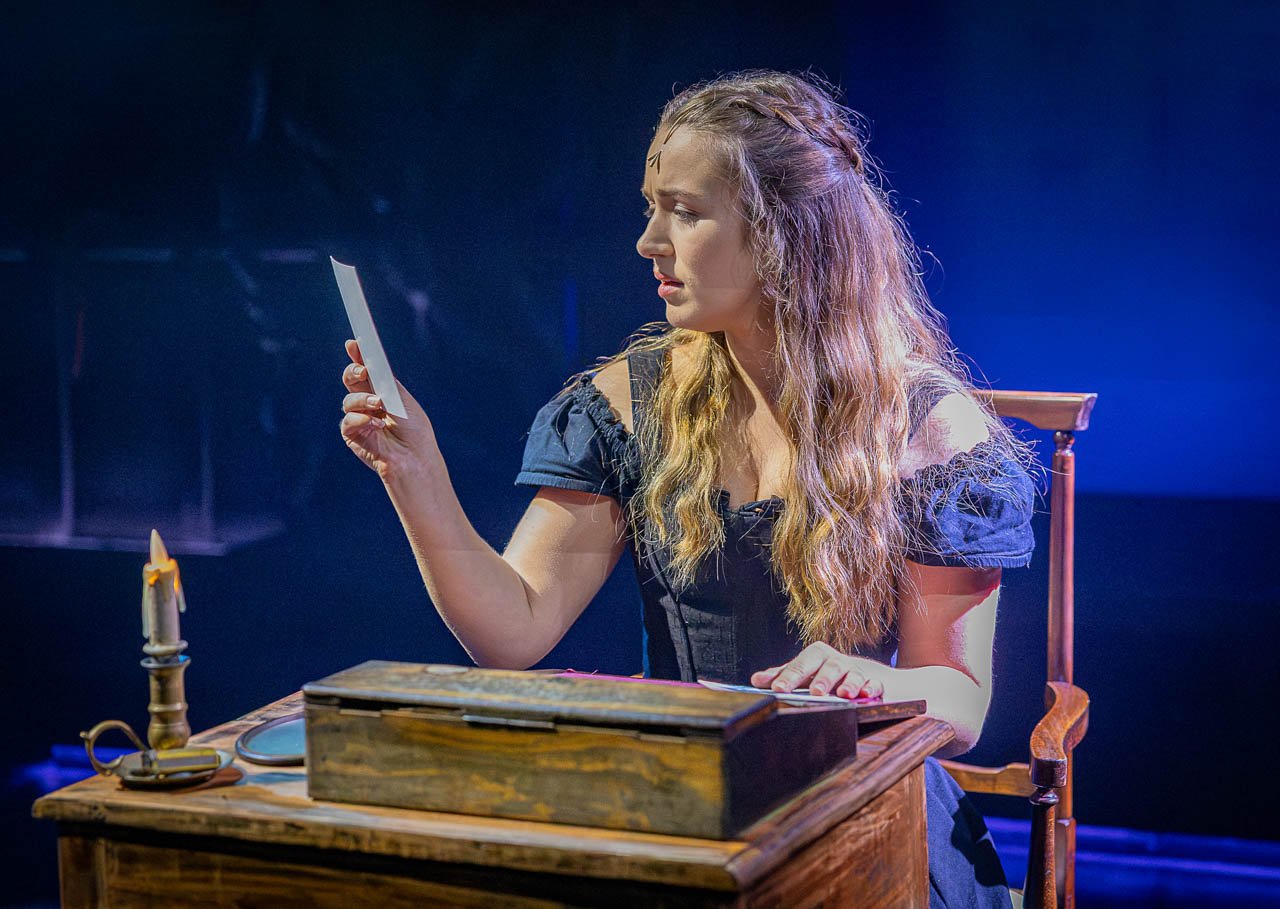
Chester Nub News announces a stage adaptation of Jane Eyre to be performed at Storyhouse starting November 10.
A powerful new stage adaptation of Charlotte Brontë's classic Jane Eyre arrives at Storyhouse this autumn.
Directed by Lily Dyble, Jane Eyre will run at the Chester venue from Tuesday 10 November to Saturday 21 November. [...]
"Charlotte Brontë's revolutionary masterpiece Jane Eyre remains as potent today as it did when it was written in 1847, said Storyhouse creative director Suzie Henderson.
"This dynamic and imaginative new stage adaptation promises to present it in visceral and powerful fashion.
"I'm delighted to be able to reveal such an exciting cast of talented actors who are working with Lily Dyble in the rehearsal room to bring her thrilling storytelling vision to life for our audiences here at Chester."
The role of Jane will be played by Olivia Marcus, while Gabriel Akuwudike will appear as Edward Rochester. The cast also includes Oscar Adams, Aamira Challenger, Millie Faraway, Andrea Gatchalian, Kate Kordel, Robyn Rose-Li and Leo Wan.
Jane Eyre is a Storyhouse, Mercury Theatre Colchester, and Rose Theatre co-production, in association with Northern Stage, supported by a grant from the Royal Theatrical Support Trust (RTST).
The production is based on Sally Cookson, Mike Akers and the original company's acclaimed adaptation of Charlotte Brontë's groundbreaking novel.
Set designer is Anna Yates, costume designer is Khadija Raza, lighting design is by Lucia Sanches Roldan, and Joseff Harris is sound designer and composer. Movement director is Natasha Harrison, Fight director is Rachid Sabitri and intimacy director is Haruka Kuroda. Casting is by Helena Palmer. (Dherran Titherington)
Broadway World reports the cast of this production too.

For The Guardian, musicals seem to be a new thing. Reviewing a stage adaptation of Three Men in a Boat:
The 135-minute show is punctuated by eight musical numbers and, though it is now almost obligatory for classic literature to be sung and danced (the most recent victim Jane Eyre), this is a logical candidate. (Mark Lawson)
The fact that a theatre critic makes that comment and doesn't even know Jane Eyre. The Musical is new to London but not actually new (the first production in Toronto was exactly 30 years ago), so hardly 'most recent' shows quite a degree of ignorance. Many musicals have been written in 30 years.

The Standard reviews the new film adaptation of Sense and Sensibility, reminding us of reviews of Joe Wright's take on Pride and Prejudice twenty years ago:
Things are moody and at times almost Brontë-esque thanks to Arnaud Potier’s autumnal cinematography and the rolling, rain-lashed hills. (Hannah Pettit)
El País (in Catalan) reviews the novel Mons on trobar-te by Berta Creus.
Aïllada al poble diminut de les muntanyes pirinenques on ella i en Sebastià van anar a raure, en bona part perquè era el lloc on vivia un amic comú —que a l’inici de la novel·la es converteix en la nova parella de la protagonista—, la Jara sembla una reencarnació del Heathcliff de Cims borrascosos (una de les citacions que encapçalen la novel·la és d’Emily Brontë), com si perseguint-lo i invocant-lo en tot moment tingués també la prerrogativa de fer-lo present: inquieta i nerviosa, el busca pels paisatges que recorrien o al riu on es banyaven, acariciant els guants de llana que li havia regalat, o en les tres ratlles horitzontals —“una de ben recta que separa el cel gris clar del mar gris fosc, i una de desdibuixada que separa el mar gris fosc del prat mig gris”— de la fotografia que hi ha penjada al menjador. (Ponç Puigdevall) (Translation)
Rissi Writes posts about Jane Eyre 2006. The Brussels Brontë Blog features Lilia Hassaine's JE.

Wednesday, September 23, 2026

Tomorrow will mark the 178th anniversary of Branwell Bronté's death and The Telegraph and Argus takes a look at recent and forthcoming talks about him.
Talks exploring the life and legacy of Branwell Brontë are taking place at the Brontë Parsonage and Brontë Birthplace.
The events aim to shed light on the often-overlooked brother of the famous Brontë sisters, who made his mark as both an artist and poet but whose life was ultimately overshadowed by personal struggles.
On September 22, the Brontë Birthplace hosted an online talk titled Sibling Rivalry: Unpacking the Art of Branwell Brontë, led by guest speaker Dr Maebh O’Regan.
The talk explored Branwell’s artistic output, focusing on his creative process.
Branwell’s most well-known work is The Brontë Sisters Portrait, also known as The Pillar Portrait, painted in 1834.
Though the piece has received negative criticism, it remains one of the most popular works in the British National Portrait Gallery.
Later in the week, the Brontë Parsonage will present an in-person and online talk on September 24, titled Grief and Loss in the Writing of Branwell Brontë.
Led by Brontë scholar Rose Gant, the talk will begin at 2pm at the Parsonage, with a Zoom session offered at 7.30pm.
A spokesman for the Brontë Parsonage said: "Like his siblings, Branwell suffered a series of losses throughout his lifetime, attending the deathbed of his mother, his aunt and his close friend William Weightman.
"Branwell drew on these losses as inspiration for his writing, capturing his experiences in both his letters and poetry.
"This talk will explore these writings, looking at both the inspirations and how Branwell captures his experiences of grief." (Amelia Short)
The Telegraph features 'The battle to save Brontë country from England’s biggest wind farm'.
As bleak as it is beautiful, the windswept landscape of the South Pennines and its surrounding settlements in West Yorkshire fuelled the imagination of the Brontë sisters as they wrote their works in the mid-19th century.
“In the hill-country silence, their poetry comes by lines and stanzas into my mind,” wrote Charlotte Brontë, reflecting on the moorland after the deaths of her sisters, Anne and Emily.
Yet residents warn the setting that inspired the Brontës could be lost forever to England’s largest onshore wind farm. [...]
“It’s not just a local moor,” explains Nick MacKinnon, who lives in the small village of Stanbury. “It’s internationally designated twice, and it’s internationally famous as the Brontë moor. [...]
As for the wind farm’s ramifications for tourism, Calderdale Energy Park said: “Our assessment work to date concludes that Top Withens and its Brontë associations would remain intact, with no harm to its heritage significance.”
Yet Rebecca Yorke, director of the Brontë Society, is not convinced.
“You can’t separate the Brontës’ work and the influence on them from the landscape itself,” she says. “The two are completely entwined.”
Despite having seen visitor numbers increase by 20pc, in part because of the release of Emerald Fennell’s Wuthering Heights, Yorke believes the tourism related to the literary heritage would be affected if the project went ahead, given the landscape would be “forever changed”.
“Wuthering Heights is full of references to wildlife, particularly birds, such as lapwings and skylarks, which are around today. And there are also several mentions of peat in the novel,” she says
“The Brontës themselves were well aware of the nature which made up the moors.”
Yorke points to the final line of Wuthering Heights in which Lockwood, seemingly untouched by the turbulence he has witnessed, ponders the “quiet earth” of Brontë country.
“If Calderdale Energy Park is not stopped, then the ‘quiet’ of this unique and special place will be shattered by the industrial hum of turbines, and the ‘earth’ replaced by tons of concrete,” she says. (Robert White)
The fact that Calderdale Energy Park is wilfully misunderstanding what 'landscape' means and the very real fears of local residents (and not just local residents) for the area says it all, really. We sincerely hope the plans will fall through, and the sooner the better.

Indie Boulevard features Amanda Fagan, whose new song ‘Forever Yearn’ 'takes its heart from Emily Brontë’s Wuthering Heights'.
The couple in the song burn with feeling, however let their pride stand between them. Years pass. Only then do the lyrical protagonists see what they’ve lost, and by that point, the door is already closed. What remains is longing that never fades and hunger with nowhere left to go.
Amanda Fagan treats this story with lightness, allowing the sadness to come through naturally. “Forever Yearn” is a minor tragedy concerning timing and stubbornness, in that two lives can easily drift apart when neither of the individuals is willing to yield first.
The song takes a classic story of ruined passion and turns it into a personal and up-to-date account, one that deals with the cost of delaying too long in saying what is important. (Layla Moore)
Several news outlets published the obituary of the actress June Wyndham Davies (1929-2026), who appeared in 1953 in a regional production of Wuthering Heights:
She moved on to the Theatre Royal, Horsham, where her roles included Catherine Earnshaw in Wuthering Heights (1953), with Michael Caine as her brother Hindley. (Anthony Hayward in The Guardian)

Tuesday, September 22, 2026

In The Telegraph and Argus, Brontë Parsonage Museum director, Rebecca Yorke, discusses the proposed West Yorkshire tourism levy.
Rebecca Yorke, director of the Brontë Parsonage Museum in Haworth, said: "We have not consulted our local accommodation partners or our visitors about the possible introduction of an overnight visitor levy, but understand why there might be concerns.
"The current economic climate continues to put pressure on the budgets of businesses and visitors alike and many tourist destinations have already been impacted by increased costs, e.g. the price of fuel and car parking charges."
She stressed the need for transparency if a levy is introduced.
Ms Yorke said: "While the introduction of a tourism levy will bring us in line with many European destinations, we believe it's important that its purpose is clearly communicated and articulates how the income generated by it will be used." (Amelia Short)
Awards Watch reviews the new film adaptation of Jane Austen's Sense and Sensibility while reminding readers of the fact that:
Just this year, Emerald Fennell crafted her own spin on Emily Brontë’s “Wuthering Heights,” and Christopher Nolan struck box office gold with his version of “The Odyssey,” proving there is always new material to mine, even if it makes literary purists uneasy. (Sophia Ciminello)
Southern Living lists '23 Books To Read When You Want To Cozy Up On A Rainy Day' including
Wuthering Heights by Emily Brontë
A gothic story of longing set between two neighboring estates in a bleak northern England setting, Wuthering Heights follows multiple generations of love stories between destructive characters and passionate romantic tangles. Obsessive love, social class, and even a few ghostly hauntings come into play in this page-turner that feels like one endless rainy day. (Arabella Hau)
Vanguardia (Mexico) also includes Wuthering Heights on an autumn reading list.

Stroud Times recommends going to see the local production of Underdog. The Other Other Brontë Sister. A contributor to Kumparan discusses 'Why Jane [Eyre] Chooses Self-Respect Over a Comfortable Life'.

Finally, the podcast The Book Club discusses Jane Eyre:
The Real Love Story Behind Jane Eyre Was Much Darker 
Join Dominic Sandbrook and Tabitha Syrett as they delve into the fascinating story behind the writing of Jane Eyre, the world it was born of, and the novel itself.

Friday, September 18, 2026

Love Horror reviews Wuthering Heights: The House of the Damned.
Heathcliff and Catherine’s doomed romance has always carried more than a hint of the macabre, but Wuthering Heights: The House of the Damned is taking that darkness much further. The new British horror reworking of Emily Brontë’s classic novel transforms Catherine into a vengeful ghost and Heathcliff into a man prepared to kill in order to bring her back.
Directed by Rebecca J Matthews, the film will be released to own next month through Signature Entertainment, offering a supernatural reinterpretation of one of literature’s most famously destructive relationships.
The story begins after Catherine’s death, with her spirit haunting the halls of Wuthering Heights and terrorising those who remain there. Heathcliff, consumed by grief and obsession, becomes convinced that her continued presence depends on bloodshed and begins carrying out sacrifices in the hope that Catherine might eventually possess a living body.
That arrangement is disrupted by the arrival of Mr Lockwood, a new tenant at a neighbouring property whose curiosity draws him into the increasingly dangerous affairs of the house. As his health deteriorates and his grip on reality begins to falter, Lockwood encounters Catherine’s tortured apparition while gradually discovering just how far Heathcliff is willing to go.
Liana Failla wrote the screenplay, drawing on Brontë’s 1847 novel while pushing the material firmly into supernatural horror. Rather than treating Catherine’s presence as an ambiguous gothic element, the film makes her ghost central to the action, with Heathcliff’s grief transformed into a murderous devotion.
Filming took place in Brechin, Scotland, giving the production a suitably remote backdrop for its reimagining of the isolated Yorkshire estate.
The project joins a long line of screen adaptations inspired by Wuthering Heights, although its emphasis on possession, sacrifice and explicitly supernatural violence takes the material in a markedly different direction from the more traditional romantic and period-drama interpretations.  The House of the Damned recasts Catherine and Heathcliff’s relationship as something much more dangerous, turning romantic obsession into the engine for a full gothic horror story. (Emily Bennett)
A columnist from The Guardian wonders, 'Why stop at Wuthering Heights: House of the Damned? Bring on Mrs Dalloway’s Rampage!'
In which case, you really have to applaud whoever came up with the idea of Wuthering Heights: The House of the Damned. Available on digital platforms in three short weeks (on 19 October in fact), it is a remake of Emily Brontë’s classic novel, only scarier. In the film, as far as I am able to tell, Cathy has died and her ghost starts haunting Heathcliff to the point that he starts murdering everyone. Is it any good? All signs point to not really, especially since the trailer contains a shot where Cathy seems to become a zombie so that she can punch through a window and strangle someone to death. But will I watch it? Oh God, try to stop me.
You can see what’s happening here, can’t you? Emerald Fennell made a Wuthering Heights film this year and it was wildly successful, currently the 19th biggest film of 2026. But Wuthering Heights was published 179 years ago, so anyone can do whatever they want with it. Fennell’s film proved this all too well, with its rubbing and squishing and skin-coloured rooms. But it also means that someone else can hop on the back of it and turn it into a hammy horror about a zombie in a bridal gown. It’s not like the Brontës are around to sue, is it? (Stuart Heritage)
A sad case of 'Wisdom has been chasing you, but you've always been faster' in another article of The Guardian, though. 
Rain came in with the wind and I got absolutely drenched on the final approach to Haworth. But soon after, I was entering Bradford’s prettiest township and thinking about coffee and cake. The walk officially ends at Penistone Hill country park, but after taking walking therapy a few years ago, I am no longer a completist – and was satisfied with my walk and mini achievement. I bowed out on Haworth high street, without so much as a glance at the Brontë Parsonage Museum. (Chris Moss)
Are we really supposed to cheer that on now?

For The Sun, Haworth is 'the most autumnal English destination EVER'
Cobbled streets, vintage shops, pubs with roaring fires all surrounded by rolling countryside hills – you’ll find it all in this Yorkshire village.
There’s no better time to visit than autumn, as the whole village gets a seasonal overhaul with huge shop displays and twinkling lights for the dark evenings.
The West Yorkshire village called Haworth has absolutely everything associated with autumn from cobbled streets to charming cottages and cosy cafes. [...]
The town has literature connections too as it was home of the Brontë sisters, who between them wrote books like Wuthering Heights and Jane Eyre.
Yorkshire.com explained: “Home of the famous Brontë sisters, Haworth is an undisputed literary mecca, attracting visitors from all around the world." (Alice Penwill)
A contributor to The Conversation discusses why 'the places we love in books can never quite be found in real life'.
From the Brontës' Haworth to Jane Austen's Bath, Wordsworth's Lake District and Thomas Hardy's Dorset, literary places continue to exert a powerful hold over readers.
Literary tourism appears to be enjoying renewed popularity, from visits inspired by classic novels to the TikTok trend of turning books into travel itineraries. But what exactly are literary tourists hoping to find when they get there? The answer is more complicated than it might seem.
Haworth, Bath and Dorset all exist, obviously. They can be found on a map and visited. But the Brontë moors, Austen's Bath, Wordsworth's Lakes and Hardy's Wessex are also literary reimaginings of those places. They may never have existed in quite the form readers imagine.
Our fascination with literary places has a long history. Literary geography, which combines physical geography with literary studies, emerged in the late 19th century as the novel grew in popularity and, in many ways, developed alongside literary tourism.
In 1899, William Lyon Phelps created his Literary Map of England, marking locations associated with authors and literary works. A few years later, William Sharp's Literary Geography (1904) mapped regions such as "Dickens land," "the Brontë country" and the literary geography of the English lakes.
These early literary maps invited readers to see where fictional and geographical worlds appeared to overlap. More than a century later, readers are still seeking those points of intersection. [...]
When visitors reach Haworth, Grasmere or Dorset, they are not encountering those places for the first time. They have already visited them in their imagination. Their version of the landscape has been assembled from books, films, photographs, places they have visited and other cultural references. When they arrive, they compare the physical location with that imagined one. [...]
At Haworth, visitors move through domestic spaces associated with the Brontë family while simultaneously encountering the imaginative worlds of Jane Eyre and Wuthering Heights.
The Brontë Parsonage Museum in Haworth derives much of its power from bringing biography, landscape, family tragedy and fiction together in one place. [...]
From the earliest maps of Dickens land and Brontë country to today’s literary pilgrimages, the goal has remained remarkably consistent: to find the point at which real and fictional worlds collide. Literary geography suggests that this point may never quite be reachable. Perhaps that is precisely why readers keep looking for it. (Rebecca Hutcheon)
A couple of sites are wondering why CNN shone the spotlight on the fact that Jane Eyre is now mandatory reading for Chinese teenagers. According to China Daily, CNN is 'Reading too much into a reading list'.
There was a time when putting Jane Eyre on a school reading list would have been regarded as a fairly ordinary educational decision. A teacher might have thought that young readers could benefit from encountering a spirited orphan, a brooding gentleman, a Gothic mansion and a complex moral journey. CNN, however, has discovered that the matter may be considerably more sinister. The appearance of Charlotte Brontë's novel on a Chinese reading list, it suggests, is evidence of something called ideology.
This is an impressive burden to place on a book. A novel that has survived Victorian moralists, modern feminists, postcolonial critics, film directors, television producers and generations of adolescent readers must now also survive the investigative imagination of cable news.
According to CNN, the Chinese authorities see Jane Eyre as a corrective to the superficial romantic fantasies of the social-media age. That interpretation is not especially difficult to understand. The novel does, after all, present a young woman who values dignity, independence and moral self-respect more than money or social position. Jane refuses to become Rochester's mistress even though she loves him. She rejects St John's proposal because it offers duty without affection. Her famous declaration — "I care for myself" — is hardly a ringing endorsement of passive obedience.
Yet CNN appears determined to treat the inclusion of an extracurricular classic as a coded ideological communique. One begins to wonder whether every alteration to a school reading list must now be examined for signs of a change in the authority's philosophical weather. If a book is added, it is a signal. If a book is removed, it is another signal. If a book remains where it was, perhaps that is the most ominous signal of all.
There is, of course, a legitimate discussion to be had about Jane Eyre. The novel was published in London in 1847, and its treatment of Bertha Mason, the "mad woman in the attic", has rightly attracted criticism. Its depiction of colonialism, race and imperial wealth deserves scrutiny. Rochester's conduct, too, may strike contemporary readers as less than an ideal model of romantic behaviour. But literary criticism requires a modest acquaintance with history. Brontë was writing in the nineteenth century, not drafting a relationship guide for the year 2026. To read an old novel critically is sensible; to demand that it conform entirely to present-day moral vocabulary is to confuse literature with an updated terms-of-service agreement.
A classic's value does not depend on its being ideologically spotless. Jane Eyre has generated a vast critical literature, inspired countless adaptations for stage and screen, and remained influential across cultures for nearly two centuries. Its endurance is not proof that every idea in it is beyond question. It is proof that the novel contains enough artistic power, psychological complexity and unresolved contradiction to keep readers arguing. [...]
A reading list is usually a reading list. Sometimes a book is chosen because it is good, sometimes because it is available, and occasionally because someone has actually read it. That last possibility may be less dramatic than ideological intrigue, but it is probably worth considering. (Li Yang)
And from Global Times (also a Chinese newspaper):
In the fall semester of 2026, the British literary classic Jane Eyre was included in the ninth-grade Chinese language curriculum as part of the "whole-book reading" list. CNN reported on the news, but described China's textbooks as being "tightly curated by the state," claiming that the inclusion of such a British romantic classic was "surprising."
But what is so "surprising" about Jane Eyre being included in Chinese middle school curriculum?
Thornfield Hall, Rochester, the secret in the attic, and Jane Eyre herself - a petite woman of plain appearance who refuses to yield to fate - have long been part of the shared literary memory of generations of Chinese readers. As early as 1917, "A Sketch of Western Women Novelists" published in Women's Magazine, a magazine founded in Shanghai in 1915, introduced Charlotte Brontë and Jane Eyre. In July 1925, Zhou Shoujuan's translation Chong Guang Ji is believed to be the earliest Chinese translation of the novel. In 1979, the film Jane Eyre was released in China. In 1980, the Shanghai Translation Publishing House published Zhu Qingying's translation, with an initial print run of about 270,000 copies.
How could it be "surprising" that a work read in China for over a century - given its immense popularity - has become part of the required reading list for Chinese students? Is it that CNN's understanding of China is too outdated, or that it simply refuses to take off its colored glasses?
The Chinese Ministry of Education has clearly stated that Chinese language textbooks include "a wide range of classical and contemporary works from both China and abroad." Many foreign literary classics such as Resurrection, One Hundred Years of Solitude, Hamlet, and To the Skylark have already been included in Chinese language textbooks. CNN's reporters may not even be aware that former US president Abraham Lincoln's Gettysburg Address has also been included in the People's Education Press high school elective curriculum.
What is even more puzzling is that in its report, CNN specifically interviewed several Chinese parents and scholars who opposed the inclusion of Jane Eyre, citing concerns that the book might "teach girls in class that their brain should being wrongly ruled by love." While questioning whether it helps adolescents develop "healthy values," it made no mention of the broad public appreciation for the novel in China. When quoting coverage from the Beijing Daily, CNN also selectively omitted student reflections from a Jane Eyre reading session - insights that touched on core themes of love, respect, growth, and emotional resonance with remarkable precision.
Great literature transcends language, nationality, and time. The enduring resonance of Jane Eyre among Chinese readers is a testament to the success of cultural exchange between China and the world. The CNN report, which repeatedly emphasized "surprise," does not appear to be an attempt to challenge stereotypes about China, but rather to reinforce them under a different guise.
To be quite honest, we weren't expecting to see Jane Eyre embroiled in international politics, but that's the Brontës' incessantly busy afterlife for you.

Church Times reviews Susan Dunne's book Charlotte Brontë and Elizabeth Gaskell: Their lives, friendship and writings.
Part III is the most original in the book. Entitled “The Unlucky Book” (1855-60), its chapters chart the story of Elizabeth’s research for The Life of Charlotte Brontë and the several libel cases that followed its too hasty publication. Vivid vignettes abound, as when Elizabeth and Catherine Winkworth travel to Haworth by train to find the parsonage still deep in mourning and both clergymen breaking down in tears, and when the biographer enlists the help of her daughters and some of her many visitors in copying Brontë letters. Her rash comments on Lydia Robinson, Branwell Brontë’s femme fatale (literally), and Cowan Bridge School got her into even more trouble than had Mary Barton and Ruth. Changes were made in a later edition, and Elizabeth swore never to write another biography.
Religion shaped these writers’ lives but is ignored here. The book contains many typos and is printed on inferior paper. Nevertheless, it remains a page-turner. (Dr Michael Wheeler)
The Telegraph and Argus celebrates the fact that the Brontë Birthplace welcomed 'over 100 open day visitors'.
Located in Thornton, Bradford, the birthplace of the famous literary family welcomed more than 100 visitors during a special open day held on Sunday, September 13, as part of a scheme of free heritage open days.
The exhibition, titled From Butcher's Shop to Birthplace: The Story of the Brontë Birthplace, focused on the building’s transformation after the Brontë family left Thornton.
Thomas Haigh, vice chair of the Brontë Birthplace, said: "Visitors loved the exhibition, and it was really nice to see the Brontë Birthplace attracting new audiences who aren't necessarily Brontë fans.
"One visitor said the exhibition was so informative, and it was a wonderful experience to learn about the butcher’s shop as well as the Brontës history.
"The building is so iconic because it is the birthplace of the famous Brontë authors."
The Brontës lived in Thornton for five years before moving to Haworth.
The exhibition traced the building’s later life, including its time as a butcher’s shop run by Reg Lovette for more than 40 years.
Mr Haigh said the highlight of the day was their VIP guests Barbara, the daughter of Mr Lovette and her husband Alan.
"Barbara was there throughout the day sharing more memories and greeting visitors as they came to learn more about one of Thornton's Master Butchers." (Amelia Short)

Wednesday, September 16, 2026

Wednesday, September 16, 2026 7:27 am by Cristina in , , , , ,    No comments
Broadway World announces that Jane Eyre the Musical now has a trailer.
Southwark Playhouse has posted a trailer for its production of Jane Eyre, offering a first glimpse of the musical currently running at Southwark Playhouse Elephant. The clip previews the atmosphere of the staging, which brings Charlotte Brontë's novel to the stage through what the theatre describes as a lush and sweeping score. [...]
The staging marks the UK premiere of the musical, running at Southwark Playhouse Elephant through 24 October. The trailer was shot by videographer Adam Nightingale. (Michael Major)
And here it is:


Still on stage, Northern Arts Review is looking forward to York Settlement Community Players' The Other Other Brontë, which opens at Theatre@41 on Monkgate on October 13th.
The show by Sarah Gordon, which premiered in 2024 at The National Theatre London, will be performed at Theatre@41 on Monkgate from the 13th to the 17th October. It tells the story of the rivalry between the Brontë sisters from Charlotte’s perspective, and reveals some truths behind why we only know Anne as the ‘third sister’, or the Other Other Brontë.
Director Claire Morley, who last directed for YSCP in 2014 with Brecht’s Drums in the Night says: 
“Directing Underdog really appealed to me because whilst it tells the story of this incredible literary family who are so entwined in the national (and Yorkshire!) cultural fabric, it doesn’t put them on a pedestal. We see them as flawed human beings. The dialogue and stagecraft is also very contemporary, which I love. I am looking forward to reflecting that further in aspects like the soundtrack. Expect current chart hits rather than choral music!”
Lara Stafford (last seen as the title character in Anne Boleyn with Black Treacle Theatre at Theatre@41), YSCP regular Jess Murray, and University of York MA Theatre-Making student Millie Rhodes lead the cast as Charlotte, Emily, and Anne Brontë. They are joined by a multi-rolling ensemble made up of local actors Nick Patrick Jones, Jon Cook, Maggie Smales, and Pamela Gourley. 
“We’re so thrilled to bring this very Yorkshire literary play to Theatre@41 this October,” says YSCP Chair, Natalie Roe, “We went on a cast and crew trip to the Brontë Parsonage in Haworth, which helped everyone get into the world of the play. There’s such a great energy in the team already, we can’t wait to share Underdog with you.”
According to Biba (France), Lilia Hassaine's JE is a firm candidate to the Prix Goncourt.
Ce livre d'une journaliste et chroniqueuse déjà connue du prix Goncourt se dessine comme un des favoris du concours. [...]
Il s'appelle Je, mais ce n'est pas une autobiographie. Même si on ne connait pas la vie personnelle de l'autrice, il ne peut pas s'agir de cela car le roman se passe en 1831. On lit : "Île de la Jamaïque, 1831. Antoinette Cosway, créole de bonne famille, s'éprend d'Edward Rochester, un Anglais aussi impénétrable que fascinant. Mais à la séduction enflammée succèdent rapidement des scènes vénéneuses, où les baisers sont des blessures, où toute une société livre la jeune femme à son bourreau.
Des années plus tard, Antoinette tente de conquérir sa propre histoire. "JE" se situe à mi-chemin entre roman victorien et thriller intimiste contemporain. Lilia Hassaine s'est inspirée du personnage de la première femme de Rochester dans Jane Eyre, le roman culte de Charlotte Brontë. Elle a choisi de lui donner une voix, un corps, une destinée." [...]
Avec déjà une sélection par le passé, Lilia Hassaine devient déjà une habituée de ce concours. Cela pourrait l'avantager. Avec toutes les autres distinctions que le livre a déjà, il a vraiment ses chances. Enfin, la référence à un classique de la littérature peut aussi l'avantager. Outre cela, il n'est pas pour autant premier des ventes. Pour l'instant, C'était ça ou mourir D'Orélien Thélyson est numéro un des ventes, considéré comme le phénomène littéraire de l'année, il s'apparente comme le favori qui au final perd. Alors que "Je" est dixième du classement Datalib.
En tout cas, les lecteurs semblent adorer. Babelio lui donne la belle note de 4,25/5. On peut lire entre autres : Livre de la rentrée littéraire 2026 et ce fut un coup de cœur ! Un livre magnifique, une plume efficace, un récit captivant. (…) Le roman met en lumière une autre vision de cette femme, victime de son temps, du patriarcat, de son époux, et des machinations l'ayant conduite à être enfermée et considérée comme "folle". Je ne pouvais pas lâcher ce livre." (Paul Mocka) (Translation)
Yorkshire Live recommends '10 best autumn walks in Yorkshire where you take in the stunning countryside' including
Haworth
A town near Bradford, Haworth is surrounded by stunning autumn walking trails. Whether you want to see the Brontë Waterfall or just the town itsel, the Victorian style of the town never fails to give off a great autumnal feel. (Sebastian McCormick)

Monday, September 14, 2026

Le Monde reviews (sadly, behind a paywall) Lilia Hassaine's JE.
Comme l’écrit Lilia Hassaine, en ouverture de JE, son quatrième roman, où elle s’attache à remettre en lumière un personnage mystérieux évoqué par Charlotte Brontë dans Jane Eyre (1847), le procédé fait du récit d’une « histoire d’hier » une « histoire d’aujourd’hui ». En effet, rappelle-t-elle, Jean Rhys (1890-1979) s’était emparée d’Antoinette, la première femme, enfermée et tenue pour folle, de Rochester. Dans La Prisonnière des Sargasses (Denoël, 1971), l’écrivaine anglaise l’avait, comme Charlotte Brontë elle-même, « regardée depuis son époque » et s’était « racontée à travers [elle] ». (Florence Bouchy) (Translation)
UA News reports that Ghanaian poet Emma Ofosua will take part in the Brontë Women’s Writing Festival later this month.
On September 26, Ofosua will join the Literary Sisters from Accra to Bradford panel discussion as part of the Brontë Women’s Writing Festival. Writers Tabitha Bast, Barsa Rea and Priscilla Adepa will also take part in the discussion. The panel is scheduled at the Old School Room on Church Street in Haworth.
Liam O'Dell didn't enjoy Jane Eyre the Musical in London and gives it 2 stars out of 5. AnneBrontë.org features 'The Earliest Bronte Letter' (23rd September 1829--from Charlotte to Patrick).

Saturday, September 12, 2026

A columnist from The Chosun Daily has been to Haworth.
The Brontë sisters’ father was the parish priest of Howarth [sic]. The museum is a renovated parsonage where the sisters lived. Traces of the sisters remain everywhere, including the fireplace used by Emily Brontë and the dress of her elder sister Charlotte, who wrote *Jane Eyre*.
After leaving the parsonage, I began a trek across the moor—the wild, open landscape that inspired *Wuthering Heights*. Top Withens, the ruined farmhouse said to have influenced the novel, sits atop a hill approximately 430 meters above sea level.
Walking for about an hour and a half across the moor, where only the wind’s whisper could be heard, I reached the desolate scene: two trees standing beside a crumbling stone house at the hill’s summit. Sitting on the roof of the abandoned house and looking down, I saw vast plains dotted with purple heather flowers swaying in the wind—a serene yet beautiful sight. I realized that the author, having grown up in such scenery, could depict a love that is both tranquil and ferocious. Facing the strong wind, I quietly recited Catherine’s famous line expressing her passion for Heathcliff: “I am Heathcliff!” (Kwak Ah-ram)
Still quite near, The Telegraph and Argus interviews the owners of Wuthering Delights, a café near the Brontë Birthplace in Thornton.

1428 Elm thinks that 'Wuthering Heights: The House of the Damned promises a more faithful and horrific version'.
Conversely, the trailer for Wuthering Heights: House of the Damned does a pretty solid job of selling it as being just as faithful of an adaptation as many of the others have been over the past century. There’s Catherine’s ghost, a look at Cathy (meaning that the story will at least dabble in the decades-spanning material), and even looks to be taking significant inspiration from the latter pieces of the book that rarely see any play in cinematic versions. Notably, the film has even cast Sky Cheema, a non-white actor, in the role of Heathcliff, which was famously played by the very white Jacob Elordi most recently, inciting a great deal of controversy.
All in all, this is a fun riff on the idea and is just as valid as any number of the countless other adaptations over the years, in theory. My hope is that Hirani and co. keep their heads up and resist the urge to just turn it into a hack-and-slash feature with Wuthering Heights cosplay, instead embracing the story’s actual text in meaningful ways. To their credit, the trailer looks like much more of the latter rather than the former, so I’m more than down to check it out. (William Jones)
Woman's World has writer Min Jin Lee (of Pachinko fame) recommend several books.
A book Min Jin Lee would give to her younger self: 
Jane Eyre by Charlotte Brontë. Originally published in 1847, this novel has become one of the most-read books of all time. It’s the story of every chapter of Jane Eyre’s life, from her harsh upbringing as an orphan to her position as governess for a young French girl at Thornfield estate, where she meets and falls in love with the charming Mr. Rochester. It’s a powerful tale of love, classism, religion and feminism.
What Min Jin Lee says about this book: “[I] recall reading this in [my] 20s, but [I] should have read it in [my] teens and then revisited it in [my] 30s.” (Carissa Mosness)
Book Club Chat has a Q&A with writer Carly Hillman.
What are some of your favorite novels?
This is such a tough question, because I feel like it is constantly changing depending on the season, my mood, where I am… But God of Small Things by Arundhati Roy and Jane Eyre by Charlotte Brontë will always be on my list, for sentimental reasons: I read both in high school, and they were two of the first novels that unlocked my love of devouring and discussing books with others. (Heather Caliendo)
Black Hills Pioneer features a local 11-year-old girl who has just read Jane Eyre.
She awarded the literary classic 5 stars, and high praise — the only thing she disliked about the book was “that the story had to end! I wish it could have gone on forever,” [she] said. 
She felt picking up the Brontë novel also boosted her vocabulary. 
“One thing I like about this book is that it’s a older book and has older words to learn, so you can learn what they mean,” [she] said.
The Tab lists '15 guaranteed signs in a university student’s room that he’s a total f***boy' and apparently one of them is this one:
9. Performative male book
He has one whole book – a copy of Wuthering Heights he bought for his GCSEs (because he thought it was the same as Jane Eyre). The book is displayed prominently opposite the door, to demonstrate what an erudite feminist he is. (Claudia Cox)
Finally, a new episode of the Behind the Glass podcast has been released:
 S4 E7: With... Ruth Rossington
Mia and Sam chat to their colleague Ruth on this episode! Ruth is part of the Visitor Experience team at the Museum and has previously worked as a journalist and London tour guide!
We look at the progression of photography in the nineteenth century and discuss the mysterious backstory of one particular item in the collection...

Saturday, September 05, 2026

Saturday, September 05, 2026 8:59 am by Cristina in , , , ,    No comments
Many sites are featuring the premiere of Jane Eyre the Musical in London. From Playbill together with some new pictures:
John Caird and Paul Gordon's 2000 musical version of Jane Eyre is getting a long-awaited U.K. debut at Southwark Playhouse Elephant, and Playbill has a first look at the new production. Performances began August 28 and continue through October 24. Opening night is September 8. (...)
The new staging is co-directed by Caird (Les Misérables) and Megan McGinnis, reuniting after the latter starred in Caird's Daddy Long Legs musical. The production is being produced by Adam Blanshay Productions in partnership with the work's original Canadian producers, David and Hannah Mirvish.
The cast is led by Charlie Burn as Jane and Ashley Gilmour as Rochester, with Claire Greenway as Abbot and Grace Poole; Melad Hamidi as St. John and Lord Ingram; Connor Wood as John Reed and Vicar; Jonathan Andrew Hume as Brocklehurst and Mason; Izzi Levine as Agnes, Leah, Jane's Mother, and Mary Ingram; Hannah Lindsey as Scatcherd and Bertha Mason; Isabelle Methven as Helen Burns and Bessie; Gemma Page as Reed and Fairfax; Eve Shanu-Wilson as Blanche and Sophie; and Poppy Jason and Emily-Rose Samuel as Young Jane and Adele. Casting is by Sarah-Jane Price.
The musical premiered in Toronto in 1996, ultimately making it to Broadway in 2000, bringing Brontë's classic gothic romance to the world of musical theatre. The work would go on to earn five 2001 Tony Award nominations, including Best Musical. A starry concert production brought the musical back to NYC with a Manhattan Concert Productions performance at Lincoln Center's David Geffen Hall starring Erika Henningsen and Ramin Karimloo. News of this production also comes just after the launch of a new chamber revision of the musical with theatrical licensor Music Theatre International. Having premiered in 2024 at North Carolina's Theatre Raleigh with a smaller orchestration, reduced casting needs, and changes to the lyrics and book, this edition likely served as the basis for the U.K. premiere at the 310-seat venue.
“I’m so pleased to have the opportunity to explore a new version of Jane Eyre in the beautifully intimate Southwark Playhouse Elephant," said Caird in an earlier statement. "It's always a pleasure to work on this timeless romance but all the more exciting to be collaborating with the brilliant and innovative Megan McGinnis as co-director."
“Charlotte Brontë’s masterpiece is not only a landmark portrayal of a strong female protagonist, but a story that sends audiences out of the theatre feeling better about their own lives than when they walked in," added Gordon.
The production features choreography by Georgina Lamb, music direction and supervision by Ben Kubiak, set and costume design by Morgan Large, sound design by Andrew Johnson, and lighting design by James Whiteside. (Logan Culwell-Block)

Manchester Evening News recommends an autumnal trip to Haworth by describing it as 'The 'witchy' Yorkshire village with cosy pubs and cafes that's straight out of Gilmore Girls, perfect for autumn', which seriously couldn't be sillier.

Glam features Charlotte Brontë and some quotes. Clara (Spain) recommends Wuthering Heights among other classic novels written by women. The Brontë Sisters UK posta a video sharing a walk across the windswept Haworth moors with her daughter and dogs, exploring why this wild landscape meant so much to the Brontë family.

Monday, August 31, 2026

Monday, August 31, 2026 9:35 am by Cristina in , , ,    No comments
Vietnam has an article on 'Traveling just because you love a book'.
In England, such itineraries can take visitors to Stratford-upon-Avon, the birthplace of William Shakespeare; Jane Austen's house in Chawton; or the Brontë Parsonage Museum in Haworth, associated with the three Brontë sisters. 
El generacional (in Spanish) has an article on Wuthering Heights. AnneBrontë.org features the letter M. Heger wrote to Patrick Brontë about Charlotte and Emily in 1842.

Thursday, August 27, 2026

Thursday, August 27, 2026 9:24 am by Cristina in , , , , ,    No comments
Broadway World reviews Brontë Sister House Party.
If you’ve ever wondered what it may be like to party with the Brontё sisters, get ready to sip on a lot of cordials, margaritas, and rosè and experience an evening like no other at Nu Sass Productions’ Brontё Sister House Party. Join Emily (Leah Ly), Charlotte (Aubri O’Connor), and Anne (Rose Hahn) Brontё, alongside their brother Branwell (Ty Edwards) and some other very special guests, as they throw yet another house party that they hope will help them escape the Purgatorial time loop in which they are trapped. 
Many, many years after their untimely deaths, the Brontё sisters have found themselves stuck in Purgatory by the Lavender Witch of Gondol (a creation from their own imaginations), which requires them to throw a party every single night until they are able to reach The Point of Celebratory Reverence; except they don’t know what that requires, or do they? In order to gain approval from the Lavender Witch of Gondol, the Brontёs turn to some special guests to to keep their party attendees entertained: Wuthering Heights’ Cathy (Brenna Horner), Jane Eyre’s Helen Burns (Alyssa Nolan), and famed English singer Kate Bush (Madeline Marie). Through a wide variety of musical numbers, their stories are told (and hopefully earn audience approval) and the complexities of everyone’s lives are exposed. Do they ever make it out of this time loop? You’ll just have to see for yourselves!
Charlotte’s (Aubri O’Connor) expectations of perfection and anxiety surrounding the party are palpable. O’Connor’s portrayal of the eldest sister is brilliant and because of this, I was able to empathize with her desire to protect her sisters, reconnect with her love, and remain optimistic that this time loop will eventually end. I commend O’Connor for her raw emotion and dedication to the role - it is a performance that has left an impression on me. 
In contrast to Charlotte’s range of emotion, Emily (Leah Ly) is pessimistic and remains that way through most of the show, even though she may know the way out. Whether that level of pessimism was the original intention or not, Ly’s performance remains at one level - always a bit mopey and apathetic. More depth to Emily’s character would have been an added bonus to this production.  (...)
Nu Sass Productions’ Brontё Sister House Party is a fun night out and a great way to spend an evening in this last part of summer. There are a variety of special performances coming up, including a free performance on September 8th during Art All Night sponsored by Van Ness Main Street, and they are all worth checking out. I’m eager to see what else Nu Sass Productions has in store this year! (Abby Korb)
LBC has an article on the plans for a wind farm at the heart of Brontë Country and how the locals (and visitors, we would add) are against it.
Walking in Brontë country on the Moors above Haworth is like walking in one of the famous sisters’ novels.
But the landscape that inspired Emily Brontë’s Wuthering Heights, a story revived in the latest Hollywood film starring Margot Robbie and Jacob Elordi, is under threat, according to some local residents.
Thirty-four wind turbines, each one standing at 200 metres tall, are being planned for construction on Crow Hill on the Moors here.
Nick Makinnon’s home sits on part of the Brontë walk, taking in the stunning views of the dramatic scenery.
He is among a large group in the surrounding area who are campaigning against these plans.
“It’s a special protection area for enlisted birds, it’s a conservation area and it’s the inspiration for the Brontë sisters” Nick explained. “So on those three axes, it’s the worst site in England.”
A spokesperson for Calderdale Energy Park told LBC: “Our assessment work to date concludes that Top Withens (the farmhouse that inspired Wuthering Heights) and its Brontë associations would remain intact, with no harm to its heritage significance.
“The nearest turbine would be more than 800 metres away and positioned beyond intervening landform, limiting its prominence in views from the site.”
To that, Nick said this goes much deeper…literally.
“Amazingly, there’s only one site in England where you get a peat landslide known as a ‘bog burst’, where the bog explodes under pressure.” Nick pointed out.
“The only place it happens in England is on Crow Hill. The developers of the Wind Farm have very recently decided it needs to go over that area.”
In response to Nick's comments, a spokesperson for Calderdale Energy Park told LBC: “Detailed peat, ground condition and stability assessments are ongoing, and the findings will inform the project's final design.
“The design has already evolved through two stages of peat probing and hydrological surveys, moving infrastructure away from deeper peat and adjusting track alignments to follow shallower corridors, with floating tracks proposed in suitable locations to avoid cutting into peat altogether.”
Around 80,000 visitors come to the area each year, many wanting to see the history of the Brontës.
Rebecca Yorke, the Director of the Brontë Parsonage Museum, said if this energy park were to go ahead, it would “change the landscape forever".
“It would be very mercenary to say it would have an impact on tourism; we don’t know if it would stop people coming here,” she said.
“But what we do know is that their experience would be very different. That landscape would not be the same, the wildlife wouldn’t be there.
"To walk those moors is like walking in the Brontës' imagination. You can’t separate the landscape from their writing.” (Alex Taylor-Brown)
Publishers' Weekly features Marlon James talking about Jean Rhys.
Wide Sargasso Sea feels like it’s in conversation with Edward Long’s The History of Jamaica. He goes off on white women in the Caribbean. How the white woman is this feral creature, she may be tainted, possibly insane, certainly full of wanton lust. My theory is that Charlotte Brontë read it, and hence we get the madwoman in the attic, who’s from Jamaica. Brontë wouldn’t have known a thing about Jamaica. Her only source would have been written material, and the only written material I know of from that period would be Edward Long’s History.
So if you’re Jean Rhys, not only are your characters these women, but you’re also that woman. And I think she felt driven to give that woman a voice and agency. People think she only did that in Voyage in the Dark or Wide Sargasso Sea, but she did it in all her books. (Nick Hilden)

Wednesday, August 26, 2026

Wednesday, August 26, 2026 10:53 am by Cristina in , , , , , , ,    No comments
The Fan Carpet shares 'Five Things [They] Learned at the Jane Eyre Rehearsal Day'.
1. This production has been decades in the making
For producer Adam, bringing Jane Eyre to the UK is much more than another production.
Having first fallen in love with the musical as a young theatre fan in Toronto before seeing it on Broadway, he spent years hoping to one day help bring it to British audiences.
That passion was evident from the moment he welcomed the media into rehearsals, making it clear this is very much a labour of love.
2. Jane's voice belongs to the whole company
Perhaps the most fascinating creative decision is the production's ensemble-led approach.
Rather than limiting the narration to Jane herself, the entire company shares responsibility for telling her story.
As John Caird explained, Charlotte Brontë's novel is written almost entirely from Jane's perspective, and this theatrical device allows that first-person narration to remain central while creating something uniquely suited to the stage.
3. Casting wasn't just about finding great singers
One theme emerged repeatedly throughout our conversations.
This company wasn't assembled simply because its members have exceptional voices.
Co-director Megan McGinnis explained that every performer needed to be an outstanding storyteller capable of carrying both dialogue and music with equal conviction.
Watching rehearsals, it quickly became clear why that mattered. Every member of the ensemble contributes to telling Jane's journey.
4. The children are central to the story
Many productions might have asked adults to portray Jane as a child.
Instead, this production places genuine young performers at the heart of its opening chapters.
Emily-Rose Samuel and Poppy Jason share the roles of Young Jane and Adèle, bringing an authenticity that immediately grounds Jane's early experiences.
As the creative team explained, seeing Jane's childhood through the eyes of a real child was considered essential to the emotional impact of the story.
5. Respecting Charlotte Brontë doesn't mean avoiding change
One thing became clear throughout the afternoon.
Nobody involved is trying to recreate Charlotte Brontë's novel word for word.
Instead, every creative decision has been made with the same goal: preserving the heart of Jane Eyre while allowing musical theatre to tell the story in its own language.
Whether through the ensemble narration, the intimate staging or the symbolic design, this production appears determined to honour the novel while embracing everything theatre can uniquely offer.
Explosion Network reviews the film adaptation of Victorian Psycho.
Victorian Psycho is an odd film that I never really felt knew how funny, tonally offbeat, or scary it wanted to be. There’s a commitment from the cast to make this ‘Norman Bates’ crossed with Jane Eyre work, but instead of a successful transfusion of genre, it’s just a bit odd. (Dylan Blight)
Wrexham interviews The Most Wuthering Heights Day Ever organiser Moira Gleed.
Hundreds flocked to Plas Newydd, Llangollen, on June 20, to take part in The Most Wuthering Heights Day Ever.
Organised by Moira Gleed and her daughter Rowen, attendees donned red dresses and outfits after Kate Bush’s iconic look in the Wuthering Heights 1978 music video to learn and record the song’s dance routine.
The event was open to those of all experience and the practice in the morning was led by two local choreographers: Karen Lyon and Sarah Bright.
We’ve recently caught up with Moira Gleed to chat about her experience of this event.
250 tickets were sold, and they sold out within days of being advertised. Moira said she’d never have dreamt such a fantastic opening.
“It exceeded expectations, exceeded hope.”
Yorkshire Live recommends a ''Cosy' Yorkshire walk with waterfall and quaint village', ie. Haworth, that is perfect for autumn. Chronicle Live recommends a trip to Haworth too. Digital Spy suggests streaming Frances O'Connor's Emily on the BBC.

Friday, August 21, 2026

Friday, August 21, 2026 10:27 am by M. in , , , , ,    No comments
The worst that can possibly happen is happening. We warned about this a few days ago, and here it is: the politicization of the opposition to the Calderdale windfarm. The harm that this initiative will do and the fact that local media unashamedly dance to the orders of the local right-wing leaders is just terrible. Look at the comments if you don't believe us. Now if you oppose this obnoxious project, you turn out to be an ally of the fossil fuel industry and a follower of the Farage sect. We read in The Telegraph & Argus:
Three leaders of Reform-led councils in West Yorkshire and Lancashire are united in their opposition to a giant windfarm which a company hopes to build on Calderdale moorland.
Calderdale Energy Park (CEP) plans to put 34 giant wind turbines on Walshaw Moor, which is located between Hebden Bridge and Haworth, the village associated with the Bronte sisters.
The company says the turbines will generate enough low carbon electricity to power 198,000 homes a year.
But the proposals have met with strong resistance from campaigners concerned about potential damage to peatland and loss of moorland habitat which is home to birds.
The Government’s Energy Secretary – currently Miatta Fahnbulleh – will ultimately decide whether or not this controversial application is given the green light. (...)
Councillors Dan Sutherland, the leader of Calderdale Council, Stephen Place, leader of Bradford Council, and Stephen Atkinson, leader of Lancashire County Council, met at Halifax Town Hall to discuss and set out their concerns.
By responding to the Calderdale Energy Park proposal collectively, they hope to amplify concerns about the plans – which have also been made by campaigners and residents – not just regionally but nationally. (...)
Another factor causing alarm was the impact on the heritage associated with the moorland.
“The Brontes’ work is of global significance,” said Coun Sutherland.
The final outcome might come down to the Brontë moors – or the Calderdale Energy Park, he said. (...)
Coun Place said: “We don’t think it’s been widely enough known in the Bradford area, which is why we’re keen to get involved with this.
“It’s just something we have got to make the public aware of.
“The Brontës’ works are cherished and protected peatland could be severely affected,” he said. (John Greenwood)

It's certainly disturbing to link together in the same phrase Reform Party and the Brontës. But here we are.

It's much, much better to associate the Brontës with solidarity initiatives like this one that happened in Haworth. In Keighley News:

More than 200 people took part in a new charity walk through Brontë country.
The first-ever Brontë Pub Walk started in Haworth and wound through Stanbury, Ponden and the outskirts of Oakworth, finishing on Haworth’s Main Street.
Walkers followed in the footsteps of the famous literary sisters while raising funds for Sue Ryder’s palliative and end-of-life care services.
Routes of five and 10 miles were available, with pub stops along the way.
Adam Brunksill, regional fundraising team manager at Sue Ryder Manorlands Hospice, said: "We’re incredibly grateful to everyone who took part in our very first Brontë Pub Walk and helped make it such a special day.
"It was fantastic to see people enjoying the beautiful countryside, visiting some of the places connected to the Brontë family and, of course, stopping for a well-earned drink or two along the way. (...)
he walk passed by the Brontë Parsonage Museum and St Michael and All Angels’ Church, where several members of the Brontë family are buried. (Francis Redwood)
Another review of The Bronté Sister House Party is online. In City Cast DC: 
Brontë Sister House Party, a comedy that’s equal parts literary feminism and Christopher Durang-style surrealism, feels like it was expressly written for Nu Sass Productions. (...)
Nu Sass co-founder and artistic director Aubri O’Connor plays Jane Eyre author Charlotte Brontë in House Party. Her performance as a neurotic people-pleaser who lives (well, “lives”) in hope that a Belgian professor who inspired characters in at least three of her novels will at last show up for this interminable soirée is one of the best reasons to attend.
Written in 2021, this clever provocation comes to us from playwright Courtney Bailey. Bailey holds a Ph.D. in English literature from Baylor University, but her premise is far from academic: We are all the invited guests of the three literary Brontë ladies, none of whom lived to see 40, now sentenced to entertain us in some otherworldly bardo until their jailer decides they (we?) have reached The Point of Celebratory Reverence. Our hosts have little guidance on exactly how they might achieve this ecstatic state. Their only clue is a game show-style chime that rewards them whenever they do something to indicate that they’re fun-loving and sociable and not just a trio of introspective and invariably miserable writers. (..)
 Her characters are not all of equal interest, and the performances animating them are variable. Director Kathleen Barth struggles to keep the pace of all this clever existential chitchat sufficiently caffeinated, as evidenced by the fact that a play with a published (and ideal) run time of 90 minutes to two hours stretches out, intermission included, to two and a half. Still, it’s a fun night out, and one that might inspire you to brush up on your Brontë bibliography. (Chris Klimek)
The Fan Carpet explores "how John Caird and Megan McGinnis are reimagining Charlotte Brontë’s Jane Eyre through ensemble storytelling":
Rather than asking one performer to carry the weight of Charlotte Brontë's first-person narration, co-book writer and co-director John Caird has transformed the ensemble into Jane's collective voice.
It is a deceptively simple idea, but one that completely changes how audiences experience the story.
For Caird, the challenge was never to recreate the novel word for word.
Instead, the goal was to preserve what makes Jane Eyre special while allowing theatre to do what theatre does best.
A novel allows readers inside Jane's thoughts for hundreds of pages. On stage, those inner emotions must become action, performance and music.
Sharing Jane's narration across the company preserves Charlotte Brontë's first-person perspective while creating something that feels inherently theatrical. (...)
One decision that particularly impressed us was the production's commitment to casting genuine young performers as Young Jane and Adèle.
Rather than asking adults to portray childhood, Emily-Rose Samuel and Poppy Jason bring an authenticity to the opening chapters of Jane's journey that helps establish the emotional foundation for everything that follows.
It is a reminder that Jane's resilience isn't born overnight—it begins with the experiences that shape her from childhood.
The Derbyshire Times lists places to visit in Derbyshire and the Lake District, before summer ends:
1. Hathersage
Hathersage has strong literary connections - having inspired Charlotte Brontë while she was writing Jane Eyre. The nearby North Lees Hall (pictured here) also became the main inspiration for Thornfield Hall. The Grave of Little John, Robin Hood’s second-in-command, can be found at St. Michael’s Church in the heart of Hathersage. While there is little evidence proving he is buried here, ballads suggest that he originated from Hathersage and settled there again later in his life. (Tom Hardwicke)
BookRiot has a list of historical queer gothic novels. Including
The Wives of Herrick Hall by Julie Lew
In 1799, a disgraced young woman becomes the companion to a Lady in the isolated Herrick Hall. Lady Blake suffers from nightly visions of her impending death, and Herrick Hall is haunted by its previous mistresses. If you’ve longed for a sapphic take on Rebecca or Jane Eyre, and if you like ghosts, family secrets, curses, and forbidden love, this is perfect for your TBR.
Times Now News recommends Wide Sargasso Sea:
A haunting prequel to Jane Eyre, imagining the life of Mr. Rochester's 'madwoman in the attic' before her confinement, a Creole heiress in postcolonial Jamaica. Rhys writes with lush, feverish intensity, turning a footnote of Victorian fiction into a devastating meditation on colonialism, identity, and erasure. Essential, and far richer than its source material. (Simran Sukhnani)
The history of summer readings in The Economic Times makes for a curious read:
In 1876, Publishers Weekly asked booksellers to identify their most saleable novels. [Blanche Willis Howard’s] One Summer ranked below Dinah Mulock Craik’s John Halifax and Charlotte Brontë’s Jane Eyre but ahead of Harriet Beecher Stowe’s Uncle Tom’s Cabin.
La Vanguardia (Spain) describes Yorkshire as a huge film set:
Más figuras literarias surgidas en Yorkshire han acabado en la pantalla. Por ejemplo, la pareja de Cumbres Borrascosas. Su escritora, Emily Brontë ambientó la obra en su paisaje natal, el parque nacional de Yorkshire Dales. Sus páramos cubiertos de brezos, entre verdes oscuro y púrpuras, según incida la luz de un sol casi siempre plomizo, aportan tenebrismo al relato. Y pasan a ser un protagonista más en la reciente cinta protagonizada por un tempestuoso Jacob Elordi y una Margot Robbie, tan hermosa como tóxica. (Armando Cerra) (Translation)

The New York Times Midi Crossword (August 21, 2026)  contains a Brontë question: "Jane, in a Brontë novel".

Wednesday, August 19, 2026

Wednesday, August 19, 2026 9:40 am by M. in , , , , , ,    No comments
MDTheatreGuide reviews NuSass Productions' The Brontë Sister House Party:
In Courtney Bailey’s offbeat, but easy-to-watch play directed by Kathleen Barth, the sisters and feisty brother, Branwell (Ty Edwards), are stuck in a time warp sometime in their afterlife. It’s difficult to pinpoint the exact years of Purgatory, but it’s definitely contemporary. The task they must complete is to reach the highest level a party can attain and, once achieved, they will be released from this punishment.
Emily (Leah Ly) seems to want out of her current situation as she struggles with her distrust of men. Her T-shirt berates men, real and fictional. She has a special affection for women, especially Cathy, the character she created in Wuthering Heights, who shows up at every party. Brenna Horner is superb as this vixen whom we want to love/hate. She steals the show with her hand mic and sexy gown and leads the audience in a party song. As the actors kept filling our glasses for the expected toasts, I felt I was in the best place for a hot, August Sunday afternoon. My guess is that it would be just as special during mid-winter. (...)
While it looks like nothing will be resolved, and the party dims with Branwell’s rant about hating all the women who loved him. He was my least favorite character in this otherwise all-female cast. For the record, I enjoyed this ‘party’ more than many of my earth-bound soirees. My only issue was that Alexa never revealed what the “best party song” was. My guess is Brittany Spears. I suppose I’ll have to return to find out. I would like that very much, and this time, I will toss my cane, put on some dancing shoes, and sequins, just like the house manager who was adorned with silver sparkles. (Carolyn Kelemen)
FanCarpet interviews Isabelle Methven on playing Helen Burns and Bessie in the upcoming London performances of Jane Eyre. The Musical:
Isabelle Methven: My name is Isabelle Methven, and I’m playing Helen Burns and Bessie in Jane Eyre. They’re two very different women, but both have such an important influence on Jane’s life, which makes them wonderful characters to play.
Jane Eyre is regarded as one of the great works of English literature. What drew you to Charlotte Brontë’s story?
Isabelle Methven: It’s actually my favourite book.
I’ve loved it for years, so when the opportunity came up to be part of this production, I couldn’t have been more excited. Charlotte Brontë created such rich, truthful characters, and I think that’s why people continue to connect with the story today.
It’s a real privilege to be part of bringing it to life on stage.
Helen Burns and Bessie are very different characters, yet both help shape Jane’s journey. What has it been like exploring those roles?
Isabelle Methven: That’s one of the things I love most about them.
Helen represents kindness, compassion and forgiveness, while Bessie provides warmth and comfort in a very different way. They both leave lasting impressions on Jane, even though they’re with her at different points in her life.
Finding those differences has been one of the most enjoyable parts of rehearsals.
Parade discusses the 1996 song  It’s All Coming Back To Me Now:
Written by composer and lyricist Jim Steinman, the heartbreaking power ballad is said to have been influenced by the gothic Emily Brontë novel “Wuthering Heights,” which Steinman said was one of his favorite books.
“‘It’s All Coming Back To Me Now’ is my attempt to write the most passionate, romantic song I could ever write,” Steinman is quoted as saying, according to his official website. “I was writing it while under the influence of Wuthering Heights.” (Carly Silva)
The Telegraph & Argus features the influencer, Jack Roscoe:
Mr Roscoe said: "I’m on a mission to help younger people connect to the landscape through adventure, discovery and education."
One of his early successes was a video exploring the dark history of Haworth, home of the Brontë sisters, which sparked a new direction for the channel.
He said: "I made a video about the dark history of Haworth, home of the Brontë Sisters, and discovered that people love that combination of learning about local history, nature and walking adventures that are accessible to them." (Harry Williams)
The Wall Street Journal reviews the English translation of Anjet Daanje's The Song of Stork and Dromedary:
“The Song of Stork and Dromedary” (FSG Originals, 736 pages, $23), published in the Netherlands in 2022 and translated into English by David McKay this year, begins in an English village in West Yorkshire during the first half of the 19th century. This is the birthplace of Millicent and Eliza May Drayden, whom Ms. Daanje has loosely modeled on Charlotte and Emily Brontë. The book expands outward, creating an enormous system of stories orbiting the sisters’ lives and legends.
Like the Brontës, the Draydens are the eccentric daughters of a widowed curate. After growing up in wild isolation on the moors, they published groundbreaking novels under androgynous pseudonyms. (Sam Sacks) 
Spoilers Allowed reviews the film Incredible, but True from a Gothic perspective: 
In the Gothic, time is rarely linear, as the past constantly intervenes in the present. Think intergenerational trauma in Wuthering Heights, colonial mining in Mexican Gothic, or the way every room holds the past, present and future of its inhabitants in The Infamous Gilberts. Houses are one of the ways the Gothic shows the passage of time through ruins and decay.
Islands explores Yorkshire:
Yorkshire is synonymous with many things: its eponymous puddings, the Brontë sisters and their enduring Gothic literature, moody moors and weather-beaten heathlands, and market towns built from honey-colored Yorkstone. In Helmsley, a small town that's partially tucked inside the North York Moors National Park, you can experience all of the above — minus the Brontës, of course, the last of whom, Charlotte, died more than 170 years ago. (...)
Wander Helmsley's narrow lanes and you'll soon find Helmsley Castle, a stone fortification that's been around since the mid-12th century. Folktales suggest that, come nightfall, the grounds are stalked by apparitions and ghosts. Additionally, the town provides access to trails weaving through the nearby moorlands and heathers, the very same landscapes that inspired the Brontës' most famous tales, "Wuthering Heights" and "Jane Eyre." (David McElhinney)
The Guardian has an opinion column on writers' houses turned into museums:
Rydal Mount was sold by its previous owners in part due to a drop in numbers, and curators must be adept in capitalising on any new sources of interest. At the Brontë Parsonage in Yorkshire, an exhibition accompanied this year’s release of a new Wuthering Heights film; at Anne Hathaway’s cottage in Stratford-upon-Avon, Hamnet tours are on offer. 
Flaw in the Iris reviews the film  Teenage Sex at Camp Miasma:
I feel like the filmmaker is channelling what those movies made them feel when they watched them rather than being slavish to the plot or specific details — one of the ways this film oddly parallels Emerald Fennell’s “Wuthering Heights,” along with both films including scenes of fleshy walls. (Carsten Knox)
The Los Alamos Daily Post is still excited about the recent Most Wuthering Heights Day Ever in Los Alamos. The Yorkshire Post takes its readers to Aysgarth Falls and reminds us it was one of the locations of Wuthering Heights 1992.