Podcasts

  • S4 E4: with... Eliza Goodpasture - On this episode, Mia and Sam sit down with art historian and writer Eliza Goodpasture! Eliza has written the introduction to a new edition of Emily Bront...
    1 week ago
Showing posts sorted by relevance for query galen beckett. Sort by date Show all posts

Thursday, September 04, 2008

Thursday, September 04, 2008 10:44 am by Cristina in ,    No comments
It looks like Princeton University Press is now releasing John Mullan's Anonymity in the USA. The Wall Street Journal reviews it today.
Charlotte Brontë enjoyed attending literary parties when she visited London but insisted on keeping up the pretense that she hadn't written "Jane Eyre" -- the only reason why she had been invited. (John Gross)
Again, this way of condensing in a nutshell portrays things rather different than they actually were. Charlotte Brontë didn't exactly 'enjoy' attending these parties, and George Smith - her publisher - was quite okay with the fact that she attended incognito (which was a cover that didn't last that long anyway).

Many newspapers - among them the Miami Herald - publish a review of The Magicians and Mrs. Quent by Galen M. Beckett. According to the reviewer,
Fans of Jane Austen and the Bronte sisters will be in a familiar landscape reading "The Magicians and Mrs. Quent." (Robert Folsom)
Bearing in mind that Jane Austen and the Brontë sisters don't actually share a familiar landscape we guess that's just becase on the fact that the book takes place when women wore longs skirts or something. But the publisher itself insists on the connection:
What if there was a fantastical cause underlying the social constraints and limited choices confronting a heroine in a novel by Jane Austen or Charlotte Brontë? Galen Beckett began writing The Magicians and Mrs. Quent to answer that question.
Here's the synopsis, in case you are wondering:
In this enchanting debut novel, Galen Beckett weaves a dazzling spell of adventure and suspense, evoking a world of high magick and genteel society—a world where one young woman discovers that her modest life is far more extraordinary than she ever imagined.
Of the three Lockwell sisters—romantic Lily, prophetic Rose, and studious Ivy—all agree that it’s the eldest, the book-loving Ivy, who has held the family together ever since their father’s retreat into his silent vigil in the library upstairs. Everyone blames Mr. Lockwell’s malady on his magickal studies, but Ivy alone still believes—both in magic and in its power to bring her father back.
But there are others in the world who believe in magick as well. Over the years, Ivy has glimpsed them—the strangers in black topcoats and hats who appear at the door, strangers of whom their mother will never speak. Ivy once thought them secret benefactors, but now she’s not so certain.
After tragedy strikes, Ivy takes a job with the reclusive Mr. Quent in a desperate effort to preserve her family. It’s only then that she discovers the fate she shares with a jaded young nobleman named Dashton Rafferdy, his ambitious friend Eldyn Garritt, and a secret society of highwaymen, revolutionaries, illusionists, and spies who populate the island nation of Altania.
For there is far more to Altania than meets the eye and more to magick than mere fashion. And in the act of saving her father, Ivy will determine whether the world faces a new dawn—or an everlasting night. . . .
Another book reviewed is What Happened to Anna K., by Irina Reyn. From the Pittsburgh City Paper:
Reyn's Anna K. is a Russian-Jewish immigrant who works in publishing. She has a history of Bronte-obsession and, generally, likes nice things -- good books, expensive clothing, New York food -- that serve only to catapult her wanting to eventually disastrous extremes. Anna's marriage to the bloodless Alex K. predictably detonates, leaving her with David Zuckerman (the new Vronsky), an adjunct writing instructor and enthusiast of Russian literature. This doesn't last, either. (Adam Colman)
Author Kathy Lette, interviewed by Sky News, points out something we had overlooked about e-book readers.
On the negative side reading a book that relies on batteries or electrictiy has one fatal flaw, what if there's a blackout and you never get to find out if Jane Eyre marries Mr Rochester or if Lizzie Bennett discovers her altar ego with Mr Darcy or whodunnit in the whodunnit. It could be a case of creative intercourse interruptus.
Ooh, scary (and we mean it).

The reviewer of the New York Times mentions Jane Eyre when reviewing the new TV series Privileged.
Megan is more Baby Jane Holzer than Jane Eyre; she’s a lovely, refined Yale graduate who was raised in nearby Fort Lauderdale but seems quite at ease in high society. (Alessandra Stanley)
A couple of blogs today: Reading, Writing, Working, Playing posts about the first episode of the miniseries The Brontës of Haworth. If you liked the article on Fritz Eichenberg that we linked to yesterday, you might be interested in seeing more of his work courtesy of Caustic Cover Critic.

Categories: ,

Monday, August 18, 2008

Monday, August 18, 2008 7:38 pm by M. in , , , , , , ,    No comments
The Daily Mail (and The Telegraph among others) informs about one of those periodical literary polls asking for the best loved book or author or whatever. This one was commissioned by the Costa Book Awards 2008: Best-Loved Author Of All Time. A couple of Brontës are there:
15. Charlotte Bronte
20. Emily Bronte
Hollywood Today reviews The Blackstone Key by Rose Malikan. The review ends with this enigmatic comment:
There could have been a bit more conflict between Mary and Captain Holland. Her hero, or is he? Blackstone Key moves along the lines of the works of Charlotte Bronte with regard to the suspense. (Gabrielle Pantera)
Charlotte Brontë, a Hitchcock avant la lettre?

Another review that tangentially mentions the Brontës is the following:
Fans of Jane Austen and the Brontë sisters will be in a familiar landscape reading The Magicians and Mrs. Quent (498 pages; Bantam Spectra; $23) by Galen Beckett. This fantasy debut uses those authors’ famous works as a template. Does the place name Heathcrest Hall ring any chimes? (Robert Folsom in Kansas City Star)
The Concord Monitor talks about one of our usual suspects, Margot Livesey's The House on Fortune Street:
We hear each of their stories in turn, exemplified by a similar situation in a famous novel or an author's life: Dara becomes a real-life Jane Eyre when a tall, dark stranger literally falls at her feet. Cameron's story parallels Lewis Carroll's, the author of Alice in Wonderland, who was fascinated by young girls and took many photos of them. In Abigail's ending narrative, we learn that her beloved grandfather loved Dickens, and Great Expectations is reflected in her story. You don't have to remember much about the classic works to enjoy Livesey's comparisons. Betrayal is a major theme, as are luck and the search for truth. In the end, you will wonder how anyone can ever know another person, even one living under the same roof. (Claire Davis)
Some days ago we talked about Watson & Oliver sketch comedy show at the Edinburgh Fringe Festival. MetroLife gives more information:
What these grammar school pals should aim for is more invention and twist on universal themes. They do show they're capable of doing that with a Wuthering Heights sketch, where Cathy and Heathcliff's romantic witterings on the moors take an unexpected turn when they're interrupted by a mobile phone call. As does a fight, batons in hand, between film score composers John Williams and John Barry. (Sharon Lougher)
Another local newspaper, The Huddersfield Daily Examiner, presents Tony Earnshaw's Made in Yorkshire (more information on this previous post).

UniversBD reviews Mara's latest comic book: Clues-T1: Sur les traces du passé. According to the author:
Sorte de polar à la sauce victorienne, Clues est, d’après son auteur, un mélange entre Sherlock Holmes, Gangs of New York, My fair Lady et Jane Eyre. (Laurent Boileau)
Le Monde publishes an article about an exhibition of Paula Rego in Nîmes, France:
"Paula Rego, rétrospective de l'oeuvre graphique", Ecole supérieure des beaux-arts, hôtel Rivet, 10, Grande-Rue, Nîmes. Tél. : 04-66-76-70-22. Jusqu'au 21 septembre. Du mardi au samedi, de 10 heures à 18 heures.

Certaines s'expliquent partiellement par la littérature : Rego a en effet consacré des séries d'estampes à Peter Pan ou au corbeau maléfique de Poe. Elle connaît par coeur Lewis Carroll, et la suite que lui a inspirée Jane Eyre en 2002 suit le roman très loin dans le grotesque, la laideur accablante, le désespoir le plus morne. On y retrouve l'humeur noire et railleuse qui caractérisait en 1996 sa galerie de sorcières contemporaines.

Contemporaines : le deuxième terme importe. Ce fantastique à la fois funèbre et comique de Rego pourrait n'être qu'hommages rendus à Hogarth et à Goya. Elle les a salués en effet plusieurs fois et, de temps en temps, leur adresse encore un signe de complicité. Mais, à l'exception des images pour Jane Eyre, tout, dans ces gravures, les situe aujourd'hui, costumes, attitudes, décors et, naturellement, ses ruptures de style, sa manière sèche d'abréger et de couper court aux détails inutiles et encombrants. (Philippe Dagen)

EDIT (September, 3): An English translation of the article can be read on The Guardian.

The blogosphere is pretty quiet today: Lulin olvasmányai reviews Jane Eyre in Hungarian and Tierney publishes an interesting post on Wuthering Heights and on how people tend to - mistakenly, of course - lump the Brontës and Jane Austen together. You're history! posts about Justine Picardie's Daphne.

Categories: , , , , , , ,

Saturday, September 13, 2008

Saturday, September 13, 2008 1:44 pm by M. in , , , , , ,    No comments
Let's begin our newsround with some local papers which mention recent Brontë-related events. Keighley News covers the recent performance of the puppetry theatre company Frolicked at the Brontë Parsonage Museum (in the picture, Frolicked puppeteer Beka Haigh at work in the Bronte Parsonage Museum with the 'ghost' of one of the literary family's servant, source)
Visitors to a Brontë shrine enjoyed a bonus — with no strings attached.
Outdoor puppet theatre company Frolicked presented a specially commissioned show, at the Parsonage Museum, in Haworth.
Informal interactive performances were given in the Parsonage and its grounds.
Huddersfield-based Frolicked specialises in creating puppets and performing at interesting and unusual locations.
Currently on show at the parsonage is “My Life Dreams” — an exhibition of digitally manipulated photographs based on the Brontës by Swiss artist Annelies Strba.
And visitors also have a rare opportunity to see the famous portrait — on loan from the National Portrait Gallery — of Emily Brontë, painted by her brother Branwell.
And the Hebden Bridge Times reports a recent talk by Ian M. Emberson (who will also appear in the upcoming Ilkley Literature Festival)
AT the latest Heptonstall Women's Institute meeting Ian Emberson spoke about the Brontes.
Some Brontëites now. From a member of the Creativesports's website staff:
I read Middlemarch when I was in graduate school and loved it, along with Eliot's The Mill on the Floss. But, then, the Victorian novel was my specialty genre, and I pretty much loved anything from that period, be it Coleridge or Dickens or the Brontë sisters or Thackery (sic) or whomever. (Lawr Michaels)
Locus Magazine (September 2008) recommends Galen Beckett's The Magicians and Mrs. Quent:
A first novel, and first in a series, mingling Jane Austen-style comedy of manners with the Victorian gothic of Charlotte Brontë — and just a hint of Lovecraftian cosmic menace. The daughter of a mentally ill magician tries to keep her family together and find love while dealing with the disapproval of polite society and her demanding mother.
And Stephenie Meyer's Twilight saga and its Brontë references have arrived even in India:
But that reading may in fact be not all true. If anything, Meyer’s work is a romance. There are echoes from Austen and the Brontes (not just Charlotte, whom the author lists as a favourite, but Emily too).
The atmosphere is Wuthering Heights and if you didn’t get that, there are enough references to the classic to drive home the point. But more than that the Twilight Saga most definitely reminded me of Mills & Boon. (Anoothi Vishal in Business Standard)
The National Review manages to slip a Brontë mention in a review of The Lincolns. Portrait of a Marriage:
A man who thought himself damned by a “devilish passion” for a girl would not only have been morbidly sensitive, as Lincoln was always to be, to that which is hellish in life, he might also have adopted, as his own pet theory, the Romantic idea that the syphilitic sufferer, though foredoomed to madness, receives compensatory gifts of creative power and visionary insight. Byron’s Manfred, Poe’s Roderick Usher, and the heroes of Hugo, Balzac, and the Brontë sisters are variations on the 19th-century theme that genius is in many cases allied to diabolic depravity. (Michael Knox Beran)
A couple of Australian news sites review the ongoing performances of Polly Teale's Brontë in Brisbane. Let's begin with the positive one. Amy Hyslop on Australian Stage (picture source)
Just like being rich and thin it seems that the Brontë sisters will never go out of style and thank God for that. Presented by ThreeSisters Productions, a group aiming to “shine light on female voices and characters”, Brontë is the second play written by Brontë obsessive Polly Teale to be performed in Brisbane this year.
It examines the short lives of sisters, Charlotte, Emily and Anne, and the complex reasons behind the desire of three such naturally reclusive women to write works of passionate, uncompromising fiction. Removing the sisters from their mythology and placing them squarely in the domestic, Teale’s script brims with real human warmth, passion and humour without sacrificing any of the romanticism without which any play about the sisters would be incomplete.
Sue Rider’s direction is excellent and she has elicited wonderful performances from her young cast who all rise to the considerable challenges of Teale’s densely packed, demanding script. Rebecca Roberts is engaging as the unworldly Anne and Hannah Levien brings a stern, passionate pragmatism to ambitious Charlotte.
Ron Kelly delivers wonderfully nuanced performances in a number of different roles including Patrick Brontë and Mr Rochester (Jane Eyre) and Kerith Atkinson brings a disturbing undercurrent to Cathy (Wuthering Heights) and Bertha (Jane Eyre).
But the standout performances come from Kevin Spink and Kathryn Marquet as Branwell and Emily. In the difficult role of the lost brother who of all the siblings most desired celebrity but was least blessed with talent Spink is totally convincing, showing us not only Branwell’s rage but his vulnerability too. Kathryn Marquet, who I last saw as Bertha Mason in Harvest Rain’s recent production of Jane Eyre, really delivers as the complex Emily, the deeply reclusive sister with one foot in the grave and her head in the clouds.
Considering the challenges of size and location the Sue Benner theatre presents to any production, let alone one seeking to impart a gothic Victorian atmosphere, Brontë is remarkably atmospheric. The set design by Kitty Taube makes the most of the tiny stage cleverly placing the audience inside a recreation of a recreation of the Brontë household.
Stephen Brodie’s sound design is hauntingly beautiful and the costumes by Carolyn Taylor-Smith are a refreshing departure from the usual period fare being thoughtfully designed to harmonise with every element of the production without slavishly copying period style.
If I have one criticism it would be that no one managed a real Yorkshire brogue but it’s a small point in the scheme of things. Brontë is a wonderful production showcasing some of Brisbane’s most talented new performers and is a must for any Brontë fan.
And now the negative one by Sue Gough in The Courier Mail:
POLLY Teale is an English playwright and director who has a fascination for bringing the works of the revered Bronte sisters to the stage. (...)
In this more recent work, Bronte, she narrates the tragic history of the entire family.(...)
It is appropriate that the production is directed by Sue Rider because she has a long list of credits for writing, directing and acting in plays about women and women's issues.
Set designer Kitty Taube's backdrop is a blown-up page of handwritten manuscript that doubles as a clever screen behind a simple kitchen setting and Jason Glenwright's lighting creates the perfect mood.
The ambience is completed by composer Kylie Morris's hauntingly atmospheric soundscape.
Having set the scene so well, it's a pity the play can't live up to its introduction.
The trouble is that Bronte is first and foremost educational, sometimes tediously so, even though Teale, while remaining fairly faithful to the historical facts, attempts to spice things up by taking some liberties with both characterisation and motivation and also with suggestions of incest, smouldering sexual frustration and sibling envy.
This does not get around another fault: The play feels as if it was written 30 years ago.
The extended exposition - the repetition rather than reworking of feminist critique - and the endless philosophical rhetoric do nothing to explain the central mystery of how the Bronte sisters, who lived all their lives in extreme isolation on the Yorkshire Moors, conjured up such wild passion in their work.
Teale tries to show how domestic torments caused by their alcoholic brother Branwell (Kevin Spink) provided inspiration, but this is somewhat facile.
The least-famous of the sisters, Anne (Rebecca Roberts), is the quieter foil for the ambitious Charlotte (Hanna Levien) and the wildly melancholic Emily (Kathryn Marquet).
As their frustrations multiply, we see these projected into their written characters and Kerith Atkinson, doubling as Cathy from Wuthering Heights, and the lunatic Bertha from Jane Eyre, invades the action, one moment a frail creature in white, the next a writhing lost soul in scarlet rags.
While the London production opted, accurately, for Irish accents for the sisters - such was their isolation that they spoke like their father - Rider has settled for a Yorkshire burr and the actors handle this well.
Ron Kelly is outstanding in his multiple roles and Kathryn Marquet has the dramatic endurance to sustain a very believable Emily.
It may well be the fault of the playwright that the remaining actors seem trapped in a rather mediocre melodrama.
The National Post thinks that the fashion designers' autumn creations are somewhat gloomy:
When preparing for their autumn collections, fashion designers must have been boning up on Wuthering Heights and Edgar Allan Poe, because their collections plumb the inky depths of black on black on black. (Nathalie Atkinson)
And we have a Heathcliff sighting on an article in The Independent Love & Sex section:
As a child, I was always drawn to the tortured rogues like Heathcliff in literature, even though he was cruel to animals, beat his wife and wound up miserable and dead. Despite the fact that I was a confident, independent woman who has succeeded in many facets of life, in the past I have been emotionally immature when it comes to relationships. (Catherine Townsend)
On the blogosphere, Mademoiselle J briefly posts about Jane Eyre 2006 (in Swedish), nastia: pretty in pink posts about Charlotte Brontë and things mean a lot devotes a post to Jane Eyre.

Categories: , , , , , ,

Friday, September 26, 2008

Friday, September 26, 2008 4:54 pm by M. in , , , ,    2 comments
Michael Caines in the Guardian's Book Blog complains about why publishers only seem to be interested in publishing obscure works from well-known (and easily saleable) authors instead of other interesting (but not so marketable) authors and works:
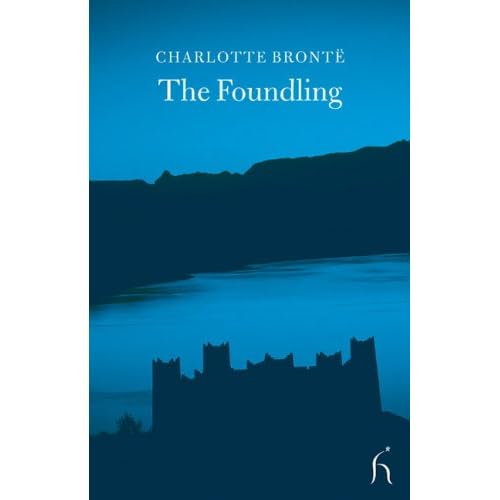
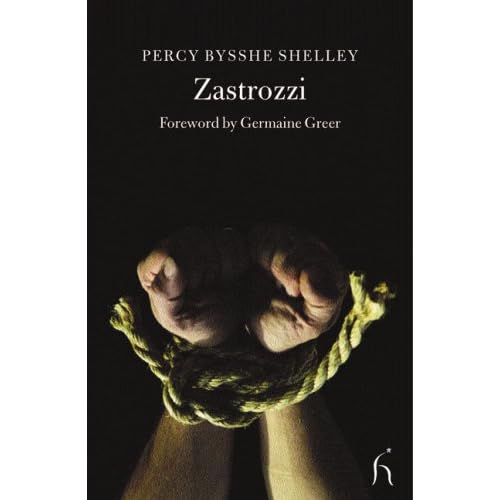
If you listen carefully you'll notice something that sounds distinctly like the bottom of a barrel being scraped, but the key to it all is that a Name can be marketed. Take a look at some recent covers from Hesperus. Each one makes it tastefully but absolutely clear that their authors are familiar to you - Bronte, Dickens, Shelley - even though the titles are not. It's only a short step in cover design to a volume with JONATHAN SWIFT emblazoned in gold across the front. TOM CLANCY, eat your heart out.
Although we may agree with Michael Caines's complain, we don't think that scraping the Brontës' barrel is not compatible with his demand.

Also in The Guardian, Linda Newbery talks about children and teenager book characters. For some reason, Jane Eyre appears among the examples:
Most important of all is that your readers must care about your character. Endow your hero or heroine with skill, beauty and undentable self-confidence and you risk alienating the reader. Flaws, self-doubts and weaknesses - in even the most spirited of characters, like Philip Pullman's Lyra - engage reader sympathy. Winnie-the-Pooh is endearing because he's well-meaning, but easily confused; Jane Eyre because she considers herself to be plain and unremarkable.
Joan Blakewell, British journalist and TV presenter, publishes in The Independent a sentimental journey from her teens to now:
Then the hormones kicked in and I became a sucker for DH Lawrence and the fire in the blood. Emily Brontë's message was that tortured passion was better than gentle loving. All this led to turbulent times and love and sex became a major pre-occupation. I read about it, fantasised, saw the movies Brief Encounter, Gone with the Wind but didn't do much about it.
The Rhinoceros Times reviews The Magicians and Mrs. Quent by Galen Beckett and slips this perceptive comment:
Anybody who dares to write a book that deliberately reminds you of Jane Austen and the Bronte sisters is an idiot. Austen is such a perfect writer that nobody can match her wit – those who try merely embarrass themselves. And few who try to do Bronte-esque Gothic have a clue as to how the genre works. (Orson Scott Card)
Gonzalo Barr interviews Rita María Martínez, author of the poetry chapbook Jane-in-the-Box:
Barr: How do you write?
Martínez: Many of my poems were sparked while reading the poetry and fiction of others. I stop reading, grab a legal pad, and start writing. I’ve written many of the Jane poems at my parents house, so perhaps being there helped me channel this poem. I write in cursive on a notebook and use a gel pen. Afterwards, I type the text into the computer and revise as I go along. I also stuffed my ears with earplugs, so I wouldn’t be distracted by any noise! I have this unbelievable super-hearing, which is more of a curse than a blessing.
Barr: I often wish we had developed earlids, as well as eyelids.
Martínez: Earlier this week I was rereading Wuthering Heights. I know it’s a classic, and I know many readers are absolutely obsessed with this book. However, I have always extremely disliked the main characters, Heathcliff and Catherine. They are very flawed individuals. But I decided to give the novel a second shot, and put my hatred of Heathcliff on hold. While rereading Wuthering Heights, I had an idea for a new Jane Eyre-related poem, titled “Letter to Edward.” In the chapbook, I have a poem titled “Letter to Bertha.” Now I am toying with the idea of writing additional Jane Eyre-related poems and turning them into another poetry collection. Wuthering Heights vividly describes the moors and touches on insanity and cruelty, so rereading it sparked an idea for a new poem, where I compare Heathcliff to Rochester.
Some of the Jane poems were written after reading A Room of Her Own, The Madwoman in the Attic by Gilbert and Gubar, Wide Sargasso Sea, or Angela Carter’s short stories and others. I wrote a good chunk of poems while commuting on the metro, though I usually like to write in bed during the late hours of the night when it is quiet. I am not a morning person, so I envy writers who roll out of bed and start writing. (...)
Barr: Why Jane Eyre?
Martínez: I read it as a junior in high school and was captivated by the plot. It’s a page turner. Thackeray could barely put the book down when he first read it and gave it a glowing review. I am fascinated by the story. The plot has all the right ingredients: mystery, romance, adventure. The reader really gets to know Jane and is able to live inside her head. One traces her life from a young age. By the end of the novel, the reader knows every intimate detail of Jane’s life—much in the same way the reader gets to know Pip from Great Expectations or Bailey from the movie It’s a Wonderful Life. Jane Eyre is the story of an underdog, and audiences usually root for underdogs. Characters like Edward Rochester, Bertha Rochester, St. John Rivers, and Blanche Ingram are also extremely memorable. I’ve found myself relating to different characters during different stages of my life. And Charlotte’s prose is very poetic and beautiful. There’s a reason it’s a classic.
Barr: Would you call your poetry feminist?
Martínez: Yes, I consider my writings to be feminist, though there are times I dislike the
label. No offense to Chaucer, Milton, or Shakespeare, but at age sixteen it was refreshing to read a novel penned by a female—a novel which is part of the literary canon. Poems such as “Cross Dressing” and “Reading Jane Eyre II” are a tribute to Charlotte Brontë and other female authors who wrote pseudonymously. Female authors were judged on a different scale. Brontë wanted the reader to approach the novel in an unbiased manner—to reserve judgment according to the literary merits of the work as opposed to the gender of its author. “Letter to Bertha” and several other poems are attempt to address the important issue of female authorship and female insanity and its treatment.

Rita María Martínez will read this Sunday, September 28, 2008, at 6:00 p.m., along with other graduates of the Florida International University M.F.A. program, at Books and Books, 265 Aragon Avenue, Coral Gables (305.442.4408)
On the blogosphere, all is about Wuthering Heights:
Blog Om Bøger posts about the book linking the analysis to the works and conclusions of psychologist Alice Miller and philosopher Axel Honneth (in Norwegian). The Cheeky Gwynnes and Joyce's Live Space recommend Emily Brontë's masterpiece.

Categories: , , , ,

Thursday, July 09, 2009

Thursday, July 09, 2009 1:31 pm by M. in , , , , , ,    2 comments
The Scarborough Evening News reports the results of the Scarborough in Bloom photographic competition:
The competition's Under 16 category winner was Larissa Webster with her flower and coastal view (Class 5J, Gladstone Road Junior School) while a highly commended went to Jessica Speight (Class 5B, also of Gladstone Road Junior School) for her photograph of Anne Bronte's grave.
Click on the picture to go to the Scarborough in Bloom website and enlarge it.

The Charleston Gazette interviews (look at the comments to read Denise Giardina's clarifications) Denise Giardina, author of the upcoming Emily's Ghost:
Charleston author Denise Giardina describes the realization as her "Come to Jesus moment."
The ordained Episcopal deacon was reading yet another biography of the Brontes. The book noted that a serious novel never had been written about the sisters who produced "Jane Eyre" and "Wuthering Heights." Perhaps, Peter Ackroyd should write one. (Rosalie Earle)
Well, actually what Lucasta Miller's The Brontë Myth (the "biography" which the article refers to) says is that "The great biographical Brontë novel is, however, yet to be written." and suggests not only Mr Ackroyd name but also A.S. Byatt. (Check the aforementioned comment to know more details).
"No, no, I should write that book," Giardina remembered saying to herself.
And so she did. (Rosalie Earle)
And Jude Morgan, Syrie James, Sheila Kohler or Juliet Gael did the same thing. Their novels have been published or will be published this or next year.
"Emily's Ghost: A Novel of Bronte Sisters" was published this month by W.W. Norton. Giardina talked about her fifth novel, read a passage from it and answered questions about her work Wednesday at Lunchtime Lecture at the Clay Center.
Her obsession with the Brontes began before she was born, Giardina explained. One of the first purchases her mother made with her first paycheck as a nurse was a two-volume set of "Jane Eyre" and "Wuthering Heights."
Giardina said the woodcarving illustrations in the books "were fascinating to me as a 5-year-old. I tried to make up stories about them because I couldn't yet read."
Later, she read a biography of the Brontes before she had actually read any of their 19th- century novels.
In her 1987 novel "Storming Heaven," Giardina introduces a main character, Carrie Bishop, by talking how much she loved "Wuthering Heights." She said she consciously modeled "The Unquiet Earth" on "Wuthering Heights," beginning with its name to its structure and characters.
So when she read that no serious novel had been written based on the Brontes, Giardina said she became obsessed with writing the book. After all, she had already done much of the research.
She focused on Emily Bronte, the author of "Wuthering Heights," because Charlotte Bronte outlived her sisters and, Giardina said, "totally controlled how the Bronte story was told." (A third sister, Anne, is the author of "The Tenant of Wildfell Hall.")
Giardina visited Haworth in Yorkshire, England, where the Brontes lived, and walked the moors described in "Wuthering Heights." She visited the parsonage, where the Rev. Patrick Bronte raised his daughters, and where his young, handsome curate William Weightman visited.
With a historical novel, Giardina said she is very careful to get the basic facts and details accurate.
But little of Emily Bronte's writings -- her poems, letters, perhaps a second novel -- remain. What Giardina learned about her was through others and through "Wuthering Heights" itself.
For example, a letter from a friend of Charlotte Bronte described Emily's intense look during a conversation with the curate. "I took that and ran," Giardina said.
In a March review for the Sunday Gazette-Mail, Carol Campbell wrote:
"When you open the pages of Denise Giardina's new novel, you slip into the world of the Brontes as effortlessly as one of Emily's ghosts.
"Whether you are very familiar with the lives of the famous Bronte sisters or know very little about them really doesn't matter for the success of this novel."
Giardina will speak about the novel and sign her books at a wine reception at 6 p.m. July 27 at Taylor Books on Capital Street. She will talk and sign books at 7 p.m. July 29 at Barnes & Noble, University Drive, Morgantown. (Rosalie Earle)
The Wall Street Journal talks about the Salinger incident and the fair use of copyright characters:
Fair-use copyright usually lets an author quote from another's work in a scholarly article, review or news story. But literary critique in the form of a novel is not unheard of. Jean Rhys's "Wide Sargasso Sea" retells "Jane Eyre" from the point of view of Bertha, the madwoman in the attic. Rita Copeland, a comparative literature professor at the University of Pennsylvania, calls it "a deep exploration of the political, social and racial issues that underlie Charlotte Brontë's novel. Of course Rhys' book is a great novel, but it's also an important 'reading' of 'Jane Eyre,' of the Caribbean side of the story in Brontë's novel and of the European relationship to the West Indies." (...)
Margaret Mitchell was long gone, of course, by the time Ms. Randall borrowed her creations, as was Brontë when Rhys wrote her work. And though Mr. Salinger himself was not troubled by his appearance in Mr. Colting's work, the public's fascination seemed to stem from this literary layering. (Julie Steinberg)
National Review lists several recent fantasy readings:
Galen Beckett’s The Magicians and Mrs. Quent is a bit more heavy-handed as a pastiche of Austen and the Brontës, by way of Jules Verne, but I found it a delight from beginning to end. (Orson Scott Card)
The Tehama County Daily News discovers new Brontëites in the Corning Healthcare District, Jane Austen's World publishes a post compiling the Q&A with Syrie James, author of The Secret Diaries of Charlotte Brontë. The novel is also reviewed on Sharon's Garden of Book Reviews:
This fascinating novel is a delight to read, and should send readers scurrying to discover James’ previous novel “The Lost Memoirs of Jane Austen.”
The Blog of Oddments and Curiosities reviews Villette and Tj.blackwell has uploaded a complete set of pictures of his trip to Top Withens and Brontë country.

Finally, Bo Bunny interviews the author Joanna Campbell Slan:
What are your favorite books or authors?
I have so many that I could fill pages and pages. Let’s stick to the classics, shall we? I love Jane Eyre by Charlotte Brontë, Rebecca by Daphne du Maurier, and A Tree Grows in Brooklyn by Betty Smith, best of all.
Categories: , , , , , ,