Podcasts

  • S4 E6: With... Anthony Delaney - Sam and Mia chat to award-winning historian, broadcaster and author Dr Anthony Delaney! Anthony holds a PhD in 18th-century social and cultural history a...
    2 weeks ago

Wednesday, September 09, 2026

Wednesday, September 09, 2026 12:24 pm by M. in , ,    No comments
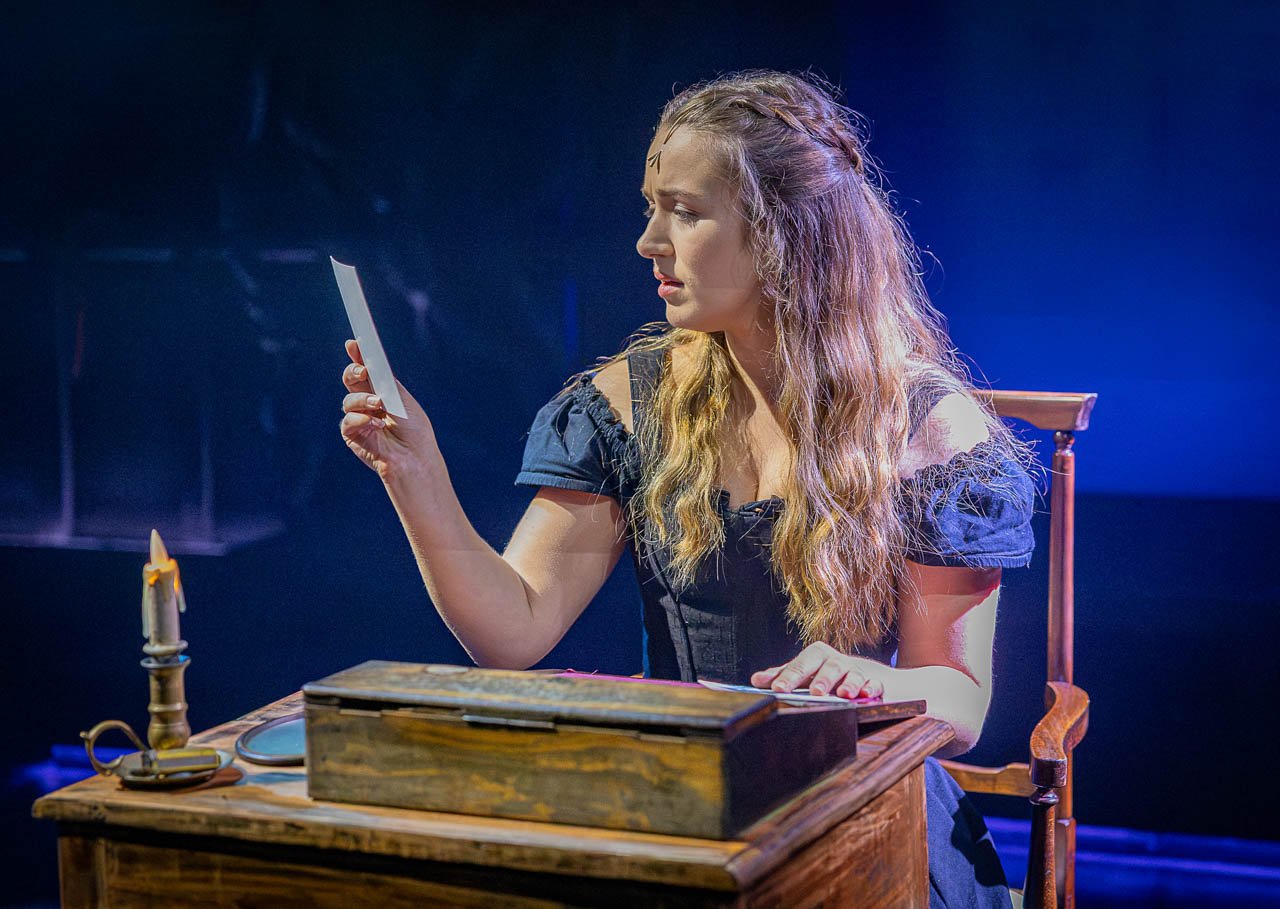
First reviews of Gordon & Caird's Jane Eyre. The Musical London production. Not bad, not exceptional. Good ones, without enthusiasm:

4 out of 5 stars

There are some aspects where the musical doesn't quite work as well from an adaptation standpoint, either straying from the source material or too conscious of its modern audience. Its core message of being "brave enough for love", expressed in the final musical number, feels a tiny bit more moralising than Brontë's novel, which is preoccupied with a woman's search for identity and personal freedom outside the bounds of social barriers. The musical also sidesteps some of the uncomfortable implications around Bertha Mason, who has regularly been assumed to be a woman of colour by many literary scholars, by casting a white actress (Hannah Lindsey) in the role - though ironically, her brother Richard Mason is played by a black actor (Jonathan Andrew Hume), muddying the waters slightly around what the production was trying to imply.
Regardless, where the musical succeeds is in capturing the spirit of Brontë's novel through its aesthetics, musical style, and the cast's portrayal of its often complex characters. What emerges is something quite lovely: hauntingly beautiful in places, emotionally devastating in others. (Shehrazade Zafar-Arif)
3.5 out of 5 stars

The strong ensemble cast is slick and assured, shifting effortlessly between multiple roles. Charlie Burn makes a compelling Jane, balancing quiet determination with moments of defiance, with a voice that soars like a bird. Ashley Gilmour’s Rochester brings brooding charisma and emotional turmoil, with a richly sonorous voice. Isabelle Methven shines in the contrasting roles of saintly Helen and spirited Bessie, while Emily-Rose Samuel (sharing the role with Poppy Jason) impresses as Young Jane/Adele, combining a bright voice with remarkable maturity.
After finally crossing the Atlantic, Caird and Gordon’s ‘Jane Eyre: A Musical’ captures Brontë’s spirit, even if it doesn’t quite match the novel’s force. Still, its ghostly atmosphere and strong performances make it well worth a visit. (Hannah Bothelton)
3 out of 5 stars

Gordon and Caird’s lyrics pay lip service to Jane’s longing for freedom, her evolving religious faith, and the ways in which her love for the enigmatic Mr Rochester challenges her. But too often these themes are explained to us didactically, or expressed in generic terms (Jane sings at one point of wishing to “go where I am not allowed”, a strangely childish plea). The eventual conclusion, involving Jane’s matured love for Rochester, is a trite romantic comedy ending rather than a spiritual reckoning.
This is not helped by some odd pacing choices: the first act ends on a forgettable duet between Jane and Rochester, which offers no real plot advancement and causes an awkward break in momentum. Jane and Rochester’s wedding, interrupted by the revelation that he’s already married, only comes about two-thirds of the way through the show, leaving Jane’s emotional journey to stall at the start of the second act. 
What Gordon and Caird have succeeded, though, is in creating a capital-R Romantic, almost operatic emotional world for their characters. Their best writing is that which embraces the natural lyricism in Charlotte Brontë’s writing; famous images from the novel, including the string tying Jane and Rochester together, feel made for song. Elsewhere, if the lyrics fall short, the accompanying soundscape builds back the story’s emotional force, tapping into Jane’s sense of fear, isolation or passion at any given moment. (...)
This production is not the intellectual powerhouse fans of the novel may come to expect, but it does not hold back when it comes to heightened, moving displays of emotion – obeying not the letter of Charlotte Brontë’s masterpiece, but certainly its spirit. (Clementine Scott)
The music, which is appealingly sung by the ensemble, soars and harmonises nicely, though the songs have a tendency to blend together and the lyrics can’t resist didacticism. It reaches a climax in Jane’s second-act solo “Painting Her Portrait”, which is a powerful song of ideas. Andrew Johnson provides a clean sound design and the seven-piece band, led by Ben Kubiak, is ideally balanced.
As Jane and Edward Fairfax Rochester, Charlie Burn and Ashley Gilmour are an appealing pair who share a convincingly yearning chemistry. Unlike their characters, both are conventionally attractive (as is so often the case in adaptations). Burn's Jane feels closer to Belle in Beauty and the Beast than to Brontë's fey, fiery misfit, but she’s a heroine worth rooting for. (...)
The first act anticlimactically culminates with Jane and Rochester admitting their feelings to themselves; the fortune teller scene, proposal, wedding, and its aftermath all come in the second half. Evangelical clergyman St John Rivers (Melad Hamidi) is dealt with swiftly and the convoluted “We are actually cousins” business is eliminated, as is the legacy from the long-lost uncle in Madeira.
As with most adaptations of classic literature, it’s best enjoyed for what it is, rather than fixating on its shortcomings (even if that can be part of the fun). The book will always be there. Reader, I probably wouldn’t marry this show, but I'd go on a date with it. (Julia Rank)
Gordon’s songs lean heavily on soaring ballads and harmonies, many of which, to be frank, rather blend into each other. There are only so many iterations of Jane’s inner yearnings one needs in order to understand the central point that she’s a woman in love. However, a few of the numbers do make a deeper impression, notably “Painting Her Portrait” and the climactic “Brave Enough for Love”, both of which showcase Burn’s West End calibre vocals (she recently starred in Mean Girls).
Although the character arc of Jane never gets its full expression – she feels more Maria in The Sound of Music than fully-fledged proto-feminist literary icon – none of the blame for that can be laid at the feet of Burn, whose intensity is matched by Gilmour’s. They make a superb central pair with chemistry to burn, so to speak (though they’re anything but the ‘plain’ types they claim to be), and are well supported by a multi-rolling ensemble including Isabelle Methven as Jane’s ill-fated childhood friend, Gemma Page as her vindictive aunt, Jonathan Andrew Hume as her sadistic headmaster and Hannah Lindsey as the infamous and ethereal attic-dwelling Bertha. Mention too should go to the accomplished performance of Emily-Rose Samuel (who rotates with Poppy Jason) as both the young Jane and her French-speaking ward. (...)
However, although it doesn’t quite convince as an overlooked masterpiece, there is no doubt it has merits, together with some stonking central performances, and is one that musical aficionados won’t want to miss. (Theo Besanquet)
The cast are uniformly excellent throughout. Charlie Burn brings determination and intelligence to Jane, while Ashley Gilmour provides a suitably brooding Rochester. Equally impressive is young actor Emily-Rose Samuel, who, at this performance, effortlessly captured both Young Jane and Adèle with remarkable confidence and presence.
This UK premiere tells Brontë’s story with clarity and conviction, supported by strong performances and striking design. Yet despite these accomplishments, it never quite captures the emotional sweep of the great romance at its centre, leaving a production that is engaging, but ultimately less heartfelt than it ought to be. (Greg Stewart) 

You can follow the discussion on Theatre Board or Reddit too. 

Some more information about the LoveHit productions of Wuthering Heights and Jane Eyre. The Wuthering Heights adaptation has around 50 short episodes. Each individual episode lasts between 1 and 3 minutes. This version is optimized specifically for mobile viewing on the LoveHit app (that is, a 9:16 vertical format). The first 13 episodes are already available, and we've seen them.

It's a bizarre experience: the unnatural vertical format, the tiresome pattern of a sort of climax every minute or so, coinciding with the end of each episode; and the impossible tone of Taylor Sheridan meets Barbara Cartland make this a fascinating, but not in a good way, experience. The producers promise a 90-minute horizontal version to be presented at the upcoming MIPCOM, October 12–15, in Cannes. We imagine that this format will make the film visually less ugly, but we don't have too many expectations.
Directed by Alex Hunt
Written by Oliver Draiv (among others, we guess)
Produced by Phil Viardo, Jeremy Gilbreath (supervising) and  Vlad Kumurzhi (associated).
Photographed by Eugnee Filson

With: Jean Evans (Cathy Earnshaw), Dante Ayala (Eddie Linton), Ehan Vaughan (Heathcliff Earnshaw), Gabriel Quintella (Hindley Earnshaw), Maia Sky (Bella Linton), Lane Wray (Patrick Earnshaw), Sofia Shakarian (Young Cathy), Jameson Barros (Young Heathcliff), Jax Binkert (Young Hindley).
The Jane Eyre adaptation has not been released yet:
Jane Eyre
Directed by Jerry Bradford
Written by ???
Produced by Phil Viardo, Alex Hunt (executive), Jeremy Gilbreath (supervising) and Vlad Kumurzhi (associated).
Photographed by Benjamin Mahl

With Raina Silver (Jane Eyre), Tyler Harlow (as Edward Rochester), Eric Roberts (as Father Jameson), Alana Tilton (Bertha), Esmeree Sterling (Georgiana), Derek McDonnell (Richard Mason), Emily Lisa Jones (Blanche Ingram), Yva Leroy (Adele),
We wonder who this Father Jameson may be.

And if you have any doubts about these adaptations, the Instagram LoveHit reels account has all the answers:
The classics got hotter. Vertical dramas from stories you already love. Open the app. For the plot.

Tuesday, September 08, 2026

The Telegraph and Argus reports that the Brontë Parsonage Museum is celebrating the 10th anniversary of To Walk Invisible.
The Brontë Parsonage Museum has launched an exhibition marking the 10th anniversary of the BBC drama 'To Walk Invisible', which told the story of the Brontë sisters.
Located at the Parsonage in Haworth the exhibition will run until December 31, 2026. It explores the making of the 2016 BBC drama, featuring costumes, props, set designs, and production notes.
Mia Ferullo, digital engagement officer at the Brontë Parsonage Museum, said: "Over the past ten years To Walk Invisible has become a film cherished by many Brontë fans.
"It offers an authentic, well-researched interpretation of the sisters and their lives.
"We wanted to celebrate this anniversary by showcasing the creative team's process including a behind the scenes look at the screenplay, set design and costume design."
The drama starred Finn Atkins as Charlotte Brontë, Charlie Murphy as Anne, Chloe Pirrie as Emily. 
Four original costumes designed by Tom Pye are on display in the museum’s period rooms, including a dress for each sister placed around the dining room table where they famously wrote their novels.
An additional costume for Emily is exhibited in the kitchen.
Ms Ferullo said: "In the dining room, we have Emily's lightning print dress, worn in the film by Chloe Pirrie.
"There is a story that while shopping in Bradford, Emily had selected a material with a lightning print on it, sadly the original dress no longer exists.
"The costume designer Tom Pye liked this anecdote and decided to recreate it for the film."
She believes the costumes help visitors imagine the sisters as they once were.
Ms Ferullo said: "I think displaying the costumes can help visitors visualise the family within the space, you can imagine the sisters walking around the dining room table discussing their writings.
"The cast were all similar heights to the original Brontë family, so you also get an idea of the height difference between them."
Other artefacts from the drama on display include bonnets, Branwell’s top hat, and his nightshirt.
Visitors can also see a recreation of the "Gun Group Portrait" of the siblings, concept art by set designer Grant Montgomery, and a prototype model of the Parsonage set.
Ms Ferullo talked about director Sally Wainwrights aim to present the Brontë family in a way they hadn't been portrayed previously.
"She wanted to portray them as a real family, challenging some of the myths around them."
She praised the production team’s dedication to authenticity, noting that Mr Montgomery measured every flagstone in the original Parsonage to ensure the replica set was as accurate as possible.
It also sits alongside the museum’s ongoing exploration of Brontë screen adaptations.
Props from Emerald Fennell’s forthcoming version of Wuthering Heights are already on display, and the museum has previously hosted exhibitions on cinematic interpretations of the Brontë family’s work from around the world. (Amelia Short)
Still in Yorkshire, Harrogate Informer features the work of designer jeweller Joanne Gowan.
Based in her studio in Pateley Bridge, the local artisan has already spent several years developing a single, monumental piece. She intends for it to eventually earn that prized status of a family heirloom through what she describes as the slow process of thinking. 
Joanne Gowan:
I had the idea to produce a Wuthering Heights piece about two years ago when I moved to North Yorkshire, celebrating the first connection I had with the area from reading the Brontë novels from the age of 10.
This Emily Brontë piece sort of ate into my subconscious on so many levels: spiritual ideas, eternal love, passion, the wild of the landscape, and the contrast of good and evil, all wrapped into one.
When Gowan joins a curated group of the UK’s top contemporary jewellers and silversmiths for the three-day Acquire selling show at Ampleforth Abbey, visitors will have a rare, exclusive opportunity to view her work-in-progress. The creative journey behind the piece spans from the rugged Yorkshire moors to the historic gemstone cutting centers of Germany.
Joanne Gowan:
Initially, I took some images from illustrations of Cathy in early book editions and contacted my gem dealer in York, R.M. Weare. They sourced a highly talented gemstone carver in Idar-Oberstein, Germany.
The rock crystal carving then took over six months to develop, with lots of input back and forth during the cutting process.
Meanwhile, I re-read the novel several more times to narrow down the exact elements I wanted to include. After that, a lot of the designing happens in my head. Over the months I get a clear mental vision, and then on the right day, I sit down and work it all out on paper.
The final design is a complex vignette, or picture piece, engineered to be worn as a high-end brooch or pendant, or displayed standalone as a miniature work of art. It captures the haunting, pivotal moment when Cathy appears at the window—a scene that defines the emotional landscape of the entire novel.
Framed within a window meticulously carved from soapstone, the structure mimics the box bed window of Ponden Hall near Haworth, widely believed to be Emily Brontë’s real-world inspiration for the scene.
Joanne Gowan:
Cathy, rendered in rock crystal, will appear to be coming through the leaded glass. The Ash tree leaves knock against the window, representing the moment when Nelly speaks to Heathcliff on the morning of Cathy’s death and he leans against the tree. In the foreground sill is a sprig of Yew with its toxic red berries, representing the bridge between mortal death, endurance, and the supernatural spirit. Alongside it sits a bunch of yellow crocuses—the earliest spring flowers brought to Cathy’s bedside by Edgar Linton, representing renewal and hope. This beautifully ties to the end of the novel, when the children of Cathy and Heathcliff reach an eventual mutual connection.
The breath-taking final piece will be constructed from a rich palette of premium materials: rock crystal, soapstone, sterling silver, 18ct yellow and red gold, black rhodium plating, platinum, vivid rubies, and yellow sapphires. [...]
The original design sketch and the German-carved rock crystal component will be publicly displayed for the first time at the Acquire event, where the finished masterpiece will be open for official commission.
Event Details
The design sketch and rock crystal carving will be on display at the annual Acquire exhibition, curated by Joanne Gowan.
Venue: Alban House, Ampleforth Abbey estate, North York Moors, YO62 4EN
Dates: Friday 18th to Sunday 20th September 2026
Opening Times: 10:00 AM – 5:00 PM daily
Admission: Free entry to the exhibition. The daily specialist guest talks curated by Susan Rumfitt are ticketed.
Also in The York Press, The Telegraph & Argus, and others.

And now for an exclusive from Deadline:
EXCLUSIVE: Literary classics such as Wuthering Heights and Jane Eyre are getting the microdrama treatment.
This is through the latest entrant into the microdrama field, LoveHit, an L.A.-based studio and app focused on originals based on classic literary adaptations.
LoveHit, which launches this month, has a vertical video slate built entirely from classic novels in the public domain. At launch, this will comprise Wuthering Heights, Pride and Prejudice, Jane Eyre, The Great Gatsby and Beauty and the Beast. More are in post-production, including Dangerous Liaisons, The Scarlett Letter and Les Misérables.
Each has been written, shot and edited as both a vertical series and a horizontial features, with the latter being readied for TV and streaming buyers worldwide attending MIPCOM on October 12-15 in Cannes. Series will last roughly 50 episodes running between one and three minutes, with the films at 90 minutes.
Actors appearing in the titles include microdrama regulars Meg Bush, Tyler Harlow and Sophie Swiszcz, along film, television and stage stars. These include Academy Award nominee Eric Roberts, who appears in Jane Eyre, which stars Raina Silver and Tyler Harlow. Ethan Vaughan and Jean Evans will star in Wuthering Heights, which is relocated to a present day American ranch. A vertical cut of the show launched on the LoveHit app on August 27 ahead of the full launch. [...]
“There isn’t a market in the world where these titles need much of an introduction,” said Lenny Levi, CEO of LoveHit. “Every generation has adapted them, and every generation finds its own reason to connect with them. That’s what makes them evergreen.” (Jesse Whittock)
Entretanto Magazine (in Spanish) has a review of Andrea Arnold's Wuthering Heights. Le Nouvel Observateur (France) features Lilia Hassaine's Jane Eyre retelling JE.
12:47 am by M. in ,    No comments
Another AI retelling of Jane Eyre:

by Rose Angel Publishing AI and Bernardine Mitchell
Publisher ‏ : ‎ Rose Angel Publishing
September 6, 2026

England, 1852.
After losing her family during Ireland's darkest years, Maeve O'Connell crosses the sea determined to build a life of her own. With her fiery copper hair, sharp mind, and unwavering spirit, she has spent years fighting against the prejudice that follows her wherever she goes. When she accepts a position as governess at the remote Blackwood Hall, she hopes only for independence and a fresh start.
Instead, she finds herself drawn to the estate's enigmatic master, Alexander Blackwood—a man haunted by secrets he cannot escape and a legacy he cannot forget.
As their friendship deepens into an unexpected romance, Maeve begins to uncover disturbing truths hidden within the walls of Blackwood Hall. Whispers of a long-dead wife, missing letters, locked rooms, and buried family scandals lead her toward a mystery that stretches far beyond England's moors and into the painful history of her own homeland.
With powerful enemies determined to keep the past buried, Maeve must decide whether love is strong enough to survive the weight of history—or whether some secrets are destined to destroy everything they touch.
Filled with windswept landscapes, forbidden love, family intrigue, and Gothic mystery, Jane Eyre of the Emerald Isle is a sweeping historical romance inspired by the timeless spirit of Jane Eyre and the enduring resilience of Ireland.

Monday, September 07, 2026

Monday, September 07, 2026 9:32 am by Cristina in , , ,    No comments
TV Fanatic has a recap/review of Season 2, Episode 11 of
The Librarians: The Next Chapter.
Finally, sharing a correspondence-based adventure with Anya via the Library’s copy of Charlotte Brontë’s Jane Eyre turned Vikram’s fear of always being alone and never belonging up to 11. (Diana Keng)

The story of correspondence via Jane Eyre appeared in the previous episode, S02E10:  And the Heart of a Librarian.

Valencia Plaza (Spain) has an article on translating classic novels into Spanish and one of the novels mentioned is Jane Eyre. AnneBrontë.org features 'The Early Art Of The Brontës'.
A recent article on Wuthering Heights adaptations:
by Mariana Chajon Oliveros
Pivot: Literary Journal, 11(1), 20-25 (2026)

Abstract
This is a brief personal essay that critiques Emerald Fennell's adaptation of Wuthering Heights, provides a brief overview of the field of classic novel adaptation over the past thirty years and proposes questions that go outside of the well-known, “how do we create interest?”. In this essay, I consider what the future of film adaptation looks like, and how Hollywood can move towards capitalizing on universal aspects of classic novels, as well as how it can utilize modern systems of knowledge, such as psychology, critical race theory, sexuality and gender studies, to provide an added layer of meaning, or represent what goes unsaid in many works of classic literature. Fennell’s adaptation serves as a jumping-off point to assess the current challenges of literary adaptations, and the novel Wuthering Heights is used as an example for creative ideation.

Sunday, September 06, 2026

Sunday, September 06, 2026 11:00 am by Cristina in , ,    No comments
Harper's Bazaar France interviews Lilia Hassaine about her retelling of Jane Eyre, JE.
À travers le destin d’Antoinette Cosway, personnage de Jane Eyre – dont les initiales, J. E., résonnent dans le titre –, Lilia Hassaine explore les mécanismes de l’effacement, de l’enfermement et de la reconquête de soi. En Jamaïque, en 1831, Antoinette Cosway s’éprend d’Edward Rochester, mais l’élan amoureux cède peu à peu la place à la domination et à la violence. Celle que l’histoire a reléguée au silence entreprend alors de reprendre possession de son propre récit.
Harper’s Bazaar : Quel a été le point de départ de JE ?
Lilia Hassaine : J’ai découvert  Jane Eyre de Charlotte Brontë à l’adolescence. À l’époque, j’y ai lu exactement ce qu’on m’avait appris à y voir : l’histoire d’amour entre une jeune orpheline devenue gouvernante et le maître du manoir anglais où elle travaille. Mais au moment du mariage, elle découvre qu’une femme est séquestrée dans ce manoir et que cet homme est déjà marié avec celle-ci. Lui affirme que son épouse est folle, dangereuse, qu’il l’a enfermée pour son propre bien ; en somme, il se présente comme la véritable victime de l’histoire. Et puis je l’ai relu il y a deux ans, et je n’ai pas lu le même livre. Mon regard de lectrice s’était complètement déplacé.
H.B. : Dans quel sens ?
L.H. : Je me suis demandé ce qui avait changé pour que je ne voie plus que cette femme, au point qu’elle devienne une obsession. Elle occupe très peu de place dans Jane Eyre. Elle est décrite comme une créature sauvage, menaçante, avec des traits qui relèvent parfois d’une représentation profondément marquée par les préjugés raciaux de l’époque. À la relecture, de nombreux éléments m’ont mise mal à l’aise. J’ai eu envie de comprendre cette femme, de lui redonner une histoire. Qu’avait-elle vécu avant d’être réduite à cette figure monstrueuse ? Cela a fait naître une autre réflexion. Si mon regard avait changé, c’était sans doute parce que mes propres expériences avaient transformé ma manière de lire. Mais ce déplacement tenait aussi à quelque chose de plus collectif : l’époque elle-même avait changé, et avec elle les questions que nous posons aux textes.
H.B. : Vous écrivez : “Cette œuvre ne fut pas l’œuvre d’un seul homme ; il faut toute une société pour rendre possible une telle entreprise.” Cette phrase semble entrer en écho avec des réalités très actuelles. Aviez-vous cette dimension contemporaine en tête dès le début de l’écriture, ou s’est-elle imposée progressivement ?
L.H. : Lorsque j’ai écrit  JE, les affaires Bruel ou Lyhanna n’avaient pas encore éclaté, mais cette question me révoltait déjà. Pour moi, les affaires Epstein et toutes les autres n’ont jamais été des cas isolés : elles révèlent un problème systémique, profondément sociétal. On les a longtemps réduites à des histoires d’intimité, au nom de la vie privée, comme si s’y intéresser relevait de l’intrusion. Or c’est à l’échelle de la société qu’il faut penser ces violences. Elles ne peuvent exister sans une forme de complicité collective : il y a ceux qui savaient, ceux qui se sont tus, ceux qui ont préféré regarder ailleurs. Aujourd’hui, nous comprenons mieux certains mécanismes de ces violences, mais il reste beaucoup à faire. (Florine Delcourt) (Translation)
Collider has ranked 'The 10 Saddest Books of All Time,' and Wuthering Heights makes it to #8.
8 'Wuthering Heights' (1847)
Some people might try telling you that Wuthering Heights is a romantic novel, but sometimes, some people are wrong. There are feelings of longing and desire here, but the passionate stuff is also destructive, and Wuthering Heights is more focused on looking at the lingering effects of trauma, alongside exploring prejudice, class, inequality, and all sorts of other things that aren’t particularly romantic.
There are some adaptations of Emily Brontë’s source material that lean into romance, or have things play out as a love story of a bittersweet nature, but in the book, there is not much love, traditional or otherwise. In its place, you do get a ton of sadness in Wuthering Heights, and it’s remarkable how much of that emotional devastation still packs a punch close to two centuries on from the novel’s publication. (Jeremy Urquhart)
A contributor to Her Campus suggests '10 Literary Halloween Costumes For The Book Lovers,' and one of them is
9. Jane Eyre from Jane Eyre
For those who want their Halloween costume to look like it belongs in a moody period drama, say hello to Jane Eyre. Jane’s wardrobe is understated, which actually makes this a pretty easy costume to recreate. Look for a long black, gray, or dark-colored dress with a high neckline and simple silhouette. Add a book, a ribbon, or an old-fashioned-looking bag, and you’re ready to wander around Halloween parties looking like you’ve just escaped Thornfield Hall. (Danielle Okogho)
And finally, an article on 'Why the rise of Christianity is not what you think' in The Critic begins as follows:
As I stood, packed into a sea of commuters, a man in full tweed, thick-rimmed glasses and freshly polished brogues stepped onto the tube/bus beside me and pulled out a battered, Penguin vintage paperback. It could have been a novel such as Jane Eyre, but instead he pulled out the Holy Bible. (Iona Lowe)
5:05 am by M. in , , ,    No comments
From the Ivory Coast:
by Ouana Alassane Sekongo, University Félix Houphouët-Boigny, Côte d’Ivoire, Wandja Fatoumata Tuo, Université Alassane Ouattara, Côte d’Ivoire, Omar Ndiaye, Université Cheik Anta Diop, Sénégal, Ataféї Pewissi, Université de Lomé, Togo
Revue Internationale de Linguistique Appliquée, de Littérature et d’Education, Volume 9 Numéro 2 – Juin 2026

This paper investigates the complex interplay between love, trauma and revenge in EmilyBrontë’s Wuthering Heights, focusing on the character of Heathcliff. It shows how desire forvengeance against the offenders intertwines with strong love. Through a psychoanalytic lens and close reading of the text, the investigation demonstrates that Heathcliff’s trauma and self-immolation – both emotionally and physically – serve as a manifestation of his obsessive longing for Catherine. Ultimately, the study found that revenge, rather thanbeing a mere act of malice, can be a misguided attempt to reclaim lost love, highlightingthe tragic consequences of intertwining passion with vengeance. It indicates thatvengeance against those who hate us does not attract human heart, but it only leads toone’s own destruction. Therefore, the article upholds that patience, redemption andmutual understanding remain the bedrocks of any truthful and lasting human relationship.

Saturday, September 05, 2026

Saturday, September 05, 2026 8:59 am by Cristina in , , , ,    No comments
Many sites are featuring the premiere of Jane Eyre the Musical in London. From Playbill together with some new pictures:
John Caird and Paul Gordon's 2000 musical version of Jane Eyre is getting a long-awaited U.K. debut at Southwark Playhouse Elephant, and Playbill has a first look at the new production. Performances began August 28 and continue through October 24. Opening night is September 8. (...)
The new staging is co-directed by Caird (Les Misérables) and Megan McGinnis, reuniting after the latter starred in Caird's Daddy Long Legs musical. The production is being produced by Adam Blanshay Productions in partnership with the work's original Canadian producers, David and Hannah Mirvish.
The cast is led by Charlie Burn as Jane and Ashley Gilmour as Rochester, with Claire Greenway as Abbot and Grace Poole; Melad Hamidi as St. John and Lord Ingram; Connor Wood as John Reed and Vicar; Jonathan Andrew Hume as Brocklehurst and Mason; Izzi Levine as Agnes, Leah, Jane's Mother, and Mary Ingram; Hannah Lindsey as Scatcherd and Bertha Mason; Isabelle Methven as Helen Burns and Bessie; Gemma Page as Reed and Fairfax; Eve Shanu-Wilson as Blanche and Sophie; and Poppy Jason and Emily-Rose Samuel as Young Jane and Adele. Casting is by Sarah-Jane Price.
The musical premiered in Toronto in 1996, ultimately making it to Broadway in 2000, bringing Brontë's classic gothic romance to the world of musical theatre. The work would go on to earn five 2001 Tony Award nominations, including Best Musical. A starry concert production brought the musical back to NYC with a Manhattan Concert Productions performance at Lincoln Center's David Geffen Hall starring Erika Henningsen and Ramin Karimloo. News of this production also comes just after the launch of a new chamber revision of the musical with theatrical licensor Music Theatre International. Having premiered in 2024 at North Carolina's Theatre Raleigh with a smaller orchestration, reduced casting needs, and changes to the lyrics and book, this edition likely served as the basis for the U.K. premiere at the 310-seat venue.
“I’m so pleased to have the opportunity to explore a new version of Jane Eyre in the beautifully intimate Southwark Playhouse Elephant," said Caird in an earlier statement. "It's always a pleasure to work on this timeless romance but all the more exciting to be collaborating with the brilliant and innovative Megan McGinnis as co-director."
“Charlotte Brontë’s masterpiece is not only a landmark portrayal of a strong female protagonist, but a story that sends audiences out of the theatre feeling better about their own lives than when they walked in," added Gordon.
The production features choreography by Georgina Lamb, music direction and supervision by Ben Kubiak, set and costume design by Morgan Large, sound design by Andrew Johnson, and lighting design by James Whiteside. (Logan Culwell-Block)

Manchester Evening News recommends an autumnal trip to Haworth by describing it as 'The 'witchy' Yorkshire village with cosy pubs and cafes that's straight out of Gilmore Girls, perfect for autumn', which seriously couldn't be sillier.

Glam features Charlotte Brontë and some quotes. Clara (Spain) recommends Wuthering Heights among other classic novels written by women. The Brontë Sisters UK posta a video sharing a walk across the windswept Haworth moors with her daughter and dogs, exploring why this wild landscape meant so much to the Brontë family.
5:59 am by M. in ,    No comments
A Bangladesh Brontë-related bachelor thesis:
by Sajal Hossain Dhaly
BRAC University
2026

The purpose of this research is to discern whether Jean Rhys’s Wide Sargasso Sea and Abdulrazak Gurnah’s Paradise are “writing back” to the English and European colonial empires and their literary canons, specifically to Charlotte Brontë’s Jane Eyre and Joseph Conrad’s Heart of Darkness. Foundational postcolonial literary theories from books and academic journals provide context to the efficacy of Rhys and Gurnah’s writing back: such as Edward Said’s Orientalism, Gayatri Chakravorty Spivak’s idea of the Subaltern, and Homi K. Bhabha’s concept of mimicry. Furthermore, the research also relies on Chinua Achebe’s theory of abrogation and appropriation of the English language as a means of resistance and taking back agency by the colonised subjects. Upon assessing these books, book chapters, and articles, the research finds that Rhys and Gurnah are in fact not writing back to any colonial empire or writer; Rhys writes for a feminist Creole identity, and Gurnah writes to help establish the African literary tradition.

Friday, September 04, 2026

Friday, September 04, 2026 10:32 am by Cristina in , , , , ,    No comments
Hampshire Chronicle reviews Conn Artists' stage production of Jane Eyre at Theatre Royal Winchester.
Bringing Charlotte Brontë's Jane Eyre to the stage is no easy feat, squeezing in all the twists and turns of the classic novel into something an audience can sit through in one evening.
But Conn Artists Theatre Company's latest production at Theatre Royal Winchester offers an engaging retelling of one of literature's most enduring love stories.
This adaptation remains faithful to the source material, following Jane's journey from an unhappy childhood to her employment as a governess at Thornfield Hall, where she meets the brooding and enigmatic Edward Rochester.
The first half is a little slow-going as the production carefully establishes the characters and their relationships. While it takes time to build momentum, the groundwork pays off as the drama unfolds.
After the interval, the pace quickens considerably, and the audience is drawn into a gothic tale packed with romance, secrets and heartbreak. Long-hidden truths emerge, relationships are tested, and emotions run high as the story races towards its dramatic conclusion.
Evie Depledge delivers a convincing performance as Jane Eyre, capturing both the character's quiet determination and emotional strength. Ross Muir is equally compelling as Edward Rochester, bringing passion and intensity to the role while conveying the character's troubled past and inner conflict.
The cast makes effective use of a relatively simple set, allowing the performances and storytelling to take centre stage. Atmospheric lighting and clever staging help create the moody gothic atmosphere that fans of the novel will recognise.
The production reaches its peak during the fiery climax, with the drama surrounding Thornfield Hall providing some of the evening's most memorable moments. The final image of Jane and Rochester walking away together against the backdrop of a burning house is both striking and moving, bringing the story to a satisfying close.
While the first half occasionally lacks urgency, the gripping second act more than makes up for it. With its mix of love, loss, twists and redemption, this production successfully brings a classic story to life for a modern audience. [...]
For lovers of classic literature and period drama, this adaptation is well worth catching while it is on the road. (Kimberley Barber)
We have a couple of items on the recently published retelling of Jane Eyre JE by Lilia Hassaine. A review from Sud Ouest:
Dans son quatrième roman, Lilia Hassaine s’attaque à l’un des mythes de la littérature victorienne : Bertha Mason, l’épouse séquestrée d’Edward Rochester dans « Jane Eyre ». Un acte de réparation littéraire tout autant qu’une radioscopie de l’emprise conjugale.
En 1847, Charlotte Brontë dessinait dans « Jane Eyre » les contours d’une créature terrifiante : la « folle du grenier ». Tapie dans l’ombre du manoir de Thornfield Hall, Bertha Mason incarnait l’obstacle à la romance de l’héroïne. Un siècle plus tard, en 1966, Jean Rhys accomplissait un premier geste d’affranchissement avec « La Prisonnière des Sargasses », en restituant son nom créole – Antoinette Cosway – et en retraçant son enfance jamaïcaine ainsi que son déracinement. Lilia Hassaine choisit, quant à elle, de s’immerger au cœur de la matrice du drame : la relation avec Rochester et la mécanique du dessaisissement de soi. Bien plus qu’une simple relecture d’un classique, « Je » offre une subtile analyse de l’emprise et du « gaslighting ». Le récit s’ouvre en Jamaïque, alors que l’esclavage touche à sa fin. Antoinette y croise d’abord le regard d’Edward Rochester. Lors d’un bal en 1831, une scène de séduction à la sensualité maîtrisée scelle le piège. Le futur maître de Thornfield  lui offre une part de gâteau au citron : « J’ouvris les lèvres. N’opposais aucune résistance. Le glaçage fondit sur ma langue, sucré, acide, et pour la première fois je vis Edward, le visage nu, dépouillé de son masque sévère. »
L’attirance des corps fait vite place à la jalousie, la possession, puis au mépris. Le premier meurtre est de nature symbolique. En rentrant en Angleterre, Rochester lui confisque son nom : « Le dépouillement patronymique constitue le premier acte d’effacement : en rebaptisant arbitrairement son épouse Bertha, le maître des lieux lui retire son ancrage créole pour la réduire au silence. » Rochester ne se contente pas d’enfermer son épouse : il détruit patiemment son assise identitaire. Le doute inoculé finit par dissoudre toute certitude intime.
Lilia Hassaine montre avec une acuité toute contemporaine les ressorts de la manipulation mentale. Le véritable effroi ne provient pas tant de la séquestration physique que du silence complice de la communauté. De la haute société coloniale jusqu’à la domesticité anglaise, chacun observe, se tait et valide l’arbitraire sous couvert de préservation des convenances. La violence apparaît alors dans toute sa dimension systémique : elle repose sur l’indifférence collective. [...]
Lilia Hassaine confirme son talent de romancière par sa calme maîtrise des phrases, tantôt doucement poétiques, tantôt couperets, comme mimétiques d’un étouffement progressif. Un roman qui se lit d’une traite, solidement structuré, fort et obsédant. Le lecteur, avide, est happé dans l’engrenage. L’une des grandes réussites de la rentrée qui devrait séduire autant le public que les jurés des prix littéraires. (Translation)
And France 24 talked to Lilia Hassaine about it.

Tech Times claims that 'Wuthering Heights: House of the Damned Asks What Science Still Cannot Answer'.
Saban Films released the first trailer for Wuthering Heights: House of the Damned on September 1, 2026, ahead of its October 16 VOD and digital debut — a horror adaptation that strips Emily Brontë's 1847 novel of all romantic ambiguity and replaces it with a literal agenda: ritual murder, a ghost that hungers for a living body, and a visitor who slowly loses his mind. The film arrives in a specific scientific moment. A peer-reviewed study published in Frontiers in Behavioral Neuroscience in April 2026 confirmed that infrasound — sound below human hearing — raises cortisol levels and shifts mood, offering a plausible psychoacoustic mechanism for exactly the kind of environmental deterioration the film dramatizes. Meanwhile, the State of Brain Emulation Report 2025 concluded that the question of whether consciousness can survive substrate transfer — whether a person can truly migrate from one body to another — remains unanswered, with a minimum of thirty to forty years of research still needed. Gothic horror has always been the cultural form we use to hold open questions that philosophy and science haven't closed. In 2026, the specific questions House of the Damned dramatizes are being asked in actual laboratories, and the answers are not in yet. (...)
Wuthering Heights: House of the Damned is the first entry in a planned slate of literary horror adaptations called "Gowns and Gore," produced by ScaryContent at the 2025 AFM (Munich/Los Angeles) and distributed by Saban Films. Director Becca Hirani — also credited as Rebecca J. Matthews — and screenwriter Liana Failla keep the novel's skeleton but literalize everything Brontë left ambiguous. In Brontë's original, Catherine's ghost appears to Lockwood in Chapter 3, her child-hand clawing at the frosted window — a single unnerving scene that the novel never fully explains. In Hirani's version, that ambiguity becomes an engine. Catherine's ghost is not incidental to the story; she is its driving force, and Heathcliff is her instrument.
Can Consciousness Migrate? Gothic Horror's Central Question Is Now a Research Program
Heathcliff is not mourning Catherine. He is running what the film's synopsis describes as a deliberate operation: feeding her ghost enough "bloodlust" through human sacrifice to accumulate the force necessary for her to occupy Lockwood's living body. This is soul transference treated as a directed technical project — with a goal, a method, and a willing technician.
The question of whether consciousness can transfer between substrates is among the most actively contested in contemporary neuroscience. The State of Brain Emulation Report 2025, authored by Zanichelli et al. and released on arXiv (2510.15745), assessed twenty years of progress in three areas — neural recording, brain structure mapping, and computational modeling — and found that the field has advanced substantially while remaining at least thirty to forty years from human-scale application. Near-complete connectomes now exist for zebrafish larvae and fruit flies. For humans, the gap is measured in orders of magnitude: human brains contain roughly one hundred billion neurons; current technology can simultaneously monitor thousands.
The deeper problem is not scale but continuity. Even if a complete brain scan were possible, the "continuity problem" remains unresolved: would the entity instantiated on a new substrate be the original person, or a copy who merely believes they are? This is precisely the philosophical question Brontë staged in her novel, and precisely the question that makes Heathcliff's project horrifying rather than tender. He is attempting a transfer whose success cannot be verified from the inside.
What Is the Real Science Behind Haunted Houses?
Lockwood's trajectory in the film — progressive illness, delusion, altered perception — maps onto a well-documented real-world phenomenon that psychologists and neuroscientists have studied with increasing rigor. [...]
Gothic Literature as Cultural Technology: Why Brontë Wrote This Story in 1847
The literary scholar Jerrold E. Hogle, in the Cambridge Companion to Gothic Fiction, identifies a defining structural feature of the genre: the depiction of horrifying events in Gothic fiction "often serves as a metaphorical expression of psychological or social conflicts." Gothic is not escapism. It is the cultural form human societies have repeatedly reached for when they need to express something that cannot be stated in ordinary social registers.
Ellen Moers coined the term "Female Gothic" in her 1976 study Literary Women, specifically identifying Brontë's Wuthering Heights as a prime example of Gothic fiction deployed to give form to female experience that Victorian propriety made unspeakable. Moers argued that Catherine's love for Heathcliff should be understood as an expression of pre-adolescent freedom and erotic attachment that the social architecture of 19th-century England had no legitimate channel for. The Gothic frame is what allowed Brontë to depict this love at all — and to show its consequences — without either endorsing or condemning it. The horror is the form the truth takes.
Emily Brontë wrote her novel under the pseudonym Ellis Bell — a woman writing in an era when female authorship faced institutional skepticism — and the Yorkshire moors she depicted were her actual environment, not metaphor. Scholar Carol Senf has argued that Gothic literature "was a counterbalance produced by writers and thinkers who felt limited by [a confident rationalist worldview] and recognized that the power of the past, the irrational, and the violent continue to sway in the world."
House of the Damned sits within a contemporary tradition that film scholar David Church, in Post-Horror: Art, Genre and Cultural Elevation, describes as merging "art-cinema style with decentered genre tropes, privileging lingering dread and visual restraint over audiovisual shocks and monstrous disgust" — though ScaryContent's own "Gowns and Gore" branding suggests a franker relationship with spectacle. The production company describes its slate as the systematic literalization of the darkest energies inside canonical 19th-century novels. House of the Damned is the argument that what was always inside Brontë was horror — that the Gothic frame was not decoration but container, and that the film is showing what happens when you take the lid off.
The film was produced in the Yorkshire region near the actual moorland landscape that inspired Brontë — a production choice that activates what theorists of place call geopoetic memory: a site-specific emotional charge accumulated through repeated cultural inscription. Filming on these moors does not merely provide scenic authenticity. It claims the location's cultural inheritance. [...]
Is Wuthering Heights Actually a Horror Story?
This question has a serious scholarly answer. Feminist critic Ellen Moers specifically noted in her foundational analysis that the novel's early readers were struck by what The Athenaeum called "shocking pictures of the worst forms of humanity" and details of "cruelty, inhumanity, and the most diabolical hate and vengeance." Charlotte Brontë, in her posthumous 1850 preface to her sister's novel, asked apologetically: "Whether it is right or advisable to create things like Heathcliff, I do not know."
The Gothic genre, as classified in the Cambridge Companion to Gothic Fiction, is characterized precisely by "an environment of fear, the threat of supernatural events, and the intrusion of the past upon the present" — all features of Brontë's novel. The word "wuthering" is etymologically a weather-descriptor: the house itself is defined by atmospheric violence. The ghost of Catherine appears in Chapter 3. Heathcliff's obsession leads to neglect, abuse, and multiple deaths across two generations. What House of the Damned does is answer the Gothic's central withheld question — is the supernatural real? — in a way Brontë deliberately refused to answer. It is not a corruption of the novel. It is a choice to close what Brontë left open. (Maxwell Templeton)
2:04 am by M.   No comments
This is an online course that begins tomorrow, September 5:
Literature Cambridge

Join us for a season of six lectures and seminars, live online, on the writings of three great English writers of the early nineteenth century: Charlotte, Emily, and Anne Brontë. We study four of their powerful novels, plus the poetry of Emily Brontë and a selection of the extraordinary childhood writings of the sisters and their brother Branwell. You can book as many individual lectures as you like, or you can book the whole season at a discount. This offer closes on 4 September 2026, before the Season starts.

Monthly, Saturdays, 5 September 2026 to 13 March 2027

18.00-20.00 British Time
19.00-21.00 Central European Time
Morning or Lunchtime in the Americas

Lectures

• Saturday 5 Sept. 2026. Kate Eliot, Juvenilia of the Brontës
• Saturday 3 Oct. 2026. Trudi Tate, Emily Brontë, Wuthering Heights (1847) 
• Saturday 7 Nov. 2026. Greta Colombani, The Poetry of Emily Brontë 
• Saturday 9 January 2027. Clare Walker Gore, Charlotte Brontë, Jane Eyre (1847)  
• Saturday 13 February 2027. Corinna Russell, Charlotte Brontë, Villette (1853) 
• Saturday 13 March 2027. Alison Hennegan, Anne Brontë, The Tenant of Wildfell Hall (1848) 

Thursday, September 03, 2026

Thursday, September 03, 2026 10:04 am by Cristina in , , , ,    No comments
Sussex Express reviews the local opening night of Conn Artists' take on Jane Eyre.
Worthing’s Conn Artists once again confirm themselves as a theatrical force be reckoned with, this time with a deeply-impressive stage adaptation of Jane Eyre, directed by Nick Young and produced by Ross Muir who is also our Rochester.
So assured, so confident, so natural were the performances that it was difficult to believe that this was the very first night of the tour that we were watching.
And equally, at the end, it was difficult to believe that we had seen just five actors, so completely and so distinctly did they inhabit the vast array of roles across the evening.
But perhaps most impressive of all was the fluency of the production, a piece of storytelling which beautifully captured the essence of the novel and flowed undeflected until it had delivered it whole – not just the darkness, the cruelty and the damage, but also the lightness and the humour.
This was a night of traditional Conn Artists work, with all their hallmarks, the use of music, a simple set, highly-effective multi-roling, the adaptation of a great classic – all woven together to excellent effect.
Our Jane tonight was Evie Depledge, and it was a remarkable performance she gave, offering us Jane’s vulnerability but more importantly, the sheer strength of her spirit – the little girl who endures such viciousness and cruelty and yet who answers back so forthrightly, ditto the young woman who learns to love but does so on her own terms, always according to her sense of what is right and just.
Opposite her was company founder and tonight’s producer Ross Muir as Rochester. Muir rightly gave us Rochester as a complex and difficult man, damaged and so wrong in so much of what he does, but also a man who starts to see the light and sense just what his life could be. It’s a very finely judged performance.
And around Depledge and Muir (who multi-roles to an extent), the others create the rest of Jane Eyre’s world.
Janna Fox shifts beautifully from Mrs Reed to Mrs Fairfax to Miss Ingram; Erin Maria Walther breaks your heart as Helen and then delights as Adele; Edward Smith is variously the ghastly Mr Brocklehurst and the high-minded St John Rivers.
Put it all together and it’s a terrific evening at the theatre which is about to go far and wide on a major tour – including that crucial home date in Worthing (Thursday-Friday, October 8-9) (Phil Hewitt)
Still on stage, Jane Eyre the Musical makes it onto Love London Love Culture’s theatre picks for September 2026.

Beyond the Bookends includes Jane Eyre on the list of 'Books about Orphans and Foster Care'. El cotidiano (in Spanish) reviews Andrea Arnold's Wuthering Heights.
12:43 am by M. in , ,    No comments
Scholars from Saudi Arabia:
by Lama Alsulaiman, King Saud University
AWEJ for Translation & Literary Studies, Volume 10. Number 3. August 2026

Jane Eyre by Charlotte Brontë and The Giver by Lois Lowry represent characteristics of comingof-age novels, or bildungsromans, in which the protagonists evolve within seemingly idealistic yet highly dominating, emotionally repressive societies. The protagonists of these novels develop their moral identities by actively engaging with their memories. Jane reflects on her personal memories while Jonas internalizes and examines collective memories that are forbidden to other citizens by societal authorities. Accordingly, by comparing the two protagonists' coming-of-age stories, this article aims to illustrate how memories, whether lived or passed on, can play a transformative role in the protagonists' gradual moral growth by reconstructing their internalized morality that Freud conceptualizes as the superego. The significance of this study lies in the new comparative perspective it offers on these two works from different literary periods and genres, underscoring the shared psychological role of memory in the process of moral development. This study answers the question: How can individual and collective memories contribute to reshaping the superego in these two novels? This article utilizes memory studies and employs Freud's construct of the superego as its psychoanalytic lens to demonstrate how and why the protagonists alter their socially imposed mindsets after encountering memories that foster moral growth. The analysis concludes that, in both novels, memory functions as a reconstructive mechanism that integrates emotion with moral consciousness through personal reflection on recollected experiences, releasing repressed emotions and resulting in moral autonomy.

Wednesday, September 02, 2026

Wednesday, September 02, 2026 9:49 am by Cristina in , ,    No comments
Dread Central and many other sites are sharing the trailer for Wuthering Heights: The House of the Damned.
Here’s a reimagining you didn’t know you needed (or maybe still don’t). Saban Films has released a trailer this morning for Wuthering Heights: The House of the Damned, based on the classic novel by Emily Brontë.
No, really. If you didn’t think Emerald Fennell’s adaptation of Wuthering Heights earlier this year was enough of its own horror movie, this reimagining has you covered. It turns the “romance” story on its head, transforming it into what looks like a pretty generic ghost story.
Here’s the official synopsis: Mr. Lockwood arrives at the remote and storm battered Wuthering Heights, unaware that Catherine’s vengeful ghost walks its halls. Her obsessed lover, Heathcliff, feeds her blood lust with human sacrifice, hoping to give her soul a new body to inhabit. As Lockwood grows sick and delusional, he is drawn deeper into their deadly, undying love, and must escape before he becomes their next victim.
Ross Townsend-Green, Sky Cheema, Elle O’Hara, and Nicola Wright star.
Rebecca J. Matthews (A Woman Scorned) directed from a script by Liana Failla.
Enter Wuthering Heights: The House of the Damned when the film releases on VOD and Digital October 16th via Saban Films. (Matt Konopka)
And here's the trailer:


Collider has ranked 'The 10 Best Books That Are Over 100 Years Old' and Wuthering Heights has made it onto #5.
5 'Wuthering Heights' (1847)
People have been alarmed and challenged by Wuthering Heights for almost 180 years now, and that’s kind of great. Admittedly, the most recent movie adaptation is what caused the most Wuthering Heights-related drama in living memory, but it’s easy to imagine this book causing a stir – and feeling like a shock to the system – when read back in the 1800s. Even throughout much of the 20th century, Wuthering Heights would've felt like a lot. And today… maybe still a bit, to be honest.
It’s easy to be taken off-guard if you're after some kind of sweeping romance, because the book really isn't that. There is passion, and some people who believe they're in love, but also, so many dysfunctional characters defined by traumatic pasts, and much more by way of tragedies that happen than moments of romance or passion. It’s a dark, borderline-horror novel at times, and it’s a bit like Frankenstein in that adaptations can be interesting, or even good, but there is something unable to be captured in a different medium, no matter how skilled the filmmaker might be. You just have to find time to read Emily Brontë’s original story the way you need to find time to, one day, read the entirety of Frankenstein’s original text. (Jeremy Urquhart)
A new compilation book with Brontë excerpts and quotes:
by Kate Greenwood
HarperNorth
ISBN:
August 27, 2026

A beautiful collection of daily quotes from the Brontës.
From the wild, windswept moors of Yorkshire emerged three sisters whose writing would change the literary world: Charlotte, Emily and Anne Brontë. Fearless in their vision, they gave us some of the most passionately feminist and deliciously gothic literature ever written – works that continue to captivate, challenge and inspire.
This charming collection gathers their most enduring words across novels, poems and letters, offering 365 daily reflections on love, life and literature.
Complete with an illustration for each month, this is the perfect gift to add a touch of Brontë brilliance to each day.

Tuesday, September 01, 2026

Tuesday, September 01, 2026 7:48 am by Cristina in , , ,    No comments
Broadway World reports that Carlisle Floyd's Wuthering Heights will open at the little OPERA theatre of NY in November.
The little OPERA theatre of ny (LOTNY) will present Wuthering Heights, an opera by Carlisle Floyd after the novel by Emily Brontë, from November 19-22 at the Loreto Theater, Sheen Center for Thought & Culture, 18 Bleecker St, New York, NY, 10012. [...]
Wuthering Heights, an opera by Carlisle Floyd after the novel by Emily Brontë, is the iconic story of Cathy and Heathcliff, whose bond in childhood grows into an unbreakable love, set against the raw landscape of the Yorkshire Moors. Their attempt to reform their interior nature and conform to society's expectations of them ends in tragedy for them and the people around them.
American composer Carlisle Floyd's setting of the story has not been seen in NYC since its premiere in 1959, when it was presented by the New York City Opera. (Stephi Wild)
Another article on the subject on Broadway World reports that,
Tickets will go on sale September 9. For further details and ticket information visit https://www.lotny.org/wuthering-heights. To reach the Box Office by phone, please call (212) 219-3132. (Nicole Rosky)
Burnham-on-Sea shares pictures of the Jane Eyre production that will be on stage there this Friday.
1:02 am by M. in ,    No comments
Another Jane Eyre adaptation begins tomorrow, September 2, on a UK tour:
Conn Artist Theatre Company presents
Adapted by Nick Young and Ross Muir
Directed by Nick Young

Orphaned…Oppressed…Unbreakable.
Jane Eyre’s fight for freedom, happiness and a sense of belonging, blazes from the cruelty of her childhood to the creepy corridors of Thornfield Hall, where she discovers passion, dark secrets, and a love that overcomes every obstacle.
Charlotte Brontë’s gothic romance, swept against the backdrop of the Yorkshire moors, with a haunting atmosphere and unforgettable emotion, tells a story of independence, resilience, and the courage to follow one’s heart.
Thrillingly brought to life in a new staging by Conn Artists Theatre Company, following on from their recent adaptation of Far from the Madding Crowd, and performed with an ensemble cast of five actors with original music and songs.

UK Tour Dates: 

Date/s Time/s Venue
Wed 2nd – Thu 3rd Sep 202619:30 & 14:00 (Thurs only)Theatre Royal Winchester
Fri 4th Sep 202619:30The Princess Theatre, Burnham-on-Sea
Sat 5th Sep 202619:30Royal Spa Centre, Leamington Spa
Wed 9th Sep 202619:30Marina Theatre, Lowestoft
Thu 10th Sep 202619:30South Mill Arts, Bishop's Stortford
Fri 11th - Sat 12th Sep 202619:30 & 14:30 (Sat only)The Theatre, Chipping Norton
Tue 15th – Sat 19th Sep 202619:30 & 14:30 (Thurs & Sat only)Theatre Royal Windsor
Tue 22nd Sep 202619:30Lancaster Grand Theatre
Wed 23rd Sep 202619:30Middlesbrough Theatre
Thu 24th Sep 202619:30Alnwick Playhouse
Fri 25th - Sat 26th Sep 202619:30Theatre Royal Dumfries
Mon 28th Sept 202619:30Bingley Arts Centre
Tue 29th Sep 202619:30Rotherham Civic Theatre
Wed 30th Sep 202619:30Waterside, Sale
Thu 1st - Fri 2nd Oct 202619:30The Atkinson, Southport
Tue 6th Oct 202619:30Chelmsford Theatre Studio
Wed 7th Oct 202619:30Haverhill Arts Centre
Thu 8th - Fri 9th Oct 202619:30 & 14:00 (Fri only)Connaught Theatre, Worthing
Tue 13th Oct 202619:30Epsom Playhouse
Thu 15th Oct 202619:30Cornerstone Arts Centre, Didcot
Fri 16th Oct 202619:30Marine Theatre, Lyme Regis
Sat 17th Oct 202619:30Pavilions Teignmouth
Tue 20th Oct 202619:30Anthony Minghella Theatre, Quay Arts, Isle of Wight
Wed 21st - Thu 22nd Oct 202619:45Wilde Theatre, South Hill Park, Bracknell
Fri 23rd Oct 202619:30The Corn Hall, Diss
Sat 24th Oct 202619:30Maddermarket Theatre, Norwich
Wed 4th Nov 202619:30Taliesin Arts Centre, Swansea University
Thu 5th Nov 202619:30Strode Theatre, Somerset
Fri 6th Nov 202619:30Swindon Arts Centre
Sat 7th Nov 202619:30Swan Theatre, Worcester
Tue 17th - Wed 18th Nov 202619:30Arena Theatre, Wolverhampton
Thu 19th - Fri 20th Nov 202619:30Pavilion Arts Centre, Buxton
Sat 21st Nov 202619:30Heywood Civic, Heywood
Tue 26th - Wed 27th Jan 202719:30 & 13:30 (Wed only)The Roses Theatre, Tewkesbury
Thu 28th Jan 202719:30Tacchi-Morris Arts Centre, Taunton
Fri 29th Jan 202719:30Bryanston School, Dorset
Tue 2nd - Wed 3rd Feb 202719:30 & 13:30 (Wed only)Towngate Theatre, Basildon
Thu 4th - Fri 5th Feb 202719:30 (Thurs only) & 13:30 (Fri only)Lighthouse Theatre, Kettering
Sat 6th Feb 202719:30The Kenton Theatre, Henley-on-Thames
Tue 9th Feb 202719:30The Mill Arts Centre, Banbury
Wed 10th Feb 202719:30Lichfield Garrick
Thu 11th Feb 202719:30Darwen Library Theatre
Fri 12th - Sat 13th Feb 2027TBCChesterfield
Mon 22nd Feb 202719:30Blackwood Miners' Institute, Caerphilly
Tue 23rd - 24th Feb 202719:30Aberystwyth Arts Centre / Canolfan Y Celfyddydau
25th Feb 202719:30Glowyr, Rhydaman / Ammanford
Fri 26th Feb 202719:30Landmark Theatre, Ilfracombe
Tue 2nd Mar 202719:30The Radlett Centre, Radlett, Herts
Wed 3rd - Thu 4th Mar 202719:30 & 13:30 (Thurs only)Key Theatre, Peterborough
Tue 9th - Wed 10th Mar 202719:30 & 14:00 (Wed only)CAST, Doncaster
Thu 11th Mar 202719:30Theatre Royal, Wakefield
Sat 13th Mar 202719:30Sarah Thorne Theatre, Broadstairs

Monday, August 31, 2026

Monday, August 31, 2026 9:35 am by Cristina in , , ,    No comments
Vietnam has an article on 'Traveling just because you love a book'.
In England, such itineraries can take visitors to Stratford-upon-Avon, the birthplace of William Shakespeare; Jane Austen's house in Chawton; or the Brontë Parsonage Museum in Haworth, associated with the three Brontë sisters. 
El generacional (in Spanish) has an article on Wuthering Heights. AnneBrontë.org features the letter M. Heger wrote to Patrick Brontë about Charlotte and Emily in 1842.

JE

A new Jane Eyre derivative has just been published in French:
by Lilia Hassaine
Éditions Gallimard. Collection Blanche
ISBN 9782073099945
August 20, 2026

« — Que savez-vous de la beauté, Antoinette ?
Il se tourna vers moi, suspendu à ma réponse.
— Pas grand-chose. Mais je sais la reconnaître quand elle est là.
— Eh bien moi, chaque fois que je la vois, elle me blesse.
Quand je vois votre visage, par exemple, quelque chose en moi se trouve comme ébranlé. »

Île de la Jamaïque, 1831. Antoinette Cosway, créole de bonne famille, s’éprend d’Edward Rochester, un Anglais aussi impénétrable que fascinant. Mais à la séduction enflammée succèdent rapidement des scènes vénéneuses, où les baisers sont des blessures, où toute une société livre la jeune femme à son bourreau.
Des années plus tard, Antoinette tente de conquérir sa propre histoire.
JE se situe à mi-chemin entre roman victorien et thriller intimiste contemporain. Lilia Hassaine s’est inspirée du personnage de la première femme de Rochester dans Jane Eyre, le roman culte de Charlotte Brontë. Elle a choisi de lui donner une voix, un corps, une destinée.
Further information in:
Dans La Prisonnière des Sargasses (1966), la romancière Jean Rhys remontait aux origines de cette folie en retraçant l’enfance créole de Bertha qui, avant d’être rebaptisée par Rochester « comme on change le nom d’une bête à l’achat ou l’étiquette d’une malle », se prénommait Antoinette. C’est dans la lignée de ces deux précédents romans que Lilia Hassaine inscrit le sien, Je, imaginant cette « histoire pas encore entendue » de la rencontre entre Antoinette et Rochester, de leur mariage et de leur départ de la Jamaïque pour l’Angleterre. Une histoire que l’autrice rend à son héroïne après qu’elle lui a été méthodiquement confisquée, en la faisant s’exprimer à la première personne. (...)
Assumant un regard post-Me Too, l’écrivaine démontre, à l’instar de ses précédents romans, combien l’intime est politique et révèle la structure sous-jacente de sociétés qui, plutôt que de protéger les victimes, participent à leur enfermement. Beau et glaçant à la fois, Je est de ces livres précieux qui dessillent et invitent à regarder ce qu’on tentait d’ignorer. (Laetitia Favro)
Dans “Je”, l’écrivaine revisite le roman de Charlotte Brontë en donnant voix à l’épouse séquestrée d’Edward Rochester. À travers sa version de l’histoire se dessine une évocation subtile du gaslighting et des violences faites aux femmes. (...)
Dans Je, Lilia Hassaine — dont c’est le quatrième opus, après L’Œil du paon, Soleil amer et Panorama — se saisit aujourd’hui à son tour du personnage de Bertha, née Mason — la première épouse, réputée « démente » et enragée, d’Edward Rochester, qui la maintenait enfermée dans le grenier du manoir de Thornfield Hall —, pour en faire la narratrice de son roman. Lui redonnant son prénom de jeune fille, Antoinette — et le patronyme que lui avait choisi Jean Rhys, à savoir Cosway. Surtout, lui rendant une voix et une subjectivité : c’est elle qui dit « je », d’un bout à l’autre de cette confession — dont on ne connaîtra qu’aux ultimes pages du livre le destinataire. (Nathalie Crom)
Paris Match interviews the author:
Marie-Laure Delorme: Quel est votre rapport à “Jane Eyre”, de Charlotte Brontë ?
L.H.: Quand j’ai découvert “Jane Eyre”, à l’adolescence, j’ai lu exactement ce que je devais lire : une histoire romantique et gothique entre une gouvernante et un homme plus âgé. Jane Eyre va découvrir qu’Edward Rochester est déjà marié et que son épouse, Antoinette Cosway, est enfermée au grenier depuis dix ans. À l’époque, je trouvais ces personnages ténébreux et tumultueux. Je me disais : qui ne possède pas ses zones d’ombre ? Je n’avais pas vu la violence des situations. On est au début du XIXe siècle. Antoinette Cosway n’est pas soignée dans un asile, mais enfermée chez un homme. Il y a peu de temps, j’ai relu le roman. J’ai alors retrouvé avec Edward Rochester des événements que j’avais déjà personnellement vécus, et le destin d’Antoinette Cosway a pris toute la place. (...)
ML.D.:“JE” n’est-il pas aussi un roman sur le langage ?
L.H.: Au cœur de “JE”, une question : de quoi parle-t-on ? À chaque instant, l’homme utilise ce que la femme dit. Un geste ou une parole ont, selon le contexte, une portée tout à fait différente. J’ai voulu entrer dans un caractère et une maison pour montrer combien tout est subtil et ambigu. On pose un regard de biais et on voit autre chose. Le personnage ­d’­Edward Rochester peut apparaître attirant par certains aspects. Il y a un trouble. Mais la violence est là : Edward Rochester amène Antoinette Cosway à jouer contre elle-même. J’ai terminé “JE” en me sentant physiquement mal.
ML.D.: Le “JE” du titre, allusion aux initiales de “Jane Eyre”, a-t-il un double sens : Antoinette Cosway reprend la main sur son histoire et vous racontez aussi la vôtre à travers la fiction ?
L.H.: Je n’écris pas pour rien. Il y a un jeu entre fiction et ­autofiction. Je n’aurais pas pu écrire “JE” si je n’avais pas personnellement vécu certaines des situations que je raconte. Mes romans sont toujours liés à des raisons intimes et profondes. Je me lance dans l’écriture car j’ai quelque chose à démêler en moi. “Panorama” venait de la rupture entre la société et l’institution judiciaire, et “JE” est né du silence de la société face aux violences faites aux enfants et aux femmes. Mais si j’ai choisi la forme romanesque, c’est parce que je voulais que tout se mélange : ce qui vient du réel, ce que j’ai transposé, ce que j’ai imaginé. Je ne tiens pas à ce que l’on distingue la part fictionnelle de la part autobiographique. Il y a un trouble du côté des personnages, mais aussi du côté du genre littéraire. “JE” est une fiction vraie. Je ne sépare pas le roman de la vérité. Chacun des sentiments a été éprouvé, vécu, ressenti. Il ne s’agit pas du pastiche d’un roman victorien, mais d’une histoire contemporaine. Rochester a traversé toutes les époques.