Thursday, October 06, 2011

Brontë Parsonage Museum launches new Autumn/Winter Contemporary Arts Programme
The Brontë Parsonage Museum will launch its new season Contemporary Arts Programme with an event to celebrate National Poetry Day. On Saturday 8 October, poet Aoife Mannix will be resident at the museum throughout the day, inviting visitors to contribute to a crinolined dress ‘poetry installation’. Following the event, Aoife will weave these visitor contributions into new poetry which will be exhibited as a series of poetry installations in the rooms of the Parsonage in November.
Other events in the new programme, which will run from October until March 2012, include an afternoon with hugely popular children’s author Jacqueline Wilson, on Thursday 27th October, and an event with the screenwriter for the upcoming film adaptation of Wuthering Heights, Olivia Hetreed, on Friday 9 December. Both events will take place at the West Lane Baptist Centre in Haworth.
The Brontë Parsonage Museum will also launch a new project with Artist in Residence Rebecca Chesney. Preston-based artist Rebecca will be setting up a weather station at the Parsonage to record weather readings over the next twelve months. She will then cross-reference the data with descriptions of weather in the Brontës’ letters and novels to compare how the weather in Haworth has changed since the Brontës’ day. Working with local people to collect the information, Rebecca will use her research to create an exhibition of new work for the museum next summer.
A full list of events in the new contemporary arts programme is listed below:
Aoife Mannix: Poet in Residence
Saturday 8 October 2011
Brontë Parsonage Museum To mark National Poetry Day, poet Aoife Mannix will be resident at the Brontë Parsonage Museum. She will be asking visitors to contribute lines of text to a crinolined dress installation that will evolve throughout the day into a sculptural piece. Aoife Mannix will weave these visitor responses into new poetry inspired by her residency, which will be exhibited as a series of poetry installations in the rooms of the Parsonage from 8th November 2011 until 1 January 2012.
Aoife Mannix is an Irish writer and poet based in London. Her first novel Heritage of Secrets was published in 2008. She is the author of four collections of poetry; The Trick of Foreign Words (2002), The Elephant in the Corner (2005), Growing Up An Alien (2007) and Turn The Clocks Upside Down (2008). She is currently poet in residence for BBC Radio 4’s Saturday Live and for the Royal Shakespeare Company. Free with admission to the museum. Event takes place throughout the day.
Jacqueline Wilson
Thursday 27 October, 2pm
West Lane Baptist Centre, Haworth One of the nation’s favourite authors, Jacqueline Wilson visits Haworth to read from and talk about her work, including her new book Sapphire Battersea. Jacqueline Wilson wrote her first ‘novel’ when she was nine years old. She has since gone on to write over forty books, and creating enduring characters such as the famous Tracy Beaker. Her books are loved and cherished by young readers all over the world, and have won numerous prizes including the Children’s Book of the Year, the Smarties Medal and the Children’s Book Award. In 2002 Jacqueline was awarded the OBE for services to literacy in schools and from 2005 to 2007 she was Children’s Laureate. In 2008 she became Dame Jacqueline Wilson. Jacqueline Wilson is also a great admirer of Charlotte Brontë’s Jane Eyre and she has written the introduction to the White's Pocket Classic edition of the novel.
Tickets: £5 and must be booked in advance. Special ticket offer for talk with admission to the museum: £8.40 adult; £6.80 child. Bookings: jenna.holmes@bronte.org.uk/ 01535 640188. Age guidance 8 + and children should be accompanied by a ticket buying adult.
Olivia Hetreed: Wuthering Heights
Friday 9 December, 7.30pm
West Lane Baptist Centre, Haworth Andrea Arnold’s new film version of Wuthering Heights will be released in cinemas on 11 November. The film’s screenwriter, Olivia Hetreed, visits Haworth to discuss how she adapted the novel for the screen.
Olivia Hetreed’s first feature film, Girl With a Pearl Earring, was nominated for multiple Oscars and BAFTAs including Best Adapted Screenplay. The film starred Scarlett Johansson and Colin Firth and was adapted from the novel by Tracy Chevalier. Olivia Hetreed started her career as a documentary, drama and film editor before moving into screenwriting for ITV drama, including adaptations of What Katy Did, E.Nesbitt’s The Treasure Seekers and The Canterville Ghost. Tickets £6 and must be booked in advance from jenna.holmes@bronte.org.uk / 01535 640188.
A horror of great darkness: Gothic from the Brontës to Twilight
Friday 24 February, 7pm
West Lane Baptist Centre, Haworth
From Dracula to Twilight, the gothic has thrilled, disturbed and drawn out our darker sides for centuries. Jane Eyre and Wuthering Heights played an important part in the Victorian reinvention of the genre, and continue to have an influence on the contemporary interpretation of the gothic. Dr Catherine Spooner explores our continuing obsession with zombies and vampires, and shows how the gothic influences contemporary culture, from literature and film through to fashion, advertising and music. Tickets £5 and should be booked in advance from jenna.holmes@bronte.org.uk / 01535 640188.
The Garden of Oblivion
Friday 2 March – Thursday 5
April Brontë Parsonage Museum Franklin is an artist based in Brussels, Belgium, and has spent many years creating a body of intricate drawings inspired by the Brontës’ lives and works. Franklin has used brush, pencil, pen and china-ink to create this series of detailed drawings, each work taking months to complete. The small-scale works are layered with symbolism, taking inspiration from the Brontës’ imaginative and spiritual world. Franklin’s work draws heavily on poetry and literature, and has been exhibited in Belgium, including Musee Arts et Marges, Brussels and Ermitage Saint Hadelin, Belgium. Exhibition free with admission to the museum.
Ross Raisin Wednesday
7 March, 2pm
West Lane Baptist Centre, Haworth
Novelist Ross Raisin discusses his new novel, Waterline. Ross Raisin was born in Silsden in 1979. He went to Bradford Grammar School, studied English at King’s College London and has an MA in Creative Writing from Goldsmith’s University. His debut novel, God’s Own Country was published to critical acclaim in 2008, and tells the dark tale of a teenage farmer’s son living on the Yorkshire Moors. Ross was shortlisted for 8 separate awards for the book, including the Guardian First Book Award, John Llewellyn Rhys Prize and Portico Prize, and won the Sunday Times Young Writer of the Year Award 2009. He lives in London. Tickets £5 and should be booked in advance from jenna.holmes@bronte.org.uk / 01535 640188.
For further information please contact the Arts Officer: 01535 640188 jenna.holmes@bronte.org.uk www.bronte.info
Wednesday, October 26, 2016
Jacqueline WilsonOur Ambassador for Charlotte returns to Haworth
October 26, 2pm
West Lane Baptist Centre, Haworth
One of the nation's favourite authors, Jacqueline Wilson, visits Haworth to read from and talk about her work.
Jacqueline Wilson wrote her first 'novel' when she was nine years old. She has since gone on to write over one hundred books, creating enduring characters such as the famous Tracy Beaker. Her books are loved and cherished by young readers all over the world, and have won numerous prizes including the Children's Book of the Year, the Smarties Medal and the Children's Book Award. In 2002 Jacqueline was awarded the OBE for services to literacy in schools and from 2005 to 2007 she was Children's Laureate. In 2008 she became Dame Jacqueline Wilson.
Jacqueline Wilson is also a great admirer of Charlotte Brontë's Jane Eyre and is working with the Brontë Society as an Ambassador for Charlotte during 2016.
Tuesday, January 19, 2016
Keighley News unveils many of the activities organised by the Brontë Society as part of the Brontë200 celebrations.Staff at the Brontë Parsonage Museum, run by the society, have prepared a year-long programme dedicated to Charlotte, writer of classic novels including Jane Eyre.On the Brontë Society website we read somehting more about Jacqueline Wilson's role on Brontë200:
The programme begins on February 1 with the opening of a new exhibition at the museum entitled Charlotte Great And Small, which explores the contrast between the novelist’s constricted life and her huge ambition.
The display has been created by novelist and Brontë enthusiast Tracy Chevalier, who is the museum’s Creative Partner throughout 2016.
Highlights include her child-size clothes, tiny books and paintings Charlotte made, and a scrap from a dress she wore to an important London dinner party hosted by Thackeray.
Tracy has also edited a new collection of short stories influenced by the writing of Charlotte Brontë, entitled Reader, I Married Him, featuring the work of writers like Helen Dunmore and Susan Hill.
Tracy said: “I have long loved Charlotte Brontë and am thrilled to be involved in the celebration of her bicentenary.
“The Parsonage is a unique house; it’s incredible to see the place where so much creativity arose. I’m hoping to sprinkle some surprises in amongst the dresses and writing desks – including a Twitter tour of the house and exhibition, and even a knitted Jane Eyre!”
The museum’s writer in residence will be award-winning novelist Grace McCleen, while popular children’s author Jacqueline Wilson will be an ‘Ambassador for Charlotte’ during 2016.
Jacqueline said: “Jane Eyre is my all-time favourite novel. Jane continues to be an inspiration to us all, especially women.
“I first read the book when I was ten and have reread it many times since with increasing enjoyment. Perhaps there's a hint of Jane in several of the child characters in my own books.”
Charlotte’s 200th birthday falls on April 21, and will be celebrated throughout the day in Haworth as well, as Charlotte’s birthplace of Thornton.
There will be talks on different aspects of Charlotte’s life; an opportunity to view some of Charlotte’s letters, manuscripts and personal possessions; a birthday party with tea, cake and surprises.
There will be a wreath-laying ceremony for invited guests the following day at Westminster Abbey.
Other highlights of the year will be lectures by renowned Brontë biographers Juliet Barker and Claire Harman, a new TV drama about the Brontë family, and a new ballet version of Jane Eyre.
Writers Maggie O’Farrell, Lucy Hughes-Hallett and Charlotte Mendelson will join Claire Harman and Tracy Chevalier for the Great Charlotte Brontë Debate.
Items from the Brontë Parsonage Museum’s collection will be on display at the National Portrait Gallery before transferring to the Morgan Library in New York. (David Knights)
On accepting the role, Jacqueline said:The Brontë Society has also announced the following on Facebook:
"I think it's wonderful that the Brontë Society is celebrating the bicentenaries of all the Brontës in turn and I'm delighted to be a special ambassador for Charlotte during 2016. Jane Eyre is my all-time favourite novel. I first read the book when I was ten and have reread it many times since with increasing enjoyment. I've devoured more Brontë novels and many biographies, visited the Parsonage Museum half a dozen times and walked across the moors breathing in the bracing air. I shall be doing everything in my power to spread the word about Charlotte Brontë and encourage everyone to read her brilliant novels."
Rebecca Yorke, spokesperson for the Brontë Society said:
"Dame Jacqueline Wilson is a perfect Ambassador for Charlotte. Like Charlotte, she began writing at a very young age and there are echoes of the motherless, neglected and resilient Jane Eyre in several of Jacqueline's most-loved characters, such as Tracy Beaker and Hetty Feather. We are thrilled to be working with Jacqueline during 2016 and with her help we hope to engage new and younger audiences with Charlotte Brontë and her work."
Jacqueline Wilson will return to Haworth for an event in October.
The Brontë Society will be hosting a festival of contemporary poetry in the grounds of the Brontë Parsonage Museum in Haworth this summer. Poetaster will be a two-day extravaganza of performance and entertainment, celebrating the talents of young and up-and-coming poets, lyricists, spoken word artists, storytellers, rappers and street rhetoricians of every form and flavour from Yorkshire and the north of England. The event will take place on the weekend of the 2nd and 3rd of July. Look out for further announcements.This year also sees the premiere of the play We Are Brontë by Publick Transport in Bristol. Bristol 24/7 offers a preview of the production:
Bristol’s brilliant comic theatre company Publick Transport is offering us a distinctly different view of the sisters’ Gothic/Romantic world.And here's another Brontë-related production, as the Lancashire Evening Post reports that,
We Are Brontë is a piece of comic visual theatre inspired by the real and imaginary worlds of Yorkshire’s literary siblings, presented in Publick Transport’s irreverent style. Physical theatre collides with stand-up, clowning and improvisation as two performers deconstruct not only Gothic themes of love, madness, repression and revenge – but also themselves. Part play, part enquiry into the act of putting on a play, this promises to be no ordinary Brontë adaptation.
“The task we set ourselves was to make something where the audience are genuinely uncertain whether or not they are supposed to laugh – the polar opposite of ‘knowing comedy’, where the performers are winking at the audience,” explains Publick Transport’s founder and performer Angus Barr. “The theory is that the audience will laugh all the more because they will have been allowed to discover what’s funny for themselves, and the process of holding it in will make it erupt all the more violently: the danger is that they won’t laugh at all!
“It’s a development of Publick Transport’s exploration of modern clown, taking it closer to the edge – somewhere our director Ed Rapley was not afraid to go. The Brontës were ripe material because theirs is among the most serious of English literature, and that mirthless tone suits our purposes. In our attempt to steer clear of parody we have kept dialogue to a minimum, so it has ended up a very physical piece.” (Steve Wright)
Lincoln-based Chapterhouse Theatre Company will launch the 2016 season and their own summer tour at Lytham Hall, Lancashire’s most popular venue, on Sunday 12 June at 6.00 pm. The company will present Richard Main’s production of Emily Brontë’s classic novel, Wuthering Heights, adapted for the stage by Laura Turner.While the South Wales Evening Post announces plans for a local production of Wuthering Heights too.
Calling all Emily Brontë fans: auditions will be held in Swansea this month to find two actors to play Heathcliff and Cathy, the leading roles in Wuthering Heights.Here's PopcornTV's (Italy) top 8 (although it's 10 according to them) Brontë films:
Charles Vance's stage adaptation of the Gothic romance set on the wild and windy Yorkshire moors will be performed by Swansea Little Theatre at the Dylan Thomas Theatre, Swansea, from April 13 - 16, and auditions will take place on:
Thursday, January 21, 7.30pm
Sunday, January 24, 3pm
Tuesday, January 26, 7.30pm
Along with the two principal characters, a further eight parts will be up for grabs and everyone is welcome to audition.
The play will be directed by Brian Sullivan, who previously directed Under Milk Wood for the local amateur group. (Mark Rees)
- Les soeurs Brontë (1979) di André Téchiné con Isabelle Adjani e Isabelle Huppert.First Things discusses how Jane Austen's Emma 'transformed the writing of fiction', as suggestested by John Mullan in a recent article in The Guardian.
- Jane Eyre (2011) di Cary Fukunaga con Michael Fassbender e Mia Wasikowska.
- Wuthering Heights (1992) di Peter Kosminsky.
- Wuthering Heights (1939) di William Wyler.
- The Tenant of Wildfell Hall (1996) di Mike Barker.
- Villette (1970) di Moira Armstrong. (!!!!)
- Wuthering Heights (2011) di Andrea Arnold, con Kaya Scodelario.
- Jane Eyre (1943) di Robert Stevenson con Orson Welles.
Knightley observes Frank and Jane during a game and suspects something is up. He's right, but the tiny glimpse of the Brontë romance that blinkered Emma misses is fleeting, too fleeting perhaps for a first-time reader to fully appreciate. (Peter J. Leithart)This columnist from Big Issue North shares some of last year's (unfulfilled) new year's resolutions.
It’s way too easy to just write down stuff like drink less alcohol and get more exercise, and a whole lot easier to shrug and say, OK, maybe that’s one for this time next year. Which is what happened to me at the start of 2015 when I tapped into my laptop a slew of check-box pledges that included “climb Scafell Pike by the long Eskdale route”, “do Hull pub crawl with Dave” and “read Wuthering Heights”. Along with “muck out my filing cabinet”, none of these came remotely close to being ticked off. (Roger Ratcliffe)BookRiot links Hello by Adele with Wuthering Heights.
Saturday, November 25, 2017
Branwell’s bicentenary year is drawing to a close, so our final free Tuesday talk of the year, on December 5, will see our learning officer Sue Newby deliver ‘a retrospective’ on the troubled Branwell Brontë.BBC Radio 3's Essential Classics features Jacqueline Wilson this week:
We’ve enjoyed discovering more about him this year, and the poems of our creative partner Simon Armitage, and the brilliant recreation of Branwell’s bedroom, have really helped visitors get a sense of who Branwell was. Join us on 5 December to hear Sue look back on the year.
The end of Branwell’s bicentenary year means Christmas is approaching – a time of year we all love at the museum.
If you’re looking to treat somebody to a pre-Christmas gift, we still have spaces on our very intimate Brontë Treasures by Candlelight evening on Friday, December 8 at 7.30pm. This very special evening costs £85 per person, and includes a glass of wine upon arrival.
If you don’t have the excuse to treat yourself, there is another opportunity to see the museum by candlelight at our late-night Thursday on December 14.
The Parsonage will be dressed for Christmas, and we’ll be serving sherry in the shop, where we have some very beautiful Christmas cards on sale, and prints of the Parsonage looking very wintery – prefect gifts for any Brontë fans.
We will also be joined by local author SR Whitehead, who will be happy to sign copies of his latest books. We were so busy last year, we had to nip out and buy some more sherry, so come along if you want to instil some Christmas cheer!
As is always the case on our late night Thursdays, after 5pm, entry is free to visitors providing proof of residence in BD22, BD21, BD20 or Thornton.
We have our final event of the year on Sunday December 10, an event postponed from October.
Simon Armitage and actor Adam Nagaitis, who played Branwell in Sally Wainwright’s To Walk Invisible, will be in conversation with Yvette Huddleston, arts correspondent at The Yorkshire Post.
We were very disappointed when we had to postpone this event in October, but are delighted that we’ve managed to reschedule before the end of the year, and surprisingly we still have a few tickets left.
Don’t delay in booking if you want to hear Simon and Adam discuss the various ways in which they chose to approach Branwell. It should be the perfect conclusion to Branwell’s bicentenary year.
More from me next time about our January events.
Like last year, although the museum will be closed in January for our deep clean, and the preparation of our new Emily Brontë exhibition, the shop will remain open, and we have events on Saturdays January 6, 13 and 20, and will be joining West Lane Baptist Centre’s Movie Monday on January 8 with a screening of the 1939 version of Wuthering Heights. (Diane Fare & Richard Parker)
Dame Jacqueline Wilson talks about the ideas that have inspired and shaped her throughout her life.
I’m not a Brontë but this is my territory - Jacqueline Wilson on Jane EyreDaily Kashmir Images talks about Jane Eyre:
Children’s author Jacqueline Wilson read Jane Eyre as a child and remembers being inspired by its savagery
(...) The novel deliberates over a broader feministic perspective which is very much unprecedented to the Victorian era. It does not only belong to women, it is rather a proto-feministic text that deals with the problems faced by unattached women compelled to earn a living in a hostile world. It is about identity, self-esteem and morality.Long Island Weekly recommends some classic holiday reads. Apparently Wuthering Heights is one of them:
The protagonist of the novel is exquisitely crafted, from running away from Thornfield to the doomed courtship of St. John Rivers and her return to the Thornfield only to find Rochester blind, keeps the reader hungering for more. Of course, a happy ending does ensue, which is a little bit clichéd, but it does tie up all the ends nicely. It is almost like a summer storm in a way- gorgeous, sunny outlook followed by rain, lightning and thunder, and then finally the calm after the storm when it still smells like rain. (Ayaz Nabi Malik)
Wuthering Heights by Emily BrontëThe Peterborough Examiner examines the history of Reydon Hall in Suffolk:
Published in December 1847 under the pseudonym “Ellis Bell,” Wuthering Heights was Emily Brontë’s only novel. Her two sisters Charlotte Brontë (Currer Bell), known for Jane Eyre and Anne Brontë (Acton Bell) known for The Tenant of Wildfell Hall, also achieved literary success of their own. But it is Wuthering Heights that has found a static place on the wintertime bookshelf. An English literature classic, the novel pushed the envelope by challenging strict Victorian ideals of the day regarding social classes, religious hypocrisy and gender inequality. Everyone knows the story of Heathcliff and Catherine Earnshaw and if you don’t, be sure to dive into this classic this season. (Jennifer Fauci)
Revisiting her Reydon youth in 1860, Catharine Parr recalled that the Stricklands were much like the famous Brontë family. English literary history has, however, overlooked that sisterly uniqueness and familial accomplishment. It is certainly time to revisit the remarkable Stricklands of Reydon Hall not only to see them more clearly as a writing family but also to review their wide-ranging literary achievements. (Michael Peterman)Dagens Nyheter (Sweden) interviews the writer Ayòbámi Adébáyò:
Vilka författare har gjort särskilt starkt intryck på dig, Emily Brontë? (Georg Cedeskorg)Gabriel Vetter in Tages Anzeiger (Switzerland) is a little sick of the know-it-alls:
Ja, ja, hon är en av de viktigaste! Men också Charles Dickens, där finns det ju verkligen en hel del mörker, honom läste jag redan som ung och så Tolstoj och Tjechov förstås. Toni Morrison återvänder jag ofta till liksom Elizabeth Strout, Wole Soyinka och givetvis Margaret Atwood. (Translation)
Leute wissen ja ständig über alles Bescheid. Sie wissen um die deutschsprachige Literatur aus der Romantik und kennen den englischen Fussball und wissen, wo Vögelbrutstellen im Kanton Aargau liegen und zitieren Jürgen Habermas und zitieren Beat Breu und zitieren Charlotte Brontë (und wissen nicht nur, dass sich Brontë mit zwei so Pünktchen über dem e im Nachnamen schreibt, sondern auch noch gleich, wo auf der Computertastatur sich diese zwei Pünktchen über dem e befinden – ich habs nicht rausgefunden, Tschuldigung), und sie kennen nicht nur die wichtigsten Werke von Vivaldi und wissen, warum man Mehl sieben muss, wenn man einen Teig macht (wegen des Klumpens, nehme ich an), sondern sie können auch Turnfiguren am Reck, zum Beispiel Feldaufzug und Abhurten. (Translation)24 heures (Switzerland) interviews actress, theatre author and director, Laetitia Dosch:
Un père plombier, une mère «dans les ressources humaines», une enfance solitaire qui la pousse aux frontières du gouffre psychique. «C’est vrai, vers 15 ans, j’ai arrêté de parler. Trois ans. Dans ma famille, les choses n’étaient plus… dicibles. Je me suis réfugiée dans la lecture, du Club des cinq aux sœurs Brontë. Et John Irving. Puis la télé, avec Johnny Depp dans 21 Jump Street que j’ai suivi chez les cinéastes indépendants, les Jim Jarmusch, John Waters et Tim Burton.» (Cécile Lecoultre) (Translation)Gazzetta di Parma (Italy) celebrates the 40th anniversary of the second live album of Genesis, Seconds Out:
E a cantare ci ha preso gusto, tanto che nel tour europeo per lanciare “Wind&Wuthering” - copertina fantastica ma atmosfere che iniziano ad allontanarsi dal prog; il titolo richiama il romanzo di Emily Brontë, Cime tempestose, appunto Wuthering heights – alla batteria c'è lo statunitense Chester Thompson, tranne nel “solito” “The cinema show” in cui la suona Bill Bruford. (Michele Ceparano) (Translation)Ginger Generation (Italy) is not very happy with the Io Legge e tu? spot which featured Wuthering Heights:
Fuori campo la voce della presunta protagonista ci legge le frasi divorate dagli occhi della lettrice. Per chi non riconoscesse i nomi dei due protagonisti, ecco arrivare un aiutino: in primo piano gigantesco la regia ci sbatte in faccia il titolo del libro che un lettore medio si suppone conosca. La giovane donna sta leggendo Cime Tempestose, il capolavoro di Emily Brönte (sic).Empire (Italy) interviews the scholar Irene Gammel on the Netflix adaptation of Anne of the Green Gables:
La giovane legge avidamente la descrizione di Heathcliff, il bel tenebroso maledetto protagonista del libro. Mentre la donna si sente divenire la nuova Catherine, la protagonista femminile del romanzo citato, la telecamera sposta l’attenzione su un ragazzo. Anzi un ragazzino, data l’esile corporatura. Non ha nulla del tenebroso e magnetico Heathcliff. Ora un primo piano degli occhi dei due protagonisti della pubblicità.
Non sappiamo come, grazie forse al teletrasporto, il giovane è improvvisamente dietro alla fanciulla che ora è in piedi e in mezzo al locale. Ella sente lo sguardo rapace e torbido e passionale del giovane divorarla. Emozionata sente di rivivere nella vita reale l’amore struggente del libro “Cime tempestose”. Lui ha un’aria in realtà spersa. Sembra alla ricerca della teca dei panini.
Insomma se la prima ondata di spot facevano un po’ ridere, questa seconda non è da meno. In che modo dovrebbe questa coppia della città metropolitana spersonalizzante e capitalista essere la nuova coppia Heathcliff e Cahty della brughiera inglese? In che modo quei due ragazzotti dello spot dovrebbero essere una delle coppie d’amore più struggenti della letteratura? (Claudia Lisa Moeller) (Translation)
Nel romanzo, il poeta Alfred Tennyson è nell’aria, nella serie Netflix Jane Eyre è citata ben due volte. Un vero colpo di stato ai danni dei kindredspirits evocati dalla scrittrice… (Mario A. Rumor)Kristeligt Dagblad (Denmark) talks about the 150th anniversary of the real Elvira Madigan:
Le citazioni dalla letteratura classica e dalla poesia sono state fondamentali per la Montgomery. Conosceva quei testi a menadito, amava la forza delle parole, la letteratura. Quando era più giovane lavorò anche nella biblioteca di Cavendished era solita leggere un libro parecchie volte prima di acquistarlo per la sua collezione personale. Inoltre era dotata di una memoria formidabile e amava recitare versi e intere poesie mentre passeggiava con gli amici. Lucy Montgomery ha rivelato un impegno partecipativo e performativo nei confronti della letteratura davvero straordinario. Questo spiega perché l’intertestualità divenne così importante nella sua narrativa, sia che si riferisse al versetto di Tennyson o a Jane Eyre. (Translation)
Historien om den tragiske kærlighed står som en af de helt centrale tematikker i den vestlige litteratur. Det er fortællingen om det unge par, som forelsker sig, men som ikke kan få lov til at realisere deres kærlighed til hinanden. Romeo og Julie blev adskilt af stridende familier, Paris og Helena startede sammen Den Trojanske Krig, og for Heathcliff og Catherine stod 1800-tallets klassesamfund i vejen for et lykkeligt ægteskab på Wuthering Heights. (Morten Hammeken) (Translation)La Razón (Spain) reviews the film God's Own Country:
«Tierra de Dios», su película, arranca como un retrato frío, inmisericorde, de una Inglaterra rural gris y sin perspectivas, con las largas laderas de Yorkshire (aquellas «Cumbres borrascosas» de las Brönte (sic)) llenas de brezo, esperando una segunda oportunidad. (G. Núñez) (Translation)Critictoo (France) recommends To Walk Invisible:
Lorsque vous êtes une scénariste originaire du Yorkshire, les sœurs Brontë sont encore plus incontournables qu’à l’accoutumée. Sally Wrainwright a donc récemment donné vie aux trois mythiques romancières dans un téléfilm qui revient sur leur relation avec leur frère et la naissance de leurs œuvres majeures. À la fois sombre, beau et inspirant, To Walk Invisibledramatise la vie de Charlotte, Anne et Emily avec autant de passion que de réalisme pour nous emporter un peu plus dans cet univers et nous donner envie d’aller encore plus loin. (Fabien) (Translation)CinéChronicle (France) describes the film Rebecca 1940 like this:
L’histoire, proche de l’univers des sœurs Brontë (Jane Eyre, Les Hauts de Hurlevent) s’inscrit dans la tradition du drame victorien. (Thierry Carteret) (Translation)Autostraddle recommends Emily Midorikawa and Emma Claire Sweeney's A Secret Sisterhood: The Literary Friendships of Jane Austen, Charlotte Brontë, George Eliot and Virginia Woolf; La Vanguardia (Spain) recommended Good Night Stories For Rebel Girls as a Black Friday purchase. El Heraldo (Spain) lists Wuthering Heights as one of the books to read before dying. Palabras que hablan de historia (in Spanish) reviews The Brontë Cabinet.
Sunday, September 22, 2024
There is a power in writing, to inspire and create, and to carve whole worlds filled with drama, as the Brontë sisters did.Now, with this weekend's Brontë Festival of Women’s Writing, major names in children's literature are to descend on Haworth.There's former children's laureate Dame Jacqueline Wilson, bestseller Bea Fitzgerald, along with Liz Flanagan as creator of the Wildsmith fantasy series.This 13th annual festival runs at a number of settings and hosted by the Brontë Parsonage Museum, with meetings for writers and readers and children's events.And along with 'in conversation' events with major-name authors, there are workshops for all ages, tapping into people's childhood, nostalgia and, of course, the Brontës themselves.Liz Flanagan, from Hebden Bridge, is author of the much-loved Wildsmith series. The Brontës brought wonderful stories to the world, she said, to show that imagination is not bound by the circumstances of life."To me, they are deeply inspirational, in their ambition and range and breathtaking skill," she said. "It’s vital to create for the next generation and I’m so proud to work in this area of children’s literature. I know from my own childhood reading how transformative and important books were for me."To a keen reader there are adventures just waiting in the pages of every new novel, and now there are to be talks and workshops for those looking to craft their own stories.Literary agent Clare Wallace, of Darley Anderson, will share tips while author Lucy Mangan celebrates stories that shaped her childhood in her memoir Bookworm.Rachel Dodds of Seven Stories will discuss the role that women such as the Brontës have in inspiring writers over the last century, while English teacher Carol Atherton explores books taught in school. Then, there are to be poetry workshops, before a panel shares their own writing and influences.And Dame Jacqueline Wilson herself, a children's literature legend, will discuss her career and share her story Star of the Show.A free festival, Words on the Street, runs alongside the main programme with chalk art, storybook witches, poetry trails and activities with museum Storyteller in Residence Sophia Hatfield in the meadow behind the museum, bringing words to life for the whole family.Ms Flanagan said that through their words, women can achieve just about anything, while a huge array of books are needed to build reading habits that last. (Ruby Kitchen)
Jane EyreCharlotte Brontë, 1847I can't read, or even think about, the scene in which Jane's school friend Helen Burns dies, without crying. It's so real to me that, in rural graveyards, I half expect to come across her modest grey marble headstone, inscribed with the word "Resurgam".
This impersonal sense of apathy permeates the entirety of Diwan’s half-hearted affair, with the blasé Emmanuelle perking up only when in the presence of two opposing forces: chatty escort Zelda (Chacha Huang) and mysterious hotel client Kei (Will Sharpe). With the subtlety of a rusty hammer, Diwan gives the sex worker a battered copy of Wuthering Heights and the elusive man the job of an engineer specialising in dams — a woman who sells affection carrying a book about the selfishness of love and an emotionally stunted man whose job is to erect physical barriers. How clever. (Rafa Sales Ross in Little White Lies)
Soon Emmanuelle is listlessly roaming around the Rosefield Palace Hotel in Hong Kong (the St Regis, whose views provide all the film’s highlights). She’s supposedly inspecting the staff, but also avails herself of the opportunity to have a brief threesome with a couple of guests and masturbate in a potting shed with a local prostitute who frequents the pool (Chacha Huang, forced bizarrely to regurgitate tracts of Wuthering Heights). (Fionnuala Halligan in ScreenDaily)
While he plays hard to get, she diverts herself with passing pleasures — a three-way with fellow hotel elites, some heavy breathing and Emily Brontë quotation with local escort Zelda (Chacha Huang) — though an inordinate amount of script acreage is given over to some determinedly non-intriguing corporate intrigue regarding Emmanuelle’s pending performance evaluation of hotel manager Margot (Naomi Watts, looking frankly surprised to be there). (Guy Lodge in Variety)
As a storytelling engine, revenge is much, much older than cinema. The Bible is full of people seeking vengeance—such as Lamech in the Book of Genesis or Esau plotting to murder Jacob. Greek and Norse myths were built on revenge tales involving the Gods. Hell, even classic literature such as Wuthering Heights is built around Heathcliff enacting an elaborate revenge scheme on the Earnshaw and Linton families. (Michael Gordon)
Roger Alton, a former longstanding Observer editor who retains friends in the newsroom, said there had long been a suspicion that Guardian bosses viewed his old newspaper “as being like that mad person in the attic in Jane Eyre”. Alton led the newspaper between 1998 and 2007, a period in which it had a circulation topped 400,000 and launched several successful supplements. He said The Observer always felt like “something they had to put up with, rather than embrace. Now they just want to get The Observer off their hands.” (William Turvill)
Will Higgins, an English teacher at Dartmouth High School in Massachusetts, said he still believes in teaching the classics, but demands on students’ time have made it necessary to cut back.“We haven’t given up on ‘Jane Eyre’ and ‘Pride and Prejudice.’ We haven’t given up on ‘Hamlet’ or ‘The Great Gatsby,’ Higgins said. But he said they have given up assigning others like “A Tale of Two Cities.” (Sharon Lurye)
All the elements of gothic sci-fi are present and accounted for here. The setting of Scotland’s misty moors would have worked in a tale like Wuthering Heights. (Michael Gordon)
This novel is a “love letter to books and reading,” with rich references to literary classics like Great Expectations and Wuthering Heights. Bickers skillfully captures the power of literature in shaping relationships and healing emotional wounds, making The Book Swap a must-read for book lovers. (Shashank)
Die Zitate und Albernheiten, sie sind zahlreich an diesem Abend. In den besten Momenten verdichten sie sich zu einer feingeistigen Persiflage auf eine vergangene Zeit, als sich die stürmische Wetterlage in der Gemütsverfassung der Bewohnerinnen und Bewohner spiegelte, als die Männer vor Wut «wegvagabundierten» und die Frauen vor Verzweiflung dem Wahn verfielen. Eine Welt der Sumpfhühner, Heideschafe und unaussprechlicher englischer Namen (und jetzt alle zusammen: Thrushcross Grange).So komisch das oft ist: Am Ende bleibt dann vor lauter Ulk doch eher unklar, worum es an diesem Abend gehen soll. Der Blick ins Programmheft macht auch nicht schlauer. Dort wird Chat-GPT befragt, wovon «Sturmhöhe» eigentlich handle. Die Maschine spuckt brav eine Antwort aus. Die Regie bleibt eine schuldig. (Lena Rittmayer) (Translation)
“Cime tempestose” di Emily BrontëSe invece desideri leggere un classico in cui l’amore sia raccontato nella sua variante più passionale, in un’atmosfera fosca che rimanda subito al clima autunnale, non possiamo che suggerirti “Cime tempestose“.Il romanzo di Emily Brontë narra la storia di Heathcliff, del suo amore per Catherine, e di come questa passione alla fine li distrugga entrambi: tema centrale del libro è difatti l’effetto distruttivo che il senso di gelosia e lo spirito di vendetta possono avere sugli individui.La storia è raccontata come una sorta di lungo racconto che Ellen Dean, o Nelly (la governante della famiglia) racconta al signor Lockwood, il nuovo affittuario di Thrushcross Grange; il finale è invece ambientato l’anno successivo alla partenza di Mr. Lockwood. (Nicoletta Migliore) (Translation)
Rocío Cortés Galdo: Sus padres son grandes narradores, usted siguió su estela: cuenta historias, pero con música. Algo inevitable, supongo, contar historias ya que su madre, la escritora Siri Hustvedt, hasta los 13 años se pasaba dos horas leyéndole un libro antes de irse a dormir. ¿Cuál fue su favorito?S.A.: Mi madre y yo leíamos todo juntas. Comenzamos con clásicos infantiles como Peter Pan, la serie de Oz, los cuentos de hadas de los hermanos Grimm, El jardín secreto, por nombrar algunos, y rápidamente pasamos a leer a Austen, Dickens, Wilde, las hermanas Brontë y muchos más. Probablemente, de los libros que mi madre y yo leímos juntas, David Copperfield, Jane Eyre y Cumbres borrascosas fueron los que más me influyeron en mi vida, entonces tenía, más o menos, entre 10 y 12 años. (Translation)
Amateur synchronised swimming shows (with Kate Bush's Wuthering Heights among others) in the Malvern Observer.
Wednesday, September 18, 2024
Have you ever wondered at what age authors like Dame Jacqueline Wilson and the Brontës started writing? If you think it all started when they were adults, with classics like Tracy Beaker, Wuthering Heights and Jane Eyre, you would be wrong!The Brontës began writing way before that, creating imaginary worlds and compiling their own work when they were just children. Likewise, Dame Jacqueline knew she wanted to write from just six years old.Now, these literary legends are coming together in one place in the form of an exhibition and festival to celebrate and recognise the genre of children’s literature - fittingly taking place at the Brontë Parsonage in Haworth, Yorkshire, where the family lived.Dame Jacqueline will be a guest speaker at this year’s Brontë Festival of Women’s Writing, which focuses on children’s literature and takes place Friday 20 - Sunday 22 September 2024. Her books have been on the shelves of thousands of libraries across the world, with her stories often sticking with readers from childhood through to adulthood. [...]Ann Dinsdale, principal curator at the Brontë Parsonage Museum, said “The exhibition tells of how Charlotte, Branwell, Emily and Anne Brontë lost their mother and two elder sisters in early childhood and how they sought refuge in an imaginary world.”Toy soldiers bought for Branwell became the inspiration for several plays and stories written by the children. Ann added: “They produced miniature books and magazines, intended to be ‘read’ by the toy soldiers, and then hand-stitched into covers made from scraps of wallpaper or packaging." The books are tiny indeed, with some as small as 36 x 55mm (1.42 x 2.17 inches). [...]The Brontë Parsonage Museum’s programme office Angela Clare understands the influence that reading as children can have on people as they grow older: “We always hope to inspire people to read more, write more, and try something new."The Brontës enjoyed drawing as well as writing, having lessons from an early age. They often had to copy engravings in books, resembling characters from their stories.While putting together the exhibition, Ann discovered something: “The Brontës often doodled on the margins of their books. While deciding what objects to display in the exhibition we found tiny pencil sketches in one of the Brontës’ books which we’d not noticed before.”
I'd heard so much about the Brontë sisters during my school years that I had become immune to their greatness.I was ignorant to what these young women had achieved and continue to achieve through their literary masterpieces, namely Jane Eyre and Wuthering Heights among others.The books are set in the stunning backdrop of the West Yorkshire moors and the more I have learned about them, the more I have become intrigued to go on my own journey exploring the romantic landscape which inspired the novels. [...]These striking green buses run hourly between Keighley and Hebden Bridge. Fortunately I was in luck as a bus was due as I entered Keighley bus station which proudly flies the Yorkshire Flag at full mast.The Brontë buses transport people from Keighley through Brontë Country to Hebden Bridge.It cost me £2 to board the bus which would take 15 minutes to Haworth. These single decker buses are clean, modern and even show off maps and share Brontë facts.I was apparently the only excited tourist on the bus as I snapped photos of the Brontë signs and gazed out of the window to take in the stunning views which cascaded around me. (Sophie Mei Lan)
Burton is, of course, far from the first creative to explore the gothic aesthetic. It flourished in the 19th century, when writers such as Edgar Allen Poe, Wilkie Collins, Mary Shelley and Emily Brontë produced masterpieces of the genre. (Lauren Cochrane)
Thursday, August 17, 2023
The Times recommends 'The best new thrillers for August 2023' and one of them seems to have Brontë echoes.Wuthering Heights by Emily BrontëImmortalized in a, shall we say, banger, by the notable songwriter Kate Bush, the Gothic flight of fancy Wuthering Heights tells the tale of a passionate but destructive relationship between Catherine Earnshaw and Heathcliff. Set in the wild and desolate moors of Yorkshire, Brontë delves into themes of social class, the supernatural, and the destructive power of emotions unresolved. It is a haunting and atmospheric masterpiece. [...]Jane Eyre by Charlotte BrontëI shudder to think what childhood horrors the Brontë sisters must have endured that allowed both of them to pen some of the most horrifying works of Gothic fiction in the English canon. Jane Eyre follows the life of well, Jane Eyre, an orphan who becomes a governess at Thornfield Hall, owned by the enigmatic Edward Fairfax Rochester. As Jane and Mr. Rochester begin to form an emotional bond, a dark secret from his past emerges … specifically from the attic above. Speaking of which, if you hear banging sounds coming from the attic or walls of this mansion during your stay, you would do well to ignore them. (Jack Doyle)
My Husband: A Novel by Maud Ventura, trans by Emma RamadanThe French narrator of Maud Ventura’s sharply written debut loves her husband deeply. Truly. After 15 years together, she seems to have a perfect life. Two lovely kids, a good amount of cash and her looks still, not to mention a partner who has the hots for her.Yet as she relates every detail of her week, it becomes clear this is a brittle façade, at least in her eyes. While she veers between obsessively professing her love and revealing her irritation at her husband’s apparent failure to return it, we wonder if she is merely just insecure about her own worth. She is appalled when, in a game with friends, her husband compares her to a clementine, which she thinks is a cheap “supermarket fruit”. Is she, in fact, bananas?This is not a conventional thriller as such, but there is plenty of suspense and the stakes are high. A bestseller and prizewinner in France, this cool Gallic examination of the balance of power in a marriage comes over as the screwed-up offspring of Marguerite Duras’s The Lover. That there is a final twist is the only predictable aspect of a skilfully manipulated psychological drama. Emily (Brontë) in Paris. (James Owen)
Sir, Jacqueline Wilson is happy to see the works of Roald Dahl hacked up so long as publishers don’t touch “adult classics”, especially her favourite book, Jane Eyre (“Children’s author calls for age-appropriate book editing”, Aug 15). However, she has missed a crucial irony. Classics were also once children’s books. Jane Eyre would have been read by adults and teens on its publication. Only recently has there been such a thing as an “age-appropriate book”. Furthermore, removing words (from 20th-century books) such as “queer” and “gay”, which are prevalent in Shakespeare and Victorian literature, which all children will end up studying for GCSE, is not useful or even necessary.In fact, this is precisely why young people don’t have “a sense of history” — because people keep editing it.Ben WolfinEnglish teacher, London NW7
Thursday, September 19, 2024
Some highlights include conversations with celebrated authors such as Jacqueline Wilson, discussing her career and new Victorian adventure story, and Lucy Mangan, exploring her memoir on childhood reading. Carol Atherton will delve into the evolving relevance of books taught in schools, while Clare Wallace from the Darley Anderson Children's Book Agency will provide insights into the publishing industry. The festival also features a poetry panel with four poets discussing their work and influences. Interactive elements include a workshop for children to create their own little books, inspired by the Brontës, and a session with award-winning local author Liz Flanagan on her fantasy series. The event concludes with a guided walk to the Brontë Waterfall.
Our annual Brontë Festival of Women’s Writing is back from Friday 20 - Sunday 22 September!
We're celebrating contemporary writers and artists through this year's theme, Webs of Childhood - tying in with our 2024 special exhibition on the Brontës' younger years.
The festival's focus is literature for children and young adults, and we're excited to welcome a host of fantastic speakers and workshop leaders (including our headline speaker, Dame Jacqueline Wilson!) to help us explore the theme.
Whether you're a writer, a reader, or simply interested in reminiscing about your favourite childhood books, we have talks and workshops for all ages.
As part of the Brontë Festival of Women's Writing, we also have our free Words on the Street festival! This includes fun, accessible events for families, running alongside the main festival. We're grateful to Bradford City Council for funding these activities.
This is the complete program:
Thursday, November 14, 2019
Judi Dench, Jacqueline Wilson and Tracy Chevalier are among several names throwing their weight behind the Brontë Parsonage Museum’s bid to keep one of Charlotte Brontë’s tiny manuscripts from being “shut away in a private collection”, with public donations topping £50,000 with just a week to go before the miniature book is auctioned. [...]iNews carries the story, too.
The manuscript last came up for auction in 2011, when the museum was outbid by an investment scheme; the institution is now desperate to acquire what it called an “extremely rare, immensely significant piece of history” when it is auctioned in Paris on 18 November, so it can make it available to visitors and scholars.
The book is expected to sell for at least £650,000, and the museum has been applying to trusts and foundations to raise the funds, with an additional public crowdfunder topping £50,000.
“There are just a few days to go before Charlotte’s little book goes to auction in Paris and we are urging everyone, literature lover or not, to be part of this historic moment to bring this literary gem home to where it was written 189 years ago,” said a spokesperson for the museum.
Dench, who is honorary president of the Brontë Society, called for members of the public to help “bring it back to Yorkshire where it belongs”.
“These tiny manuscripts are like a magical doorway into the imaginary worlds they inhabited and also hint at their ambition to become published authors,” she said. “It’s very moving to think of 14 year-old Charlotte creating this particular little book at home in Haworth Parsonage.”
The museum said that the story about the murderer, who has an “immense fire” burning in his head which causes his bed curtains to set alight, was a “clear precursor” of a scene between Bertha and Edward Rochester in Jane Eyre, which Brontë would publish 17 years later. “We want to be able to look after it, learn from it and use it to inspire future generations how and why Charlotte started writing, and would hate to see it shut away in a private collection,” said its spokesperson. “This is the first time we have run a Crowdfunder campaign as part of this process and we have been incredibly touched by comments left by those who have already supported us. We want to bring the book back for all of them.”
Jacqueline Wilson also threw her weight behind the campaign. “Fourteen-year-olds often write little books. I did myself, and many young girls send me their own literary efforts. But Charlotte Brontë’s little book is so very different - a handwritten delightful miniature work from a 14-year-old who would grow up to be a literary genius,” she said.
Actor Sarah Lancashire, musician Cerys Matthews, and writers Audrey Niffenegger, Tracy Chevalier and Bonnie Greer are also among those backing the campaign. “These little books are a unique insight into the 14-year-old Charlotte and to be privy to their content feels so intimate and such a privilege,” said Lancashire. “The little book coming up for auction in Paris belongs here in Haworth, and I ask everyone who can to support the campaign to bring it home.”
“I love the idea of something so iconic to the Brontës’ lives going back to the place where it was created, rather than tucked away in some private collector’s safe,” added Chevalier. “Charlotte and her siblings learned how to create worlds as teenagers, and the little books were a crucial part of that training.” (Alison Flood)
We wonder whether the following is an actual blunder or a deceitful marketing strategy. Offaly Express (Ireland) reports that Charlotte's Way, up until now a guesthouse, is up for sale. Charlotte's Way is the current name for what used to be known as Hill House and according to this newspaper,
A Georgian house once home to famed author of Jane Eyre, Charlotte Brontë, is up for sale in Banagher.Such a little known fact that it isn't even true as there isn't any record of Charlotte Brontë setting foot in it, not to mention living there. From The Oxford Companion to the Brontës by Christine Alexander and Margaret Smith:
It is a little known fact that she once lived in Banagher with her husband, Arthur Bell Nicholls, briefly staying in this beautiful house, which is now run as a guesthouse. (Justin Kelly)
Banagher, Ireland, c.80 miles west of Dublin, in King's County (now Offaly), home to the Revd A. B. Nicholls. From the age of 7 when he was adopted by his uncle and aunt [...] Nicholls lived with them at Cuba House [...]Apple-picking (gourmet edition) in The Times:
Nicholls took his wife Charlotte Brontë to visit his former home during their honeymoon in Ireland. Charlotte was impressed by the elegant Georgian Cuba House [...] After Revd Patrick Brontë's death, Nicholls returned to Banagher to live with his aunt and her daughter Mary Anna who had moved from Cuba House to the smaller Hill House, at the top of a rise overlooking the town and Shannon River [...]. In 1864 he married Mary Anna and continued to live at Hill House, Banagher (still in existence), until his death.
Although we are focusing on just apples, [Raymond Blanc] says they are in a way the root of everything. A kind of symbol for Britain to move forward by reconnecting with the past: from Shakespeare dropping so many mentions of so many varieties of apple you can almost guess his favourites, Charlotte Brontë extolling the “blossom blanched orchard trees whose boughs droop like white garlands”, to a future where trees are back at the heart of our landscape. (Helen Rumbelow)The Guardian celebrates the 50th anniversary of Northern Ballet.
The archive has handwritten logbooks of visits to the various theatres and school halls where Northern Dance Theatre, as it was first known, performed. There is promotional material trumpeting “the north’s own ballet company” which comprised 11 dancers – seven women, four men – and now has four times that number. There are glamorous shots of Northern’s illustrious artist laureate, Rudolf Nureyev, in 1986 and desperate campaigning letters from that decade, railing against proposed Arts Council cuts. A look through the company’s posters reveals a striking consistency of vision: the same company that staged dance-drama The Brontës in 1995 went on to perform Nixon’s version of Wuthering Heights in 2003 and recently enjoyed one of its biggest hits with another prestigious literary adaptation, Cathy Marston’s Jane Eyre. (Chris Wiegand)New Statesman America asks a good many writers and literary people to pick their favourite reads of 2019.
Kit de Waal
[...] The Confessions of Frannie Langton (Viking) by Sara Collins is a brilliant story of a slave, Frannie, who leaves a Jamaican plantation and comes to London to become technically “free”, being gifted to a man trying to prove that Africans are lesser humans. This is a gothic novel in the style of Jane Eyre, but far darker and more humorous.
Saturday, January 22, 2011
New collections of poetry including poems by the Brontë sisters:Love and Longing: A Collection of Classic Poetry and Prose
Edited by Kate Agnew
Paperback, 192 pages
Totem Books
ISBN: 978-1-84046-523-5
Pub Date: 01/11/2011
"The selection is brilliant, creating cross-currents, complications, and time travelling coincidences to challenge intelligent readers."--"Times Educational Supplement"
A collection of classic poetry and prose based on the enduring themes of love and romance, with an introduction by prize-winning children's author Jacqueline Wilson. Includes material from the Romantics, Thomas Hardy, John Milton, Jane Austen, and Emily Brontë as well as Ovid, Catullus, and less well-known authors.
Kate Agnew is a previous chair of the Children's Booksellers Association. She has also contributed to the "Cambridge Guide to Children's Books" and has edited several children's books.
Jacqueline Wilson, OBE, is an internationally best-selling children's author.
62 Poems by the Brontë SistersCategories: Books, Poetry
Charlotte Bronte, Emily Brontë, Anne Brontë
# Paperback: 172 pages
# Publisher: ReadaClassic.com (December 3, 2010)
# ISBN-13: 978-1611040241
Thursday, October 13, 2011
Eugenides's third and latest novel, The Marriage Plot, arguably represents his most ambitious approach to gender yet: Rather than describing young women from the point of view of a collective male narrator, as he did in The Virgin Suicides, or creating an intersex protagonist, as he did in Middlesex, he writes from the point of view of a woman, Madeleine. And, as suggested by the title, he's not writing just any female character. He's attempting to create a woman who wrestles with and possibly defies the traditional Jane Austen or Charlotte Brontë novel's expectations for her gender: that is, the expectation that her story will end with a wedding. (Eleanor Barkhorn)The Portland Mercury does the same:
The Marriage Plot announces its obsession in the very first sentence:
"To start with, look at all the books."
The books are by Henry James, Jane Austen, the Brontë sisters, George Eliot—and they're arranged by publication date on the bookshelves of Madeleine Hanna, a Brown University senior who's about to graduate with a degree in English. It's a collection of texts, author Jeffrey Eugenides tells us, "seemingly chosen at random, whose focus slowly narrowed, like a personality test, a sophisticated one you couldn't trick by anticipating the implications of its questions and finally got so lost in that your only recourse was to answer the simple truth. And then you waited for the result, hoping for 'Artistic,' or 'Passionate'... but finally being presented with an outcome that cut both ways: 'Incurably romantic.'" (Alison Hallett)
The visit of Jacqueline Wilson to the Brontë Parsonage Museum (one of the Contemporary Arts Programme activities) is announced by The Telegraph & Argus:
Children’s author Dame Jacqueline Wilson will be reading from her new book as part of an arts programme organised by the Brontë Parsonage Museum. (...)
A great admirer of Charlotte Brontë’s Jane Eyre, she has written the introduction to the Whites Pocket Classic edition of the novel.
he Parsonage’s autumn/winter contemporary arts programme, which runs until March 2012, includes an appearance by the screenwriter for the upcoming new film adaptation of Wuthering Heights, Olivia Hetreed.
Artist-in-residence Rebecca Chesney will be setting up a weather station at the Parsonage to record weather readings over the next year. She will then cross-reference the data with weather descriptions in the Brontës’ letters and novels to compare how the weather in Haworth has changed since the Brontës’ day.
Working with local people to collect the information, Rebecca will use her research to create an exhibition of new work for the museum next summer. (Emma Clayton)
Slate discusses the current meaning of middlebrow (if it has any meaning any more):
The novel as a form has a particularly strong middlebrow tradition, as Richard Brody noted a few months back; indeed, many of the writers [Virginia] Woolf claims as fellow highbrows—Dickens, Scott, and Brontë, for instance—seem obviously middlebrow. (David Haglund)Nouse insists on an idea which we find deeply wrong:
It is also important for scholars to remember that authors like Jane Austen, Charlotte Brontë and George Eliot would most certainly come under the umbrella of “chick-lit” – after all, their storylines and ideas are akin to many recent fictional works of this genre. 200 years of hindsight and scholarly criticism may have granted them access into the literary canon, but at the time, one can only imagine how they were scorned by the men as pieces of unintellectual fluff. (Andrew Ryan)Austen, Brontë and Eliot are as much under the umbrella of chick-lit as Mickey Spillane, Dashiell Hammett or Raymond Chandler are pulp fiction.
PopMatters reviews The Mangan Inheritance by Brian Moore:
The plot rolls forward, gaining density like an Irish gothic version of Jane Eyre, until finally Jim meets a man able and willing to give him the entire sordid story of the family Mangan. (Diane Leach)Thinkerviews has posts on Wuthering Heights and Agnes Grey; Iris Watts Hirideyo and The Idle Woman talk about Jane Eyre 2011; Secluded Charm attended Juliet Barker's talk at the Morley Literature Festival; Elle Cloughie has uploaded Brontë country pictures on Flickr.
Tuesday, May 09, 2006
10. Jane Eyre by Charlotte Bronte
Technically this is an adult book, but I read it to Emma when she was about 10. She particularly enjoyed the first few chapters when Jane is a little girl and she's treated badly by her aunts and her cousins and then packed off to a terrible boarding school.
Nine O'Clock echoes the recent death of the literary critic, historian and member of the Romanian Academy Zoe Dumistrescu-Busulenga that in 1967 published a Critical Approach to the Brontë sisters: Surorile Brontë.
Jacqueline Wilson was born in Bath, and Bath is inextricably linked to Jane Austen. The Denver Post publishes a very interesting and nice article about Austen places and the different locations where the last Pride & Prejudice movie was shot.
Derbyshire, the current location for the BBC new Jane Eyre adaptation was also used in the P&P film version. Even Haddon Hall (the current Thornfield Hall)
Next we toured Haddon Hall, an original manor house whose oldest portions date from the 13th century. The Inn at Lambton scenes were filmed here in the Great Hall, and Lizzie and Jane's paneled bedroom was shot in the Dining Room. You can tour Haddon Hall every day from May through October.
There's also another Brontë connection in the article:

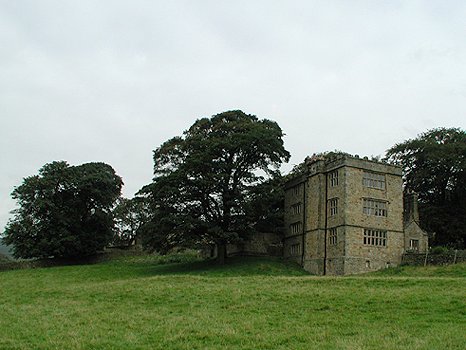
Remember the towering cliff edge where Lizzie stands, her cloak billowing in the wind, gazing out to distant peaks? This is Stanage Edge, in Peak National Park, a magnet for parasailers and rock climbers. You can hike to the top, too, from a trailhead below. Incidentally, the small tower barely visible below is North Lees Hall, the inspiration for Charlotte Bronte's "Jane Eyre."
Well, for Thornfield Hall as a matter of fact. From the 'fictional' Thornfield to the 'real' one... in just one paragraph. The picture on the left, North Less Hall, is taken from here.
Categories: In_the_News, Jane_Eyre, Brontëites
Saturday, May 17, 2014
What difference does it make to see the original manuscript of a literary text rather than just read the printed version? As someone who once nearly sullied a priceless Charlotte Brontë manuscript in an American archive with one of my own tears, I would say it makes all the difference. Faced with the real thing, my pretensions to being a detached and objective researcher dissolved. [...]TES thinks that the digitalisation of these papers may help students connect with classic authors.
The most fascinating are not the fair copies of great works, written to submit to publishers before the days of typewriters, but the private documents never intended for public eyes. Seeing them as they are offers a transgressive frisson, a sense of intruding on a private space.
This is particularly the case with Emily Brontë's diary entry, written at "past 4 o'clock" on Monday 26 June 1837, now accessible on the British Library's new website. Emily never kept an ongoing journal, only a few fragments offering fly-on-the-wall records of what was going on in Haworth Parsonage at the moment of writing, secret missives intended only for her own eyes and those of her sister Anne, whom she sketches, along with herself, writing at the dining-room table, in this particular example. It shows the way in which Emily's imaginative and real lives intersected: news of characters in her fantasy world of "Gondal" rubs shoulders with a down‑to-earth record of the fact that Charlotte is at that very moment upstairs sewing, listening to Branwell read aloud. The entry ends with a transcription of an actual conversation, as Emily and Anne discuss the possibility of going out on the moors before evening to get into the mood for writing. But we will never know whether or not they did so. Emily, as ever, remains fugitive.
Children are so accustomed to school visits from modern authors that they can struggle to see classic writers as real people, according to Jacqueline Wilson.Back to heroines, The Huffington Post defends the plucky ones.
The best-selling children’s author said: “Modern authors have become well-known because they do so many school and library visits.” Her novels, which include The Story of Tracy Beaker, are regularly among the most-borrowed from British libraries.
“The problem is that classic authors like Noel Streatfeild, Robert Louis Stevenson and Louisa May Alcott can’t really strut their stuff around the schools,” she added.
Ms Wilson was speaking to TES in response to a survey published this week, which shows that 82 per cent of English teachers see pupils struggling to identify with classic authors such as Charles Dickens, Jane Austen and Charlotte Brontë.
The British Library survey of 520 teachers also reveals that 76 per cent of English teachers believe that their students find it difficult to think of classic authors as real people.
“Pupils just think of poets as dead white males,” said Bethan Marshall, senior lecturer in English education at King’s College London. “They think they’re completely irrelevant. Authors now seem more real than those who wrote hundreds of years ago.” [...]
Among the teachers surveyed, 82 per cent said students would be inspired by seeing authors’ original manuscripts. This was certainly true of Ms Wilson when she was at school: “For me, the first time I saw the manuscript of Jane Eyre – to see that, in Charlotte Brontë’s neat handwriting. And Jane Austen, it’s all scratched out and corrected. That was a surprise, because her prose is so precise.” (Adi Bloom)
I grew up reading books, novels especially, and mine is an old story, especially by now, when we've been talking about whether or not women can or should be counted among serious writers for several hundred years now. Each generation thinks that it has discovered the subject but really, all we do is replicate the arguments of the past. Check the work of Mary Wollstonecraft, Charlotte Brontë, Virginia Woolf. Each in her own way decried the same things: Women's interests are not viewed as serious. Women find it hard to fight back because those who do will be castigated as complainers and scolds. Men control everything and so a woman who writes is helpless to stem the tide against her.The Yorkshire Post features the exhibition Artists of Faith at the Brontë Parsonage Museum.
But even as they cataloged their demands, each writer, in her own way, also excelled at presenting the plucky heroine. Each excelled at the narrative of perseverance, exactly as if each one needed to say: "Take it on faith. This is what you're going to need." [...]
When I was 11, the woman who lived next door cleaned out her daughter's room--the daughter had moved away--and a box of books appeared on my desk. Most were advice manuals dispensing counsel about make-up and hair-styles, the provenance of the good girl, the girl who did as she was told. But tucked underneath were a couple of novels. These had heavy cardboard covers and thick yellowing pages. They smelled of age and promise. The first one I opened began with a line that told me this book was going to be different. First off, the narrator was a woman. Second, and even more important, was the way she saw the world, with herself at the center and the story her own.
That was how I met Jane Eyre. She was a revelation to my 11-year-old self--the self who had already been taught that good books were written by men about courageous guys and noble, thoughtful boys. Jane was not like any girl character a man had written. She thought for herself. She took terrifying action, often at great risk, and did things that were unthinkable.
Unimaginable. Almost unbelievable. And yet I believed she could do them. And although I would not have said so when I first read her story, she made me believe that I could do things too. (Randi Davenport)
The Brontë family’s strong links with the Methodist faith were founded in Patrick Brontë’s own religious grounding as a young priest – his career was nurtured by John Wesley’s friend Thomas Tighe and – and his wife Maria Branwell’s family were devout Methodists from Cornwall. After Maria’s death her sister Elizabeth came to Haworth to help raise the Brontë children and she had a powerful influence on the lives of her young nephew and nieces. [...]Still locally, Keighley News reviews the book Walking the Literary Landscape by Ian Hamilton and Diane Roberts.
“I think the reason the Parsonage works so well in that respect is because the Brontës were such interesting people,” [curator Nick Cass] says. “They were interested in social justice and early ideas of feminism and engaged with those issues particularly creatively. So I think to do anything either political or creative in that space is a legacy and a tribute to them and a really interesting way to provoke thought about how we deal with those issues today. What is also interesting about the Parsonage is that the Brontës were very interdisciplinary in their practice – they drew and painted as well as writing. ”
He feels that visitors coming to the museum are affected by the experience of being in the Brontës’ home and describes it as having for many people almost “a sense of pilgrimage.” Exploring the rooms in which the family lived and worked – and, in many cases, died – can have a profound effect, highlighting not only a sense of intense creativity but also mortality and loss. “People are looking for an absorbing experience not necessarily to spend a long time reading,” he says. “And some of the best artworks can express things that words can’t.” The Methodist Church Collection comprises 51 artworks altogether from which Cass selected 11 – they include outstanding work by Graham Sutherland, Mark Cazalet, Elizabeth Frink and Maggie Hambling – to display around the Parsonage. He says that he mostly went by intuition in making his selection.
“The works are not there to illustrate any particular point, so I tried to have a sense of how particular paintings might work in particular places,” he says. “Then I explored what that suggested to me and what broader connections there might be.” (Yvette Huddleston)
Brontë fans can follow in the footsteps of their heroines thanks to a new walks book.The Globe and Mail reviews the novel American Innovations by Rivka Galchen.
Walking The Literary Landscape takes people from Haworth on to the moors past the Brontë waterfalls.
Walkers visit Top Withens, the ruined farmhouse reputed to be the inspiration for Emily Brontë’s Wuthering Heights, then back to Haworth via Stanbury.
The Brontë sisters are among famous writers featured in the glossy paperback, written by Ian Hamilton and Diane Roberts.
Each of the 20 walks takes in a location linked to the life or works of a well-known writer. They include poets like William Wordsworth and Ted Hughes and novelists like Jane Austen and Charles Dickens, together with children’s writers Beatrix Potter and Lewis Carroll.
The authors tell how the Brontës are still inextricably linked to Haworth and describe the Parsonage Museum as “superb”.
They add: “Our walk follows in the footsteps of the sisters, who demonstrated in their writing a remarkable sympathy for nature in the raw and an ability to withstand a fair amount of hardship.”
As in Atmospheric Disturbances, Galchen’s acclaimed debut novel, there are communications with the dead, and the possibility of other, slightly off-kilter, universes where things like time travel are scientifically possible. Or are they? In my favourite story, The Region of Unlikeness, Galchen combines an unwieldy love triangle with the speculative, resulting in a kind of mash-up of Back to the Future and Truffaut’s Jules et Jim, although rather than Jeanne Moreau’s free-spirited Catherine, the woman here is a lonely and insecure graduate student in civil engineering. The happiest days of her life begin when she meets Ilan and Jacob by chance in a Moroccan coffee shop on Upper West Side. “They were discussing Wuthering Heights too loudly, having the kind of reference-laden conversation that unfortunately never fails to attract me,” revealing everything we need to know about her and the men. (Zsuzsi Gartner)Another conversation on Wuthering Heights is mentioned in an article about Cuban writer Pablo Armando Fernández and his book Los niños se despiden on CubaDebate.
Lo conocí por los tempranos años 80, en casa de Ada Santamaría Cuadrado, en un cumpleaños que Ada le celebró a Pepe Rodríguez Feo con sus amigos. Pablo estaba acompañado de Maruja y a una pregunta nos habló, a mi hermano y a mí, de “Cumbres borrascosas”, la novela que más le gusta y también de las hermanas Bronte; nos recordó el famoso verso de Emily: “The soul to feel the flesh, the flesh to feel the chain”, que se quedó flotando para siempre en el aire.The Irish Times interviews writer Joseph O'Connor.
Heathcliff, Catherine y Edgar, Hareton Earnshaw, la señora Dean, Hindley y su esposa Frances, la granja de los Tordos. La historia de las dos familias que viven en la zona, los Linton y los Earnshaw. La amistad a escondidas y el amor apasionado, una historia de borrasca entre cumbres. (...)
Estallamos en una carcajada, hicimos la cola y continuamos hablando de Heathcliff, Hareton y del fantasma de Catherine. (F. Vladimir Pérez Casal) (Translation)
Which writers, living or dead, would you invite to your dream dinner party? If there is a Hell being prepared for me, it will be a dinner party. But I’d like to be in a bar, late at night in New York, with Colm Toibin, Patti Smith, Dickens, St John of the Cross, Toni Morrison, Keats and Emily Brontë, with her brother Branwell leading the singsong while arm-wrestling. (Martin Doyle)Jess Mountifield reviews Jane Eyre after having watched the 2006 adaptation first. From the Brontë Parsonage Facebook page: a great grand daughter of Sir James Roberts's visits the museum all the way from Canada, the display for the 1940s weekend being prepared and finally the sad news of the death of Oscar the (local) cat. Corner Store Press posts Fritz Eichenberg's Jane Eyre illustrations. The Fiction Therapist asks Could Wuthering Heights’ Cathy have been mindful?
And finally, an alert from today's UK TV. BBC Two broadcasts Wuthering Heights 1939 (13.25 h).
Search

Labels
- Advert (14)
- Agnes Grey (359)
- AI (7)
- Alert (1872)
- Anne Brontë (631)
- Art-Exhibitions (1070)
- Arthur Bell Nicholls (45)
- At The... (11)
- Audio-Radio (649)
- Biography (404)
- Books (4232)
- Branwell Brontë (389)
- Brontë 200 (395)
- Brontë Birthplace (96)
- Brontë Parsonage Museum (1788)
- Brontë Society (585)
- Brontëana (814)
- Brontëites (2018)
- Brussels (318)
- Charlotte Brontë (1064)
- Comics (423)
- Contest (34)
- Cottage Poems (9)
- Dance (394)
- Elizabeth Gaskell (268)
- Ellen Nussey (20)
- Emily Brontë (1179)
- Fake News & Blunders (163)
- Fiction (466)
- Games (3)
- Haworth (2005)
- Humour (389)
- Illustrations (177)
- In Memoriam (13)
- In the News (1311)
- Ireland (120)
- Jane Eyre (8291)
- Journals (659)
- Juvenilia (306)
- Maria Branwell Brontë (34)
- Mary Taylor (80)
- Messages from BB (116)
- Movies-DVD-TV (5165)
- Music (2564)
- New Releases (7)
- Opera (239)
- Patrick Brontë (234)
- Penzance (15)
- Poetry (928)
- Red House (64)
- References (2845)
- Reminder (142)
- Review (139)
- Scarborough (89)
- Scholar (1434)
- Sequels and Retellings (1255)
- Shirley (290)
- Software (17)
- Talks (1648)
- The Professor (138)
- The Tenant of Wildfell Hall (570)
- Theatre (3538)
- Thornton (193)
- Top Withens (114)
- Translations (553)
- Unfinished Novels (11)
- Victorian Era (433)
- Villette (590)
- Websites & Apps (198)
- Weirdo (685)
- Wide Sargasso Sea (1125)
- Wuthering Heights (7785)
Recent Posts
Blog Archive
Other BrontëBlogs
-
-
The Early Art Of The Brontes - Some people succeed through life through hard work and determination, others seem to have natural skills and talents, often visible from an early age. Some...2 days ago
-
第41回大会のご案内 - 10月17日(土)に日本ブロンテ協会第41回大会を関西外国語大学中宮キャンパスにて開催いたします。プログラムはこちらをご覧ください。ポスター 参加される方はこちらから*9月末日まで*にお申し込みください。4 weeks ago
-
Les hauts de Hurlevent | Documentaire | ARTE - Paru en 1847 sous le pseudonyme masculin d’Ellis Bell, "Les hauts de Hurlevent" sidéra la critique. Dans ce conte d'amour, de vengeance et de mort, Em...1 month ago
-
Unexpected – and memorable – day out in Brontë Country - My husband Paul and I headed again to Haworth last month for our annual visit and participation in the June weekend of events organised by the London Bro...1 month ago
-
“Wuthering Heights” Review - Emerald Fennell’s adaptation of Wuthering Heights has been much anticipated pretty much since it was first announced a few years back. The idea alone was e...5 months ago
-
A New Adaptation of Jane Eyre In the Works - Image Source: Deadline 1934, 1943, 1970, 1973, 1983, 1996, 1997, 2006, and 2011. These are the years when major film and television productions of Jane E...6 months ago
-
-
ERROR: Database error: Table './rss/feeds' is marked as crashed and should be repaired at /var/www/html/feed.pl line 1657. -1 year ago
-
More taphophilia! This time in search of Constantin Heger's grave in Brussels. - Constantin Heger's Grave Charlotte Bronte Constantin Heger Whilst on a wonderful four day visit to Brussels in October 2024, where I had t...1 year ago
-
Empezando a leer con Jane Eyre (parte 2) - ¡Hola a todos! Hace unos pocos días enseñaba aquí algunas fotografías de versiones de Jane Eyre de Charlotte Brontë adaptadas para un público infantil en f...1 year ago
-
Goodbye, Jane - As two wonderful years come to an end, Piper and Lillian reflect on what we've learned from Jane Eyre. Thank you for joining us on this journey. Happy...2 years ago
-
Hello! - This is our new post website for The Anne Brontë Society. We are based in Scarborough UK, and are dedicated to preserving Anne’s work, memory, and legacy. ...3 years ago
-
Final thoughts. - Back from honeymoon and time for Charlotte to admire her beautiful wedding day bonnet before storing it carefully away in the parsonage. After 34 days...3 years ago
-
Ambrotipia – Tesori dal Brontë Parsonage Museum - Continua la collaborazione tra The Sisters’ Room e il Brontë Parsonage Museum. Vi mostriamo perciò una serie di contenuti speciali, scelti e curati dire...4 years ago
-
-
-
Buon bicentenario, Anne !!!!! - Finalmente annunciamo la novita' editoriale dedicata ad Anne nel giorno bicentenario della nascita: la sua prima biografia tradotta in lingua italiana, sc...6 years ago
-
Two New Anne Brontë 200 Books – Out Now! - Anne was a brilliant writer (as well as a talented artist) so it’s great to see some superb new books…6 years ago
-
Review of Mother of the Brontës by Sharon Wright - Sharon Wright’s Mother of the Brontës is a book as sensitive as it is thorough. It is, in truth, a love story, and, as with so many true love stories, the ...6 years ago
-
Brontë in media - Wist u dat? In de film ‘The Guernsey Literary & Potato Peel Pie Society’ gebaseerd op de gelijknamige briefroman, schrijft hoofdrolspeelster Juliet Ashto...6 years ago
-
Ken Hutchison's devilish Heathcliff - *Richard Wilcocks writes:* Ken Hutchison and Kay Adshead Browsing through the pages of *The Crystal Bucket* by Clive James, last read a long time ago (p...7 years ago
-
Nouvelle biographie des Brontë en français - Même si, selon moi, aucune biographie ne peut surpasser l’excellent ouvrage de Juliet Barker (en anglais seulement), la parution d’une biographie en frança...7 years ago
-
Researching Emily Brontë at Southowram - A couple of weeks ago I took a wander to the district of Southowram, just a few miles across the hills from Halifax town centre, yet feeling like a vil...7 years ago
-
Reading Pleasures - Surrounded by the heady delights of the Brontë Parsonage Museum library archive, I opened this substantial 1896 Bliss Sands & Co volume with its red cover ...8 years ago
-
Link: After that dust-up, first editions are dusted off for Brontë birthday - The leaden skies over Haworth could not have been more atmospheric as they set to work yesterday dusting off the first editions of Emily Brontë at the begi...8 years ago
-
Page wall post by Clayton Walker - Clayton Walker added a new photo to The Brontë Society's timeline.8 years ago
-
Page wall post by La Sezione Italiana della Brontë Society - La Sezione Italiana della Brontë Society: La Casa editrice L'Argolibro e la Sezione Italiana della Brontë Society in occasione dell'anno bicentenario dedi...8 years ago
-
Html to ReStructuredText-converter - Wallflux.com provides a rich text to reStructredText-converter. Partly because we use it ourselves, partly because rst is very transparent in displaying wh...8 years ago
-
Display Facebook posts in a WordPress widget - You can display posts from any Facebook page or group on a WordPress blog using the RSS-widget in combination with RSS feeds from Wallflux.com: https://www...8 years ago
-
charlottebrontesayings: To Walk Invisible - The Brontë Sisters,... - charlottebrontesayings: *To Walk Invisible - The Brontë Sisters, this Christmas on BBC* Quotes from the cast on the drama: *“I wanted it to feel...9 years ago
-
thegrangersapprentice: Reading Jane Eyre for English class.... - thegrangersapprentice: Reading Jane Eyre for English class. Also, there was a little competition in class today in which my teacher asked some really spe...10 years ago
-
5. The Poets’ Jumble Trail Finds - Yesterday I had the pleasure of attending with some friends a jumble trail in which locals sold old – and in some instances new – bits and bobs from their ...10 years ago
-
How I Met the Brontës - My first encounter with the Brontës occurred in the late 1990’s when visiting a bookshop offering a going-out-of -business sale. Several books previously d...12 years ago
-
-
Radio York - I was interviewed for the Paul Hudson Weather Show for Radio York the other day - i had to go to the BBC radio studios in Blackburn and did the interview...13 years ago
-
Short excerpt from an interview with Mia Wasikowska on the 2011 Jane Eyre - I really like what she says about the film getting Jane's age right. Jane's youth really does come through in the film.15 years ago
-
CELEBRATION DAY - MEDIA RELEASE February 2010 For immediate release FREE LOCAL RESIDENTS’ DAY AT NEWLY REFURBISHED BRONTË MUSEUM This image shows the admission queue on the...16 years ago
-
Poetry Day poems - This poem uses phrases and lines written by visitors at the Bronte Parsonage Museum to celebrate National Poetry Day 2009, based on words chosen from Emily...16 years ago
-
The Secret Diaries of Charlotte Bronte - Firstly, I would like to thank the good people at Avon- Harper Collins for sending me a review copy of Syrie James' new book, The Secret Diaries of Charlot...17 years ago
Podcasts, Etc..
-
-
S4 E6: With... Anthony Delaney - Sam and Mia chat to award-winning historian, broadcaster and author Dr Anthony Delaney! Anthony holds a PhD in 18th-century social and cultural history a...1 week ago
-
Subscriptions
Brontë Parsonage X
Brontë Studies X
Other Stuff

Click to join BRONTE

This work is licensed under a Creative Commons Attribution-Noncommercial-No Derivative Works 3.0 Unported License.
Site archived by the British Library - UK Web Archiving Consortium