A lost trove of works by the Brontë sisters was destined for sale. Then Britain rallied.
The story of the discovery and recovery of a treasure chest of letters, diaries, poems and manuscripts, penned in the tiny meticulous handwriting by the beloved, pathfinding, canonical English writers, the incredible Brontë sisters, reads like ... what?
An over-the-top Victorian novel, or a BBC costume drama, loosely based upon it.
The literary trove virtually disappeared from sight. For most of a century, it went dark.
Then it went on sale. And Brontë fans were aghast. And the nation rallied.
Who saved this material, the rarest of the rare, from auction to private collectors?
Why, the richest men in Britain saved it. Sir Leonard Blavatnik, the American-British-Ukrainian petrochemical-finance-entertainment mogul, put up half the money to buy it for the public a few weeks ago - with a little help from Prince Charles and thousands of small donations.
What do Brontë scholars say?
Like lifting a lid in King Tut’s tomb, dear reader. (...)
Google “Brontë” alongside “mania.”
Many hits.
In the Atlantic, Judith Shulevitz observed, “I see no reason not to consider the Brontë cult a religion.” The sisters, she wrote, “turned domestic constraints into grist for brilliant books.”
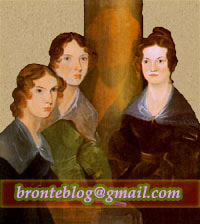
Long ago, the Brontë sisters - Charlotte, Emily, Anne - became subjects of fascination, prized for their work: Charlotte’s “Jane Eyre,” Emily’s “Wuthering Heights” and Anne’s lesser-known marvel, “The Tenant of Wildfell Hall,” considered by some the first feminist novel.
The sisters are celebrated for their writing - totally - for the creation of the three-dimensional Jane and Catherine and the Byronic bad boys Mr. Rochester and Heathcliff.
But what made them celebrities is their narrative, and these newly emerged papers may open new windows into those lives. (...)
William Law had a discerning and very focused eye - he snapped up a Shakespeare First Folio - but appears to have been especially keen for Brontë material, traveling to Haworth to buy stuff from the neighbors.
He acquired some of the best material from the dealer who bought directly from Charlotte’s widower.
This straight-line provenance - that the manuscripts and letters passed through so few hands - increases not only their value and wow factor, but their preservation.
“The material is in remarkable condition,” Heaton said.
When the Law brothers died, at the beginning of the 20th century, their Honresfield Library was inherited by their nephew, Alfred Law, a well-to-do Conservative Party member of Parliament, who died in 1939. Sir Alfred allowed a handful of scholars to see the library in the 1920s and 1930s. After his death? Almost no one got a look.
Alfred’s heirs knew they had something special, but they requested privacy, and the trove has been mostly unseen for more than 80 years.
The Brontë material includes: 25 letters by Charlotte and seven of her famous “little books,” a manuscript collection of Anne’s poems, and diary notes shared and written by Emily and Anne, on their respective birthdays.
The jewel in the crown is an ordinary ruled notebook, the kind a student would buy in a stationery shop, that contains 31 poems by Emily.
The poems are all known. But here they are each written out in Emily’s own handwriting, and the remarkable thing about the manuscript is that Emily also appears to have penned edits of her poems - and so perhaps did Charlotte.
Emily’s cross-outs appear in ink. Charlotte may have annotated the works in pencil, scholars suspect. More will be known as the cache is pored over by the experts.
At the end of the manuscript are the words: “never was better stuff penned.” Pride of authorship? Or a sister’s loving blurb? (...)
Rebecca Yorke, the interim director of the Brontë Parsonage Museum, recalled going into the vaults at Sotheby’s on Bond Street in London to look at the collection.
“It was really quite moving,” she said.
Emily’s poems were penned “in a student’s best handwriting.”
“But then to see the edits ... " she said.
“It is the most magical thing,” Heaton said. (William Booth)







0 comments:
Post a Comment