Podcasts

  • S4 E8: With... Rebecca Marks - For the final episode of series 4, Sam and Mia are joined by historian, author and content creator Dr Rebecca Marks! Rebecca holds a Master's in Art Hist...
    1 month ago
Showing posts sorted by relevance for query simon armitage. Sort by date Show all posts

Wednesday, June 11, 2008

Wednesday, June 11, 2008 12:04 am by M. in    No comments
A press release from the Brontë Parsonage Museum:
Simon Armitage in Haworth

Described as the best-known poet of his generation, Simon Armitage will be speaking about and reading from a selection of his work at the West Lane Baptist Centre in Haworth on Friday 20 June at 7.30pm.

The event coincides with the Elmet exhibition of photographs by Fay Godwin (from her collaboration with Ted Hughes) currently on show at the Brontë Parsonage Museum. Simon Armitage is patron of The Elmet Trust and has edited an anthology of Hughes’ poems. He also wrote the introduction to Fay Godwin’s last published collection of photographs, Landmarks, in 2001.

Simon Armitage’s outstanding poems, accomplished performances and dry sense of humour will make for a highly entertaining evening. The event forms part of the Brontë Parsonage Museum’s contemporary arts programme.

Simon Armitage has published ten volumes of poetry, for which he has won numerous awards, including a Forward Prize, Eric Gregory Award, and a Lannan Award, in addition to being shortlisted for the T. S. Eliot Prize and Whitbread Poetry Award. His Selected Poems was published in 2001, and his latest collection is Tyrannosaurus versus the Corduroy Kid (2006). Simon is also the author of All Points North (1998), and two novels Little Green Man and The White Stuff. He has recently published Gig: The Life and Times of a Rock-star Fantasist (2008).

Tickets cost £9.50 (£5.00 16 years and under) and must be booked in advance. As part of this event the museum will be open until 7pm for those wishing to view the Elmet exhibition. For further details please contact the Brontë Parsonage Museum, 01535 640188/ jenna.holmes@bronte.org.uk
Categories:

Saturday, May 13, 2017

An alert from the Brontë Parsonage Museum for today, May 13:
Brontë 200: Mansions in the Sky: Exhibition Talk by Simon Armitage
Simon talks about the Branwell exhibition - West Lane Baptist Centre
May 13th 2017 02:30pm - 04:00pm

To celebrate our new exhibition, Mansions in the Sky, our creative partner for 2017, poet Simon Armitage, will talk about the process of pulling together an exhibition on the often underestimated Branwell Brontë, and how his understanding of Branwell has developed and changed as he has taken a closer look at his life and influences.

Simon Armitage was born in West Yorkshire and is Professor of Poetry at Oxford University. He has published over a dozen collections of poetry including Paper Aeroplane (2014): a selection marking the 25th anniversary of the appearance of his ground-breaking debut collection Zoom! Armitage is also a playwright, novelist, song lyricist and broadcaster. His poems have been on the GCSE and ‘A’ level syllabus in this country for almost two decades. The recipient of numerous awards, Armitage was elected a fellow of the Royal Society of Literature in 2004 and awarded the CBE for services to poetry in 2010.  He released his eleventh collection of poems, The Unaccompanied, in March 2017. 

Saturday, March 18, 2017

Saturday, March 18, 2017 12:30 am by M. in ,    No comments
An alert for today, March 18, at the Old School Room in Haworth:
The Unaccompanied.  Simon Armitage reading and in conversation
March 18, 7:30pm
The Old School Room, Church Street, Haworth. Doors open at 7:00pm.

Simon Armitage launches his new collection of poetry, The Unaccompanied, in Haworth. In The Unaccompanied Armitage gives voice to the people of Britain with a haunting grace and his trademark eye for detail and biting wit. We meet characters whose sense of isolation is both emotional and political, both real and metaphorical, from a son made to groom the garden hedge as punishment, to a nurse standing alone at a bus stop as the centuries pass by, to a latter-day Odysseus looking for enlightenment and hope  in the shadowy underworld of a cut-price supermarket.
As his first event with the Brontë Parsonage Museum as Creative Partner for 2017, Simon Armitage will also reference the new work that he has created for Branwell Brontë’s bicentenary. There will also be the opportunity to view his exhibition Mansions in the Sky, and celebrate the book launch with an exclusive reception at the Museum.

Saturday, March 04, 2017

The Telegraph and Argus has a lovely letter from a reader concerning Mary Taylor's bicentenary celebrations.
SIR – I attended the Sunday morning service at St Mary’s Church in Gomersal, prior to laying the flowers on behalf of the local Brontë Society at the grave of Mary Taylor and what would have been her 200th birthday.
It was a pleasure to carry out those duties, for Mary was an inspirational woman, a feminist and businesswoman who travelled the world, wrote books and was a friend of the Brontë family.
May I through your newspaper thank the church for their support, Flowers by Salindras in Heckmondwike for providing the beautiful flowers and the children of St Mary’s School in Gomersal for their display of Mary Taylor which was much admired by the people who were present.
John Appleyard, Firthcliffe Parade, Liversedge
The Bolton News has a an article on the stage adaptation of The Tenant of Wildfell Hall, which opens at the end of this month.
Bolton's Octagon Theatre and York Theatre Royal has announced the casting for its forthcoming production of The Tenant of Wildfell Hall.
Based on the novel by Anne Brontë, this new adaptation by award-winning playwright Deborah McAndrew will be directed by the theatre's artistic director Elizabeth Newman.
She said: "Deborah’s adaptation has beautifully captured the passion and the bravery of Anne Brontë’s exquisite novel, which follows one woman’s fight for independence against all odds. [...]
"Audiences here in Bolton and in York will be transported into a world of mystery, intrigue, betrayal, and love."
Hitting the stage at the end of this month, the welcomes three newcomers to the Octagon, Phoebe Pryce who will be bringing enigmatic Helen Graham to life, Eccles-born actor Michael Peavoy - who has appeared in shows including the BBC's Musketeers - stars as handsome farmer Gilbert Markham and Nicole Lecky as Rose Markham and Lady Annabella Lowborough.
They will be joined by faces used to treading the Bolton boards.
These include Marc Small, following his roles in The Winter’s Tale and To Kill a Mockingbird, Two and Two 2's Colin Connor who is currently starring in Ashes at the Octagon, and Philip Starnier, who has featured in The Winter’s Tale, To Kill a Mockingbird and Singin’ in the Rain.
Susan Twist, who starred in Streetcar Named Desire, and Natasha Davidson, from The Secret Garden and A View From the Bridge, also return.
Youngsters Ollie Guffogg and Adam Crompton, who played Dill in To Kill a Mockingbird, hit the stage sharing the role of young Arthur, son of Helen Graham.
Completing the cast are two border collies, Tia and Eve, who will be playing Sancho with the help of their trainer and owner Elspeth Brown. (Rosalind Saul)
The end of March will also see the release of the new poetry collection by Simon Armitage, as reported by Keighley News.
Branwell Brontë champion Simon Armitage is launching his latest batch of poetry in Haworth this month.
Leading British poet Armitage is this year’s creative partner with the Brontë Parsonage Museum in the year it celebrates the 200th anniversary of Branwell’s birth.
He will be at the Old School Room, next to the museum, on March 18 to read from his new anthology The Unaccompanied.
The 7.30pm event will also see Armitage in conversation.
In The Unaccompanied, Armitage gives a voice to the people of Britain with a haunting grace and his trademark eye for detail and biting wit.
Readers will meet characters whose sense of isolation is both emotional and political, both real and metaphorical.
There is a son made to groom the garden hedge as punishment, a nurse standing alone at a bus stop as the centuries pass by, and a latter-day Odysseus looking for enlightenment and hope in the shadowy underworld of a cut-price supermarket.
The event is the first in Haworth organised by Armitage in his role as creative partner following the launch of an exhibition Mansions in the Sky.
He created the year-long exhibition at the museum to mark the bicentenary of Branwell, notorious brother of famous writers Anne, Charlotte and Emily Brontë.
Visitors to the launch of The Unaccompanied can also attend an exclusive reception at the museum while viewing the exhibition.
Mansions in the Sky invites museum visitors into the mind and work of Branwell to discover exactly who he was. [...]
Simon Armitage has spoken of his interest in the “charismatic and complicated” Branwell.
He said: “As a poet of this landscape and region I recognise Branwell’s creative impulses and inspirations. I also sympathise with his desire to have his voice heard by the wider world.” (Richard Parker)
The Westmorland Gazette reports that the former Cowan Bridge School has received a grant towards its archive.
A former private girls' school with historic links to the Bronte sisters has been given a £27,000 lottery boost to help it celebrate 190 years of women's education.
The cash will be used to collect, catalogue and share documents and items relating to the women who studied and worked at Casterton School, near Kirkby Lonsdale.
The school, originally in Cowan Bridge, was founded in 1823 by Rev Carus Wilson to educate daughters of financially disadvantaged clergymen. It was attended by four of the Bronte sisters - Maria, Elizabeth, Charlotte and Emily - and is said to have inspired Lowood, the school featured in Charlotte Bronte's Jane Eyre.
The school moved to Casterton in 1833 and continued as a girls' school until a merger with Sedbergh School in 2013. It is now a preparatory school. (Alan Tunningley)
Such an aseptic description!

Mangialibri (Italy) recommends the Italian translation of Lyndall Gordon's Charlotte Brontë: A Passionate Life.
Charlotte, Emily, Anne e Branwell sono i figli del Reverendo Patrick Brontë, tre femminucce e un maschietto. Orfani di madre, dopo un’infanzia piena di dolore e lutti famigliari crescono ad Haworth, nel bel mezzo della brughiera dello Yorkshire, nel nord dell’Inghilterra. Tutti e quattro dotati di una fervida immaginazione e di una propensione naturale per la letteratura, già fin da piccoli iniziano ad inventare mondi e personaggi che li tengono occupati nelle lunghe giornate passate in canonica. Molto presto, però, la realtà prende il sopravvento e i fratelli devono iniziare a lavorare per mantenersi. Ed è proprio per migliorare la loro educazione e la conoscenza della lingua francese che Charlotte ed Emily decidono di frequentare un collegio in Belgio, a Bruxelles. Mentre Anne trova un impiego come istitutrice, e Branwell, a dispetto di tutte le grandi aspettative del padre, trova la sua strada nell’alcool. Sono lontani i tempi in cui i quattro bambini sognavano glorie future e il riscatto sociale. La vita reale si scontra con i sogni giovanili. Ma una natura appassionata, nonostante sia celata dall’aspetto virtuoso e freddo della donna vittoriana, non può che cogliere da questa vita tutto ciò che ha da offrirle, le esperienze, i contrasti e le emozioni, per farlo diventare arte…
Una vita appassionata, uscito in occasione del bicentenario della nascita di Charlotte Brontë, è una biografia atipica dell’autrice di Jane Eyre. Siamo abituati a considerare la più longeva dei fratelli Brontë come timorosa, debole, schiva e tenacemente attaccata alla vita ritirata della canonica di Haworth, in grande misura a causa della biografia che le dedicò Elizabeth Gaskell. Grazie a questo libro di Lyndall Gordon scopriamo invece che sotto la cenere il fuoco ardeva. Quella che Gordon ci vuole trasmettere è la figura, finora nascosta, di una donna viva, passionale e dalle forti emozioni. Una donna che non ha paura di essere schietta quando le conviene, anche davanti a dei grandi della letteratura come William Makepeace Thackeray. La vita di Charlotte viene esaminata attraverso un corposo contributo epistolare e attraverso la voce delle eroine dei suoi romanzi, che in un modo o nell’altro rispecchiavano la voce dell’autrice al momento della loro stesura. Un lavoro che ha visto l’autrice soffermarsi in modo particolare sulla volontà di Charlotte di far venire alla luce la voce vera delle donne vittoriane, e non quella fasulla che volevano ascoltare gli uomini dell’epoca. Appare inoltre centrale, nella sua vita, la presenza degli uomini di cui si innamorò e che in modi diversi la motivarono a scrivere. (Translation)
Suzanne Vega picks her 10 favourite books for The New York Times.
“Wuthering Heights,” Emily Brontë
It took me a while to get into this book but now it is permanently in my heart. I love the convoluted storytelling — the first person narrator, a stranger passing by who stays the night with a bewildering family, dreaming strange dreams. Then the narration switches to the family nurse who tells a story from generations ago, which explains the current circumstances. I also love the wildness of the characters — their jealousies, pains, passions and obsessions — as well as the unabashed antisocialism of the world contained at Wuthering Heights and the love story at the heart of the book.
“Jane Eyre,” Charlotte Brontë
Before there was “Wuthering Heights,” there was “Jane Eyre.” I will never forget reading the first chapter and the shock of recognition — the narrator is a young girl living with a family she is tangentially related to, and she longs for freedom. In time, she becomes independent (after a series of hardships which she endures stoically) all the while earning her living and finding love in the end. I love her for her plain, sturdy, sensible character. I identify with her.
The Huffington Post interviews writer Faye Kellerman:
If you could re-experience reading one novel as though reading it for the first time, which one would it be?Wow. That’s a tough one. [Laughter]. Leaving my husband’s books aside, and my son Jesse’s, I’ll pick Jane Eyre. It’s a very personal story of a girl who becomes a woman. I’d also say The Count of Monte Cristo, that’s a novel of world adventure and a swashbuckling account of extreme revenge.
Both books moved me as a teenager and opened my eyes to a world far beyond my very confined one. (Mark Rubinstein)
Chorley Guardian features local writer Rhona Whiteford, who is a Brontëite:
She says: “I really admire JK Rowling as she totally revolutionalised children’s literature.
“In the 1980s and 1990s ,children’s books were going downhill. Then she wrote Harry Potter and single-handedly boosted children’s literature. Now the market is booming.
“I also love Jane Austin [sic], Emily Bronte and Agatha Christie.”
Fotogramas (Spain) features actress Ariadna Gil, who is currently playing Jane Eyre on stage in Barcelona.
“Jane Eyre es una mujer que nos sigue sorprendiendo. Más, si tenemos en cuenta que la novela es de 1847. En un mundo de hombres, ella se rebela contra la injusticia, y hace cosas de una valentía y complejidad fantásticas. Y cuando cae, siempre se levanta. Es un canto a la dignidad. Encima, se nos explica una gran historia de amor”.
Cuando se le comenta que todas las entradas del Lliure se agotaron al poco de ponerse a la venta, lo atribuye al “interés que el texto, y toda la obra de las hermanas Brontë en general, todavía despiertan hoy. Estamos viendo que el público lo disfruta, y se emociona en cada representación”. (Pere Vall) (Translation)
Ara reviews the production in Catalan.
Charlotte Brontë devia sentir, poc o molt, el mateix que la seva heroïna Jane Eyre: una dona de classe humil però amb decisió per conduir la seva vida més enllà de les convencions socials i, sobretot, per damunt de les aparences i les hipocresies d’una societat dominada pels homes. A la Jane Eyre adolescent l’acusen de mentidera perquè es revolta contra el que considera injust. Però no calla. Accepta el càstig però no calla.
No és estranya la connexió entre la figura de Jane Eyre i Carme Portaceli, una directora feminista, reivindicativa i compromesa, malgrat el romanticisme de la novel·la. I aquest és probablement el seu projecte més rodó dels últims anys. Una posada en escena directa, emocionant, que combina el relat amb els diàlegs mantenint el pols d’una història en què es barreja dolor amb alegria, força amb delicadesa, sobre una àgil versió d’Anna Maria Ricart. Una funció gairebé en blanc i negre i amb impactants projeccions (d’Eugenio Szwarcer) que recrea els clímaxs des de la duresa de la dickensiana Lowood School fins al terror gòtic del Manderley de Hitchcock.
La novel·la té alguna cosa de drama exagerat, i Portaceli el serveix amb saviesa i solucions escèniques admirables, com el joc de la gitana que vol predir-li el futur a la protagonista. La intensitat emotiva recau, però, en els diàlegs, en les confrontacions entre Jane Eyre i el senyor de Rochester, que és on nia la millor literatura del text. Res seria així, però, sense la immensa puresa d’Ariadna Gil, fantàsticament secundada per Abel Folk. Entre ells hi ha veritat i el joc teatral és subjugant. Com n’hi ha entre Gil i Joan Negrié, el reconcentrat mossèn. Molt bé també Gabriela Flores com la dona boja de les golfes, a qui Portaceli regala una escena final per qüestionar Rochester i la seva bondat. Una escena que no pertany a l’original sinó a la novel·la de Jean Rhys Ancho mar de los Sargazos. Tots els intèrprets demostren una gran -i gens fàcil- comunió amb les directrius de la directora. (Santi Fondevila) (Translation)
Publishers Weekly celebrates the bicentenary of publishing house HarperCollins and lists its many milestones, including
1848 Harper & Brothers publishes the first American editions of Emily Brontë’s Wuthering Heights, Charlotte Brontë’s Jane Eyre, and Anne Brontë’s The Tenant of Wildfell Hall. (Jim Milliot)
The Guardian is inviting readers to post their questions to Ruth Wilson, who played Jane Eyre in 2006, and who will be answering them during a live webchat at 1pm on Tuesday 7 March.

Finally, an alert from Toulouse, France. A talk about Charlotte Brontë by Marguerite C. de Précourt:
Cycle : Quatre écrivains anglais de l’époque victorienne
09/02/17 à 20h30 MJC Savouret ÉPINAL
04/03/17 à 10h MJC de TOUL
06/03/17 à 20h30 MJC J. Prévert LUNÉVILLE
07/03/17 à 20h MJC Pichon NANCY

Saturday, February 04, 2017

Keighley News tells about one of the Branwell Brontë exhibition displays:
Oakbank School students worked with leading poet Simon Armitage on a special Brontë exhibition.
The students from the Keighley school were invited to help create a display to mark the 200th anniversary of the birth of Branwell Brontë.
Their efforts went on show last week at the Brontë Parsonage Museum in Haworth, where the exhibition will run throughout 2017.
Simon is the 2017 creative partner of the Brontë Society, which runs the museum, and he will has curated this year’s flagship exhibition Mansions In The Sky, which explores the mind and work of Branwell.
The Oakbank students were selected to become part of an audio recording of one of Branwell’s poems and they spent the morning reciting and recording with Simon Armitage and his producer.
The recording can be heard by museum visitors in a life-size replica of Branwell’s studio. (David Knights)
On the Brontë Parsonage Blog we can read Simon Armitage's statement on the leaflet produced for the event.

Keighley News also reminds us of the return of the Brontë Treasures experience at the Parsonage:
Brontë Treasures are to go on display once a month in Haworth at the place where the famous family lived.
The Brontë Parsonage Museum is running Brontë Treasures events on the last Friday of every month at 2pm.
Visitors will get a special chance to see items from the world’s largest collection of Brontë artefacts, manuscript and personal belongings.
People will be allowed beyond the security cord into the Parsonage Library for a close-up viewing of items not normally on display.
A museum spokesman said: “During these hour-long sessions, a member of the curatorial team will share facts and stories about a number of carefully-selected objects, offering a specialist insight into the lives of work of this inspirational family."
The cost of each event is £85, and places are limited to 12 people. Visit bronte.org.uk/whats-on or call 01535 640192 for further information and to book tickets. (David Knights)
Incidentally, in The Telegraph & Argus you can see the first visitors to the new Brontë Parsonage season:
 First through the doors were a Mr and Mrs Hemingway, who had travelled from Manchester after seeing Brontë movie To Walk Invisible over Christmas.
The couple wanted to see the real rooms where the Brontë sisters had lived and wrote their novels, after seeing the painstakingly-recreated replicas in the BBC film.
The Hemingways received a signed copy of the book At Home With the Brontës, written by the museum’s principal curator Ann Dinsdale. (David Knights)
Tidningen Kulturen (in Swedish) has an article praising Charlotte Brontë and particularly Villette and The Professor:
 Under några månader har jag vistats i Charlotte Brontës universum. Det räckte med några sidor, ja egentligen med bara inledningsmeningen i Villette för att jag skulle fastna: ”Min gudmor bodde i ett elegant hus i den prydliga och ålderdomliga staden Bretton.” Den starka, sugande rytmen. Därefter ville jag inte sluta lyssna till denna annorlunda och betvingande röst, som likt en musa började sjunga i mina sena kvällar vid sänglampan. Hela min tonårstid var Emily Brontë min favorit bland Brontësystrarna och det är först nu jag insett hur många modulationer och vilken känslomässig spännvidd som finns i Charlotte Brontës romaner. (Read more) (Marie Tonkin) (Translation)
The Telegraph has a TV alert for this afternoon:
Great Canal Journeys (Channel Four, 8.00pm)
Timothy West and Prunella Scales embark on a journey into their pasts via the Leeds and Liverpool Canal, which celebrates its 200th anniversary this year. Along the way, they visit the country's last surviving steam-powered textile mill, meander through the `curlies', and meet acclaimed poet Simon Armitage. They also take a trip by steam train to the home of the Brontë sisters in Haworth, and are confronted by the Salts Mill after tackling the steepest lock staircase in Britain. Repeat. (Simon Horsford)
Slate talks about Dartmoor National Park:
When you think of the English moors, you probably think of vast expanses of grass, wind, and rain, the land of Brontë sisters characters and perpetual fog. But in this video from Max Smith, "The Wet Desert," an old southwestern England landscape comes into focus—when, before humans arrived, it was a temperate rainforest with coniferous or broadleaf foilage and heavy rainfall. (Madeline Raynor)
Caitlin Moran is visiting Japan and she writes about it in The Times:
You see, once a child passes the age of 12, they want only two things from a holiday – either fast cities, such as New York or Tokyo, or banana boats, from which they can instagram themselves achieving “Holiday goals”. That’s it. Forget your caravans, villas with pools or minibreaks to see the disused limestone quarries of Brecon. You’re wasting your time, money and constant, earnest exhortations to enjoy the ruins/sandcastles/Brontë exhibition.
The Guardian reviews Kathryn Hughes's Victorians Undone:
What of the dark skin of Robert Browning and Elizabeth Barrett, a lingering trace of their Jamaican ancestry; or the surprise that Charlotte Brontë (right) spoke with a sharp Northern Irish accent, rather than a broad Yorkshire one; or the missing left forefinger of William Gladstone, lost in a shooting accident as a young man? (Robert Douglas-Fairhurst)
Emma Cox quotes in TES one of her students reviewing Emily Barr's The One Memory of Flora Banks:
Conventionally, the story starts with a heroine, (or hero, but the girls go first in my book). The problem I found with Flora Banks is that her confusion is confusing. She doesn’t really know who she is. Neither do we. If a heroine is not self-assured then how is she inspiring? That’s like Jane Eyre without her parting speech (“equal — as we are!”) or Elizabeth Bennet saying “Maybe” when Darcy proposes. (Eleanor Clark) 
East Anglia Daily Times reviews the Bury Theatre adaptation of Jane Austen's Northanger Abbey in Suffolk:
Karen [Simpson] says that the secret of the success of female writers like Austen, the Brontë sisters and George Elliot, probably lay in the fact that they were writers who lived outside London and because of their good education could write authoritatively about people and things that they were interested in.
“They write about different types of women in different situations but the one thing that binds them together is that they write about women in a way that is not defined by men. This is a woman’s view of the world and that’s very unusual, particularly for that time.” (Andrew Clarke)
The New York Times interviews writer JP Delaney, aka Tony Strong:
Delaney is actually the British adman Tony Strong, he told me via email. “There are some big advantages to using a pseudonym,” he wrote. “The first is that people can’t tell from the initials if I’m a man or a woman — and I’ve been really gratified that many readers have assumed from the way I’ve written from two female perspectives that I’m actually a woman. (In that respect pen names have come full circle from the days when Emily Brontë had to publish under the name Mr. Ellis Bell.) The second is that you know people are responding to something in the story, not to a name. . . . To write under a completely new name is to free yourself from expectations.” (Gregory Cowles)
Grazia Daily lists romantic heroes in order of 'dating potential':
Heathcliff in Wuthering Heights
Likes: Wiley windy moors, drinking, gambling, cursing
Dislikes: Coventional morality, his family, you
Perfect date: Sitting in a dark room glaring at you, like any well-adjusted human being
Our verdict: 1/5. Avoid at all costs

Mr Rochester in Jane Eyre
Likes: Plain Janes, being serious, telling other people what to do
Dislikes: Bonfire night, Heathcliff (he’s his rival), women who won’t stay in line, illegitimate children
Perfect date: Locking you in the attic. Just kidding. Reading aloud together – but under no circumstances near an open fire (Rebecca Cope, Emma Firth and Katie Rosseinsky)
AbeBooks Reading Blog interviews the bookseller Inga Eubanks:
AbeBooks (Richard Davies): What’s your most memorable moment as a professional bookseller/framer?
Inga Eubanks: “There have been several but the only one I can think of right now is selling an 1898 copy of Charlotte Brontë’s Jane Eyre to the assistant of a TV movie director, who was in the process of filming Jane Eyre and who was going to be given this somewhat rare copy as a Christmas present. Ordering it two days before Christmas and needing express delivery in order to get it delivered to New York in time made it rather challenging at my end since there is no FedEx office here and the US Post Office was closed on the day the order came in but I managed. The assistant promised to let me know when the movie would be on TV but I never heard from him again.”
Movie Pilot has a list of Korean drama films (or TV series) for Valentine's Day:
'Secret' (2013) (...) Working as a reverse Wuthering Heights, this drama shows what happens when love starts from revenge. (Roxana Ortiz)
The Holsworthy Post reviews a local panto, Goldilocks and the Three Bears:
Ahead of them Madame Zarina has arrived at the manor and awoken the ancestors by spookily singing a new version of ‘Wuthering Heights’! This is a truly magnificent scene as the portraits come alive like something out of Harry Potter.
Cultora (Italy) reports several of the many (British) literary anniversaries to be celebrated in 2017:
John Milton. Il suo celebre “Paradiso perduto” veniva pubblicato 350 anni fa, ispiratore di scrittori e registi dalle sorelle Brontë a George Lucas, e il Miltons’ Cottage, situato nel piccolo borgo di Chalfont St. Giles, a sud-est del Buckinghamshire, può rappresentare uno dei luoghi più suggestivi in cui approfondire la figura del poeta. (Translation)
Página 12 (Argentina) talks about the upcoming Feria Internacional del Libro de Buenos Aires:
Se presentará Sebastián García Mouret, el booktuber con más seguidores en España. “Los booktubers contarán cómo se vinculan sus lecturas con las lecturas de los clásicos; es muy común que los chicos vayan encontrando referencias a los clásicos en los géneros que prefieren. Supongamos que los que leen novelas románticas terminan enterándose de que está Cumbres borrascosas y los que les gustan la literatura fantástica de pronto descubren que existe La metamorfosis y la buscan. Los caminos lectores en los adolescentes me parecen un tema interesante para debatir”, plantea Oche Califa, el director de la Feria, a Página 12. (Silvina Friera) (Translation)
La Nouvelle République talks about the singer and songwriter Brisa Roché:
Mais dans le clip Each of us, sorte de Hauts de Hurlevent sur les falaises, on croirait voir Björk, qu'on prendrait pour sa grande sœur. Grande sœur qu'on verrait encore davantage en Kate Bush, comme toutes les filles ayant créé leur univers visuel, musical et textuel. (A.V.) (Translation)
Il Libraio (Italy) reviews Luca Bianchini, author of Nessuno Come Noi:

Emily Brontë, Cime tempestose – Di questo libro ricordo che ero obbligato a leggerlo per la scuola, e per finirlo mentii ai miei amici e non uscii una sera d’estate a 17 anni. Una delle storie più belle e romantiche che abbia mai letto… (Translation)
Diario de Córdoba reports a recent local talk on Charlotte Brontë's Jane Eyre; Book Share India posts about the novel; Riverdale's HamletHub, Fantastika berättelser (in Swedish) and Disha Trivedi publish reviews of Wuthering Heights. Ginger Nifty reviews the webseries The Autobiography of Jane Eyre and Bahnreads talks about Jane Eyre 1996 and Jane Eyre 2011. The Jacke Wilson Blog posts a conversation with Margot Livesey
about her readerly passions and writerly inspirations, including Charlotte Brontë’s Jane Eyre, Ford Madox Ford’s The Good Soldier, and James Baldwin’s Giovanni’s Room.
Finally, a poem on Branwell Brontë by Lorna Faye with music by Alessandro Moretti.

Monday, April 24, 2017


So where he reigns in glory bright,
Above those starry skies of night,
Amid his paradise of light
Oh, why may I not be?

Oft when awake on Christmas morn,
In sleepless twilight laid forlorn,
Strange thoughts have o'er my mind been borne,
How He has died for me.

And oft within my chamber lying,
Have I awaked myself with crying
From dreams, where I beheld Him dying
Upon the accursed Tree.

And often has my mother said,
While on her lap I laid my head,
She feared for time I was not made,
But for Eternity.

So "I can read my title clear,
To mansions in the skies,
And let me bid farewell to fear,
And wipe my weeping eyes."

I'll lay me down on this marble stone,
And set the world aside,
To see upon her ebon throne
The Moon in glory ride.  

Branwell Brontë, August 13, 1836
These stanzas are the fragments included by Elizabeth Gaskell in her Life of Charlotte Brontë from a poem known as The Struggles of Flesh and Spirit by Branwell Brontë which he sent to William Wordsworth in his famous letter of 1837. He never received a reply from the Lake District but the poem and the letter are now at the very core of the Brontë Parsonage Museum exhibition celebrating the bicentenary of the birth of Branwell Brontë.

The tragic figure of the Brontë brother has been much vilified and occasionally vindicated by his contemporaries (like J.B. Leyland or Francis Grundy) or modern biographical revisionism (Winnifred Gérin or Daphne DuMaurier's biographies). Not always his vindication has been in his best interest such as the times when he is attributed the writing of Wuthering Heights. These comments have worked towards creating the image of Branwell, the delusional fool rather than Branwell, the misunderstood genius.

Still under the influence of Sally Wainwright's To Walk Invisible production (which in a way has fixed an image of Branwell as a kind of tragic Deus ex-machina of the work of her sisters), the Brontë Parsonage has devoted this year's exhibition to not exactly vindicating Branwell Brontë but trying to restore his presence (achievements and delusions alike) in the Brontë canon. This is achieved through recreating Branwell's room in the Parsonage and by highlighting signifying Branwell items from the Parsonage collection.

Simon Armitage, a Yorkshire poet like Branwell, is the creative partner of the exhibition. He has curated several objects of the Parsonage collection and explores his personal response to the items through a series of poems which will be published shortly but that can already be read at the exhibition.

The recreation of Branwell's room in the late 1830s is particularly convincing. Grant Montgomery, production designer of To Walk Invisible and Simon Armitage have completely contributed to the recreate the ominous and dense atmosphere of the room and redesigned Branwell's Studio (the room that connects the original Parsonage with the Exhibition Room). An unmade bed, a bottle of ink (or maybe liquor?) is spilt on the floor. Poems in different stages of composition everywhere, a wide selection of Branwell's drawings (including his famous self-portrait) hang on the wall, a letter to J.B. Leyland, etc... The dim illumination and a reading of the poem sent to Wordsworth on loop as read by young students from Beckfoot Oakbank School. The room's chaos is particularly striking when compared when the neatness of the rest of the rooms, which is significant in more ways than one.

The rest of the exhibition is downstairs at the Bonnell Room. Eleven objects selected from the Brontë Parsonage collection and the Wordsworth letter (on loan from the Wordsworth Trust, only until August) are on display beside original poems-response by Simon Armitage(1). The walls of the room are a festival of reddish and bluish reproductions of manuscripts and drawings by Branwell. Oppressive but seducing at the same time and rather psychedelic, too.

Some of the items include the manuscript of The Politics of Verdopolis (1833) with the sketch of a tall building which has been used as the image of the exhibition; the 1840 Branwell caricature self-portrait (we loved the companion Self Portrait poem by Simon Armitage, by the way); a very curious masonic apron allegedly decorated by Branwell; a selection of manuscripts of poems by Branwell, including Lydia Gisborne (1846), all signed by Northangerland; the watercolour Gos Hawk (after Bewick's History of British Birds) with a very funny companion poem by Armitage; the 1833 manuscript of the newspaper The Monthly Intelligencer with its impressive minute writing and convincing imitation of a real newspaper; his wallet; the very fascinating Luddenden Foot notebook; The History and Adventures of Little Henry (1810), a paperback with seven cut-out card figures which was owned by the Brontës; the very famous 1848 drawing by Branwell depicting him summoned by Death.

The Branwell exhibition is complemented by an assorted selection of costumes worn in To Walk Invisible (designed by Tom Pye) distributed around the various rooms of the Parsonage. A selection of props, replicas and reproductions of manuscripts (including a copy of the original screenplay signed by the writer and actors) can be seen in the Exhibition Room. Finally, in the space between the Bonnell Room and the shop, a selection of beautiful stills by photographer Michael Prince documenting the production process: building the Parsonage replica or script reading by the actors.

This busy season at the Brontë Parsonage also includes Clare Twomey's project Wuthering Heights: A Manuscript, which we were told has had such an incredible reception that hours have had to be set in order to avoid finishing this 18-month-long project in a matter of a few weeks. We were lucky enough to take part in it.

The museum was bursting with visitors - crowded as we had never seen it before - and it was a delight to see. It's certainly a good time to visit: as a member of the staff told us, 'the parsonage has never looked better'.

Notes

(1) Including references to Paul Pogba's record fee, Facebook, coke, condoms and Branwell photo-bombing 
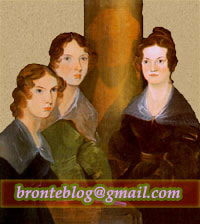
those darlings bitches witches sisters
in the Pillar portrait....

Tuesday, March 28, 2017

We still have some reviews of To Walk Invisible today. Decider describes it as
not your typical Masterpiece fare. Instead of being pretty and pristine, this film takes an unflinching look at some of literature’s most complex voices. (Meghan O'Keefe)
The Christian Science Monitor has a review too:
Think of “To Walk Invisible,” which debuted last night on public television’s “Masterpiece,” and is now streaming for free at pbs.org, as a thank-you note to the Brontë sisters for giving “Masterpiece” so much material. [...]
The best way to explore the Brontës’ legacy, of course, is reading their novels. With any luck, “To Walk Invisible” will send viewers back to their fiction, or nudge them to experience it for the first time. (Danny Heitman)
Inquisitr has an article on 'The Brontë Sisters: their books, loves, and lives'.

More of the Brontës on screen as The Blackpool Gazette features Paul Eryk Atlas, who plays Heathcliff in the latest screen adaptation of Wuthering Heights.
Early last year, The Gazette interviewed an Anchorsholme actor, who had just been cast as Heathcliff in a new, independent movie of classic novel Wuthering Heights. A year on, the film is now in post-production, with it due to be released in 2018 - a fitting year as it will mark the author of Wuthering Heights - Emily Brontë’s 200th birthday and well as 170 years since her death, aged just 30. After spending the past year of his life regularly travelling down to Herefordshire by train, in order to film his scenes, Paul Eryk Atlas is now looking forward to leaving the rest of the work to the production team. He told The Gazette: “The cast have been very involved in the whole process. “So it’s nice to hand it over and wait to see what it looks like. Hopefully the takes that they use are the takes I actually like!” [...]
Wuthering Heights is his first real screen-based acting role and he admits that the process has helped him grow massively as an actor. He said: “I’m a completely different performer than I was a year ago, just being more comfortable with the cameras. I’ve also had intensive horse riding training specifically for the role, which is a skill I can hopefully use again. Even though I was terrified!” The film is an independent, micro-budget production and is a passion project for the director Nina Elizaveta Abhrahall, with the aim being to be as faithful to the book as is humanly possible. Last month, the first full-length trailer was released and has currently been viewed by more than 6,300 people on Youtube. Paul says that the response to the trailer has been overwhelmingly positive. He added: “The Brontë fans and the Wuthering Heights fans are very excited, especially ones who can already see things marrying up to the book closely. “There’ll be more trailers released fairly soon for people less familiar with the films and books but it’s definitely been a positive response so far.”
Keighley News reports on the launch of Simon Armitage's new poetry collection at Haworth last week.
More than 130 people heard leading poet Simon Armitage read from his latest anthology in Haworth.
They packed into the Old School Room this month (March) to hear Simon showcase poems from his collection The Unaccompanied.
Afterwards the audience were able to visit the nearby Brontë Parsonage Museum to see Mansions in the Sky, an exhibition curated by Simon and focusing on Branwell Brontë.
Simon is the museum’s Creative Partner for 2017, a year focusing on the 200th anniversary of Branwell’s birth and following a similar bicentenary last year for Charlotte Brontë’s birth.
Rebecca Yorke, Head of Communications and Marketing at the Brontë Parsonage Museum, said it was a privilege to hear Simon Armitage read from The Unaccompanied so soon after its publication.
She said: “The audience was clearly captivated by the new poems which give voice to those in our communities who are emotionally or politically isolated: you have heard a pin drop in the Old School Room.
“Many people had travelled a considerable distance to hear Simon read and we were delighted to welcome lots of new faces to the museum.”
Simon will talk about the Mansions in the Sky exhibition at an event at West Lane Baptist Centre on May 13.
He will relate how his understanding of Branwell developed and changed during the period he took a close look at the Brontë brother’s life and influences.
The exhibition includes a dramatic recreation of Branwell’s bedroom and a series of new poems by Armitage, each inspired by an object belonging to Branwell. (David Knights)
LitHub quotes the words of another poet, Adrienne Rich, on the fifth anniversary of her death.
Responsibility to yourself means refusing to let others do your thinking, talking, and naming for you; it means learning to respect and use your own brains and instincts; hence, grappling with hard work. It means that you do not treat your body as a commodity with which to purchase superficial intimacy or economic security; for our bodies to be treated as objects, our minds are in mortal danger. It means insisting that those to whom you give your friendship and love are able to respect your mind. It means being able to say, with Charlotte Brontë’s Jane Eyre: “I have an inward treasure born with me, which can keep me alive if all the extraneous delights should be withheld or offered only at a price I cannot afford to give.” (Emily Temple)
The University of Indianapolis has asked three English professors to pick 'the top books to read by women writers', one of which is
Jane Erye [sic], Charlotte Brontë
“Also Jane Erye [sic], by Charlotte Brontë – most people forget the subtitle of that novel “an autobiography,” and it is unique in focusing on a female protagonist telling her own story, especially one who isn’t rich or beautiful.” – Jennifer Camden
Patheos discusses 'female beauty, religion, and fetishism' and mentions Jane Eyre:
Maybe our word “beauty” is too broad, too ambiguous – rather like our word “love.” It’s true that even in aesthetics, much that we loosely term “beautiful” would be better served by another adjective. It’s also true that the power of eros, at the height of its spiritual perfection, allows us to see a certain kind of beauty of the person, an ontological goodness that radiates and attracts, so that we are drawn towards union with the beloved even if that person doesn’t have physical, aesthetic beauty. Charlotte Brontë’s Jane Eyre presents, wonderfully, the phenomenon of two physically unattractive people falling in love – not only spiritually, with a love of the mind, but with a truly bodily desire for unity. (Rebecca Bratten Weiss)
Fine Books and Collections sums up some of the achievements of publishing house Harper Collins in its 200 years of history:
Among their successes over the past 200 years, HarperCollins pioneered the process of stereotyping; published the first American editions of the Brontë sisters’ novels; and championed Martin Luther King, Jr., publishing his Stride Toward Freedom: The Montgomery Story in 1958. (Rebecca Rego Barry)
Hermead of Surazeus has posted a poem called Mist Of Wuthering Heights.

Monday, September 18, 2017

Monday, September 18, 2017 10:32 am by Cristina in , , , , , ,    No comments
The Independent features Branwell in the year of his bicentenary with the headline 'Branwell Brontë: The mad, bad and dangerous brother of Charlotte, Emily and Anne' and yet the article, with comments by Simon Armitage, is not as sensational as the headline would imply.
The sisters, of course, are known the world over for their collective body of work including Wuthering Heights, Jane Eyre, The Tenant of Wildfell Hall. Very little is widely known about Branwell, other than he had ambitions to be a successful artist which were never realised, and died aged 31 after spiralling into addiction to alcohol, laudanum and opium. There are even conspiracy theories which abound which claim Branwell actually wrote his sisters’ books for them.
But while it’s tempting to view Branwell as a Byronesque, proto-Beat Poet figure who suffered for his art through drink and drugs, the reality is he led a rather tragic life littered with failures, fraught ambitions, and unfulfilled dreams. [...]
But this is Branwell’s year, and curating a series of events and exhibitions at the Parsonage is the poet, playwright and novelist Simon Armitage. On 7 October, at the museum, Armitage will be in conversation about Branwell’s life with the actor Adam Nagaitis, who portrayed the Brontë brother in last year’s Sally Wainwright BBC drama about the family, To Walk Invisible.
“To a certain extent, I’ve always been aware of Branwell,” says Armitage, who was born in Huddersfield and now lives in Holmfirth. “But I suppose he was always a background figure in the Brontë story. He did literally paint himself out of his own portrait of the family.”
The Parsonage asked Armitage, who says growing up in West Yorkshire meant the Brontë story was “always part of the landscape for me”, to curate this year’s Branwell events. “It’s not really a celebration,” he says carefully. “I think that’s the wrong word when talking about Branwell. But it is a marking of the 200th anniversary of his birth. I think what I’m hoping is that this year will raise Branwell’s profile a bit. I suppose it’s something of a re-branding exercise.”
Largely educated at the Parsonage by Elizabeth and visiting tutors, Branwell was a precocious child with a not inconsiderable intellect. He was red haired and quick-witted, and had a fiery disposition. He had ambitions to both be an artist and a writer, and his gregarious personality and creative impulses had an effect on his sisters, of that Armitage is in no doubt.
“I think he must have been a huge influence on his sisters in their creative writing and creative thinking. He was exciting and interesting, and we can only speculate about the extent to which his escapades fuelled their creativity,” he says.
Others have speculated more closely about Branwell’s involvement in the sisters’ work; indeed there has long been a “Branwellian” movement, since the 1920s at least, which firmly believes he actually wrote Wuthering Heights, if not more of the Brontë books.
It’s a theory that’s roundly dismissed as nonsense these days, and which was satirised in Stella Gibbons’ 1932 novel Cold Comfort Farm, in which the character Mr Mybug is writing a book devoted to the conspiracy theory. Mr Mybug opines, “You see, it’s obvious that it’s his book and not Emily’s. No woman could have written that. It’s male stuff…”
The main argument (apart from, of course, that the whole idea is the sort of sexist claptrap roundly taken down in Joanna Russ’s 1983 book, How To Suppress Women’s Writing) against the whole idea is that while Branwell had very lofty ideas and was certainly not backwards at putting himself forwards, he probably didn’t have the talent and drive to do it.
Branwell had announced early on that he was going to be a poet and a painter. According to Armitage, he couldn’t have set the bar any higher. “He chose poetry and oil painting which were probably the most difficult disciplines to progress in at that time,” he says. [...]
“Really, his talents didn’t take him much beyond his teenage years,” says Armitage. “The lack of progress with his painting must have really frustrated him. His talent had dried up at the point when for most people they were beginning to enjoy artistic accomplishment.
“There’s certainly a picaresque element to his life, which some people seem to find quite exciting. But it’s more poignant and sad, really. If Branwell was being judged by today’s standards then we would certainly say he suffered from mental health problems and addiction issues.”
As part of this year’s Branwell commemorations at the Parsonage, they have recreated his studio, and while it is comprised of non-original items (unlike the other rooms in the museum which feature the exact clothing, furniture and decorations that the Brontës wore and used) it has been painstakingly researched and sourced and is everything you would want the den of the wayward Brontë brother to be. Unmade bed, filthy sheets, books scattered across the floor. [...]
“He was usually the author of his own downfall,” says Armitage. “His jobs always ended in disaster. I’m sure his heart wasn’t in any of them, they were never what he aspired to, but he could never make a success of what he wanted to be. He never produced anything of a high enough quality. He felt a failure.”
What might have made things worse for Branwell was that, as Armitage puts it, “as he was nosediving, his sisters’ stars were rising”. [...]
Most people who beat a path up the cobbled street of Haworth to the Parsonage go in search of the sisters, Charlotte, Anne and Emily. But this year at least they’ll be leaving with more of a sense of who Branwell, the wayward son, actually was.
If he left no other legacy, at least he created the only surviving portrait of our greatest literary dynasty, and though in a fit of pique and frustration he painted himself out of it, he’ll always be there, in the background, the black sheep of the Brontës. (David Barnett)
The Telegraph reports that the Brontë birthplace is for sale again and describes its current status as a lovely café.
Jane Eyre found the small mug of coffee she drank “with relish” at her daily 5pm meal “revived vitality”, while “a basin of coffee” failed to pull Heathcliff out of his crazed restlessness. Yet both Charlotte and Emily Brontë might be surprised to find their childhood home has been turned into a bustling community café.
The circumstances behind the coffee shop – now called Emily’s – have the makings of a 19th-century novel. “We bought it as a repossession three years ago,” says Mark De Luca, a former building surveyor who had left his job due to illness. “The house had been used as a buy-to-let, split up into bedsits. It was owned by a London property developer who had fallen into difficult times.”
Mark, 33, and his wife Michelle, 32, had been looking for a place to open a coffee shop. When they discovered this terraced brick cottage in the heart of Thornton, a village four miles west of Bradford, “the Brontë element was an added bonus,” says Mark.
They bought the house for £120,000 and spent £70,000 fixing it. “We stripped the property back to a shell and redid it: new flooring, damp works, roof repairs, new heating throughout, extensive repairs to the timber sash windows, new bathroom suite and a full internal decoration,” he says. “We created it from nothing, really.”
The De Lucas also had to apply for planning permission, including consent for change of use to part residential and part commercial, because of the building’s protected status. The Grade II* listed building was built in 1802 and was home to the Brontë family between 1815 and 1820.
What now serves as one of the main parts of the café, with seating for 16 on a variety of vintage school chairs and tables next to an original fireplace, is the former dining room where Charlotte, Branwell, Emily and Anne were born. [...]
“We’ve brought the house back to life. It had fallen by the wayside and now it’s got its own heartbeat,” says Mark. “Thornton used to be pushed aside as Haworth’s poorer relative but now it holds as much importance to the Brontë family.”
He was “no Brontë aficionado” before buying the property, and has learnt about the history of the family and their house through a former owner who ran it as a museum from 1997 to 2006, the Brontë museum in Haworth and the busloads of fans who visit the coffee shop each year. [...]
“Patrick said that his happiest days were spent at Thornton and in Haworth he was a stranger in a strange land,” says Mark. “I lost my mother at a young age and my father at a relatively young age. Being from a broken family, I can relate to that.”
It is partly this background that prompted Mark to start a “suspended coffee” programme at Emily’s, whereby customers can cover the cost of an extra coffee so people who might not be able to afford one can come in for a hot drink. “You never know what’s going on in people’s personal lives,” says Mark. “We’re a social community where people come in for a shoulder to cry on or a laugh to be had.”
Now that Mark and Michelle have two children – Mariella, three, and Theodora, one – they are looking to sell the coffee shop. “We’ve got another business in the village, a hair salon that Michelle runs. It’s come to the point where one has to go, and unfortunately you can’t get rid of kids that easily,” he quips.
He is looking for offers in the region of £250,000 for Emily’s, which brings in £49,000 per year from being open four days a week. Included in the lot is the De Luca family home, a two-bedroom residence attached to the coffee shop with a private entrance, full of original Brontë-era features (07966 662832, delucaboutique.co.uk).
Mark and Michelle are currently looking for a new home in the Thornton area, so they’ll be near enough to keep an eye on the café. “I intend to experience Emily’s from a customer perspective now,” says Mark. “I’m excited for the property’s future, but there’s an element of me that’s sad to see it go. I’ve grown very attached to it. I’ll never own a property like that again.” (Lauren Davidson)
The Independent (Ireland) asks broadcaster Sile Seoige about her favourite things.
The book. Wuthering Heights by Emily Brontë; an absolute classic. I can still quote from it. As a teenager, I was obsessed by it. (Elle Gordon)
The Guardian has lunch with poet Lemn Sissay.
He’s come straight here from a meeting with some TV people at Channel 4, a “beautiful meeting” he says, if such a thing exists. He’s in talks to create a show or a series about orphans and foster children – he reels off a list: “Cinderella, Batman, Heathcliff, Harry Potter, Jane Eyre, Moses.” The idea will involve linking those characters with kids currently in care. “Families are like clever PR companies, protecting their monopoly of the idea of what it feels to be loved,” he says. “But dysfunction is also at the heart of all families. And a child in care is walking proof of that. People fear it might be contagious.” (Tim Adams)
A columnist from Las Provincias (Spain) thinks women shouldn't ask for permission to be or forgiveness for being feminists and quotes from Jane Eyre. Nick Holland has written a little (as it's actually a vast subject) on The Brontës On Film, Television and in Fiction on AnneBrontë.org.

Sunday, December 18, 2016

Simon Armitage will take over from Tracy Chevalier to be the next year’s Brontë Parsonage Museum Creative Partner for the Branwell 2017 bicentenary. We hope that his work will be as successful as Tracy Chevalier's has been in promoting the Brontë Society events in this nearly-over Charlotte 200th anniversary. Keighley Online reports:
Poet Simon Armitage has been revealed as next year’s Brontë Parsonage Museum Creative Partner.
The Brontë200 bicentenary celebrations are set to continue apace thanks to a generous grant by Arts Council England.
The Contemporary Arts Programme at Brontë Parsonage Museum has been awarded £97,702 through the Grants for the Arts fund. The money will support a range of activities marking the bicentenaries of Branwell Brontë in 2017 and Emily Brontë during 2018.
Simon Armitage is joining the Museum as Creative Partner for 2017 and is curating a programme of exhibitions and events to mark the 200th anniversary of the birth of Branwell Brontë, the wayward brother of Charlotte, Emily and Anne.
Simon explained: “Most people know Branwell either as the ne're-do-well brother of the Brontë family or as the shadowy absence in his famous portrait of his three sisters. We'll never really know Branwell properly, but in putting together events for his bicentenary I feel as if I've been privy to some of his hopes and dreams.
“Branwell's early promise and swaggering enthusiasm was ultimately overshadowed by the talents of his siblings, but even before then he appears to have lost his boyish optimism and fighting spirit, and I've found it impossible not be saddened by his disillusionment and decline.”
Jenna Holmes, Arts Officer at the Parsonage, added: “We’re really excited to be working with Simon during 2017. Branwell remains an enigma for many and we’re planning a series of events which will dig beneath the preconceptions and challenge what we think we know about the only son in the family. We’re hugely grateful to Arts Council England for their support and are looking forward to revealing our programme in the new year.”
The full programme of events will be announced in January. 
BBC News reports the closing of the Red House Museum and quotes one Kirklees Councillor saying shocking and very ignorant/stupid/silly things:
The Red House in Gomersal, which has close links to the Brontes, is due to close on Wednesday.
Kirklees Council said 30% of each building could be used for commercial ventures.
It is hoped community groups will come forward to run the buildings but, if not, they could be sold on the open market.
Charlotte Brontë often visited Red House and featured it in her novel Shirley
The council said any loaned objects will be returned to their owners or put in secure storage, while people who have permanently donated objects can be reassured they will remain in the care of Kirklees Museums and Galleries.
The reorganisation of the museum service is expected to save £531,000.
Councillor Graham Turner said: "We know the public support our plan to find new and innovative ways for them to view the collections.
"Museums are not just about buildings, it's about using the collections to tell the story of our past and how they influence what we do today."
The deadline for expressing interest or submitting an outline business case is 6 March and a decision will be made on 3 April.
Come on, Mr. Turner, at least if you are ashamed of what you are doing be quiet and do not say stupid things. The public support your plan? How do you know that? And... the best part, the one that will be remembered as the dumbest quote of the year is the 'museums-are-not-just-about-buildings' talking about the Red House Museum. In the case of the Red House Museum it is all about the building itself (even with all the modifications it has been through) because that is its real link with the Brontës.

Alan Bennett repeats an anecdote we heard before in The Guardian:
A teddy bear with sharp teeth. Bennett is plainly devoted to his partner, but on 31 August 2009 demonstrates his writer’s splinter of ice firmly intact, reporting that, after watching Wuthering Heights:
“Rupert turns to me and says: ‘You’re rather like Heathcliff.’
Me: (gratified) Really?
R: Yeah. Difficult, northern and a cunt.” (Robert McCrum)
The Guardian lists the best Christmas UK TV including, of course, To Walk Invisible:
More Sally Wainwright, this time penning a lavish period drama exploring the extraordinary lives of the Brontë sisters.
Marilyn Heins reminds us of how words can be used for praise or hurt in Arizona Daily Star:
I remember being really hurt by the words of a classmate. One incident involved two little girls ganging up on me in fifth grade because I took a copy of “Jane Eyre” to school. They accused me of being stuck-up and said that I was showing off what a good reader I was. False accusation! I carried the book to read it at recess because I wanted to find out what happened. The fact that I remember this, more than 70 years later, is an indicator of how words can hurt.
Valley Advocate reviews a theatre adaptation of Sarah Waters's Fingersmith:
It begins in a literal den of thieves in the grimy Southwark borough of London, where a teenage orphan, Sue Trinder, has been brought up as a pickpocket, a “fingersmith” as brash and cunning as any Artful Dodger (Waters’ nods to both Dickens and the Brontës are frequent and unapologetic). (Chris Rohmann)
Hartlepool Mail features five dancers who will enter the cast of the Billingham performances of a new musical production of Jane Eyre penned by Anne Dalton. The Daily Express publishes extracts from the Jonathan Pryce BBC Media pack interview.

El País (Uruguay) interviews the writer Marcela Serrano
La opción más obvia hubiera sido Jane Austen. (Fernán Cisnero)
Obvio pero lo que pasa es que Austen es muy juguetona y no me servía para esto. En todas las entrevistas que me preguntan cuál es mi escritora favorita digo Austen, a ojos cerrados. Pero no me servía así que me tiré por el lado de las Brontë, de historias más dramáticas. Pero Gaskell es una genial testigo de su tiempo, más que leer historia hay que leerla a ella para saber cómo era la pobreza de la Revolución Industrial: feroz. (Translation)
Bestfirstappearance has visited the Morgan Library's Charlotte Brontë exhibition.

Thursday, October 15, 2020

Thursday, October 15, 2020 12:30 am by M. in , ,    No comments
An alert for today, October 15, at the Brontë Parsonage Museum:
The Brontë Lounge with Simon Armitage
The Rise and Fall of Branwell Brontë
Thursday 15 October 2020, 19:30 h

We are thrilled to welcome Simon Armitage to the Brontë Lounge.
 
Simon was the Brontë Parsonage Museum’s Creative Partner in 2017, the bicentenary year of Branwell Brontë.  During his residency, Simon curated an exhibition, Mansions in the Sky, and wrote ten poems in response to Branwell’s belongings in the Museum collection.
 
In this live event, Simon will read from the Mansions in the Sky series of poems and talk to host Helen Meller about how his understanding of the notorious Brontë brother developed and changed as he took a closer look at his life and influences.  

Saturday, June 17, 2017

Local newspapers highlight what's to come to the Brontë Parsonage in the next few weeks and months. And it's a lot! Keighley News has the dates for the rest of this year's Brontë Treasures in the museum's library:
Brontë Treasures dates for the rest of 2017 have been released by the Brontë Parsonage Museum.
The monthly events allow visitors to the Haworth museum to go beyond the security cord into the library for a close-up viewing of items not on display.
Visitors can examine rarely-seen items from the world’s largest collection of Brontë artefacts, manuscripts and personal belongings.
Tickets cost £85 for each session. They will be held on July 28, August 25, September 29, October 27 and November 24, all at 2pm. (Richard Parker)
Keighley News also reports that Poetry at the Parsonage will be returning for the second year in a row and will tie in with the celebrations of Branwell's bicentenary.
Poetry at the Parsonage returns for a second year following its successful inauguration in 2016.
Top-notch poets will headline a day of workshops, talks and performances at the Brontë Parsonage Museum in Haworth.
Budding writers will be able to get in on the act with an open-mic session, poetry readings and the chance to pick up hints from the masters.
The first festival of its type in Haworth was held last year to tie in with the 200th anniversary of Charlotte Brontë’s birth.
This year’s Poetry at the Parsonage festival, on Saturday July 1, is part of a year-long programme celebrating the bicentenary of brother Branwell’s birth.
A spokesman said: “For fledgling poets or those wanting to build on their talents, there’s the opportunity to gain inspiration and hone your skills through workshops and open mic.
“We’re delighted to announce Simon Armitage, Patience Agbabi, Jacob Polley, Kei Miller, Zaffar Kunial and Clare Shaw as workshop leaders.
“And we have a treat in store for the evening: Simon, Patience, Jacob, Kei, Zaffar and Clare will come together for a poetry reading in The Old School Room.
“Poetry at the Parsonage offers a unique opportunity to hear some of the most vibrant poetic voices on the scene."
All of the workshops will take place at venues in Haworth.
The day will begin with Clare Shaw’s Writing the Shadows, taking as a starting point Charlotte Brontë’s phrase, ‘the shadows are as important as the light’.
The workshop will explore the dramatic, poetic and personal importance of engaging with loss, trauma, pain and other difficult experiences in poetry.
A workshop by the Brontë Parsonage Museum’ s 2017 creative partner Simon Armitage, entitled The Great Indoors, has already sold out.
Birmingham-born Zaffar Kunial will help writers decide when their poem is ‘ready’ during a session on Poetry Editing.
He will teach basic principles, and give practical tips on aspects such as line breaks, syntax and form.
Jacob Polley’ s workshop Small World will explore the ‘close-in and seldom-examined’, along with the micro-decisions people make while writing a poem. [...]
Kei Miller will lead a workshop on the theme of 'Poetry is never about what we say, it is about how we say it'.
Patience Agbabi’s workshop Telling Tales – Page to Stage will follow the transition from written word to performance of her modern-day interpretation of Chaucer. [...]
The day after the festival, on Sunday, July 2, Simon Armitage will host Wandering Bards, a walk in the footsteps of would-be poet Branwell Brontë.
The linear walk will go from Luddendenfoot in the Calder Valley, where Branwell worked as station clerk-in-charge, over the moors to Haworth.
Simon will be reading poetry during the arduous trek aimed at experienced walkers. (David Knights)
We must say, though, that as far as we can remember, the phrase ‘the shadows are as important as the light’ is not actually by Charlotte Brontë, as it comes from Franco Zeffirelli's 1996 adaptation of Jane Eyre.

And The Telegraph and Argus announces a forthcoming talk on Emily Brontë to mark the 199th anniversary of her birth.
“Stronger than in man, simpler than a child” is the title of an upcoming talk at the Brontë Parsonage Museum.
The talk on July 28 at 7.30pm will look at the most enigmatic of the Brontë sisters, Emily, on the eve of her birthday.
Charlotte Brontë used the phrase to describe her sister Emily after her death, but this may not be the full picture. (Richard Parker)
The Guardian discusses the literary tie-ins of TV series Twin Peaks. First of all, we are told what a tie-in is, or should be:
The tie-in is a curious beast. As an exercise in branding, it can encompass lunch boxes, duvet covers, video games, toy mannequins and lollipops. In literature, a true tie-in refers to televisual or cinematic attempts to extend the narrative of a novel without changing its original story. It involves more than simply changing the book jacket – in the way that the novels of Jane Eyre and Jaws were reissued with new covers to cash in on their cinematic fame. And it is quite different from novelising a film – though that can lead to some interesting comparisons with its representations on screen. (Stuart Kelly)
LitHub wonders, 'Why are we so afraid of female desire?'
Passionate feelings of all kinds could look unfeminine. Even writing about them was risky. Charlotte Brontë felt obliged to apologize for her sister Emily’s rendering of the “harshly manifested passions, the unbridled aversions, and headlong partialities” of northern folk in Wuthering Heights. That a quiet, well-behaved girl could even imagine a Heathcliff was somewhat unseemly. Emily had been unworldly, a home-bred country girl, Charlotte explained, much accustomed to the rough folk of the rugged moorlands, and it showed in the “perverted passion and passionate perversity” of her characters. Not that Charlotte herself was able to fully disguise her passions: her love for the (married) French teacher, Professor Constantin Héger, with whom she lodged and worked in Brussels in the 1840s, was a disruptive influence in her life and erupts through the surface of her novels. (Carol Dyhouse)
Vulture reviews the film Maudie:
There’s a Gothic quality to Maudie, suggesting stories in which a headstrong young governess slowly turns a brusque master into a sensitive lover. That’s the template, anyway — the atmosphere is too desolate and the heroine too simple to make this a modern Jane Eyre. (David Edelstein)
The Yorkshire Evening Post mixes fashion tips with local knowledge:
For petites, the top of the dress is best fairly close-fitting, not necessarily tight, but fitted or skimming close to the body. This helps keep the look in proportion and streamlined. You can create the illusion of height by choosing a slightly higher waistline, although again this should be fairly fitted. A small figure in an empire-line dress simply looks shorter and wider (have you seen the Brontë dresses at Haworth Parsonage?). (Stephanie Smith)
El Periódico (Spain) reports on the total success of the recent stage production of Jane Eyre in Barcelona:
En Gràcia, el montaje más visto, con un 100 % de ocupación, ha sido "Jane Eyre", con 6.057 espectadores. (Translation)
La Voz de Galicia (Spain) reviews the film Mal de Pierres:
Rechazada por un profesor timorato que le da a leer Cumbres borrascosas, enamorada de un hombre desahuciado, encontrará la redención en la comprensión última de su hermosa locura. (Eduardo Galán Blanco) (Translation)
La Voz (Argentina) interviews the writer Mariana Enríquez:
–La historia de Éste es el mar es, finalmente, una historia de amor trágico. ¿Qué te gusta y qué te interesa rescatar hoy de ese tipo de relatos? (Eloísa Oliva)
–Mi libro favorito es Cumbres borrascosas. Esa es la mejor respuesta que puedo dar. Hoy o siempre, es un tipo de relato que me gusta y que, sobre todo, me parece que no es cínico. Me aburre enormemente la escritura cínica e incluso irónica. En este momento, esas distancias temerosas me provocan tedio. (Translation)
Wired (Italy) reviews Lady MacBeth:
 Vendicativa, egoista, la Lady Macbeth di Oldroyd è un personaggio a cui è impossibile non affezionarsi. È stato scritto, non a caso: immaginate Cime tempestose diretto da Hitchcock. In effetti il film si rivela l’epopea crimale di una donna moderna che non si lascia imporre marito e vita, ma si sceglie l’uomo con cui stare e la vita che vuole fare in un tempo in cui alle donne tutto questo non era concesso. (Claudia Catalli) (Translation)